#286 / Editorial
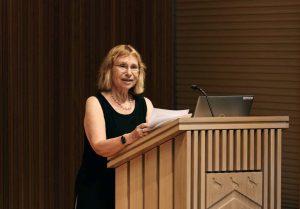
It’s back-to-school time for K., and with it comes the realization that current trends are continuing: antisemitism in Europe shows no sign of abating; the scandalous situation in the West Bank has worsened; and the betrayal of the principles upon which the State of Israel was founded remains a constant under the government still in power for a few more weeks. Let us hope that the upcoming elections in Israel will finally put an end to this downward spiral. To underscore the importance and stakes involved, this week we are publishing the text of a speech delivered this summer in Oxford by the Israeli historian of ideas and writer Fania Oz-Salzberger. This voice, which speaks to both Israeli and European audiences, is one that offers hope for a renewed future, for the simple reason that it accurately perceives what Israel has had to turn away from in order to arrive where it is today. Amos Oz’s daughter knows full well what, of the humanist and pragmatic legacy of the fathers of Zionism, has been squandered decade after decade—and what, therefore, needs to be restored. And she also knows what, of that legacy, directly concerns Europe. But beneath her tight argumentation, an anxiety shines through that lends the text its full gravity: is there still anything left of this legacy that can be brought to fruition? Fania Oz-Salzberger writes from a sense of vertigo that we cannot help but share—the kind that seizes us when, driven by the need to repeat what we hold dear, we glimpse the possibility that the object of our hopes has vanished, and that it is therefore the very act of repetition that keeps us going.
Related articles
For a Pragmatic Zionism

Are There Too Many Jews?

Morocco Through the Lens of Its Jewish Heritage (1)
Investigating Germany: A history of the AfD
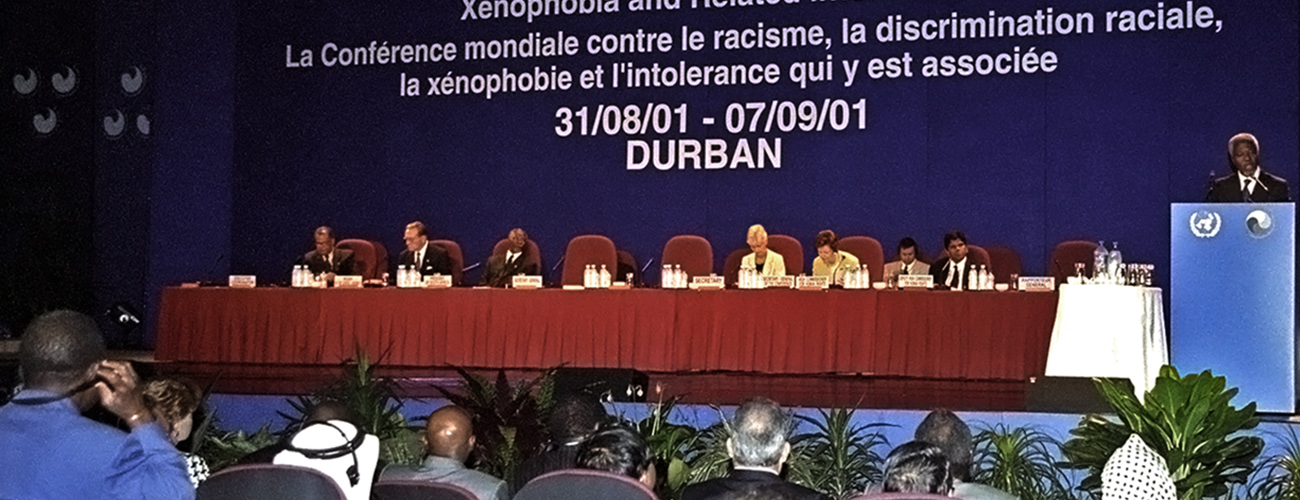
Durban Antizionism: Its Sources, Its Impact, and Its Relation to Older Anti-Jewish Ideologies
There are discourses, however, that never seem to question their own originality: tirelessly, they return in identical form from century to century, as if they were indestructible. Among these exhausting repetitions is a refrain to which Ruben Honigmann devotes his reflections this week: that there are too many Jews. Tracing the origins of this fantasy leads us to a religious prohibition which, through a curious mirror effect, also revolves around repetition: the prohibition against counting Jews, as if the very act of counting—with its implication of reducing them to identical units—were in itself blasphemous.
This week we are also publishing the first part of an exclusive investigation by Chiara Lutteri on the intertwining of Jewish and Moroccan identities. “A legacy for which community?” the author begins by asking. Once the largest in the Arab world, Morocco’s Jewish community now numbers only a very small number of members. At the same time, the government is restoring synagogues, cemeteries, and former Jewish neighborhoods, while new museums showcase this history. To whom is this memory intended? Drawing on the testimonies of Jews who have remained in or returned to Morocco, Chiara Lutteri contrasts the official narrative with the memories, practices, and expectations of a dispersed community.
Twenty-five years ago, from August 31 to September 8, 2001, the “World Conference Against Racism” was held in Durban. To recall the turning point that this event represented, and the way it confirmed the prevalence of antisemitism within the international postcolonial left, we are featuring again the essay by David Hirsh and Hilary Miller. In it, they demonstrated how the equation “Zionism = racism,” forged as early as the 1970s, crystallized in Durban into a coherent worldview, uniting postcolonialism, feminism, and the anti-racist left around a single narrative that cast Israel as the symbolic keystone of all the world’s ills.
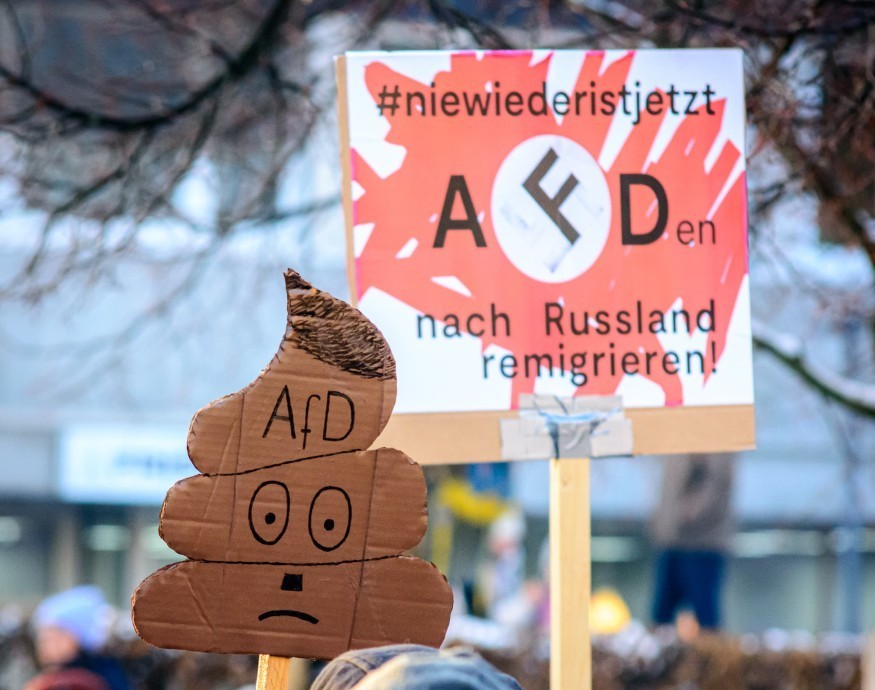
Finally, a word must be said about Saxony-Anhalt, where last Sunday the AfD achieved the best result for the German far right since 1945, with nearly 44.5% of the vote. This landslide is by no means unexpected; it confirms what Monty Ott had already described in his study of the party’s history: continuous radicalization since its founding, the absorption of networks from the New Right and the former “Wing” (which was officially dissolved), and instrumental philosemitism that has never prevented structural antisemitism within its ranks. We are republishing this text as two other regional elections loom on September 20, and as the AfD now openly declares its ambitions for the 2029 federal elections. What is at stake here is a European trend, but one cannot help but be concerned that Germany is embracing it with such zeal.