For a Pragmatic Zionism
Fania Oz-Salzberger, a historian of ideas and the daughter of Amos Oz, rejects the deadly confrontation between supporters of Israel and Palestine. Opposing zero-sum narratives and absolute conceptions of justice, she affirms the equal national legitimacy of both peoples, distinguishes between historical anti-Zionism and the form of anti-Zionism that today challenges Israel’s very existence, and advocates for an imperfect peace based on compromise. A political and personal essay that seeks to rehabilitate the humanist Zionism of Isaiah Berlin and Amos Oz in the face of nationalism and the “false friends” on both sides.
I would like to begin with a personal note. This is not an ordinary lecture, and it cannot be, because the time is not an ordinary time. I am an Israeli born and raised in what used to be called the Israeli peace camp, and two recent disasters have wrecked my country’s place in the world, my personal life story, and part of my soul.1
The October 7 Hamas massacre in southern Israel, and the ensuing Israeli war in Gaza, are not only the most influential events in my public life, as a citizen and as a public and academic voice; they are also major calamities in my private life.
I speak with a sense of grief, not only for the murdered people I knew, not only for the many innocents in Israel and the vast number of innocents killed in Gaza whom I didn’t know. I understand that my country, even if it survives and thrives, will carry a historical burden or a mark of guilt. But I cannot even be sure that it will survive and thrive. So I am not standing here merely as an observer and analyst; I have great fear for my home, belonging, and the future of my identity.
This is not the best time to be alive as an Israeli. And to be a young, like my sons and their friends, is even more challenging; and yet it is the young people who inspire our ongoing struggle for healing both Israel and Palestine.
As things stand today, in the run-up to the Israeli elections, we still have a toolbox to employ and a horizon of hope. I still believe that Israeli society can yet rise and mend its governmental and media instruments. Such mending, in turn, can reopen the road to negotiating for a compromise and eventually for peace, next door to a peaceful Palestine. Several political parties running to the Knesset, including the Arab parties and the mainly Jewish Democrats party, are openly speaking of peace and the two state solution. This is where most components of organised civil society also stand. Therefore I still hope that my family will remain living in Israel and speaking Hebrew for generations to come. I see it as a civic duty to speak out as long as there’s tangible political hope.
It is beside the point to ask how many Israelis I ‘represent’, though I am certainly not a lone voice. This is not about opinion polls: both nations want to destroy each other according to most opinion polls. So yes, opinions matter tremendously, as David Hume once said, ‘It is on opinion only that government is founded; and this maxim extends to the most despotic and most military governments, as well as to the most free and most popular.’ John Stuart Mill added that the impact of opinion is a matter of opinion.
This is not facile optimism. Israelis’ opinion of peace with Egypt changed literally overnight when the late Anwar Sadat paid his sudden visit to Prime Minister Menachem Begin.
I need to make one preliminary point about the failures of global conversation, despite or perhaps because of the internet and the world it has created. Most Israelis, even today, are not aware of the extent of the calamity that befell us. They are so trapped in a one dimensional reality, partially created by the Israeli government and its media, that they strongly assert that Israel is a blameless victim. They curl up in the foetal position of bottomless victimhood, startlingly like the Palestinian position in some respects.
This dissonance pains and angers me more than I can express, but my anger is not aimed at traumatised citizens. Certainly not at my friends and colleagues who were barbarically bereaved by Hamas terrorists on October 7. My anger is directed at the manipulators from above and at the digital influencers who obscure the humanity of the enemy’s civilians. The same leaders and demagogues who cry wolf, or shout antisemitism, whenever a true friend of Israel offers a scathing critique of its policies.
I hardly need to remind the present audience that antisemitism is real, partly age-old, partly newly resurgent, and that its hands-on violence is rising in the wake of its verbal tide. Yet instead of a staunch solidarity with Jewish communities worldwide, my government is squandering liberal opposition to antisemitism, by smearing true friends and genuine allies, and recasting legitimate criticism as antisemitic. At the same time, backhandedly, outspoken antisemites are sometimes hailed as pro-Israel, even though they are ultra-nationalists, the epitome of false friends.
Instead of a staunch solidarity with Jewish communities worldwide, my government is squandering liberal opposition to antisemitism, by smearing true friends and genuine allies, and recasting legitimate criticism as antisemitic.
The good news is that numerous Israeli citizens, on the majority spectrum of left to moderate right, see the coming elections as an opportunity to mend what is broken, heal what is very sick, and create a better climate for re-democratising Israel. Some of this political spectrum, not all, is committed to reopening negotiations with the Palestinians. But all this spectrum is opposed to the current governmental corruption, to the illegal violence of soldiers and West Bank settlers, and the takeover of the police, Border Guard, and prison service by a convicted racist minister nurtured by Netanyahu to support his rogue coalition [Itamar Ben-Gvir – editors].
I will make three arguments today: first, that the idea of a zero‑sum conflict between Israel and Palestine is false; second, that we must distinguish between historical and present forms of anti‑Zionism; and third, that peace—however imperfect—must take precedence over absolute notions of justice. I will also argue for the reinstatement of pragmatism, an erstwhile Zionist value that was thrown to the wind.
The Ghosts of Oxford
This talk is dedicated to the beloved memory of two men who first met here in Oxford in 1969, and I was fortunate enough to witness that meeting although I was only eight years old. Sir Isaiah Berlin, and my father Amos Oz. I am grateful that they are not alive to witness the current calamity. In my secular way I think that their ghosts might be hovering in this room, and their ghosts cannot yet rest in peace. I recall their lifelong insistence on searching for a humanist thread in the wilderness and ugliness of history, against the grain of the crooked timber of humanity.
It was in one of their conversations, here in Oxford sometime in the 1980s when I was a doctoral student, that I heard my father say that the Israeli-Palestinian conflict is a clash of justice against justice.
As such, he said, it is the ultimate Greek tragedy in the accurate sense that Sophocles and Euripides intended.
The idea of conflicting claims to justice is currently drowned in the noise of a so-called pro-Palestinian political theology of demons and angels, conquerors and conquered, northern and southern hemispheres, wicked colonialists and innocent victims, evil and righteous. It frames my grandparents as entitled European settlers who descended on Palestinian land and stole it.
At its rather common extreme, this political theology also embraces Hamas and Hezbollah by asserting that murder is a fair punishment for theft.
My grandparents’ life story, I am told, has been cancelled. By academics, by intellectuals, by politicians, by journalists and media influencers.
Zionism, a stance which my great uncle Joseph Klausner saw as a modern compound of Judaism and humanism, has been cancelled too. I am often told, on the social media, that there’s no such thing as a liberal Zionist, let alone a humanist one, because that would be a contradiction in terms. A logical chimera.
I am speaking here today because I think that I do exist. But it is up to you to decide.
So yes, I will utter the near-ostracised words liberal Zionism, which is what both Berlin and Oz were, to the end of their days. It is based on Berlin’s classic distinction between benign and malign national movements. To the end of his days he saw core Zionism as a moderate national creed, and in the last decade of his life he warned against the rise of the malignant Israeli nationalism, an ideology of racist superiority and denial of the Palestinians’ equal claim to a nation state.
To make it crystal clear, Berlin and Oz, and a line of moderate Zionist thinkers before them, established even earlier than Theodor Herzl, understood the Jewish claim to national independence to be equal to every other people’s claim to national independence.
Herzl was unaware of the Palestinian claim, but Berlin and Oz accepted it as equally just.
Core Zionism was about normalcy for the Jews among all other nations. Jewish superiority is by no means normal.
To the end of his days Berlin saw core Zionism as a moderate national creed, and in the last decade of his life he warned against the rise of the malignant Israeli nationalism, an ideology of racist superiority and denial of the Palestinians’ equal claim to a nation state.
To the deniers of liberal or humanist Zionism I reply that almost every peace negotiation ever undertaken during this conflict was between moderate Palestinians and liberal Zionists.
From here I wish to salute my interlocutors Ahmed Fouad Alkhatib, Samer Sinijlawi, Aziz Abu Sarah, two good friends in Germany who may not wish to be named yet, and several others who have come under extreme hate for their public endorsement of a future for both Palestinian and Israelis.
I will also mention the large group of West Bank Palestinians attending a series of meetings in Europe with members of the Israeli opposition, and they are still under the radar. We are each other’s rock as we navigate the acrimony levelled against us. If these peace partners are accepting me, I shall not denounce my self-description, my ideological identity: a liberal democrat first, a humanist Zionist second.
From this personal and intellectual inheritance, I now turn to my first argument.
Squaring the Fake Circle
I am here to challenge the false dichotomy between pro‑Israel and pro‑Palestine. I will not attempt to square this circle, because the circle itself is false.
The idea that Israel and Palestine form a zero‑sum conflict—that one people’s gain must be the other’s destruction—is both intellectually flawed and politically dangerous. It traps us in a logic where only total victory or total defeat seem imaginable.
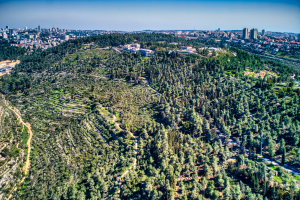
Human reality is less tidy. The ‘crooked timber of humanity,’ Immanuel Kant’s phrase so beautifully varnished by Isaiah Berlin, does not yield perfect symmetry. We cannot undo past catastrophes, but we can shape what follows them. Societies, like people, can endure, adapt, and even heal—though never without scars. Like humans and societies, old trees carry their scars even as they heal and grow.
I would to make it clear where I come from. I am the child and grandchild of Jews of European and partly Sephardic descent, who arrived in Jaffa port with a migration certificate granted by the British Mandate government of Palestine in the 1930s. While not all four of them were avid Zionists, this for all four of them was the only way out of Eastern Europe at that late stage prior to September 1939. Every single relative who remained in place, including those who desperately tried to get visas to other countries, were rounded up and shot or gassed by the Wehrmacht and the SS. By 1942 we had no living relatives in Europe.
I am also a historian of ideas. My doctoral thesis, written in this university, is about the Enlightenment. It took me years to understand how intimately my chosen topic ties in with my own family history. The Enlightenment, especially the German Enlightenment, inspired the pioneers of the Jewish Haskalah, which in turn kindled the Zionist idea. It also kindled non-Zionist and anti-Zionist ideologies among the large and culturally awakening Jewish population of East Europe. But the Haskalah began lending greater support to the Zionist idea because its pan-European humanism was continually slapped and jeered by a modernised antisemitism. As my grandfather Arieh used to say, ‘when I was a child in Europe the graffiti on the walls screamed at us “Jews, go to Palestine,” but now that I travel to Europe the graffiti tells me “Jews, get out of Palestine.”’ Times have changed indeed.
Let me lay down a simple fact. The Zionist idea of my family did not involve the displacement of a single Palestinian, and it saved the lives of all four of them. It provided the only space in which I could have been born. Their migration in the 1930s, and I am not forgetting also the British army’s campaign in North Africa, were the only acts that prevented the Wehrmacht and the SS from killing my parents in their earliest infancy.
To be sure, those grandparents also believed in a state for the Jews and all its citizens, in the ancient claim to the land and in building a just community, a country or a kibbutz. But their strongest reason to migrate was not ideology, it was life.
In my own family, survival came through migration. From this emerged what my father later called the life‑raft justification: Zionism not as destiny or ideology, but as refuge.
The naked fact that multitudes survived only thanks to Zionism does not compel me to be Zionist myself. It does not force upon me any specific historical narrative or national story. But it does compel me to try to be honest.
Some of my fellow Israeli-born historians have come to the moral conclusion that Zionism should never have happened, and that Israel’s very existence is therefore unjustified. Perhaps their biographies are different. Perhaps their families had more options. Perhaps they are better historians, or better human beings, more detached than I am, able to treat the fact of their own existence as morally irrelevant.
I respect their intellectual seriousness. But I cannot follow them. I cannot regard my grandparents’ survival, and my own birth, as an incidental footnote to a theoretical argument. Zionism saved their lives. It provided the only space in which I could have been born. And I refuse to trivialise this fact.
The Palestinians’ sense of belonging to their ancestral land deserves similar respect, no matter how much we squabble about the historical details. No one is going anywhere, neither the Israeli Jews nor the Palestinians. I wish world leaders, not to mention my own government, had done more to proclaim this simple starting point. Instead, the zero sum game monstrosities are on the march: river to sea, by any means, kill Israel, erase Gaza. It is a world of false friends preaching ever more bloodshed.
The Two-State Legacy
During the last decade of his life, my father used to tell his audiences, humorously, ‘I am not pro-Israel, I am not pro-Palestine, I am pro-peace.’ My title today deliberately paraphrases him, because, as Isaiah Berlin taught us, you are allowed to paraphrase dead thinkers for their own good.
Amos Oz was most certainly pro-Israel and pro-Palestine in his own ways. He was ardently emotionally engaged with the State of Israel, and ever in love with the modern Hebrew language and culture. He was also one of the first Israelis of his generation to support a Palestinian state next door to Israel, between the river and the sea. This was his idea of compromise, which in his vocabulary is a good term. This was his idea of peace, which in his vocabulary means that both nations get to survive and prosper, not by uniting but by dividing and sharing.
The rising movement of Jewish nationalists settling the West Bank and Gaza is not hyper-Zionist but anti-Zionist, undermining the core of justification for a state for the Jews in the land of Israel.
Why not one state? Why can’t Jews and Arabs live as one happy family? Because—and this is my farewell quote from my father tonight—we are not one, we are not happy, we are not a family. If you want peace in the Middle East, help us to divorce, he said, and split our tiny homeland into two.
I was seven years old when the Six Day War erupted, and seventeen years old when I sat on the rug in my parent’s kibbutz apartment and witnessed the foundation of the Peace Now Movement. I was there when my father conducted dialogues with Palestinian intellectuals, most notably Sari Nusseibeh, and when he joined the Oslo negotiation team to help them hammer the precious idea of a territorial compromise into words. So I am literally a child of the two state solution.
What a growing number of Israelis understand today, and Berlin and Oz understood more than fifty years ago, is that the rising movement of Jewish nationalists settling the West Bank and Gaza is not hyper-Zionist but anti-Zionist, undermining the core of justification for a state for the Jews in the land of Israel.
The Persistence of Words
This brings me to a different kind of problem: not political reality, but the language we use to describe it.
Let us talk about the death of words and concepts. There are many semantic death notices these days, and perhaps we need new philosophies of language to tackle them. As it happens, concepts, ideas and terminologies do not die just because you want them to die, or think they are finished, historically kaput, theoretically insufferable. Since October 7 2023 people assert that the two state solution is dead. Some say it in sorrow, others in glee. I am here to contest this claim.
Other people, including liberal Jewish intellectuals whom I esteem, tell me that the word Zionism is dead, and ought to be buried as quickly as possible, because – to put it briefly – internet influencers have managed to persuade most of digitised humankind that Zionist equals Nazi. My friends are rightly worried that I am carrying the dead burden of a disgraced keyword.
It’s an unbearable dissonance, living among Israeli Jews and staying attuned to the rest of the world. It is an unbelievable dissonance, that discredits everything we once thought about the internet as making the global conversation into a town hall conversation. It does not. It is still a Tower of Babel, and a dangerous one at that.
As a historian of ideas, who learnt her trade in Tel Aviv and Oxford, I would like to suggest that concepts and vocabularies do not die so fast. Sometimes we say they are dead because we dearly want them to be dead. I would like to draw the audience’s attention to the fact that a huge majority among Israel’s seven million Jewish citizens call themselves Zionists, including a surprising and growing share of the ultra-Orthodox. Many of them with a fervent belief in the truth and justice of their own historical narrative. This sense of self is currently pitted against millions of Palestinians, friends of the Palestinians, and self-declared friends of the Palestinians, including a powerful array of academic scholars and and public intellectuals. Two grandiloquent one sided convictions that can only play a blood soaked zero sum game.
You cannot refer to pro-Palestinian protesters without asking what sort of Palestine they are pro. You cannot speak of pro-Israeli demonstrators without asking what sort of Israel they are pro.
How exactly would you un-Zionise these people? We used to say that Yiddish is a dialect and Hebrew is a language because Hebrew has an army and Yiddish does not. Well, in the crudest sense, beyond every moral or historical justification, Zionism is an ideology with an atom bomb. Its people will not heed critical theory, and will resist brute force even if resistance makes them more brutal. Nor can the Palestinian national movement be undone by brute force, as we learnt to our detriment.
Zionism, its essence, the Herzl creed, has a very tight core. Everything around that core is either dispensable fat or an obnoxious distortion, a kind of cancer that you can sometimes see in the history of ideas clinging to a basic concept to its detriment. I will never tire of repeating the Herzl formula, because I am still willing to defend it with my life. It is that Jewish people have a right to a nation state within their ancestral homeland.
This is the core, and for Herzl one more item belonged to this core: that the nation state of the Jews is a liberal democracy, i.e. a country with equal civil rights to its Jewish and non-Jewish citizens. Israel’s Declaration of Independence puts it succinctly: ‘[The State of Israel] will be based on freedom, justice and peace as envisaged by the prophets of Israel; it will ensure complete equality of social and political rights to all its inhabitants irrespective of religion, race or sex; it will guarantee freedom of religion, conscience, language, education and culture.’
This is an enormous part of the foundational DNA of the Zionist movement, and this is why every anti-democratic and anti-civil-egalitarian policy of some previous and the current government of Israel is essentially anti-Zionist. Specifically the Basic Law enacted in 2018 and known as the Nation Law.
So let me bring you some news from the holy land: the inner conversation in Israel, yesterday and today too, is not about demolishing Zionism but about the roaring abyss between the Herzl’s and the Declaration’s Zionism and the so-called Netanyahu and Ben-Gvir Zionism. The latter may well be defeated in the coming elections, but the former is not going to die so quickly, no matter how many postcolonialist university professors and their zealous students are killing it off conceptually.
Let me put it another way. The state of Israel exists, and if its existence were not in doubt there would be no Zionism. No other nation state has a similar up and running ideology to defend its existence, for the simple reason that its existence is behind doubt.
As long as seven million Israeli Jews are in the foetal position of existential fear for their country, they will use the term Zionism. It will only go away, and happy be the moment, when both Israelis and Palestinians have a secure national home within their ancestral homeland. Two states or a creative confederacy.
The Two Anti-Zionisms
There are two different clusters of anti‑Zionism, and the difference is primarily temporal.
The first is historical anti‑Zionism, which has always been both legitimate and widespread. In early twentieth‑century Eastern Europe, many Jews rejected Zionism for principled reasons: some for religious beliefs, others for socialist or cosmopolitan ideals. For them, the question was whether Jews should seek sovereignty at all.
History did not treat these alternatives equally. Many who rejected Zionism were destroyed by the catastrophe that followed, while those who migrated survived. In my own family, survival came through migration. From this emerged what my father later called the life‑raft justification: Zionism not as destiny or ideology, but as refuge.
The state of Israel exists, and if its existence were not in doubt there would be no Zionism. No other nation state has a similar up and running ideology to defend its existence, for the simple reason that its existence is behind doubt.
The second form is present‑day anti‑Zionism, which addresses a different question altogether: not whether Zionism should have happened, but whether Israel should continue to exist.
This distinction matters. To debate Zionism before 1945 is to debate a possibility. To reject Israel today is to confront an existing reality—millions of people, with a state, a society, and nowhere else to go.
Blurring these two anti-Zionisms, whether out of intellectual laziness or at times manipulative dishonesty, is not only analytically weak. It obscures what is morally at stake in the present: the viability of a bloodless solution for both Palestinians and Jews.
False Friends and the Friction of Justice and Peace
Whenever a quality newspaper like the New York Times or the Guardian reports on the clash between pro-Palestinian and pro-Israelis, I feel cheated. This is almost invariably a misleading, at times manipulative oversimplification. You cannot refer to pro-Palestinian protesters without asking what sort of Palestine they are pro. You cannot speak of pro-Israeli demonstrators without asking what sort of Israel they are pro.
If, as I have suggested, Israel and Palestine are not a zero sum game, then what the hell is pro-Palestinian about the open wish to destroy Israel? No genocidal wish against the Jews is pro-Palestinian.
Equally obnoxious is the stance that it is pro-Israeli to wish the Palestinians off the map. To see them subdued, or ethnically cleansed. No genocidal wish against the Palestinians is pro-Israeli.
Every anti-democratic and anti-civil-egalitarian policy of some previous and the current government of Israel is essentially anti-Zionist.
The world today is full of false friends. Many are trying to square the circle by wishing for a one state solution. The ‘one happy family’ solution. And here is my turn to use the sad phrase, ‘not after 7 October.’ Not in my lifetime. Probably not in my children’s lifetime.
There will be no co-citizenship of Nukhba militants and kibbutz grannies. From a Gazan perspective, I will understand if people tell me that there will be no co-citizenship of bombed, bereaved and evacuated civilians with the IDF soldiers who at times committed war crimes against them. This is no time for marriage. A happy ever after? Perhaps after.
I don’t want well meaning people to give up the one state dream; all I am saying is that it cannot happen in this or the next generation. The two states can happen. They are not my pipe dream, they are not my messianic utopia, and they are not justice. But they are a practical horizon for coexistence, and a life raft for both nations.
Which brings me to the issue of justice and peace. We are so used to seeing these terms twinned in the Judeo-Christian tradition—‘justice and peace will kiss.’ But in the world today, peace has been dropped from almost all political vocabularies except for the die-hard left. I must add that there is also an ultra-nationalist and racist usage of shalom, among would-be settlers of Gaza and ethnic cleansers of the West Bank. Their peace is the peace of the graveyard, of Jewish superiority and the lunatic dream of the vanishing of Palestinians. But most of these voices do not mention peace at all. As is the case with most public statements of the so-called pro-Palestine voice.
The greatest exception, a precious exception, are Israeli Arab citizens, or Israeli Palestinians. Political leaders, including Mansour Abbas and Ayman Odeh, are openly talking about peace in the context of the two state solution, and more broadly offer a far better level of cohesion among Israeli Jews and Arabs. Other groups are promoting more original ideas, such as one frame of statehood for two free and independent nations. All original ideas are welcome.
The term justice, on the other hand, has moved decisively to the Palestinian corner of what I have called the zero-sum game. It is often a polite euphemism for outcomes that can only be accomplished violently (with the word ‘resistance’ in place as a polite euphemism for violence). It is about ethnic cleansing of the Jews, as in ‘Go back to Poland’ and its stupider twin ‘Go back to Germany’. Such a concept of justice is either anti-peace, or it points toward the peace of the graveyard. Because it assumes that the Jews who founded Israel had no justice on their side whatsoever. And this revoking, or cancellation, of the Jewish Zionist claim to justice is perfectly corroborated by postcolonial theory.
Which is why I think that postcolonial theory cannot be the only paradigm. No matter how popular its explicatory power might be, it does not fully cover the truth as I and some of you know it. So I still root for my father’s legacy on this point, the theory of tragically conflicting justices that need to be reconciled by compromise.
There are two kinds of tragedies, he used to say, the Shakespearean and the Chekhovian. In the former, at the end of the play the stage is strewn with bodies and an abstract whiff of total justice hangs in the rancid air. In the latter, the final scene has everyone hurt, disappointed, disillusioned, unhappy – but alive.
Conclusion: The Pragmatism of the Future
I open my conclusion with that wonderful Israeli poet Yehuda Amichai. ‘In the place where we are right,’ said Amichai, ‘No flowers will grow.’ For my part, I recommend unjust peace over unpeaceful justice.
I therefore want to remind you of a long forgotten feature of core Zionism. Herzl’s vision was intensely futuristic and utopian, replete with love and trust of modernity, technology and rationalism. Other Zionists were more realistic, but precisely their realism gave rise to another lost virtue of the early movement, displayed by Chaim Weizmann and David Ben Gurion: pragmatism. They put a tremendous weight on diplomacy, an enormous emphasis on legality. The UN resolution 181 of 1947 was their holy grail, the Jews’ longed-for entry ticket to the global community.
Israel’s recent governments are overriding and squandering the early Zionist values, realism, pragmatism and moderation. They have not only rejected the Herzlian commitment to liberal democracy. Just like the fanatic defenders of the Second Temple in the first century AD, they threw raison d’etat out of the window. Worse, they rooted out every remnant of humanism that early Zionism entertained, Herzl’s dream of making the world a better place for Jews, Arabs, and modern humankind as a whole.
The coming elections in Israel are historically decisive. The reason why thousands of us are engaged with civic and political activism is precisely because we are still within the window of opportunity for re-democratising Israel and returning, sad and sober and disillusioned as we are, to the process of peacemaking within secure and legally recognised borders.
And to my grandchild I say that the nation state is not holy. It is not our ancient legacy from times immemorial. It is a modern and deeply flawed political mechanism that will one day be replaced by better governmental arrangements, regional or global. By then, Zionism and all other national statehood movements will be relegated to the ashes of history, tragic and bloody and long gone. Justice and peace will yet again kiss, and flowers will grow.
Until then, our task is simpler, but harder: to choose nuance over absolutism, life over purity, and compromise over despair.
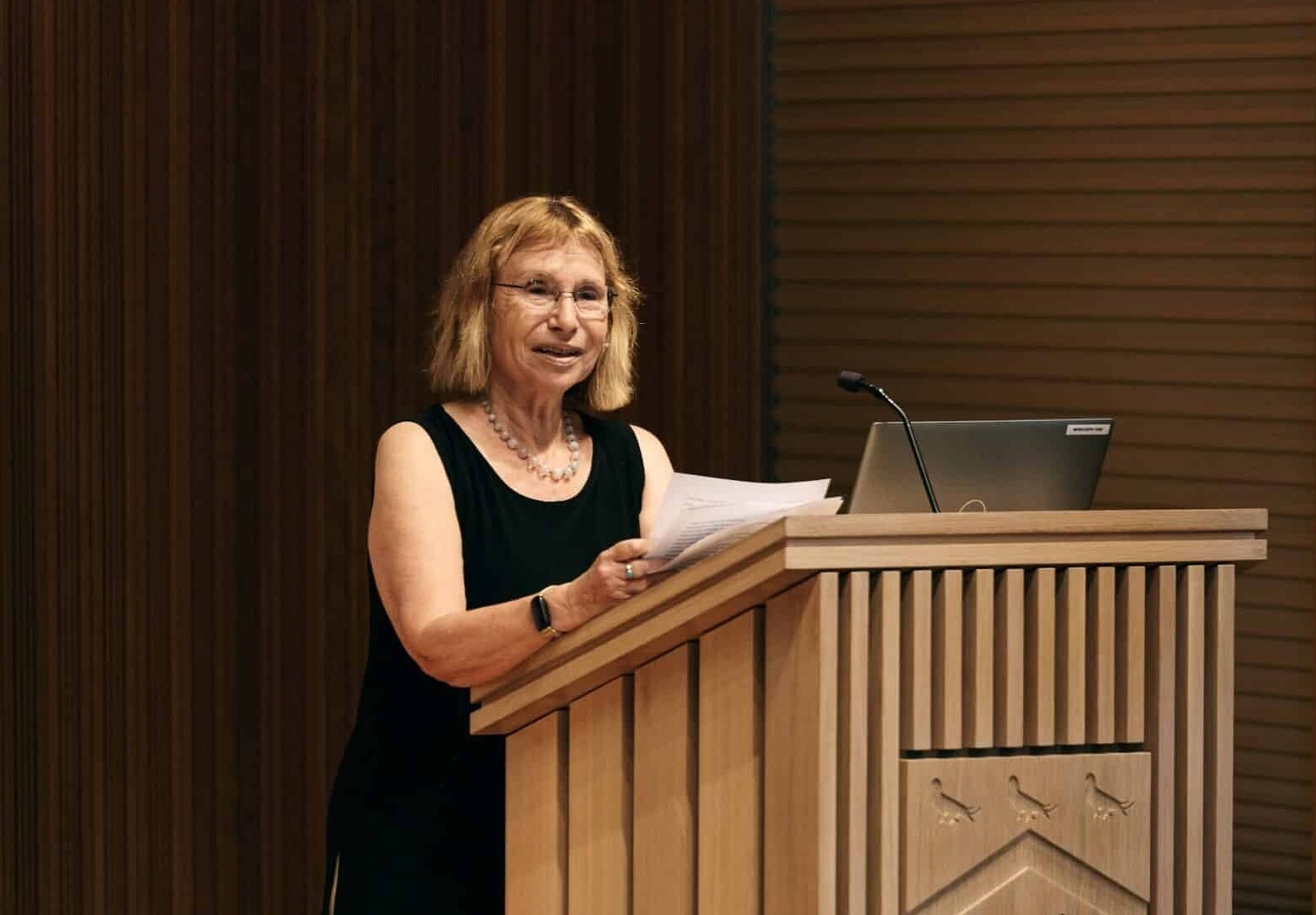
This text was first delivered as a lecture at the Massada Annual Lecture at Worcester College, University of Oxford, in early summer 2026, at the invitation of Naomi Rokotnitz. It appeared in Fathom.
- This text was originally delivered as a lecture at the Massada Annual Lecture at Worcester College, University of Oxford, in July 2026. ↩︎

Fania Oz-Salzberger
Fania Oz-Salzberger is an Israeli historian of ideas and writer, and professor emerita of history at the School of Law and the Center for German and European Studies at the University of Haifa. A specialist in political thought and the European Enlightenment, she is the author of "Translating the Enlightenment" (Clarendon Press, 1995) and "Israelis in Berlin" (Keter/Suhrkamp, 2001), among other works. Together with her father, Amos Oz, she co-authored "Jews and Words" (Yale University Press, 2012).