# 294 / Israel: what makes a majority
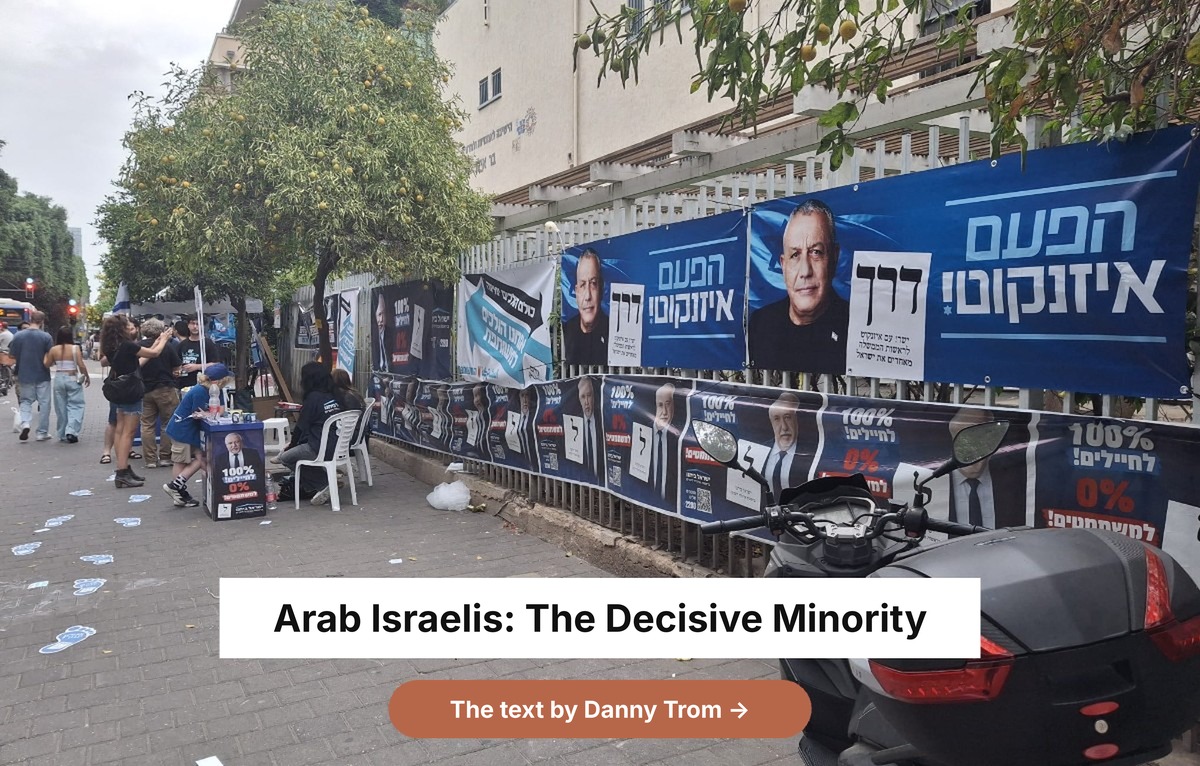
While in the United States reactionary politics has at last suffered a heavy setback, one that augurs major realignments to come, in Israel nothing has yet been settled. For now, what Israeli democracy has expressed through the latest elections remains undecided. What is certain is that Benjamin Netanyahu has lost his majority: his outgoing coalition has fallen from 68 seats to 53. The so-called ‘change bloc’ has not, however, won the elections, with 48 seats out of 120. On paper, 67 members of the Knesset could form an alternative majority, on one condition: that the 19 members elected on the two Arab lists are counted as supporting a government, whether from inside or outside the coalition. This showing, for lists representing 20 per cent of the country’s population, is historic. The deadlock is therefore less arithmetical than political. It confronts Israel with a question that the campaign carefully avoided, along with the Palestinian question: should the majority it seeks be a Zionist one? Or even a Jewish one? The two are not the same: the Haredi parties in the outgoing government do not claim to be Zionist.
Danny Trom, just back from Israel, shows in his latest piece how the current situation lays bare a deadlock rooted in the very structure of Israeli politics. In all, he counts 32 members of the Knesset out of 120 who do not embrace the Zionist project: 13 for Haredi society and 19 for Arab society. The Arab sector, he notes, is shaped by two opposing movements: on the one hand, a continuing economic and social Israelisation; on the other, a Palestinisation that ties it to a people living largely outside the country’s borders. Mansour Abbas’s Ra’am party has gained three seats and, for the first time, given political expression to this process. In its campaign, it put a former senior police official, Yoav Segalovitz, who is Jewish and a Zionist, in second place on its list. Most Arab citizens remain exempt from military service, and no one is calling for that to change. In every other area, Israel stands to gain from the Arab sector’s participation. It is now up to the change bloc to turn this into a political reality, at a decisive moment when 7 October continues to weigh on political choices.
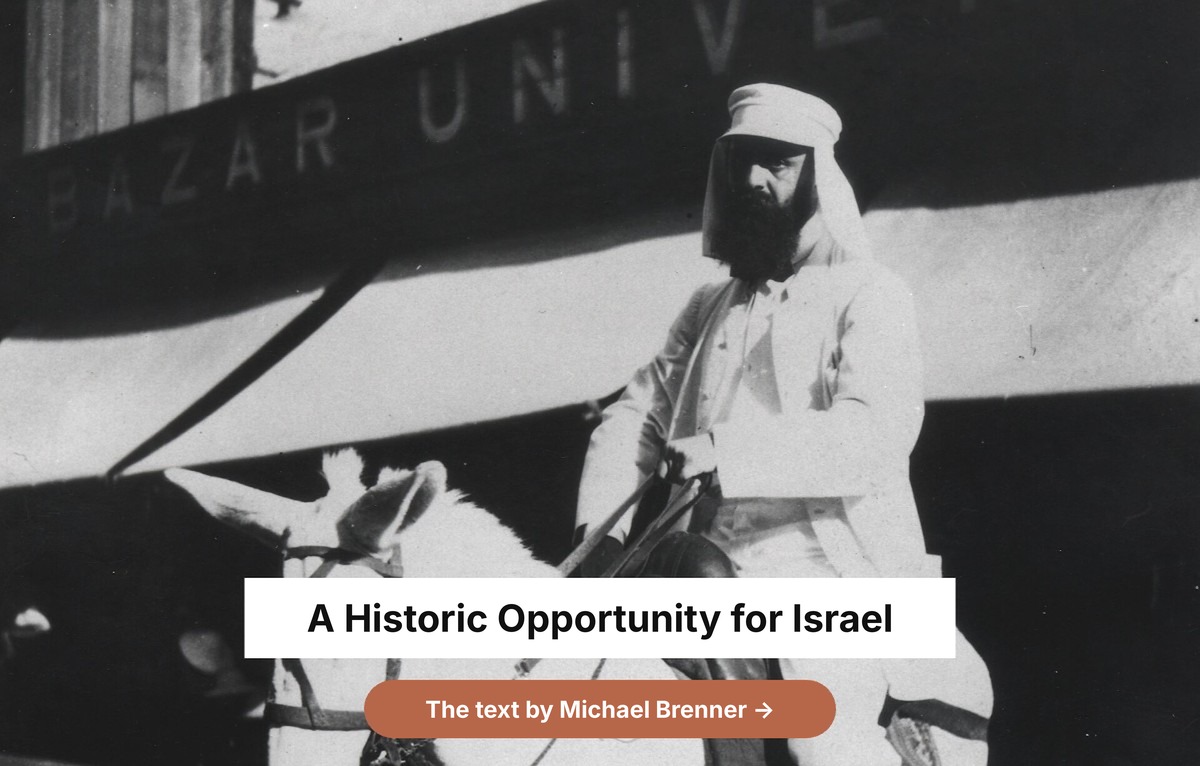
Michael Brenner counts differently. If Israel is conceived as a state of all its citizens, the result is unequivocal: the bloc of the right and the far right has lost the elections. He points to two precedents in which Arab parties weighed on the formation of a majority: the Rabin government in 1992 and the Bennett-Lapid coalition in 2021. At the time, their support amounted to only five and four members of the Knesset respectively. This time, the weight of the Arab parties is a decisive factor. Brenner reminds Likud’s heirs of the words of their founding figure: in The Jewish War Front, Jabotinsky envisaged that a Jewish prime minister should have an Arab deputy prime minister, and vice versa. And he asks what it means to form a majority in a Jewish and democratic state.
Israel, as Danny Trom says, is not about to recover its reputation in Europe. This week we publish extracts from Jean-Claude Milner’s new book, and Milner goes further. Ever since Les Penchants criminels de l’Europe démocratique [The Criminal Inclinations of Democratic Europe], he has accused Western countries of invoking the memory of the Shoah while failing in the obligations that follow from it: the need to fight antisemitism and to guarantee the existence of the State of Israel. In the afterword to Alentours du nom juif [Around the Jewish Name], a collection of texts written over almost twenty years, some of them published in K., he observes that even this reminder no longer carries any weight. The rift that has divided Europe and the United States since 7 October and the war in Gaza has completed the break. For Jean-Claude Milner, it is no longer simply a matter of denouncing broken commitments, but of observing that Europe no longer recognises any obligation to keep them.


sebastien-medianes
Test EN