#288 / Editorial
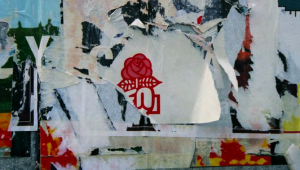
Antisemitism is wrong: on this point, everyone agrees, or claims to agree. But what political reasons do we have to fight against it? In response to this question, following the Dreyfus Affair, French socialism articulated an answer that proved decisive for the formulation of a coherent social-democratic policy. But what remains of that today? Certainly, today’s social-democratic left has inherited the vigilance of its forebears: when the old specter reappears, even if it’s on its own left, it takes offense at the unacceptable and puts a stop to it. When it comes, however, to articulating exactly what a social-democratic policy to combat this antisemitism, which everyone agrees is resurging in Europe, would entail, you could hear a pin drop. This week, Bruno Karsenti analyzes what is sorely lacking on the left today in the political lexicon of socialism: a distinct conception of minority integration capable of responding both to the liberal focus on individual rights and to the reactionaries’ fixation on identity, and of highlighting what integration demands of the majority group. Recalling how this socialist conception took shape, and what role modern antisemitism played in it, as hatred targeting Jews precisely because of their integration, Karsenti shows what is lost when domination becomes the exclusive lens through which social injustice is viewed, and why it is on the Jewish question that the conflict between irreconcilable left-wing factions stumbles.
Related articles
Socialism in the Face of Antisemitism
Who makes the law in Israel?

Photo Essay: Belmonte, a Judaism That Has Remained Alive
Since early 2023, Israel has been in the midst of a crisis triggered by the government’s proposed judicial overhaul. Three years later, with one month to go before the October 27 elections, the crisis has lost none of its intensity: on July 5, after the Court froze appointments to public broadcasting, the cabinet voted unanimously that it would not recognize any decision by the council that the Court was protecting, arguing that the council was misinterpreting the law. Julia Christ spoke for K. with Israeli legal scholar Netta Barak-Corren, who had offered a seminal analysis of the constitutional crisis as early as 2023, to trace the origins of this dizzying question: Who makes the law in Israel, and with what fundamental safeguards? From the first constituent assembly’s refusal to draft a Constitution to the interpretation of the 1992 Basic Laws that enabled the Supreme Court to assert its authority over the legislature, Barak-Corren sheds welcome light on the roots of the institutional conflict and on the political compromises it now threatens.
In Belmonte, Portugal, families have remained Jewish for several centuries without having the right to say so. Since the forced conversions of the 15th century, some fifty of these families have kept Judaism alive in secret – praying in hushed tones in attics, carrying mezuzahs on their persons rather than affixing them to doorposts. “They are Jewish; that should be enough for you,” people still say today. Eric Beracassat’s photo essay and Evelyne Dreyfus’s article trace their story all the way to the synagogue inaugurated in 1996.