#292 / Editorial
The American philosopher Michael Walzer, author of Just and Unjust Wars, in an essay published in the French and Italian issues of K. this week and in English in our partner journal Fathom, describes the choice facing Israelis not as a clash between the right and the left, but between two political approaches. One, the Zionist approach, sought to make Israel “a state like any other.” The other, rooted in a “Judaism of exile” predating Zionism, came to power with the 2022 coalition and unites the ultra-Orthodox—who live within the state as if in exile—and the “redemption activists” of Greater Israel, who advance their agenda through violence in the West Bank and constant blackmail with the threat of unrest. Caught between them, harnessed to the latter like the “Messiah’s donkey” of tradition—the ominous and opportunistic mount of the messianists—Benjamin Netanyahu repeats the old maxim of exile: “The whole world is against us.” In response to the mirage of a “Jewish Sparta,” Walzer confronts Israel with a simple truth: this portrayal of exile is over, and normality remains to be reclaimed.
Related articles
Israeli Elections: What Scenarios Lie Ahead?

A Jewish Aftermath of the 2026 Swedish Elections
Between Ultra-Zionism and antisemitism: Brazil as a Mirror of the World
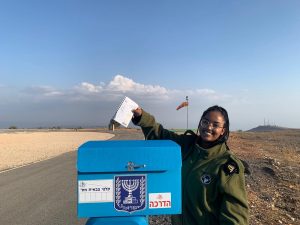
Next Tuesday, Israelis will go to the polls for the first time since October 7 and will have to make a decisive choice on this critical issue. Already divided by judicial reform and the debate over the conscription of the ultra-Orthodox, the country holds its fate in its own hands. David Chemla, author of “Israel Faces Elections Crucial to Its Future and That of the Diaspora” in K last May, analyzes in a new article the mood of voters, the strategies of the political parties, and the possible scenarios for forming a stable future government. He describes the shift in the majority that the opposition is hoping for, much like the mahapach of 1977. The context, of course, is different, and one aspect of this is particularly striking: Golda Meir had resigned following the publication of the Agranat Commission’s interim report on the Yom Kippur War. Three years after the massacre, Benjamin Netanyahu and his government still ostensibly refuse to appoint a state commission of inquiry. “In what kind of world can one separate the concept of leadership from the concept of responsibility?” asked General Avi Gil last week, the longest-serving military secretary to the prime minister in the country’s history. In an emotionally charged interview, he detailed the ignored warnings and failures, denounced falsified documents, and asserted that the coalition’s survival had repeatedly taken precedence over a deal that would have secured the hostages’ early release—some of whom died in captivity. That same majority is now fighting tooth and nail to remain in power. David Chemla concludes his analysis of a nation’s unresolved grief, a nation still denied truth and justice.
Sweden voted on September 13, yet its government has still not been formed. This is a textbook example of the political crisis facing many European countries: each of the two blocs capable of governing there depends on an alliance with a party that rightly worries all citizens committed to liberal democracy, including the country’s Jewish community. On the right, the strategy to soften the image of the Sweden Democrats involved commissioning a white paper, which backfired by documenting the party’s neo-Nazi origins. On the left, antisemitic remarks and justifications for the October 7 attacks led to the expulsion of more than twenty candidates from the Left Party. This is the situation described by journalist David Stavrou, with, in the middle of the political arena, a Jewish community of 15,000 to 20,000 people—now without a political home—that refuses to serve as a tool or bargaining chip to settle disputes between the camps. No party, he emphasizes, could prove that no antisemitic person has ever joined its ranks: what we must expect from it is that it recognize and combat antisemitism when it arises from within its own ranks.
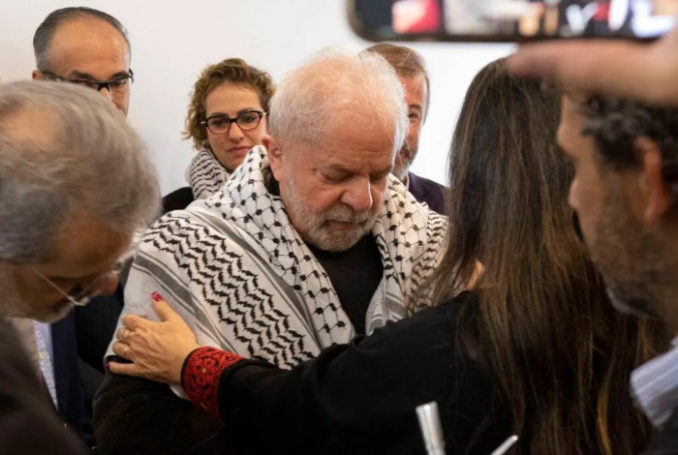
Across the globe, Brazil will be heading into its second round of elections on Sunday. We are resharing Renan Antônio da Silva and Eric Heinze’s piece on Brazil’s complex relationship with its Jewish community and its relationship to Zionism. With comments comparing the Gaza war to the Shoah by the once beloved Lula and with Bolsonaro’s prior ultra-Zionist stance, the Jewish community has felt increasingly alienated from its country’s leadership. Brazil, once a refuge for Jews and Arabs, is now facing rising divisions over the Israel-Palestine conflict, the country’s shifting policies and its antisemitic past rising to the surface again.