Who makes the law in Israel?
Interview with Netta Barak-Corren
Israel goes to the polls on October 27, still at war on several fronts and still in the midst of the political crisis that began in early 2023 with the proposed judicial overhaul. Netta Barak-Corren, holder of the Chair of Human Rights at the Hebrew University of Jerusalem, who in March 2023 published an analysis that has become a standard reference on this reform and on what each side had right and wrong, takes us back to the origins of the crisis. When did the Supreme Court begin to consider that it had the right, and the duty, to overturn laws passed by the Knesset? On what legal basis did it do so? How did the Knesset react? And why, in the specific case of Israel, is judicial review of legislation perceived as an abuse of power? These questions strike at the heart of any democratic society, for they concern equality before the law and the differences that matter enough, within a given society, to entitle individuals to special rights.
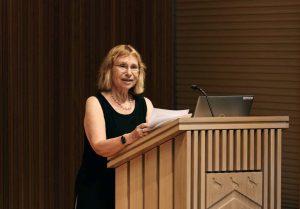
Netta Barak-Corren is Professor of Law at the Hebrew University of Jerusalem, where she holds the Haim H. Cohn Chair in Human Rights. She read law and cognitive science in Jerusalem, took her doctorate at Harvard, and clerked for Dorit Beinish, then Chief Justice of the Israeli Supreme Court. Her work applies empirical and behavioural methods to constitutional, public and international law, and she directs an ERC project devoted to building an empirical approach to constitutional law. She has taught at Chicago and at Penn, and will be at Yale next spring.
In early 2023, when the government presented its judicial overhaul, she published a long paper examining the claims of both camps and asking which of them held. It was translated from Hebrew into English and then into several other languages, and circulated well beyond the legal profession. Its conclusions satisfied neither side: much of the case against the Supreme Court is sound, she wrote, and the government’s plan answers none of it while dismantling the separation of powers. She has since argued that the deadlock should be handed to a newly elected constituent assembly.
A month before the crucial elections in Israel on 27 October, we asked her to go back further than the crisis. Israel has no constitution because the assembly elected in 1949 to write one decided against it; the Basic Laws that took its place were passed by ordinary majorities, and the Court’s authority over the legislature rests on an inference drawn from two of them. What did that arrangement make possible, when did it start to fail and what can it no longer hold?
*
Julia Christ: To begin, I would like you to explain to us the institutional machinery of the Israeli political landscape. We all know that there is a Knesset, a Supreme Court and a government, but that is about all we know — and Israel is quite particular in this respect.
Netta Barak-Corren: The Israeli Knesset is composed of 120 members, all of whom are elected on the basis of party lists. The whole of Israel forms a single electoral district, so we have no geographical or residential constituencies. No member of the Knesset is elected in a personal capacity; they are all elected as members of parties.
So when Israeli citizens go to the polls, as they will on 27 October, they cast a single ballot for a party of their choice. This is worth emphasising, because in many countries, and if I am not mistaken this includes France, voting involves more than one choice. Israeli citizens have only one choice to make, and that is a party.
Julia Christ: One vote, for one party. And a government only stands if it commands 61 of those 120 seats. What does that arrangement produce?
Netta Barak-Corren: On the basis of the election results, 120 members of the Knesset are elected through parties, and those parties then have to form a coalition government. Israel has a parliamentary system of government, not a presidential one, and there is no separation of powers between a president or a cabinet and the parliament. The cabinet is constituted on the basis of the confidence it must secure from the Knesset.
There is also no possibility in Israel of forming a minority government at the outset. The incoming government has to win at least 61 votes in the incoming parliament in order to be formed. That government is then the executive of the country.
Julia Christ: And the prime minister? Seen from outside, the prime minister looks like the centre of the whole system.
Netta Barak-Corren: The prime minister of course receives a great deal of press attention, but it is very important to know that under the Israeli constitutional regime the prime minister is first among equals. The prime minister has no unique constitutional power and, again, is not elected specifically for the job. The prime minister leads the government — the executive — and directs it, as the executive directs all the organs of the state.
Julia Christ: You say “the executive”. The word does not cover the same thing everywhere.
Netta Barak-Corren: No, and when we say “executive”, different things come to mind for people living in different countries. Israel has largely followed the British model, in which alongside the elected government there is a professional, tenured civil service. Israel’s executive is therefore composed of a thin political layer at the top — the prime minister and ministers, who form the cabinet — while almost the entire apparatus beneath the ministers is a professional, tenured civil service. There are a few exceptions, but this is broadly the structure of the executive.
Each minister can usually appoint a small number of positions of trust, which are typically filled by political appointees, though not always: ministers sometimes choose to appoint professionals to those positions. Beyond that, the entire apparatus of each ministry is professional, follows the doctrines of the civil service, and is apolitical by code of conduct – civil servants must not belong to any party.
These, then, are the two so-called political branches — one of which, as we have just seen, is deeply professional beneath its political layer.
Julia Christ: Which leaves the judiciary.
Netta Barak-Corren: Israel has grown exponentially since its founding in 1948. Back then there were 600,000 citizens; today we have passed ten million. But the Israeli system — and this applies to the political layers as much as to the judicial one — has remained very similar in shape and is relatively compact.
The Israeli judicial system has lower courts, intermediate courts and the Supreme Court. Unlike many other countries — France, for example, with its Constitutional Council, a supreme court dedicated to constitutional matters — Israel has only one Supreme Court, and that court handles all the highest appeals and all constitutional petitions for the entire country. There is no specialised top court to take some of that burden away.
Julia Christ: So you have no supreme court for administrative matters, for example — like our Conseil d’État in France?
Netta Barak-Corren: We do not. That is why I stress the differences. What we do have is a high labour court, a high rabbinical court, a high Muslim court and a few additional systems of religious law, although these deal with a much smaller caseload and occasionally the Israeli Supreme Court hears special appeals even from these high instances.
All other civil, criminal, constitutional and administrative appeals are channelled into a single Supreme Court. As you can already see, this is an enormous undertaking for the court. It is one of the busiest and most overworked supreme courts in the democratic world: more than 10,000 new cases are opened every year.
Julia Christ: Ten thousand a year — but a supreme court normally chooses what it hears.
Netta Barak-Corren: Unlike many supreme courts that can select their cases — the most famous example being the Supreme Court of the United States— the Israeli Supreme Court has no choice whether to admit a large share of the cases it receives. Apart from cases that started in the lower courts, or that have already used the right to a first appeal, the court has to hear all appeals, mostly cases that started in the intermediate courts (this includes all administrative appeals). In all constitutional cases the Supreme Court is the court of first instance (it sits as the High Court of Justice): there is no lower court that examines the petition at a lower level, gathering evidence or hearing witnesses. For constitutional cases the Supreme Court is the first and last instance.
Julia Christ: Let me stay on that point, because it matters for our readers and it is one you have written about at length. In this configuration the Supreme Court — sitting as the High Court of Justice, that is, as first and last instance in petitions against the state — decides constitutional questions with no fact-finding stage at all: no witnesses, no adversarial expert evidence, nothing but written submissions. Why is that, in your view, a more serious problem than it appears?
Netta Barak-Corren: First, I think this is quite a serious problem once you come to think about it. Law is not a theoretical argument between scholars. It is a system designed to resolve disputes by normative arguments, based on legal authorities, and subjected to an evidentiary test to determine whether the argument applies in a specific set of circumstances. You take that from law, and you’re left with a hollow system of justification. It’s baffling to think that what would have been considered outrageous in every other field of law has come to be the norm in the one field that can collapse governments and send masses to the streets in protest.
Julia Christ: So, within those ten thousand cases, how many are constitutional?
Netta Barak-Corren: Constitutional cases are in fact only a fraction of those 10,000 proceedings — about 200 a year. If you add administrative cases, depending on how you count and on the year, you might reach a few hundred more. But the vast majority of what the Supreme Court does is civil and criminal law coming up from the lower courts. It is a very busy court.
Julia Christ: Let us turn to constitutional matters, and to the question of who, in Israel, makes the law. One would assume that law is made by the Knesset and that a constitution constrains the legislator. But we know that Israel has no constitution: there are only the Declaration of Independence and the Basic Laws, voted by the Knesset itself, often by simple majority and without any special procedure. And if I understand correctly, the court initially did not hold that the Declaration of Independence amounted to a constitution?
Netta Barak-Corren: Let me put this in order. When Israel was established in 1948, the Declaration of Independence was drafted by Ben-Gurion and the interim and unelected institutions of the Zionist movement. The drafters understood the problem and had a solution: the new state needs an election, and it needs a constitution. And so, while the Declaration of Independence is mostly remembered for its poetic and declaratory passages, it also contains one legal paragraph.
That paragraph provides that elections for a Constituent Assembly will be held no later than October 1, 1948, and that the Assembly will write the constitution of the new country. That date was of course not met, because the country was thrown into a war of independence. But the elections were held — delayed, but held — in 1949, and a constituent assembly was voted in. Israeli citizens, in the very first elections held in Israel, voted for a body that would give them a constitution.
That constituent assembly began to deliberate. And within a few months, it decided that it did not want to write a constitution. That is the origin story of our constitutional state.
Julia Christ: So what did it put in place instead?
Netta Barak-Corren: In a very famous decision that we teach students to this day and that laid the foundation for the country’s constitutional history — the Harari decision, named after the member of the Knesset who proposed it — the Knesset decided, and this was a decision, not a law, that instead of a constitution it would enact a series of Basic Laws, each of them a chapter of the future constitution of Israel, and that one day all these chapters would be brought together into a constitution. The assembly then changed its name: elected as the Asefa Mekhonenet, the constituent assembly, it renamed itself the First Knesset.
From that moment on, the parliament has been known as the Knesset — but it was the act of the Asefa Mekhonenet, the constituent assembly, to change its name, to change its purpose, and to transform itself from a constituent body into a legislature that supports a government. There are many reasons for this move, but the important thing to know is that the First Knesset did not enact any Basic Law at all.
Julia Christ: Then on what law was the Supreme Court ruling in those first years?
Netta Barak-Corren: When the first cases came before the Supreme Court, there were no Basic Laws. All the Supreme Court had to rule on, as a matter of law, were British laws, and beneath those British laws a further layer of Ottoman laws — because the land had been governed by a succession of foreign rulers, none of which fully erased the law of its predecessor, but which typically amended it in places, added other laws on top of it, and reformed it in parts but not in whole. The British, for example, never amended the property law, the land law, left behind by the Ottoman Empire; they did, of course, do all sorts of other things.
The new country therefore inherited those layers of law, Ottoman and British, and the First Knesset now had to begin creating its own. But it did so in stages, because you cannot simply declare all previous law null and void — that would leave you in a state of anarchy. So one of the first acts of the transitional government was to declare that all law valid in the State of Israel on the day of its birth would remain valid until the Knesset did something else with it.
Julia Christ: And the Declaration of Independence itself? Did it carry legal force?
Netta Barak-Corren: When the Supreme Court received its first cases, already in 1948 and 1949, it was deciding them on the basis of law that the Knesset had not legislated. And one of the first and most fascinating decisions the Supreme Court had to make was precisely whether the Declaration of Independence — the first formal act of the new Jewish state — was law, and, beyond that, whether it was the constitution. Some elements of the Declaration look very much like a constitution: it speaks of rights, of the commitments the state undertakes towards its people. And the Supreme Court said no. The constituent assembly will have to write a constitution; this is not one.
Julia Christ: So to this day the Declaration of Independence is not regarded as constitutional material, or even as law?
Netta Barak-Corren: Well, the times changed. First, in 1992 the Knesset constituted the two Basic Laws of Human Rights, and these laws explicitly recognised the Declaration as a source of interpretation. Then, the Supreme Court affirmed this elevated status and began to draw more and more on the declaration in its decisions. One of the judges in the present Supreme Court argues that the Declaration binds the Knesset and limits its ability to enact new Basic Laws.

Julia Christ: When does the first Basic Law arrive?
Netta Barak-Corren: The first Basic Law was enacted in 1958, a decade after the founding of Israel: Basic Law: The Knesset. It sets out in orderly fashion all the matters relating to how elections are held, the status of the parties, who is eligible, and what kinds of law can be enacted by what majority. But it is very thin: most of the rules that actually apply to the Knesset and to elections are dealt with in ordinary legislation and in the Code of the Knesset. The Basic Law lays out the structure, and it keeps the constitutional promise — the structure, the drafting style and the level of generality are very constitution-like, for the most part. It is a text of principles more than detailed arrangements.
Julia Christ: And then one Basic Law follows another. What do they cover?
Netta Barak-Corren: The Knesset embarked on a process of enacting one Basic Law after another, every few years constituting a further one. Until 1992, all the Basic Laws enacted were what we call institutional: they established the Knesset, the government, the office of the president — who is largely symbolic in Israel — and there is a Basic Law on the army and a Basic Law on the budget. They define the institutions of constitutional law.
Then, in 1992, for the first time, the Knesset legislated two human rights Basic Laws. Basic Law: Freedom of Occupation, which is very thin and really only protects the freedom to work in an occupation of your choosing — to start a business, to apply for a job, to study something that will lead you into the occupation you have chosen. And the second, which has become far more dominant, Basic Law: Human Dignity and Liberty, which contains a collection of rights.
Julia Christ: Which rights, exactly — and which ones are missing?
Netta Barak-Corren: Importantly, there is no constitutional legislation protecting freedom of speech, freedom of religion or equality. The Knesset — which deliberated at length over these Basic Laws — deliberately chose to begin with a different set of rights: the right to life and bodily integrity, the right to privacy, the right to freedom of movement, and the right to human dignity, which was the subject of a great deal of discussion. Very few rights, then.
Julia Christ: And then the Court takes hold of these two laws.
Netta Barak-Corren: In 1995, the Supreme Court had its first occasion to interpret and apply these new Basic Laws, and it declared that what the Knesset had done in 1992 was — in the court’s own words — a constitutional revolution. The Knesset, it said, has genuinely changed our constitutional fabric: not only did it give us, for the first time, Basic Laws protecting human rights, but it also created a new constitutional structure, because for the first time the Knesset stated in those Basic Laws that no law shall be enacted that infringes one of the rights just enshrined unless it serves a compelling purpose and is proportionate. That formula of proportionality, found in many European instruments — from constitutions to international treaties such as the European Convention on Human Rights, which established the European Court of Human Rights — and developed by many courts, was embedded in 1992 in those human rights Basic Laws. On this basis the Supreme Court held that there had been a rupture in our constitutional development, and that from that moment on the Supreme Court had the authority to declare a law unconstitutional.
That eventually became an enormous source of tension between the Supreme Court and the Knesset. But it is very important to note that when the Supreme Court hands down this ruling in 1995 it sits in an extended panel, with the incoming President of the Court, Barak, and the outgoing President, Shamgar. And for a few years the Knesset actually supports it. In 1994, for instance, the Knesset decides in a special session to amend both Basic Laws together: it wants to expand the “Violation of Rights” clause and to add a further test to it, a test of conformity with the values of Israel as a Jewish and democratic state. And the Minister of Justice stands on the floor of the Knesset and says: my friends, fellow members of the Knesset, today we are doing something fundamental and great. We are amending these two Basic Laws; we are correcting an error we made as a Knesset in 1992, when we did not give them their due respect. We now stand here, eighty members of the Knesset, two thirds of the house — because in 1992 there were very few people in the room. We are correcting that error, we are aligning ourselves with other constitutional democracies, we are protecting human rights, and we are giving the Supreme Court the power to strike down laws that do not conform to those rights.
Julia Christ: So they agreed.
Netta Barak-Corren: They did — hard to imagine now — and then they voted on it.
Julia Christ: But does any text actually say that this power belongs to the Supreme Court?
Netta Barak-Corren: Nowhere in the Basic Laws does it say explicitly that the power of judicial review is vested specifically in the Supreme Court. It is implied, because under another Basic Law, Basic Law: The Judiciary, the Supreme Court is designated the highest court of law and is expressly given the authority to bind the other branches of government by its decisions and to grant any remedy it deems fit for the achievement of justice. And so, by reading both clauses together, one arrives at the understanding that it is the Supreme Court that exercises the power of judicial review, because it is the court of last resort that can bind the government.
It takes years before the Knesset begins to think it made a mistake, that it should not have given the court that power, that the court has overreached and extended its power to a degree that is harmful to the relationship between them.
Julia Christ: So they agree to the Supreme Court’s powers and then they decide not to agree. What happened? What did the Supreme Court do to give the Knesset the impression that it was now overreaching? When did this begin — and is there something right in that critique? Because you wrote a very controversial and very important article at the height of the constitutional crisis, saying that some of the points of criticism are entirely correct1.
Netta Barak-Corren: It is very hard to put one’s finger on exactly when the shift happens. The Supreme Court begins to take on more and more cases that the Knesset — or powerful forces within the Knesset, not necessarily the whole of it — consider to be political in nature. For example, the Supreme Court begins to adjudicate whether the exemption of the ultra-Orthodox from mandatory military service is constitutional, and that creates a huge stir among the ultra-Orthodox parties. They argue that they deliberately did not put equality into Basic Law: Human Dignity and Liberty, precisely because they did not want to give equality heightened protection.
Julia Christ: The omission of equality was one precaution. Was there another?
Netta Barak-Corren: A very important provision of Basic Law: Human Dignity and Liberty is the “Retention Clause” (Article 10), which provides that all laws in force at the time of the passage of the Basic Law remain valid regardless of the Basic Law, shielding them from judicial review. It was deliberately included in order to protect aspects of Jewish law built into the laws of the state, including the law of marriage and divorce, the chief Rabbinate, and national laws like the Law of Return, which gives the right to acquire citizenship to people of Jewish descent, but not, for instance, to family members of Arab citizens of Israel (who need to go through a different process to obtain status and citizenship in Israel). These laws, too, could have raised equality issues, and Knesset members did not want to embroil these laws in litigation.
Julia Christ: So the religious domain had been carved out in advance. And yet the conflict happened anyway.
Netta Barak-Corren: The Knesset thought it carved these issues out but discovered that the Supreme Court is nevertheless hearing constitutional challenges to the draft; to Israel’s immigration and entry policy; to laws restricting the import of non-kosher food; to whether municipalities must add Arabic to their street signs on grounds of equality, among other cases.
Julia Christ: Where does the rift really run, then?
Netta Barak-Corren: Many of the cases that begin to create a rift between the Supreme Court and the Knesset concern the court’s growing involvement in matters of religion and state — from strictly religious questions, such as the rules of kashrut, to more political ones, such as conscription, to national questions bearing on security and on Arab–Jewish relations. These are deeply political, explosive questions, and the Knesset begins to feel that its hard work crafting compromises and making policy that passes political muster goes down the drain when the Supreme Court comes along, insists on having the last word, and holds Israel to a standard that the politicians cannot in fact meet, undoing and unravelling what they have built.
And with every such decision another layer of frustration builds up, until we reach a series of explosions. If 2023 is the earthquake, then those of us working in the field have felt the seismic movements long before it happened. There were many smaller tremors, again and again, leading up to this crisis.
Julia Christ: What I take from what you say is very interesting from a political point of view. If I understand correctly, the Jewish state of Israel is a state made up of minority groups, and it had a body of law that recognised it as a state of minority groups — Arabs, religious people, non-religious people, various other minority groups. And then the Supreme Court came along and said: you enacted a human rights law, and although you did not write the word equality into it, we will use the term equality as if Israel were a state of individuals and not of minority groups.
Have I understood correctly that there is a very liberal interpretation of the notion of equality at work here, one that treats the Israeli population as a collection of separate individuals, whereas Israeli society’s self-understanding is not one of individuals but of groups?
Netta Barak-Corren: It is more complicated than that, and I would not press those charges against the court. Israel never had a body of law recognising it as a multicultural country – so the Court did not unravel a pre-existing group-structured constitutional conception of Israel.
Julia Christ: No, it is not a charge against the court; it is simply to understand why the question of equality is so important. One can understand the term equality in two different ways. There is equality, or equity, between groups; and there is equality between individuals.
Netta Barak-Corren: To answer this question we first need to understand the presence and absence of equality as a term in Israeli constitutional law. First, the term equality does not appear in Basic Law: Human Dignity and Liberty. Not that equality is absent from every Israeli Basic Law. Under Basic Law: The Knesset, the elections must be equal, and the Supreme Court had been interpreting what equal elections require many years before the Bank Mizrahi decision of 1995, and indeed before the 1992 Basic Law was constituted.
In the field of human rights, what the Supreme Court does — like many supreme courts before and after it, I should say — is to interpret another term — “human dignity” — and ask the deeper question of what it means to treat people with dignity. And the answer the Supreme Court arrives at is that the government must treat each person as equal to every other, because you cannot treat people with dignity if you do not treat them as equals. Human dignity grows, under the court’s interpretation, to be a “big tent” for human rights. The Court derives not only equality from dignity, but also freedom of speech, freedom of conscience and religion, and the right to family life.
Human dignity thus becomes an all-encompassing concept — under the theory that everything dear to human life, and what constitutes us as humans, is human dignity. The result is that the Basic Law suddenly covers precisely those fundamental rights that the Knesset deliberately chose not to include in it. So human dignity becomes an Achilles heel from the Knesset’s point of view and a Trojan horse from the point of view of liberal impact litigation groups. And, because the whole edifice is grounded in a law meant to protect the rights of individuals, what comes out of it is mostly decisions concerned with the protection of individual rights.
Julia Christ: And group rights?
Netta Barak-Corren: That is not to say that group rights have no place in Israeli law, or that the court has not preserved them in all kinds of cases and sometimes even expanded them. It has — for example, when it obliged municipalities to translate their street signs into Arabic, in recognition of the Arab minority’s group right to language and inclusion. But this has not been the most common move within the framework of human rights, and under this Basic Law in particular.
Julia Christ: The way the 2023 earthquake was represented was to say that the Supreme Court overrides the will of the people, which is represented in the Knesset because the Knesset is elected by the people. But the Knesset often produces very complicated majorities, so that in the end it is a small minority, often a religious one, that expresses not the will of the people but that of a minority dictating policy to a majority government. So what exactly are we talking about when we speak of the will of the people, represented in the Knesset and overridden by the court?
Netta Barak-Corren: Yes. First, I think you touch on a very important point, which is that the parliamentary and coalition-based system in Israel has been a very complicated one, which often places the balance of political power in the hands of very few rather than of the majority. This produces decades-long frustrations on the part of the political majority — both among the citizenry and sometimes among parties in the Knesset — because the way the political game is structured frequently prevents the majority from obtaining everything it wants.
Julia Christ: You have described this elsewhere as a toxic cocktail: a Knesset weak because it is dominated by the government, and a government weak because it depends on small parties that can bring it down at any moment.
Netta Barak-Corren: Yes, and you can look at this from different angles: it may be a bug or a feature of Israeli political life. As far as the ultra-Orthodox are concerned, this is a feature: the fact that they have been a permanent participant in almost every coalition government since the 1980s gives them a very strong hold over the Israeli political system. This is also a bug, because this stronghold leads to profound divergences from the majority position on the draft, Shabbat laws, kosher laws, marriage and divorce, and so on. In general, when people equate acts of the government or the Knesset with the rule of the people, in Israel, one should always ask: who are the people you are referring to?
Julia Christ: Is that an argument against the system as it stands, or for it?
Netta Barak-Corren: It’s both. I think there is a methodological point about democracy that is fair to make: democracy was never promised to be the best of all possible systems. It was promised to be better than its alternatives. This is how democracy is done in Israel, and this is the only way the actual people who are elected to do this job have found to form a coalition that will function and will take care of Israel’s problems in general and lead the country onwards. And they have done a decent job of it, for the most part, historically speaking, at the price of sacrificing certain issues. You cannot always get what you want; they chose to sacrifice these particular issues, and collectively this is a bad outcome – when it comes to these issues. To change this, one should change the electoral system in Israel.
Julia Christ: And seen from the other side?
Netta Barak-Corren: Well, we already looked at it from both sides, but let me add the Supreme Court to this mix— when the Court intervenes in controversial matters, it is not always acting against the will of the people. Sometimes it actually speaks to the wishes of the majority of Israelis in these cases, for example when it limits the power of the ultra-Orthodox over other segments of society. Here the politicians will reply that politics is not a single-issue game, the pieces depend on one another. We have to sacrifice issue A in order to obtain issue B. When the Court interferes in this delicate balance by taking this single issue out — the whole building collapses.
And so, this struggle and friction can go on, as this is a real and lasting problem. A united coalition working together under coalition discipline, where all members must vote together, often hands the power of the coalition majority to a minority of the Knesset, which can then steer the coalition in directions that are not merely contrary to the will of the majority but perhaps objectively harmful to it, and to Israel’s fate overall.
Julia Christ: We stopped at 2023, but the friction you describe has since produced something without precedent, and I would like you to take our readers through it. On 5 July this year, after the Court had frozen the appointments to the broadcasting regulator and ordered the previous council to remain in office, the cabinet resolved unanimously that it would not recognise any decision that council might take. What strikes me is the form of the argument: the government did not say that it was disobeying. It said that the rule of law means that no branch stands above the law, the Court included, and that a ruling contrary to the explicit text of a statute is therefore not an exercise of legitimate judicial review. So the claim is not one of disobedience but of interpretation. Where there is no written constitution, no second chamber and no strict separation between the executive and the legislature, compliance with judicial decisions rests entirely on a convention. What happens on the day that convention ceases to be shared — is there any institutional device capable of restoring a constraint, or must one accept that at that point only politics decides?
Netta Barak-Corren: In every country, compliance of the executive with the decisions of the judiciary is a matter of consent and conventions. When we lose this, we have a crisis of governance, which is what we have been having in Israel for the better part of 2026. Restoring this constraint will require the government’s willingness to constrain itself again, coupled with a strategic court that will wisely decide when to play ball and when to play hardball. Unfortunately, it’s not clear to me that the two main parties to this conflict at the present moment have what it takes to restore trust and conventions of respect in their relations.
Julia Christ: Is the question of whether the Supreme Court should be the final arbiter one that is playing a role in the current election campaign?
Netta Barak-Corren: Oh, certainly. Yes, for sure. It is definitely one of the things driving the parties’ campaigns. In that sense, we have not seen the last of the judicial reform, or of the constitutional crisis. It depends on the electoral results, of course, but I anticipate that we are in for a great deal more controversy and further reforms after the elections — if a new government actually succeeds in forming, because we have also had years of deadlock in which no government could be formed at all.
Julia Christ: A final question, and one our readers will need mapped out. You say the issue is driving the campaigns — but what exactly is on offer on 27 October? Which parties are going into this election committed to curbing the Court’s powers, which to restoring what was undone, and which have no settled position at all? And is any of them putting forward something constructive — a written constitution, a second chamber, a new mechanism for judicial appointments — rather than simply taking powers away?
Netta Barak-Corren: In general, the opposition is campaigning for a written constitution and for undoing some of the reforms enacted by the outgoing coalition, like the changes made to the judicial appointment mechanism. The parties forming the outgoing coalition are quite militant towards both the Court and the Attorney General, promising to continue what they started. This is why I see us walking into more controversy after elections. The most acute challenge for Israel will be to find an agreement that can actually work – in the dual sense of serving the constitutional and governability interests of the country for years to come, while satisfying the most acute concerns of the key players on the right and left. It’s going to be hard work, which I have previously recommended delegating to a new Constituent Assembly – and have outlined its general desired structure elsewhere. I hope the incoming government will be interested in shouldering it, rather than squashing the other side. If it does, this crisis can be turned into an opportunity.
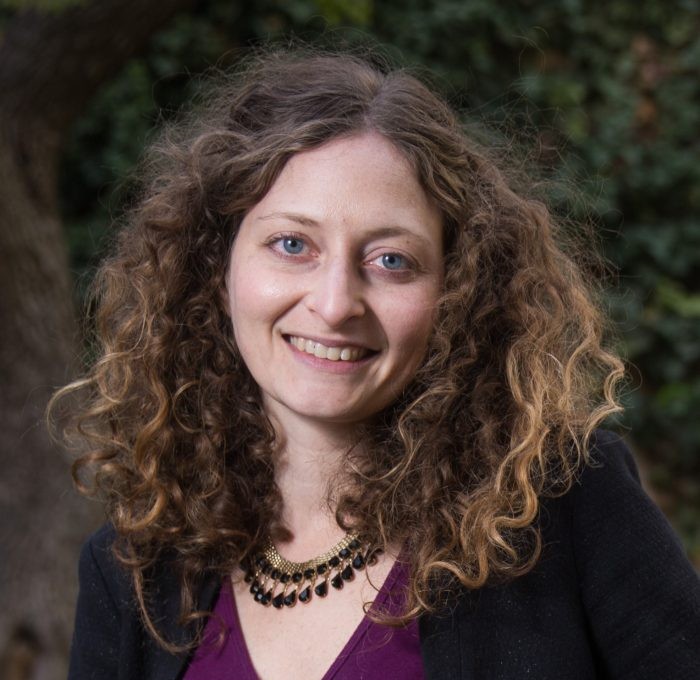
Netta Barak-Corren
Netta Barak-Corren is the Haim H. Cohn Chair in Human Rights at the Faculty of Law and the Federmann Center for the Study of Rationality, Hebrew University of Jerusalem. She is also the Principal Investigator of the ERC-funded project EmpiriCon: Developing an Empirical Approach to Constitutional Law, the inaugural Israeli Ambassador for the ERC, and an Elected Member of the Israel Young Academy.

Julia Christ
Julia Christ is a philosopher and research fellow at the CNRS. A specialist in critical theory, she works on the transformations of universalism and liberalism in dialogue with European Jewish history. Part of her research focuses on the place of Jews in modern political constructions, antisemitism, and the ways in which the Jewish perspective challenges classical categories of political thought.