#291 / Editorial
Last week, K. published Julia Christ’s essay on the film. It highlights this quote from Adorno, written to Benjamin in 1940: “Whether or not a human being can have experiences depends, in the final analysis, on the way in which he forgets.” The essay distinguished between two ways of forgetting. The first rejects reality in order to protect consciousness, so that what has been experienced never becomes the past. The second incorporates what has been experienced into a narrative, where it becomes the past and can then be forgotten. A week after the October 7 commemorations, the question may not be whether the work of remembrance has an end. The question is rather what kind of forgetting it paves the way for, and whether this forgetting will make a new political experience possible. The four essays in this issue take up this question, each from a different vantage point: an archive, a lineage, a biography, and a testimony.
Related articles

A Crime Beyond Words
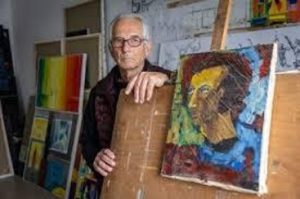
The World of Michael Kovner
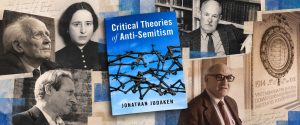
On the limitations of a critical theory of antisemitism rooted in the categories of the radical left
Three years later, I no longer remember what it was like before
For K., the historian Annette Wieviorka returned to the transcripts of the Nuremberg trials to count the occurrences of the word “genocide.” What the records preserve does not match what memory has retained of the trial. The word was brand-new at the time, and it was uttered only twenty-one times over ten months of hearings. It referred in turn to the fate of the Czechoslovak elites, the Poles, the Norwegians, and, almost as a last resort, that of the Jews. Its final occurrence comes from Alfred Rosenberg, theorist of Nazi antisemitism, speaking from the dock, to say that while he “welcomes the idea that the crime of genocide be banned by international convention,” it is “on the condition, of course, that such genocide not be permitted in any way in the future against the German people”…
Abba Kovner, hero of the Vilna Ghetto Uprising, contemplated revenge before testifying at the Eichmann trial. Sociologist Danny Trom had already written a profile of him in K. This time, he went to meet his son Michael, a landscape painter. A silent chasm separates the father’s path from the son’s horizon: “The Shoah is outside my painting,” says Michael Kovner. What if, from father to son, the meaning of what the State of Israel is becoming were played out as it passes from one generation to the next? This text is illustrated by his paintings. It was read last December at the Théâtre de la Concorde in Paris, during K. On Stage.
Can a concept be admitted to the company of others without giving up what it was coined to name? This is the question at the heart of Daniel J. Solomon’s unsparing review of Jonathan Judaken’s Critical Theories of Antisemitism, a book that proposes replacing “antisemitism” with “Judeophobia” in the hope of keeping Jews and the activist left under one roof. Solomon goes back to the sources and shows what the book passes over: the antisemitism in Arendt’s letters from Jerusalem, Poliakov’s work on hostility toward Jews in the Islamic world, and a tradition of inquiry into the antisemite far older than the Nazis. He ends the review with the suggestion that Judaken’s book is best read not as scholarship but as a document of a very old Jewish aspiration, the dream of dissolving into a majority society.
Finally, there is a kind of forgetting that is not a matter of choice. Three years after October 7, the Roman historian Serena Di Nepi no longer remembers what “before” was like. She shared her testimony with the Italian edition of K., and we are publishing it here in English.