#287 / Editorial
What becomes of a name once it is detached from what made it famous? Each of the three essays in this issue explores, in its own way, the problem of reputations that, through constant circulation, eventually become worn down by their misuse.
Related articles
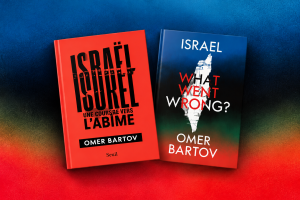
From Historian to Polemicist: What Went Wrong with Omer Bartov
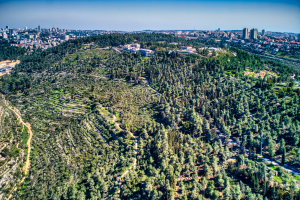
Family Reunification in Jerusalem
Morocco Reflected in Its Jewish Heritage (2)
It took Omer Bartov decades to establish his reputation in the academic world: a renowned historian of the German army on the Eastern Front and a specialist in the fate of the Jews of Galicia, he has made a name for himself through the rigor of his work. Yet, in Israel: What Went Wrong, he has ventured into an entirely different arena: that of the controversies surrounding the war in Gaza, and the use of the term “genocide” outside the binding norms of academic discourse. The American historian Jeffrey Herf, in an essay that has caused quite a stir, takes aim at this “transfer of prestige” through which Bartov the historian becomes a foil for Bartov the polemicist. Above all, he shows how little remains—once the transformation is complete—of the rigor that had earned Bartov a hearing.
Theodor Herzl’s reputation—which has not only traveled far but has also attained the status of a founding legend—has undoubtedly undergone some distortions. Unless, as is to be expected with the legacy of a revolutionary, it has been diluted and simplified into a consensus-driven portrayal. On August 5, in the midst of an election campaign, a low-key ceremony was held in Jerusalem: the transfer of the remains of Theodor’s grandparents, Shimon and Rivka, from Belgrade to Mount Herzl. Danny Trom examines what was at stake in this act of repatriating the ancestors, through which the restoration of a “continuity” was solemnly affirmed, without anyone in Israel apparently finding fault with it. It is a strange tribute to the founding father to cast him as the direct heir to a religious tradition he knew nothing about, and to pretend to forget that the Zionism of this modern Jew was, in fact, a break with that tradition. As the Israeli elections approach, Trom reminds us that it is precisely this origin—European and of uncertain identity—that the narrative of indigenousness, which is on the verge of becoming dominant, is now striving to erase.
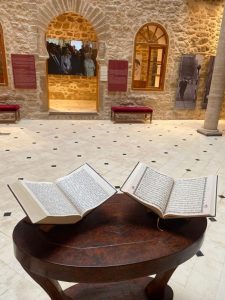
This week we are also publishing the second part of Chiara Lutteri’s exclusive investigation into the intertwining of Jewish and Moroccan identities. Why has the Moroccan government placed Jewish memory at the center of its cultural policies? This recognition safeguards a history that has long been marginalized, but it also helps construct the narrative of a Morocco that is tolerant, pluralistic, and committed to moderate Islam. Chiara Lutteri examines the domestic and diplomatic uses of this memory—from the restoration of Jewish sites to the normalization of relations with Israel—and shows how cultural heritage plays a role in the ongoing, contested redefinition of Moroccan identity.