Morocco Reflected in Its Jewish Heritage (2)
Jewish Memory in the Service of the National Narrative?
Why has the Moroccan government placed Jewish memory at the center of its cultural policies? This recognition protects a history that has long been marginalized, but it also helps construct the narrative of a tolerant, pluralistic Morocco faithful to a moderate form of Islam. Chiara Lutteri examines the domestic and diplomatic uses of this memory, from the restoration of Jewish sites to the normalization of relations with Israel, and shows how heritage contributes to the ongoing, contested redefinition of Moroccan identity.
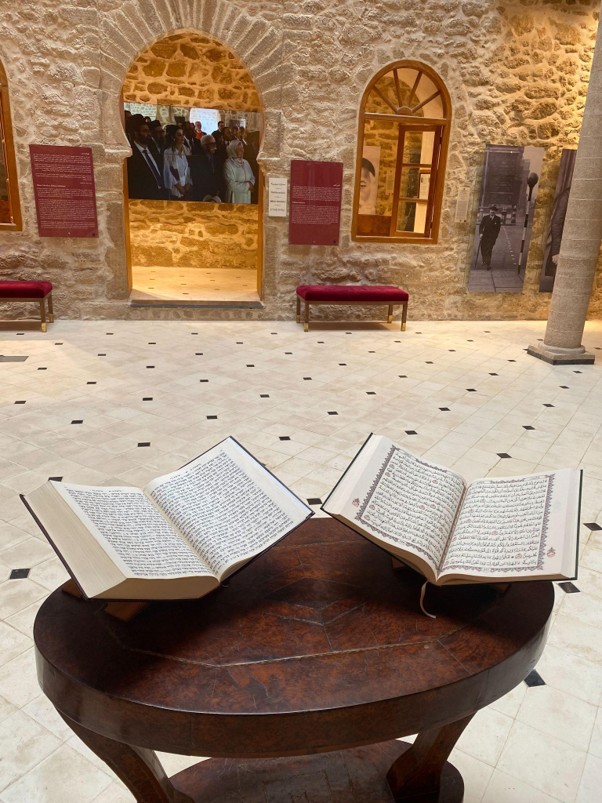
Since the 2000s, Moroccan institutions have pursued a broad policy of promoting the country’s Jewish heritage. The memory of Judaism has taken center stage in the Kingdom’s cultural debate.
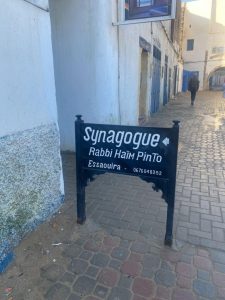
What is being promoted through renovation campaigns and the construction of museums is a specific memory of Judaism, under the close control of the political authorities. What kind of memory is this?
If we return to the theoretical foundations of heritage policies, we must emphasize that heritage does not exist in and of itself: the objects, places, and narratives that are designated as heritage are not so by their very nature; they become so. As researchers Clémentine Goutron and Ahmed Skounti demonstrate, heritage status is sometimes imposed: this is the case with Jewish heritage in Morocco and, more broadly, in the Maghreb, where heritage designation is said to be the “reflection of a problematic relationship with the past and with memory.”1 The problematic nature of Moroccan Jewish memory for the state—which is the primary actor in this process—is evident. It challenges the very foundations of policies governing pluralism in Morocco and the management of religious affairs.
While visitors to these museums will find objects that have shaped Morocco’s Jewish history and photographs illustrating the close ties that once existed between Jews and Muslims, they do not have access to historical elements that would bear witness to the persecutions, suffering, and discrimination that also define that history. Nor will visitors find any references to the departures—or “population transfers”—that constitute a chapter in Moroccan Jewish history and memory that is as painful as it is significant. The state has memorialized Judaism to turn it into a consensual and depoliticized historical subject.
The Jewish community in Morocco, however, has not fully gone along with the process of whitewashing carried out by the Moroccan political authorities. It retains a communal memory that has not erased its pain.
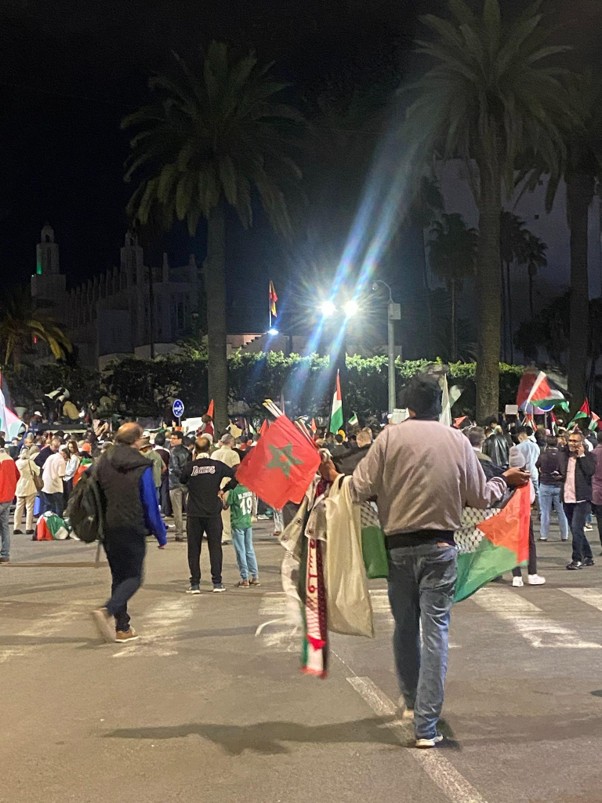
Memories of the tritel2 in Fez, the massacres in Oujda and Jerrada in 1948, and Petit-Jean (Sidi Qasem) in 1955 are still vivid. The sinking of the ship Pisces, in 1961—which was smuggling Jews to Spain—and the 44 deaths that resulted from that event, which occurred under the watchful eye of the Moroccan government, have not been forgotten either.3 While childhood memories are marked by a nostalgia for the peaceful coexistence that characterized interreligious relations, most of the people I interviewed see the Israeli-Palestinian conflict as the beginning of the deterioration of these relations. It is true that the idea of “Judaism” seems to have become politicized in Morocco through the Israeli-Palestinian conflict, and the “Jew” has been quickly equated with the image of the Israeli soldier, or at least the “Zionist,” an internal supporter of the external enemy. This is a notion that remains deeply ingrained among Morocco’s Muslim population, which remains strongly committed to the Palestinian cause, as evidenced by the weekly demonstrations that have been taking place in major Moroccan cities since October 7, 2023.
But then why, instead of ignoring it, have Moroccan authorities brought Judaism and its memory—however diluted it may be—to the forefront of their cultural policies, making them so visible?
Judaism in the Service of State Islam
One explanation lies in the essential role that Judaism—and Jewish memory in particular—plays in the standardized interpretation of Islam that the Moroccan state seeks to impose. This state Islam is based on four main ideological pillars: Sunni Islam, Maliki jurisprudence, the Ash’ari doctrine, and Sufism.4 The values promoted by this state Islam are tolerance, moderation, and the ability to coexist peacefully with others. To these four official pillars, we must add the recognition of the king as the religious leader of Morocco’s Muslim community. This political aspect is paramount, as it implies that membership in the Islamic religious community is contingent upon recognition of the king’s spiritual authority. The imposition of this state-sanctioned Islam state Islam has taken place through a vast campaign of centralization and bureaucratization that has brought all religious institutions under the direct control of King Mohammed VI.
The presence of the largest Jewish community in the Arab world is said to prove Morocco’s exceptionalism and the truth of the grand narrative of moderate and tolerant Islam that the monarchy seeks to promote.
This reconfiguration of Islam in Morocco offers advantages both domestically and internationally. On the
the level of domestic politics, the establishment of a single acceptable expression of the Muslim faith—the one defined by the government—has made it possible to discredit political and religious expressions that do not conform to it and to exclude them from the political arena. The Justice and Development Party, with its Islamist framework, and the Justice and Spirituality Movement, founded by Abdessalam Yassine, an opponent of the monarchy, certainly promote a different vision of Islam, but above all, they challenge the Moroccan political system. The palace has undermined the credibility of certain calls for democratization made by these movements by condemning their interpretation of Islam.
Internationally, state Islam has enabled Morocco to fully integrate itself into the global fight against Islamist terrorism. Morocco is engaged in the counterterrorism arena on two fronts. On the one hand, it cooperates with the United States and Europe in the fight against terrorism and radicalization through the promise of exporting its state Islam. On the other hand, it emphasizes the idea of South-South cooperation and regional integration in addressing the challenges posed by the terrorist presence in West Africa. This is done with the aim of strengthening its economic integration on the continent and, above all, of preventing any continental questioning of its territorial integrity, which is contested by the Polisario Front, which claims independence for the Saharan territories.
This redefinition of the Muslim religious sphere draws heavily on Morocco’s Jewish history; it constitutes one of the elements justifying state Islam and demonstrating its traditional roots in Morocco. The presence of the largest Jewish community in the Arab world is said to prove Morocco’s exceptionalism and the truth of the grand narrative of moderate and tolerant Islam that the monarchy seeks to promote.
“Normalization,” Between Diplomacy and Geopolitics
It is also within this ideological framework that the “normalization” agreements signed between Morocco and the State of Israel in December 2020 fit. On Tuesday, December 22, 2020, for the first time, a plane from Israel landed in Rabat. This marked the beginning of diplomatic normalization between the Kingdom of Morocco and the State of Israel, a decision made twelve days earlier in the palace of Mohammed VI, following a meeting with Israeli and U.S. delegations.5 This process, which comes after approximately 70 years of official estrangement between the two countries (although liaison offices existed from 1994 to 2000), is part of a broader framework of “normalization”6 between Arab states and Israel. Between September and December 2020, four Arab-Muslim countries signed “normalization” agreements with Israel—dubbed the “Abraham Accords” by the Trump administration: the United Arab Emirates, Bahrain, Sudan7, and Morocco, ushering in a new era of international recognition of the State of Israel.
In Morocco, these agreements are primarily security-focused: while it is true that Israeli exports have increased since “normalization,” rising from 14.9 million in 2020 to 20.9 million in 2021,8 it is primarily in military cooperation that the agreements are injecting new momentum into bilateral relations. This momentum is new—and not just for Morocco: the agreements signed in November 2021 between the two countries are, according to Israeli Defense Minister Benny Gantz, “ unprecedented,” and provide for joint military training, intelligence sharing, and the export of Israeli weapons to Morocco. Gantz told The Times of Israel: “Morocco faces challenges in defending its borders […]. We want to help them fight terrorism.” At the same time, “normalization” with Israel holds fundamental geostrategic significance, stabilizing the United States’ position on Western Sahara: the agreements came only after the U.S. recognized Morocco’s territorial integrity, as announced in a series of tweets by Donald Trump on December 10, 2020.9 Furthermore, normalization offers Morocco a symbolic victory over pan-Africanist and pro-Palestinian Algeria. U.S. recognition of Morocco’s sovereignty over the Sahara excludes the Sahrawi claims supported by Algeria and serves to marginalize Algeria not only in its continental standing—since the Sahara issue is linked to Algeria’s very image in Africa —but also in the Middle East.10 Through normalization, in a delicate balance that is very difficult to maintain, Morocco has also demonstrated the revival of a long-standing ambition of the monarchy: to establish itself as the preferred interlocutor for both sides of the Israeli-Palestinian conflict. In November 2021, the king declared that he was ready to “leverage his position and his privileged relations with all parties and international powers,” in order to “revive negotiations between the two sides with a view to finding a favorable resolution to the Palestinian question within the framework of the two-state solution.”11 Since October 7, 2023, and the resumption of hostilities between the two sides, Moroccan government officials have maintained a position of great caution, centered on the general concept of peace between the two peoples.
The king is playing both sides in Israeli-Palestinian geopolitics, and his ambiguity is no accident. All that is left to do is for him to convince the Moroccan people, who, for the most part, remain staunch ideological allies of the Palestinian cause. As of 2019, only 4% of Moroccans approved of Morocco’s official recognition of Israel.12
This caution stems from an obvious ambiguity. As a member of the Arab League, the Organization of Islamic Cooperation (OIC), and the Arab Maghreb Union, Morocco has consistently asserted itself abroad as an integral part of the Arab-Islamic world.
Furthermore, the King of Morocco is the chairman of the Al-Quds Committee, under the auspices of the OIC, whose decisions are said to reflect “the Kingdom’s continued support for the just Palestinian cause and its enduring solidarity with the brotherly Palestinian people”,13 according to the Moroccan Ministry of Foreign Affairs’ website. The king is playing both sides in the Israeli-Palestinian geopolitical arena, and his ambiguity is no accident. All that is left to do is for him to convince the Moroccan people, who, for the most part, remain fervent ideological allies of the Palestinian cause. As recently as 2019, only 4% of Moroccans approved of Morocco’s official recognition of Israel.
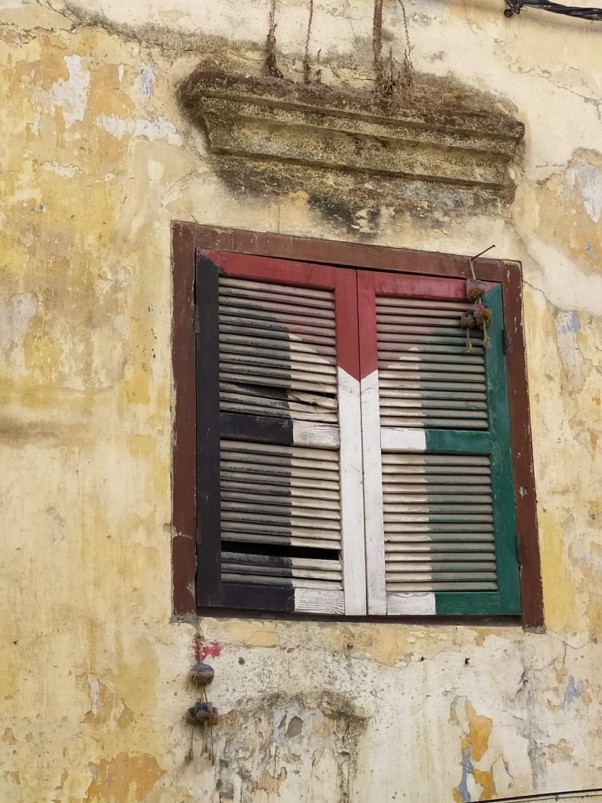
In official statements, the decision to “normalize” relations has been justified by invoking the framework of pluralism. These agreements are presented as a return to the pluralism of the past, and in particular to those whom Hassan II reportedly called “Morocco’s ambassadors to Israel”: members of the Moroccan Jewish diaspora. This “normalization” process and the king’s recent statements regarding Israel, however, directly impact Morocco’s Jewish community. The consequences are, first and foremost, economic: the launch of direct flights between the two countries led to a significant increase in the number of Israeli tourists between 2020 and 2023. While these flights allow Moroccan Jews to visit their families in Israel without having to travel through a third country, they primarily attract more people during holidays and, in particular, for pilgrimages to Morocco. “This sustains the community,” D. explains to me, “because when Israeli tourists come, the synagogues are filled, and Jewish community centers welcome them, bringing significant economic benefits.”14 Israeli tourism, far from benefiting only the Jewish community, has become highly advantageous for informal tour guides, caretakers of Morocco’s Jewish holy sites, and museum staff.
But normalization has also had an impact on Moroccans’ perception of the Israeli-Palestinian conflict. For some Moroccan Jews, this normalization has marked a sharp break with Morocco’s Arab-Muslim past, and most seem to perceive it as a turning point in how they are treated.15 When she talks about Israel, my neighbor Mrs. A. confides that not long ago, “the Arabs were mean to us,” but that today the situation is improving because “there are direct flights to Israel.” As H., director of the Cercle de l’Alliance—the oldest Jewish community center in Casablanca—explains, describing himself as a traditionalist Moroccan Jew: “If things have changed, it’s thanks to the King of Morocco; he did what his father wanted to do but didn’t dare to do.” The link between the improvement—real or perceived—in Muslims’ attitudes toward Jews and “normalization” is obvious. H. whispers when he utters the word “ Israel,” then catches himself and explains that a few years ago you couldn’t even mention Israel by name, “but now it’s the Muslims who say it, and that’s because the king says it too.”
After October 7: Moroccan Ambiguities
However, after October 7, 2023, normalization seemed to have come to an abrupt halt, at least for a while. Direct flights between Israel and Morocco were suspended, and posters advertising trips to Morocco for Jewish holidays—so popular before the war —are nowhere to be seen. A kosher restaurant, which had opened in the neighborhood where I lived and catered to Israeli tourists, had to close its doors due to a lack of customers.
The shock caused by these events is being felt by both the Muslim majority and the Jewish minority. Protests in support of the Palestinian people began a few weeks after October 7, 2023, in most Moroccan cities, providing an opportunity to denounce normalization and turn it into a national struggle. The slogan “The people want an end to normalization” echoes the chants of Arab protesters in 2011 calling for the fall of authoritarian regimes. The message from many Moroccans is clear: solidarity with Palestine is a priority. But this unity, on display in the protests, once again masks a debate over what it means to be Moroccan. While some participate in the demonstrations as Arabs and Muslims, others complain about the pervasive use of this identity-based justification to support what they consider a cause worthy of support regardless of religious or ethnic identity.16 Once again, the Palestinian issue brings to the surface the different interpretations Moroccans have of their collective and individual identities.
Among Moroccan Muslims, however, condemnation of Israel is not a universal sentiment. After the ceasefire, voices were raised in support of the 2020 royal decision and a return to the pre-war conditions of normalization with Israel—namely, the resumption of economic, security, academic, and tourism relations between the two countries. On social media, accounts dedicated to Moroccan-Israeli cooperation have multiplied, rapidly gaining visibility. The association between Israel and Moroccan Jews is systematically presented there as a given, through more or less substantiated quotes allegedly spoken by Hassan II regarding the enduring Moroccan identity of “Morocco’s ambassadors” in Israel. The resumption of the conflict in 2023 does not seem to have impacted the work of cultural and heritage institutions, which continued to welcome visitors, despite the temporary absence of Israeli tourists. Museums have, however, become more low-key, avoiding the publication of their events on their websites.
Within the Jewish community, the issue of the war is more than ever an occasion for the expression of contrasting opinions. Among community members, some have lost cousins, friends, and acquaintances. A sense of unease pervades the community, which responds to this war and its violence with silence—at least publicly. But not all Jews remain silent. Sion Assidon, for example, continued—until his death in November 2025—to wage the fight he had begun long before the war, against normalization. As coordinator of the BDS Morocco group, he joined the thousands of Moroccans who decided to boycott chains such as Carrefour and McDonald’s, accused of directly or indirectly financing the Israeli army…
Judaism, Amazigh Identity, and the Redefinition of Moroccan Identity
The prominence of Judaism in Moroccan public policy has had the merit of raising the issue of religious pluralism in the country. A generation of Moroccan youth asserting plural identities is becoming increasingly vocal on the political scene. When, as a student in Rabat, I was teaching English at a language center in the city in 2019, one of my students told me that he liked Jews because, although they weren’t Muslim, they remained attached to their Moroccan identity. “I’m Moroccan, but not Muslim ,” he told me, before adding, “You know, I don’t care about Arabness, because I’m Amazigh.” The link between Judaism and Amazigh identity has grown increasingly strong, and this is undoubtedly related to cultural and international policies that have brought Judaism to the forefront of the debate on Moroccan identity.
“When I was little,” recalls Ms. F., “we didn’t mix with Muslims. There were no ‘Moroccans’: there were Jews from Morocco and Muslims from Morocco. The idea of being Moroccan—independent of one’s religious beliefs—is a recent development ”
My student’s confession raises questions for me about two facets of Moroccan identity. On the one hand, he reaffirms the connection—idealized, recent, yet also historical—between the Amazigh and Jewish communities. On the other hand, his statements attest to the centrality that the identity marker of “Moroccan-ness” has acquired: “We are Moroccans first and foremost,” he tells me, referring both to the Jews he has likely never met and to the Imazighen (plural of Amazigh) he rubs shoulders with every day in the capital.
This discourse of “Moroccan identity” as the primary identity is recurrent, both within the Muslim majority and among the Jewish people I met during my research stay. “Moroccan identity” is sometimes even chosen as the primary marker of identity, ahead of Jewish identity.
S., principal of the Maimonides High School in Casablanca, even credits the Jews of Morocco with being at the origin of this “Moroccan identity.” “The Moroccan-Jewish community has values and virtues that are the values and virtues of Moroccans: kindness, simplicity, gentleness, and hospitality,” he asserts, before adding thoughtfully, “I even wonder if it wasn’t the Jews who brought these values—drawn from the Torah—to Morocco before its Islamization.” When I ask Ms. F. how she defines herself, she replies, “Moroccan, then Jewish.” She explains that, in her experience, the idea of “Moroccan identity” as separate from religious affiliation is very recent. The new Constitution reflects this ambiguous affirmation of Moroccan identity as both Muslim and Jewish. “ “When I was little,” recalls Ms. F., “we didn’t mix with Muslims. There were no ‘Moroccans’: there were the Jews of Morocco and the Muslims of Morocco. The idea of being Moroccan, independent of one’s faith, is a recent development.” All of my Jewish interviewees emphasize “Moroccan identity .” All of them, except for D., Ms. F.’s daughter. I meet her in Marrakech, in a charming café, where she is sitting with her ten-year-old daughter. “I define myself first and foremost as Jewish.” “Why?” I ask her in surprise, before remembering that she grew up in the French secular system and taught in public schools for twenty years. “Because, in any case, that’s what people attribute to me first. From my first name and the fact that I speak Darija, they know very well that I’m Jewish.” ”
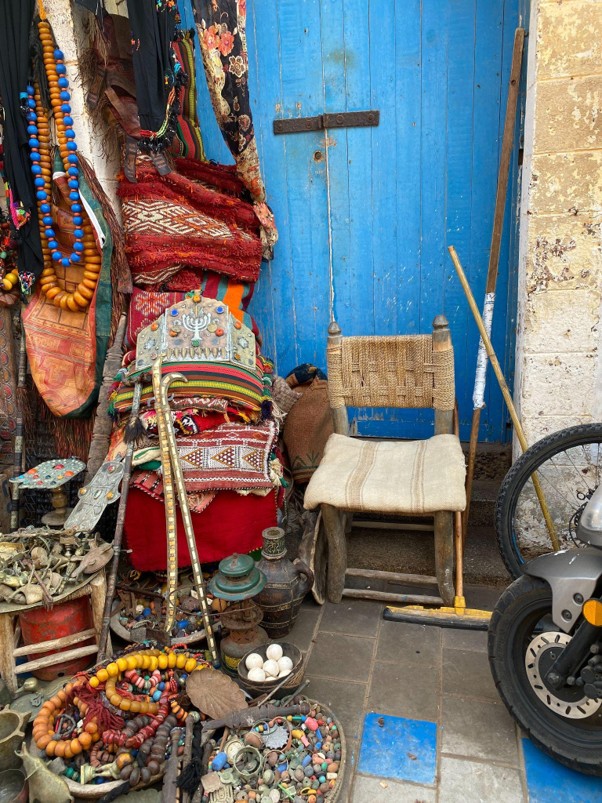
The attachment to “Moroccan identity” throughout the Jewish community is not, however, entirely new. As early as 1967, an appeal signed by Moroccan Jewish intellectuals affirmed the principle of “Moroccan identity” among Jews and called for the abandonment of all Zionist ideology: “Deeply attached to our country, Morocco […] we strongly reaffirm that Zionism cannot be our ideology, any more than Israel can be considered the homeland of the Jews or even their second homeland,” they stated.17
But how is the idea of “Moroccan identity” changing in an era when Judaism is recognized in Morocco’s public policies?
For some young people, particularly Amazighs like my student, the recognition of Judaism challenges the primacy of Arab-Muslim identity in Morocco. The recognition of Judaism, in its various forms, has given new momentum to Amazigh movements that have been fighting for decades for the full recognition of Amazigh identity in the country. It was in the context of the decision to “normalize relations” that this juxtaposition between the Jewish and Amazigh causes became apparent to everyone.
For the past decade, movements advocating for the Amazigh cause in Morocco have been building closer ties with Israel. As early as 2016—four years before the “normalization” agreements between Morocco and Israel—an Amazigh delegation traveled to Tel Aviv. The purpose of this visit was reportedly to meet with Moroccan Jews living in Israel. As one might imagine, this news drew heavy criticism in Morocco, particularly from some pro-Palestinian organizations, which called for the prosecution of anyone traveling to Israel for political purposes. This call had no practical consequences and was quickly forgotten. Four years later, as Amazigh organizations express their support for the “normalization” decision, the pro-Palestinian organizations remained largely silent.
“Taza before Gaza” is the slogan heard during protests led by the Amazigh communities of the Rif. Taza, one of the key cities of the Amazigh protest movements, takes precedence over the Palestinian cause.
An Amazigh activist told the Moroccan newspaper Yabiladi, the day after the announcement of the agreements signed between Morocco and Israel: “As for the resumption of relations between the Kingdom and Israel, I think it is an important decision that should promote the consolidation of multiculturalism in Morocco with a view to integrating the the Jewish religion to the status of a state religion on par with Islam, leading to the official celebration of Jewish holidays such as Hanukkah, Purim, or Passover.” The president of the Amazigh World Assembly was keen to comment on the “normalization” by highlighting the close ties between Jews and Imazighen: “We must not forget that the one million Jews of Moroccan origin living in Israel are Amazigh who have never severed their ties with Morocco.”18 Once again, the assertion of Moroccan identity seems to fill the gaps left by the question: What does it mean to be Moroccan?
Like my student from Rabat, another Amazigh student, interviewed by researcher Emanuela Trevisan-Semi in Meknes, draws a close connection between Arab identity and the Palestinian cause. According to them, the Amazigh people are allies of Israel because the Palestinian cause is an Arab cause—one that, as non-Arabs, they need not concern themselves with. “Taza before Gaza” is the slogan heard during protests led by Amazigh communities in the Rif.19 Taza, one of the key cities of the Amazigh protest movements, takes precedence over the Palestinian cause. Excerpt from an interview conducted by researcher Emanuela Trevisan-Semi:
“An Amazigh student—My father says there’s poverty today because the Jews left. I’d be very happy if they came back.
— What about the Palestinian issue?
— They haven’t done anything.
— Really! They haven’t done anything to the Muslims?
– That doesn’t concern me because I’m not Arab; I’m Amazigh.
— And your religion?
Islam, but I’m not religious. »20
The recognition of Judaism—and in particular the “normalization” agreements—thus seem to have given the Amazigh community an opportunity to strengthen its demands for recognition, by once again challenging the Arab-Muslim hegemony over identity and promoting a pluralistic “Moroccan identity” that is decoupled from religious frameworks.
Conclusion
The Lazama Synagogue is located in the nearly entirely renovated mellah of Marrakech. Until 2023, this synagogue—along with its inner courtyard, halls, and rooms—served primarily to welcome the city’s worshippers, as well as Jewish tourists wishing to visit the site. In 2023, the area surrounding the synagogue was converted into a museum under the leadership of Jacky Kadoch, president of the Jewish Committee of Marrakech, and with financial support from several Moroccan nonprofit organizations. Upon entrance to the site—which retains a hybrid character due to the coexistence of the synagogue and the exhibition spaces—visitors are greeted by large panels covering the walls of the room where they purchase a 10-dirham (1 euro) ticket. These panels recount key moments in the city’s Jewish history: the founding of Marrakech in 1062 and the arrival of Jews from Spain beginning in the late 14th century, as well as the encounter between the “Jews of the Atlas Mountains” and the Spanish Jews. Indeed, the venue’s permanent exhibition is dedicated to the “Jews of the Atlas Mountains.” One room, the former Beit Midrash, explains the migratory routes of the Jews of the Atlas Mountains to the cultural center of Marrakech, where instruction was sometimes provided free of charge. Other rooms trace the musical traditions of the Jews of the Atlas Mountains, as well as their clothing and customs. A panel explains that, from the synagogue’s roof, “one can see the Atlas Mountains and experience an ancient Jewish legacy of the Berber Jews of the Atlas, […] those ancient and devoted Jews who laid the foundation stone of Jewish history in Morocco.”
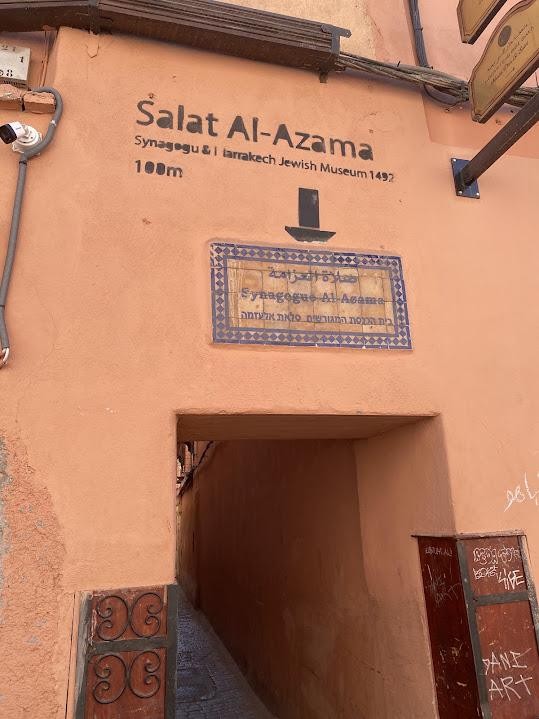
It is therefore this Amazigh Judaism and “original” Judaism that is recounted and showcased in the latest museum project dedicated to Moroccan Judaism—the Lazama Synagogue. It is often through heritage and its spaces that pluralisms—whether related to identity, religion, or politics—materialize, seemingly without conflict.
Thus, the Lazama Synagogue Museum directly highlights the intersection between Judaism and Amazigh identity as embodied by the communities of the Atlas Mountains, and, at the time of my visit, hosted a temporary photography exhibition titled “Jewish Africa,” which chronicles the existence of Jewish communities on the African continent.21 This pluralism of identity flourishes, after many long years of denial, within the museum’s walls, in the protected space of cultural heritage. But at the same time, the presentation of this pluralism and its normalization in Morocco also serve as a vehicle for the emergence of a political discourse. The departures of Jews from the Atlas Mountains are presented as a fated migration toward Israel—an aliyah that has failed to erase the Amazigh character of this population. The historical narrative concludes with the presentation of the 2020 normalization agreements, establishing diplomatic relations between Morocco and Israel. The photo accompanying the description of this event shows Nasser Bourita, Morocco’s Minister of Foreign Affairs, standing alongside Jared Kushner and Meir Ben Shabbat, all standing in front of a Moroccan and an Israeli flag, separated only by another flag—the American one. I visit the museum in October 2025, accompanying a delegation of Israeli teachers. The world has just learned of the release of the 20 Israeli hostages held in the Gaza Strip. The messages left in French, English, Spanish, and Hebrew in the museum’s guestbook express relief at this release and the hope that it will be a step toward peace for all.
The Lazama Synagogue Museum is the only exhibition space dedicated to Judaism in Morocco where I have, on several occasions, encountered direct written or visual references to Israel—a subject that remains contentious in Morocco, although the situation was more relaxed for a brief period from late 2020 to October 2023. This presence—marginal, yet so rare that it becomes central—makes this place a space where the contours of a Moroccan identity in the process of reconstruction—both in terms of identity and politics—are tested and perhaps expanded. It is within and through this Jewish heritage—endowed with a representational role—that the defining elements of new ways of being Moroccan seek to find their place: Moroccan-Jewish, certainly, but also Amazigh Moroccan and Jewish, and then Amazigh Jewish Moroccan and Israeli. “Moroccan Jewish heritage is as diverse as Morocco’s landscape,” reads a sign in the museum.
And it is this diversity—whose components overlap, defying any simplification—that challenges the narrative of an Arab-Muslim Morocco and revalues the places and spaces of a complex Morocco, which is currently questioning the homogeneity of its identity and politics. It is by presenting itself as a historical fact—and, in a sense, as a frozen and immutable element of the past—that Moroccan pluralism is brought back to the center of a very contemporary debate, the future trajectory of which remains unknown today. The redefinition of Moroccan identity can be read between the lines of these panels, objects, and spaces deemed worthy of representing another Morocco—a pluralistic Morocco.
- « Dossier: Patrimonialiser au Maghreb », Introduction by Clémentine Goutron and Ahmed Skounti, L’année du Maghreb, 2018. ↩︎
- The term tritel can be translated as “looting.” During the events in Fez in 1912, this term refers to the looting of the mellah by Moroccan troops who revolted following the announcement of the signing of the Treaty of Fez, which established the French Protectorate in Morocco. Paul B. Fenton, The Fez Pogrom or The Tritel of 1912, Ben-Zvi Institute, 2012. ↩︎
- See: https://books.openedition.org/cjb/174?lang=fr ↩︎
- Ann Marie Wainscott, Bureaucratizing Islam, 2017. ↩︎
- Le Monde, Le Maroc en Israël concrétisent leur normalisation diplomatique, December 2020. ↩︎
- The term “normalization,” borrowed from Foucauldian sociology, is used in international relations to describe the return of the paradigm of normality in relations between two states. In the case of Morocco and Israel, which had never had official relations that could serve as a precedent, the term “normalization” refers to the mutual and peaceful recognition of the two states and reflects a willingness to cooperate in several areas, just as Morocco does with other countries. Normalization does not imply an alliance between the two countries, but rather marks the establishment of diplomatic relations that conform to international norms. This involves, in particular, opening consular offices, establishing air links, participating in international meetings, allowing individuals with Israeli passports to enter Morocco, and, in general, adopting a policy of non-hostility. ↩︎
- Sudan announced the normalization of relations in October 2020, but did not sign the Abraham Accords declaration until January 6, 2021. ↩︎
- AA, Normalisation avec Israël : Avancée aux Émirats, lenteur au Maroc et au Bahreïn et absence au Soudan (Analysis), September 2021. ↩︎
- CNN Politics, Trump announces Israel and Morocco to normalize relations, Décembre 2020. ↩︎
- Orient XXI, Maroc. Le Sahara Occidental contre la Palestine, Décembre 2020. ↩︎
- Le Monde, Le Maroc disposé à favoriser une reprise des négociations entre Israël et Palestiniens, Novembre 2021. ↩︎
- Source : Arab Opinion Index, Arab Center of Washington DC, 2020. ↩︎
- Official Website of the Ministry of Foreign Affairs, African Cooperation, and Moroccans Living Abroad, May 2021. ↩︎
- See: André Levy, « Center and Diaspora: Jews in late-twentieth-century Morocco », City and Society, 2001. ↩︎
- See, for example, the reactions of Jewish business owners in Casablanca as reported by H24 Info.ma ↩︎
- Libération, Guerre Hamas-Israël: Rabat face à la pression de la rue marocaine, December 2023. ↩︎
- Le Monde, Archives, Un appel d’intellectuels israélites marocains, Août 1967. ↩︎
- Yabiladi, Maroc-Israël. Plusieurs associations amazighes expriment leur satisfaction, December 2020. ↩︎
- Le Monde, Au Maroc, les sympathies pro-israliennes de militants de la cause amazigh, April 2021. ↩︎
- Emanuela Trevisan Semi, “Différents récits sur le départ des Juifs du Maroc dans les années 1960-1970”, Centre Jacques Berque, 2012. ↩︎
- This exhibition was also on view at the Museum of Moroccan Judaism in Casablanca. For more information, visit photographer Jono David’s website: https://www.jewishphotolibrary.com/exhibitions-events ↩︎

Chiara Lutteri
Chiara Lutteri is a doctoral candidate in contemporary history at the Telemme Research Laboratory at Aix-Marseille University. She has lived in Rabat and Casablanca, where she also worked as a teacher. Her research focuses on the political role of Jewish heritage in Morocco, examining museums and heritage sites as spaces for institutional interaction, the negotiation of memory, and the staging of evolving identities.