#282 / Editorial: A Week in Brazil
During this summer break, K. Review is suspending its original publications. While we wait for the new season to begin, each week we’re offering our readers a special feature showcasing a selection of texts organized around a specific theme. This is your chance to discover a text you might have overlooked, rediscover one that resonated with you, and share some of K.’s publications with friends who aren’t yet familiar with it.
Related articles

Neo-Nazism in Southern Brazil: A Brief History of the Present
Between Ultra-Zionism and antisemitism: Brazil as a Mirror of the World

Saravá Shalom: Teshuvah in the Land of Enchantment
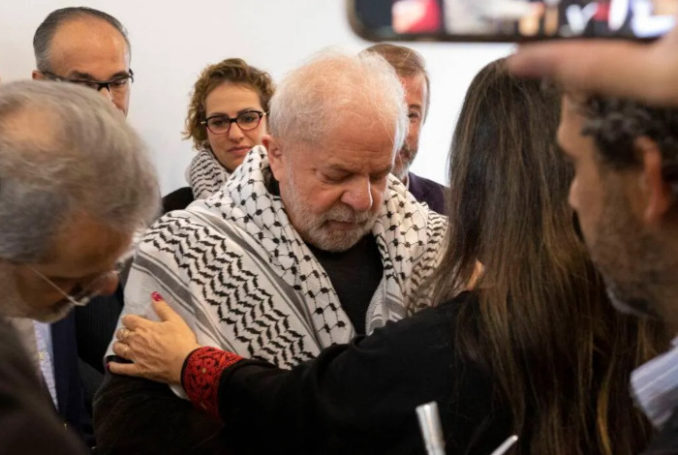
For this week’s feature, we’re heading to Brazil—a land of sunshine, carnival, and cultural diversity, but also of neo-Nazism. Renato Levin-Borges kicks things off in the Deep South, where German and Italian immigration between the two world wars left behind an indestructible branquitude—as proud of its whiteness as it is insecure in its identity—and where the figure of the Jew continues to serve as a scapegoat. Next, we turn to the broader political landscape with Renan Antônio da Silva and Eric Heinze, who draw us into Brazil’s vast political divide between Bolsonaro-style ultra-Zionism—with the Israeli flag on the First Lady’s T-shirt—and Lula-style anti-Zionism, as Lula did not hesitate to invoke the Shoah when speaking about Gaza: enough to turn the country into a microcosm of all the global tensions surrounding the Jewish question. The feature concludes on a completely different note—one that is more introspective—with Alex Minkin’s documentary, Saravá Shalom: far from synagogues and political conflicts, we discover Brazilian Jews who, in order to reconnect with ancestors silenced by the Inquisition, have turned to Umbanda and spiritualism to find what the official rabbinate no longer offered them. It is as if, ultimately, Brazil could do nothing with Judaism without reinventing all its rules in its own way.
In the fourth and final episode of “Bitter Love,” the familiarity with Israel gradually gained through the character of Daniela is called into question by the passage of time and the deterioration of the political situation. By October 7, the story concludes with a double loss: that of a beloved woman, and that of a certain Israel.
As a reminder, our archives are open, and we invite you to explore the hundreds of articles we’ve published over the past five years. If readers wish to stay in South America, they can read the profile of Javier Milei, that of Gabriel Boric, who recently stepped down as Chile’s president (in March 2026), or the story of “Argentine Jews, Between the Old and New Worlds.”