Bitter Love. Israel or the Shores of Intimacy (4/4)
Episode 4: Daniela, the Gray Zone, and October 7
In Daniela’s apartment, amid French books, chocolate bars from Paris, Shabbat in Katamon, and memories of activism, Israel takes the form of an almost familial relationship. But as the years pass, illness gradually silences the voice of this woman who was Israeli at heart, and October 7th strikes the political world to which she belonged. The story ends with a double loss: that of a beloved woman, and that of a certain Israel.
More and more often, I find myself visiting Israel, always coming up with a good excuse to go while insisting that it isn’t a central part of my life. I stay at her place, in a small room filled with French books. The slow pace of Saturdays allows me to read what I haven’t read in France. At 20, I read Marie Desplechin; at 25, Pérec; at 30, Yourcenar. One day, in her living room, I open the Larousse Hebrew-French dictionary. On the very first page, a sticker greets the reader with the following inscription: “From David GRITZ, victim of the July 31st, 2002 attack at the Hebrew University of Jerusalem”. The dictionary was one of the books he’d brought with him for his year of study, and here I am, opening it to do my Hebrew homework for the ulpan.
I like that Daniela doesn’t always talk to me about French diplomacy, Vichy, or the number of Muslims in France, as is so often the case in conversations with Israelis. In 1998, during that beautiful summer when France thought it had rediscovered its joy, I went to Israel for three weeks with the Scouts. I can’t remember exactly when it was—perhaps during the quarterfinal qualifier against Italy— we started traveling from north to south carrying a large tricolor banner. Whether we were taking a mud bath in the Dead Sea or kayaking on a tributary of the Jordan River, we had the three colors of the national flag with us everywhere we went. It was the indisputable truth of our identity, as much as we loved Israel. Often—very often—Israelis would call out to us: “How dare you fly that flag? What about Vichy? What about the Vel’ d’Hiv’?” We found this insulting and out of line. It was a blow to our pride. We told ourselves that it wasn’t a German or Polish flag, that all of that was now far behind us and settled.
When Daniela stays in Paris, I do for her what I would have liked to do for my grandparents, who are no longer alive: I help her find the apartment’s Wi-Fi password, tell her how to book tickets for shows, and, on the day of her departure, carry her suitcase to the Luxembourg RER station on her way to Charles de Gaulle Airport.
As the years go by, I’ve gotten used to receiving this email 48 hours before my flight:
“From: Daniela Y.
Subject: Black Tanzania 85%
Message: “Just like last time with the almonds.”
Now that she’s retired, she sits in her little room translating Michel Foucault’s Discipline and Punish from French to Hebrew,and texts by Jacques Derrida that I still haven’t had the courage or desire to read. She asks me for advice on the meaning of this or that word, and I’m happy to be of help. She sometimes invites her downstairs neighbors over for dinner on Friday evenings; at first, I thought they, too, were left-wing voters, since they subscribe to Haaretz. In reality, it’s a way for them to remain Ashkenazi. The son is in a paratrooper unit; the daughter works in the IDF’s public affairs office. They’re convinced that the conflict with the Palestinians can only be resolved if Israel uses maximum force. Their affection for and willingness to help Daniela are as strong as the political disagreements that set them apart.
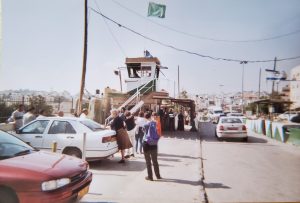
One summer, when I ended up staying at her apartment to recharge, she roused me from my lethargy: “I’m going to speak to a group of Italian Catholics at a small hotel in East Jerusalem. Will you come with me, Shmulik, or will you leave me to battle the heat alone? ” She hums while she gets ready, wearing a long skirt, a top that leaves her arms bare, and a small scarf in her hair. I’m carrying a small bag with dried apricots and a bottle of water. We walk through her neighborhood, slowly, talking about Fanny Ardant, whom she saw at the theater in Paris a few years ago, a book by Michel Warschawski, or other figures from the Israeli radical left. The walls of the Old City suddenly come into view. As we walk by the Jerusalem Cinematheque, I tell her about the time I saw “Gett: The Trial of Viviane Amsalem” in July 2014, during the Gaza war, as well as Ronit Elkabetz’s deeply moving performance. After an hour, we approach the row of palm trees that marks the Damascus Gate. These places form the invisible border between West Jerusalem— Jewish and Israeli, and the Eastern part—legally Israeli, but primarily Palestinian Arab and predominantly Muslim. Construction on the tram line isn’t finished yet. The air hasn’t cooled nearly enough. We push open the door of a small two-star hotel. We’re shown to a conference room in the basement. Daniela waves her fan and greets the group of about thirty people. The head of the delegation says that this meeting is intended to present “another voice of Israel”. Daniela takes her seat and begins recounting her life story in Italian: her Polish family’s emigration, her Orthodox upbringing, and then—in the first months following the 1967 war—her initial doubts about her nationalist convictions. Finally, since the early 2000s, her involvement with Machsom Watch. “It was when I read that a Palestinian woman—who had undergone years of medical treatment to get pregnant and was finally expecting twins—had to give birth at a military checkpoint, where she lost both newborns, that I decided to get involved in this work of raising awareness and exposing what the occupation is doing to the Palestinians.” I listen to her halfheartedly; I know all this well. The Italians ask her how she responds to critics in Israel who call this approach naive or, worse, treason.
“You know, when I’m at the checkpoint in Qalandia and I see how naturally the soldiers impose this order on the Palestinians, it reminds me of what Primo Levi wrote about the gray zone…” I tense up in my seat, suddenly doubting my love for her. You can’t possibly say something like that! I’ve spent years getting worked up in a thousand different situations over these comparisons, and now the Israeli woman of my heart is serving them up on a silver platter to Europeans who are waiting to hear that! I say nothing. There will always be misunderstandings, chasms between her—a pure-blooded Israeli—and me, who can’t bring myself to cast aside the diaspora’s anxiety. Fixed in her opposition to the Israeli right, Daniela has little interest in Islamist antisemitism, including that which affects European Jews. Yet she doesn’t celebrate the Palestinians as part of some grand dream of reconciliation. She has nothing in common with those—especially in Europe—who want a binational state. She remains deeply committed to the idea of a state where Jews are the majority and not a minority living on borrowed time. “I want to keep carrying the calendar with me,” she told the pilgrims that evening. In fact, she has never been to Egypt or Jordan, two Arab countries at peace with Israel. She isn’t interested in that. With her savings, she prefers to attend the summer gatherings in the Cévennes, where the small Yiddish-speaking community from all corners of the world comes together.
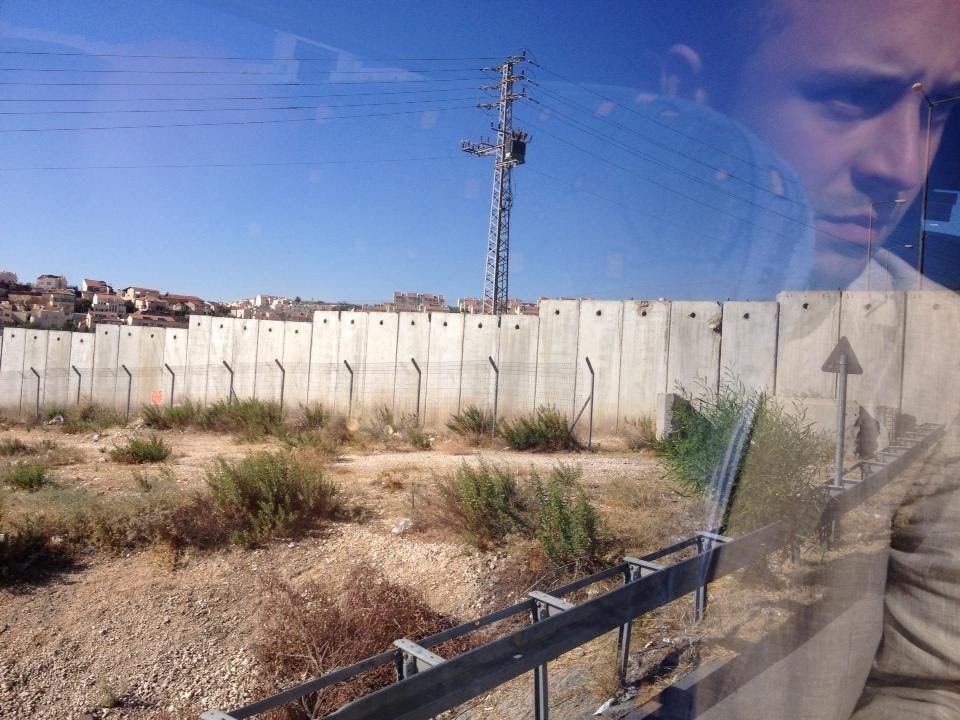
I’ve never really felt entirely at ease in the Palestinian territories. I often go there only with some effort. I take a bus near the Damascus Gate. I feel a tiny thrill of adventure as I take the exit from northern Jerusalem with the sign pointing toward Ramallah. I’m a coward, so if I go there, it’s mainly because the risks are minimal. My best shield: a leather document measuring 8.8 by 12.5 centimeters, stamped with the divine words “French Republic.” Admittedly, in this complicated Middle East, we’re no longer as popular as we were in the late 1990s and early 2000s, when the names Jacques Chirac and Zinedine Zidane acted as protective and popular talismans. He was the one and only international political leader to physically confront the Israeli military presence in East Jerusalem. One might mock the lack of long-term results from his outburst, but the Palestinians’ recognition wasn’t without value when you’re afraid of being mistaken for an American in the region.
One summer night at Daniela’s, Palestinian workers are finishing up repaving the cobblestones in front of the building. I watch them from the balcony. Daniela wants to bring them some water and cookies. We go downstairs. I don’t know if what we were doing was right, normal, or pathetic.The workers already have enough to eat and drink; they aren’t homeless and aren’t waiting for any help or pity. They thank us politely, and the Israeli-European left heads back up the stairs to bed. For all our good intentions, we had to realize that it wasn’t from Daniela’s kitchen that we could give them a state and sovereignty.
At the military checkpoint—as in those spaces formed by checkpoints, autonomous zones, and all those little corners where everyone’s rights are subject to arbitrary treatment—I lose myself and can’t help but see Daniela’s actions and her squad of women as a courageous yet laughable grain of sand in the face of a massive machine. My trips have always been in small doses, on the side during a stay in Israel. I went to see Ramallah, a mirage of Palestinian independence, a bubble of global bourgeoisie without sovereignty. Years later I went to explore and admire Nablus and its old city nestled in that hollow between two hills with the woman I loved. We were guided by a young student recommended by a journalist friend. She showed us the soap factories and the Old City with its magnificent stonework. Then, in the municipal cemetery, she pointed to the section for “martyrs who fell fighting Israel,” likely including suicide bombers. It was dizzying.
For years, I sought out or seized every opportunity to go to Israel while proclaiming that it wasn’t central to my life. A conference on French intellectuals and Israel? The first drafts of the CRIF’s founding charter in the Yad Vashem archives? An intensive modern Hebrew ulpan program? Pursuing the woman who might agree to marry me? Anything would do. I have the keys to Daniela’s place. I have my own room there—my little home away from home in Jerusalem. In Paris, from my tiny studio as a precarious intellectual, all I have to do is open a little pink cardboard box and hold that single key between my fingers to already feel a little bit like I’m there. On that little key, Daniela has taped a small sticky note with “me” written on it in Hebrew. After every visit, when I leave, she books me a Nesher—a shared taxi—and stays on her balcony watching over me until the bouncing minibus carries me and my suitcase off toward Ben Gurion. She’s stuffed my backpack with five sandwiches, fruit, almonds, pistachios, walnuts, cookies, and water; there’s no point in arguing (“Shmulik, you’re not going to spend all your money on junk food at the airport!”).
★
COVID and life kept me away from Israel, and I finally returned for a friend’s wedding after a break of several years. Daniela doesn’t reply to my emails for weeks. I end up renting a room two blocks from her apartment. Friday afternoon, a few hours after landing, I ring her doorbell. A young Asian woman opens the door, and her smile betrays her surprise. Daniela approaches and doesn’t recognize me. Shabbat is about to begin, and the TV is still on. I realize she’s in the early stages of Alzheimer’s. The woman who never tired of talking about politics no longer knows who— Naftali Bennett or Benjamin Netanyahu is prime minister. My beloved Israeli is out for the count. A little piece of my world is crumbling. My relationship with this small, warm, and stubborn country will never be the same. We exchange a few words in a strained conversation. A year and a half later, on October 7th, 2023, a large part of Daniela’s left-wing circle was murdered by Hamas in the kibbutzim around Gaza. All those small groups struggling to denounce military checkpoints, protect Palestinian villagers from settler attacks, and enable children from Gaza to receive medical care in Israeli hospitals were massacred. This left—which was already little more than an electoral ghost—now finds itself counting its dead and its kidnapped. The degeneration of Daniela’s mind cruelly symbolizes the creeping amnesia regarding the occupation. What sense could she have made of October 7th and then of the war in Gaza? I miss her perspective and her words on the situation, even though part of me is relieved that her illness shields her from this reality of constant, boundless violence. Thirty minutes after witnessing Daniela’s decline, I stopped by the neighbors’ apartment downstairs. As soon as they open the door, they understand immediately, pour a whiskey, sit me down on the couch, and explain how her condition had deteriorated. I went back to see her the next day. As soon as I speak French, she recognizes me for the duration of a few sentences. I take her in my arms. She looks at photos of my one-year-old son, including one where he’s eating gefilte fish. Her eyes light up and she exclaims, “So he’s a real Jew!” before bursting into laughter.
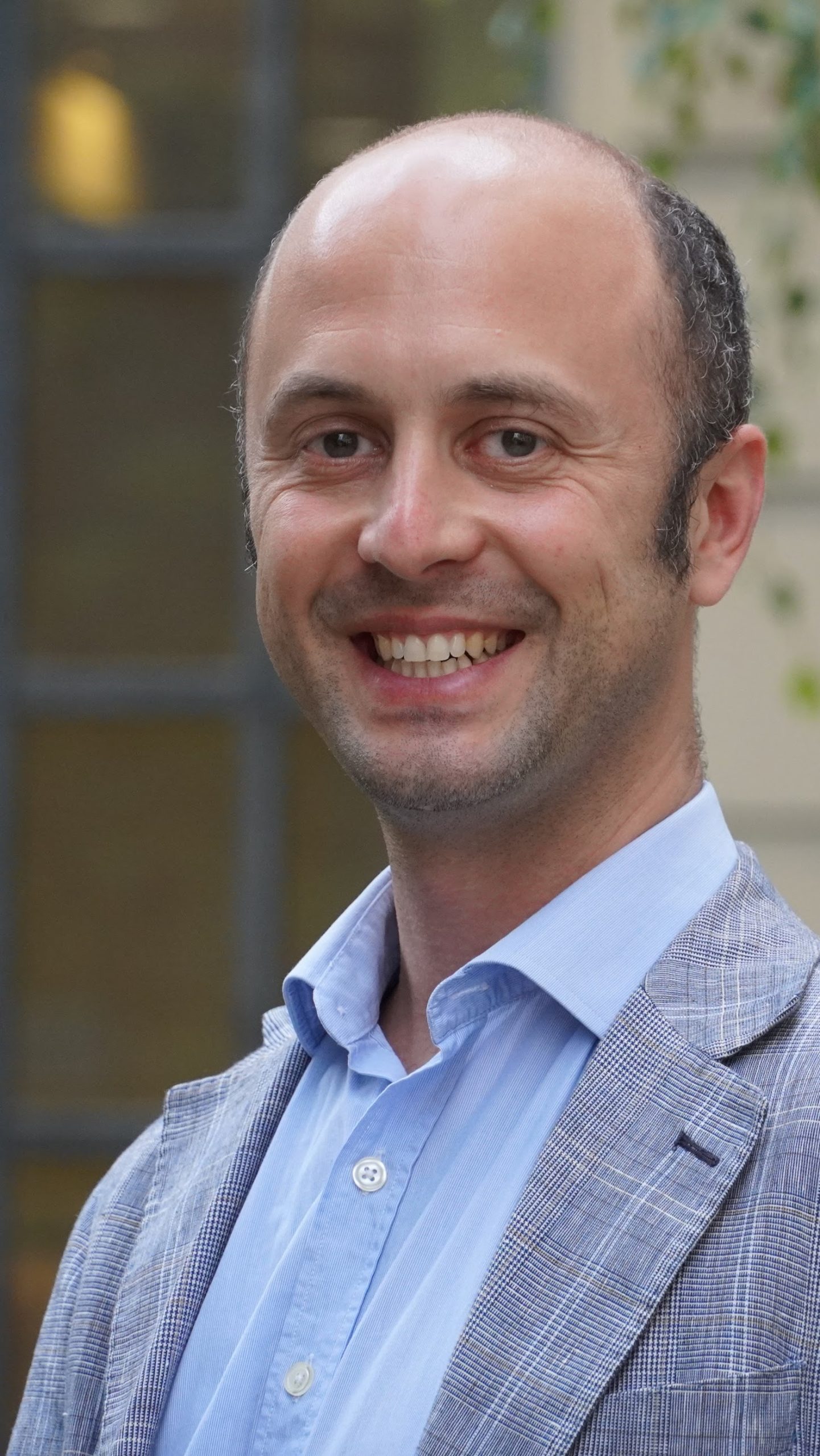
Samuel Ghiles-Meilhac
Samuel Ghiles-Meilhac holds a Ph.D. in sociology and teaches at Sciences Po Paris. He is the author of "Le CRIF De la résistance juive à la tentation du lobby de 1943 à nos jours" [The CRIF: From the Jewish Resistance to the Temptation of the Lobby, 1943 to the Present] (Robert Laffont, 2011) and "Le Monde diplomatique et Israël Histoire moderne de l'Etat juif à travers un journal de référence" [Le Monde diplomatique and Israel: A Modern History of the Jewish State Through a Leading Newspaper] (Le Manuscrit, 2006).