Saravá Shalom: Teshuvah in the Land of Enchantment
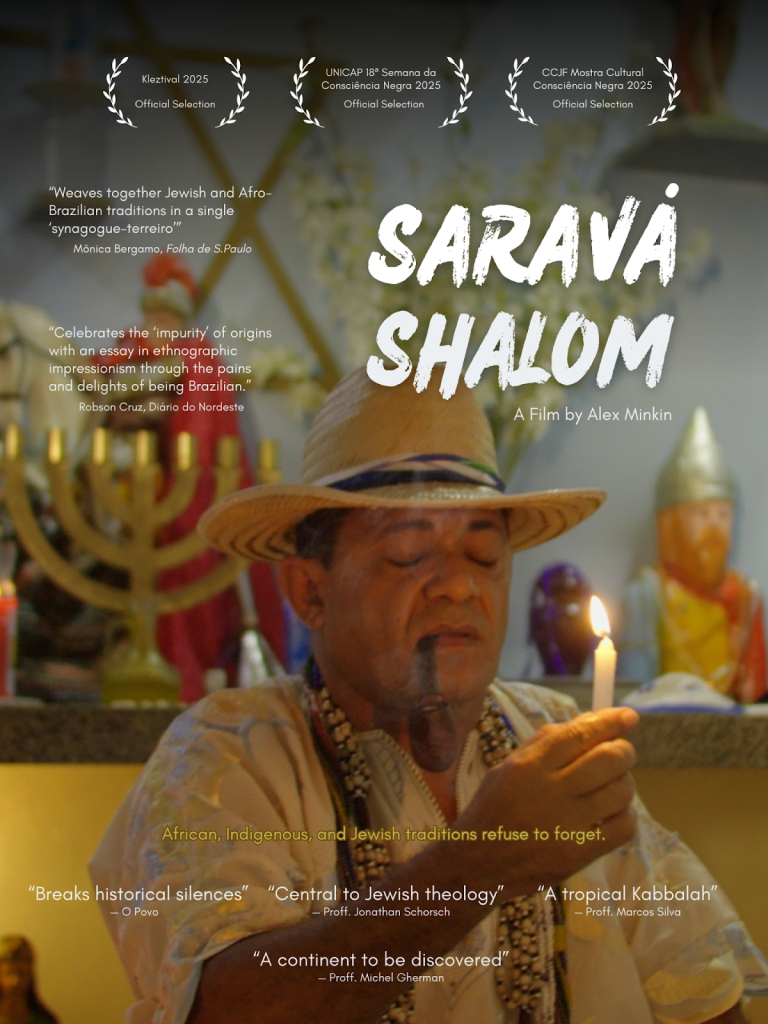
The new documentary by Alex Minkin, Saravá Shalom, questions what it means to be Jewish in Brazil. Far from synagogues and the rabbinate, the film follows Brazilian Jews who have found, in Spiritism and Afro-Indigenous religions - Umbanda, Candomblé, and Jurema - a path to reconnect with ancestors, some of them silenced since the Portuguese Inquisition.

Saravá Shalom offers a kind of cinema that confronts antisemitism by dismantling the monolithic image of “the Jew,” revealing instead a multiplicity of experiences that resist attempts to reduce Jewish identity to dominant stereotypes in Brazil and beyond.
Saravá Shalom can be read as a Jewish love letter to Umbanda, Kardecism, Candomblé, and Jewish spiritualities in Brazil… What it isn’t: an academic film.
As the film’s director, I deliberately excluded my interviews with university professors who contributed to the research. I was inspired by the words of the French philosopher Jean Pouillon, who said that it is only the nonbeliever who believes that the believer believes. The intention was for the film to speak from within, from the perspective of the participants themselves, without analytical judgments from academia, leaving interpretation open to the viewer’s encounter with the film.
From Archives to Afro-Brazilian Temples
The documentary was born out of a decade of research into Brazilian syncretic spirituality. What began as a casual visit to a small Umbanda terreiro (Afro-Brazilian temple) in Rio de Janeiro became a pilgrimage through time, lineages, and cultures.
In the deep backlands of Northern Brazilian state Ceará, amid indigenous prayers and chants dedicated to King Solomon, the camera sought to make visible a genealogy fragmented by the fire of the Inquisition and by the colonial silence.
Inspired by the documentary The Hidden Star of the Sertão (2005), by Elaine Eiger and Luize Valente, Saravá Shalom revisits a largely unaddressed topic – spiritual life of Brazilian Jews whose ancestors were forcibly converted to Christianity in Spain and Portugal during the Inquisition.
The personal trauma of growing up in the late Soviet Union, where Jewish tradition had been disrupted for generations, made the story of descendants of Brazilian Crypto-Jews feel deeply personal to me.
The film by Eiger and Valente revealed that many of them, when attempting to recover an old bond with traditional Judaism, encountered doors far less open than they had expected. Instead of welcome, descendants of Brazilian Crypto-Jews found suspicion: a lack of documents proving lineage, divergences in ritual practice, and doubts about the legitimacy and motivations behind these identity returns – factors that together made entry into established Jewish communities difficult.
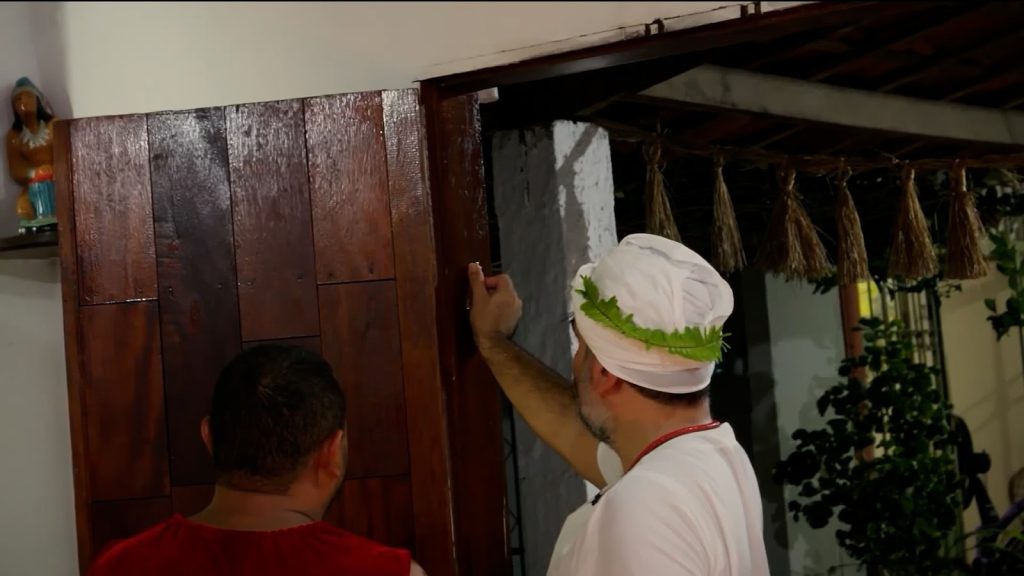
Saravá Shalom shifts the focus toward the spiritual journey to connect to the dispersed ancestors who continue to speak to one another through music, ritual incorporation, and bodily memory.
André Feitosa and Multiple Genealogies
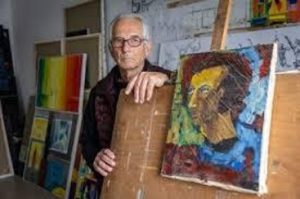
André Feitosa, a Ceará-born artist, philosopher, and human-rights lawyer, is the central character of the film. He discovered that his family descends from enslaved Africans, Indigenous peoples, and Jews forcibly converted by the Inquisition.
“I made a life choice to narrate the stories of my ancestors. Where there were no archival records, I consulted spirits in the Afro-Brazilian Temples. I am a haunted house, inhabited by competing ghosts, all demanding space, rites, memory, and healing,” André declares.
Marcos Gandelsman, psychologist, activist with Meretz Brasil and the Jewish community of Recife, explains:
“Just as the biblical Abraham, marked by the covenant, welcomes strangers at the door of his tent and extends hospitality to them, André’s acts are driven by an ancestral necessity.
At the Jewish cemetery, André expands his ‘tent of memory,’ reintegrating these dead as his own ancestors by greeting African goddess Oyá/Iansã and touching the graves of Jews to whom he has no direct ties. Like Abraham, whose actions arise from the duty to be a blessing to many, André ritualizes his ancestry because he must. He is also a subject of covenants, caring for bonds, welcoming absences, and keeping alive the lineages that precede him.”

Each of André’s ancestral lineages demands ritual loyalty. His Indigenous ancestors call him to Jurema; his African lineage to Candomblé; his Sephardic ancestors, forcibly converted by the Inquisition, demand a return to Jewish tradition. Each system carries a unique ontology of time, ethics, and embodiment.
According to babalorixá and anthropologist Robson Cruz, Saravá Shalom challenges ideals of racial exclusivity by celebrating the “impurity” of origins, making room for the symbols and spirits that emerge from Afro-Brazilian traditions, such as Umbanda.
The Ritual of Eating the Names
One of the most intense scenes takes place in the abandoned village of Cococi, deep in the Ceará backlands—a place with no neighbors, no water, made only of stone and wind. It was there that André’s Sephardic ancestors hid during the Inquisition.
“It was a harsh, formidable place to hide, never a generous one,” André says among the ruins. “Cows died, plants withered, but in the face of the Inquisition, it was as safe as anywhere could be.”

Here we find a kind of “Marrano Eucharist,” where the name—rather than being spoken before an altar—is returned to the womb of the earth by passing through the mouth. In Kabbalah, the world is created through combinations of letters; in Indigenous Brazilian religion Jurema, it is recreated through the ritual sharing of food.
André performs a ritual in which he “eats the names” of his genealogical tree – names that compose his Jewish lineage, now recognized by the Lisbon rabbinate. With each name spoken and swallowed, a lost link is reintegrated into the body. To eat the name is to make the word flesh; it is to restore, through the mouth, what was torn from the tongue.
In Kabbalistic tradition, the name carries the essence of the soul. The Tetragrammaton—the unpronounceable Name of God—is the point of convergence between being and saying. In Yoruba and Nagô traditions of African origin, vital force (axé) is transmitted through sound and ritual ingestion: to eat is to incorporate, to receive the breath of the ancestors.
At the meeting of these two cosmologies—one that sacralizes the letter and another that sacralizes the body—the ritual of eating the names becomes a dialogue between Kabbalah and axé, an alliance between memory and flesh.
“To absorb the names of time, to chew time, to chew the names that came before, to digest and resurrect the infinite—the names that bind us in ancestral time—to eat the past in order to free the future,” André says.
By eating the names, André teaches that exile can also be a mode of communion—and that true return (teshuvah) may be precisely this: encountering our dead in the voices of others.
Ceremony at the Oldest Afro-Brazilian Temple in Ceará
Saravá Shalom bears witness to André’s act of spiritual reconciliation at Ilè Ibá Asè Kpósú Aziri, the oldest continuously operating Afro-Brazilian (Candomblé) temple in Ceará. There, Jewish names are spoken. Genealogies are wrapped in sacred baskets. Jewish prayers such as the Kaddish are chanted alongside offerings of African and Jewish foods.
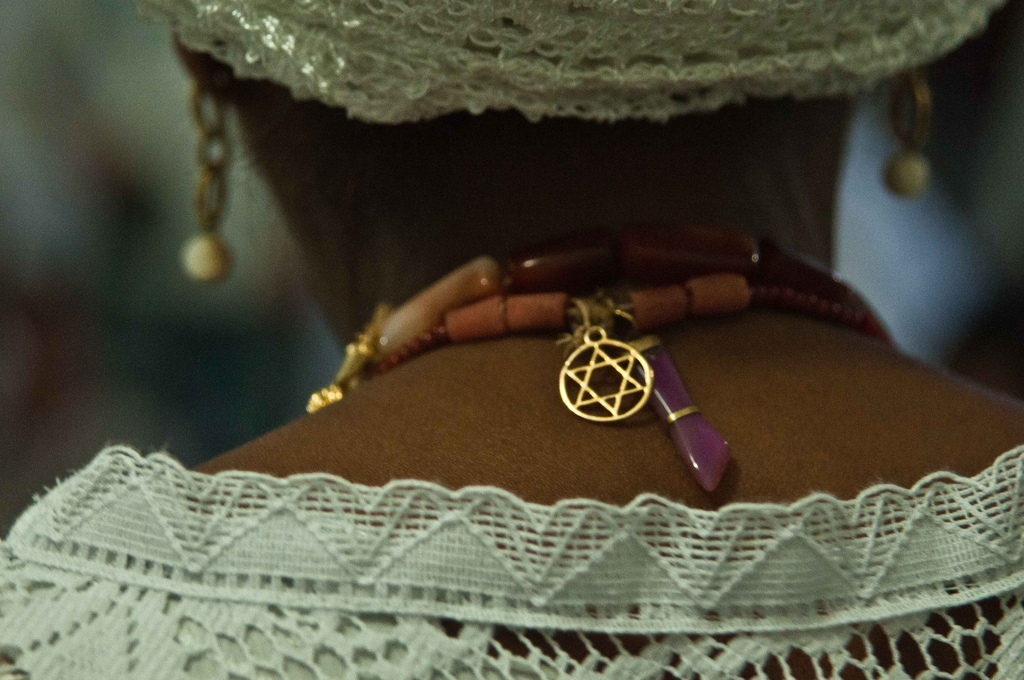
These ceremonies are ritualized acts of justice, confronting the silencing imposed by the Portuguese Inquisition, which criminalized and erased ancestral Sephardic practices.
A basket filled with food and the names of Jewish ancestors is placed on practitioners’ heads and spun counterclockwise—against time, against amnesia, back toward origin.
The Candomblé temple becomes not only a site of African memory, but a sanctuary for all diasporic peoples seeking ritual reconnections.
In the words of Naomi Ruth Lowinsky,
“If your ancestors were stolen from Africa, sold into slavery, Indigenous peoples dispossessed of their lands, or Jewish refugees, you all have terrible stories to tell. There is a safe space where our ghosts can hear each other’s stories, remember our shared history.”
The universe of interrupted memories of the Jewish diaspora was welcomed in the marginalized—and repeatedly attacked—temples of the Afro-Brazilian diaspora. This inclusivity is particularly significant considering that converted Jews were doubly rejected: neither sufficiently Christian in the eyes of the Inquisitors, nor sufficiently Jewish according to Orthodox rabbis, they became apostates without a community of their own.
Jews in Candomblé, as well as Afro-Brazilians in Judaism, thus become messengers of a new coexistence. Saravá Shalom sheds light on them after decades of silence, since such dialogue between these religions was a taboo. As the film shows, Afro-Brazilian and Jewish religions in Brazil have created many points of contact, exchange, and shared experiences, and are mutually inspiring. As the singer Assucena (Halevi Assayag Santos Araújo), of Moroccan Jewish descent, wrote for Vogue, “Few people know or realize that Judaism has more similarities to Afro-Brazilian religions than to Christianity.”
Synagogue of Ancestral Commitments
André explains the name he chose for his community:
“Synagogue of Ancestral Commitments. It’s said in plural — ancestral commitments — because it deals with several layers of ancestry interwoven with each other. There are distinct spiritual forces that inhabit those same bones. Since we arrived in Brazil, we have formed families with our allies, coming from many origins: from the African diaspora, from invasions and raids of the Indigenous people, from the intermingling of different nations.”
Saravá Shalom, as Rabbi Nilton Bonder observes, reveals that wherever Jews circulate – where they are able to live together, move freely, and form relationships – Jewish influences inevitably spread across many areas of the country’s social life. For Bonder, it shows an assimilatory process intrinsic to the history of Judaism: the Jewish presence always ends up leaving traces, whether cultural, spiritual, or symbolic, in the environments in which it is inserted.
This is the Brazilian Jewish heritage that Saravá Shalom brings to life, through both images and voices: at times reflected musically by a non-Jew, Bia – an Umbanda medium of German and Indigenous origin—who sings the voices of Jewish spirits.

Yvonne and Jewish Spiritism
While André’s path is embodied through dance and ritual, Yvonne’s journey unfolds through Kardecist Spiritism, a French-influenced spiritualist practice widely popular in Brazil. Her story leads to a surprising and often overlooked intersection: Jewish Spiritism.
Yvonne, whose Jewish parents came from Germany, has attended the Jacques Chulam Kardecist Center in Rio de Janeiro for over fifty years. Founded in the 1940s by three Sephardic families from Jerusalem, it is the only known Jewish-Spiritist center in the world.
After the death of her son, Yvonne found comfort through mediated contact with Jewish spirits. She reports having received thirty-one psychographed letters from the spirits of deceased rabbis, some signed by historical figures such as Rabbi Fritz Pinkuss and Rabbi Heinrich Lemle.
These letters, often received on the eve of Rosh Hashanah and Yom Kippur (during these holidays the center closes, allowing Jewish spiritualists to attend traditional Jewish services), contain teachings and blessings, echoing the moral and theological cadence of liberal Judaism.
Yvonne’s story marks one of the most poignant and emotionally complex moments of the film. A Jewish woman who sought solace not in traditional rabbinical teachings, but through Kardecist spiritist communication. The letters from the dead—Brazilian rabbis and her deceased son—open for her a window into a reality often hidden from public discourse and the establishment of Brazilian Jewish communities.
Andréa Kogan, a Brazilian researcher of religions and author of the pioneering study “Jewish Spiritism,” offered a moving reflection on Yvonne’s testimony at the film’s screening in Germany: “I researched Brazilian Jews who communicate with spirits, using techniques of Allan Kardec’s spiritism. When Jews face death, illness, or profound emotional suffering—such as the loss of a child—often, not receiving significant support from rabbis or Jewish institutions, they seek out spiritism.”
Yvonne’s experience, therefore, is not an isolated case. According to Kogan, this type of spiritual search is a widespread, but unacknowledged, reality for many Brazilian Jews.
As Kogan explains, there is little public discourse or academic research on Brazilian Jews who practice syncretic religions such as Umbanda, Candomblé, and Spiritism. Most Jews who engage in such practices do so secretly, for fear of judgment or exclusion.
“The film is an honest, beautiful, and true portrait of Brazilian Jewish reality,” Kogan observed. And although some may ask if she believes in it, her answer is clear: “Who am I to say whether I believe or not? It is a phenomenon that we have to look at, pay attention to, and respect.” Both the American Umbanda scholar Diana Brown and Andréa Kogan conclude that for Brazilian Jews, connecting with Spiritism, Umbanda, or Candomblé has never implied a renunciation of Judaism—it is about living a double belonging, a spiritual synthesis shaped by Brazilian pluralism and syncretism.
An Autonomous, Brazilian Judaism
For Michel Gherman, professor of Sociology at UFRJ and member of the Interdisciplinary Center for Jewish Studies, the interview with Yvonne is one of the most beautiful scenes in the film. “This is a constant practice in Judaism: sustaining the bond between the living and the dead, between mother and son, and between a son who, even after death, continues to guide her in Jewish tradition—asking her to recite the Shema. When I look at Yvonne, I see Judaism in its most radical form. I think about how, throughout Jewish history and its many tragedies, these bonds with the dead have so often been broken or rendered impossible. And yet, in Yvonne’s deeply Jewish experience, I see the possibility of maintaining a bond with her beloved son after his death. Nothing could be more Jewish than that.
One of the fundamental achievements of this film is the record of an absolutely autonomous, free, unhindered, Brazilian Jewish identity.”
Both American Umbanda scholar Diana Brown and Brazilian researcher Andréa Kogan conclude that for Brazilian Jews, connecting with Spiritism, Umbanda, or Candomblé has never implied renouncing Judaism. Rather, it is a form of dual belonging—a spiritual synthesis shaped by Brazilian pluralism and syncretism.
Rabbi Nilton Bonder observes: “There is a great deal of pluri-religiosity in Brazil. When I ask a Brazilian what their religion is, they tell me a saga.” This openness has become fertile ground for a Jewish spiritual renewal that is organic to Brazilian culture and distinct from North American and European models.
Tour in Brazil and International Reception
During its Brazilian pre-screenings, Saravá Shalom brought together diverse audiences – Jewish communities, descendants of Crypto-Jews, researchers, spiritual leaders – revealing the historical and emotional reach of the journey proposed by the film.
Michel Gherman contextualizes the film’s importance for Brazilian Jewish studies:
“Until now, what we’ve accumulated is Jewish history of immigration, community building, the formation of Brazilian Jewish community traditions, and ideological divergences among Jews. The political use, the religious use, the spiritual use that other Brazilian religions make of Judaism—we are in the first phase of research. We have a whole continent to be discovered.”
Jurema researcher and practitioner Maria Rita reinforced the idea of ancestry as a living presence, not a distant past, situating the film as an act of Marrano resistance that persists against oblivion.
Professor Marcos Silva proposed a bold interpretation: viewing Jurema as a living form of tropical Kabbalah. According to him, the animism that sustains Afro-Indigenous religions resonates with the structure of the sefirot—the vessels of creation that organize the Kabbalistic world. The Hebrew “tree of life” and the Northeastern Brazilian “Jurema tree” would be symbolic versions of the same axis: the channel through which the divine is embodied in the human, the invisible becomes matter, and the spirit finds refuge on earth.
Rômulo Angélico, a Jurema practitioner and scholar, explained how Crypto-Jews persecuted by the Inquisition sought refuge among Indigenous peoples and, through this encounter, wove Kabbalistic mysticism together with ancestral shamanism.
When the film was presented in Germany, Professor Jonathan Schorsch, Professor of Jewish Religious and Intellectual History at the University of Potsdam’s School of Jewish Theology remarked: “There’s something deceptively simple about it. American religiosity in the New World was a new terrain with encounters, “battles of the gods” that couldn’t have happened before. The whole array of spiritual technologies and cultures of African diaspora that are not the same as African religions is shown in the film. Even the rhythms are really noticeably different sometimes. Sarava Shalom allows us to see these complexities without romanticizing and fetishizing them. Judaism, Jewishness is not only a traditional dogma, but something that continues to evolve.
Brazilian Jewish religious syncretism shown in Sarava Shalom without moral judgements, with understanding and compassion, should be as central to studies of Jewish theology as works of Martin Buber and Maimonides. The question is not whether it is kosher, or not. This is what Brazilian Jews do.”

Alex Minkin
Alex Minkin is an anthropologist and director of the film Saravá Shalom. His research focuses on the intersections between Jewish and Brazilian cultures. Alex studied as part of the Moscow Jewish Theological Seminary archival project and is a graduate of the James Striar School of General Jewish Studies at Yeshiva University in New York.