Neo-Nazism in Southern Brazil: A Brief History of the Present
Over the past few decades, numerous incidents involving neo-Nazi groups have made headlines in southern Brazil, particularly since Bolsonaro took office. In this essay, Brazilian philosopher Renato Levin-Borges examines the long history of fascist and Nazi movements in southern Brazil, revisiting the waves of German and Italian immigration during the interwar period and the racial stereotypes that continue to circulate there.
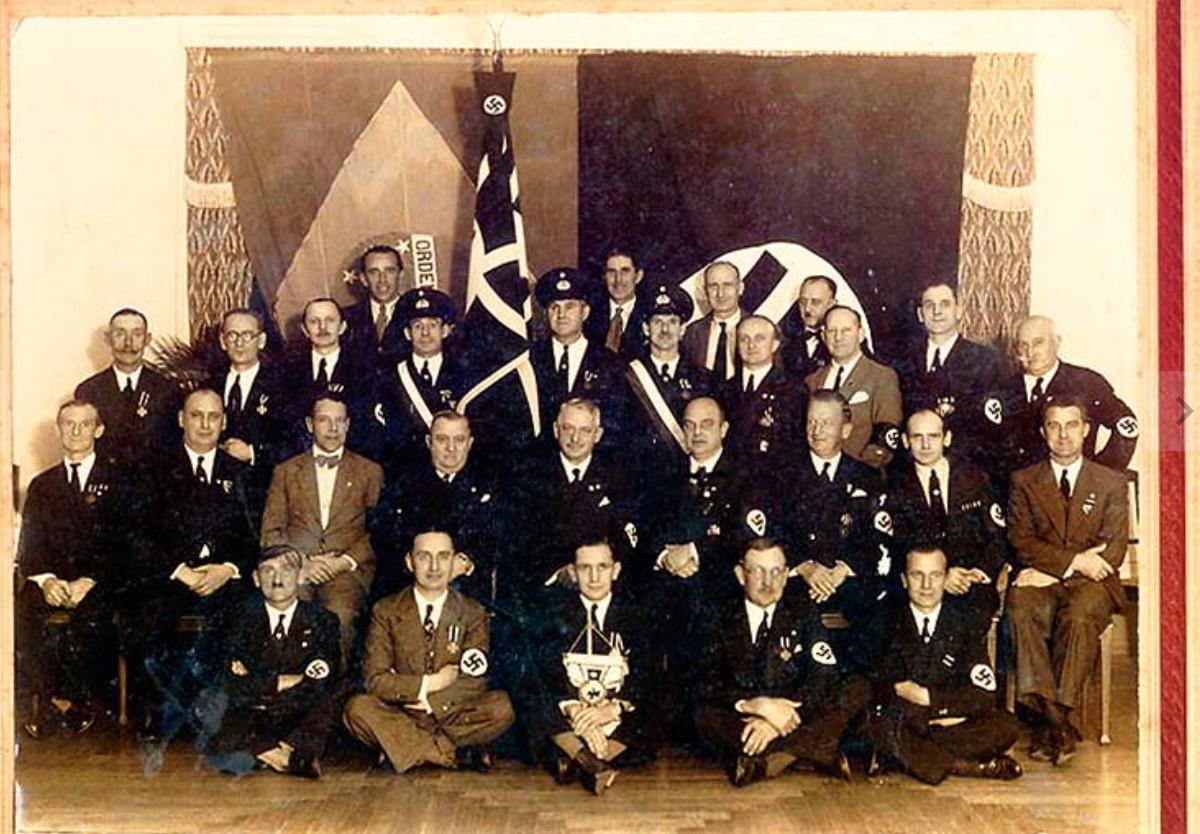
São Pedro de Alcântara is a small town in the state of Santa Catarina with a population of about 6,000, located just 40 kilometers from the state capital, Florianópolis. It was there that, on March 1, 1829, the state’s first German colony was founded, following the arrival, shortly before, of 166 German families from Bremen.
One hundred and ninety-three years later, specifically on November 14, 2022, São Pedro de Alcântara became the focus of national and international attention due to the arrest of eight neo-Nazis. Among them, four were from the state of Rio Grande do Sul, one from Santa Catarina, another from Paraná (these three states make up the Southern region of Brazil), one from Minas Gerais, and a Portuguese member of the neo-Nazi skinhead group Hammerskins. According to the investigation, these eight neo-Nazis allegedly formed a cell of Hammerskins Nation in Brazil. The presence of the Portuguese member ultimately confirmed the existence of an international connection between the Brazilian members and the neo-Nazi and white supremacist group Hammerskins, founded in Dallas (United States) in 1988 and with cells in Europe and the United States.
It is 2005, and it is cold on the night of May 8 in Porto Alegre, the capital of Rio Grande do Sul. Two young men are happily drinking in a bar in Cidade Baixa, the bohemian district of the capital of Rio Grande do Sul, wearing kippahs to celebrate the 60th anniversary of the end of the Shoah (Holocaust). Very quickly, the two young Jewish men are surrounded by a group of Nazi skinheads and attacked with fists, kicks, and knives. One of the young Jewish men is hospitalized, and fortunately, both survive. What do these two cases, separated by 17 years, have in common?
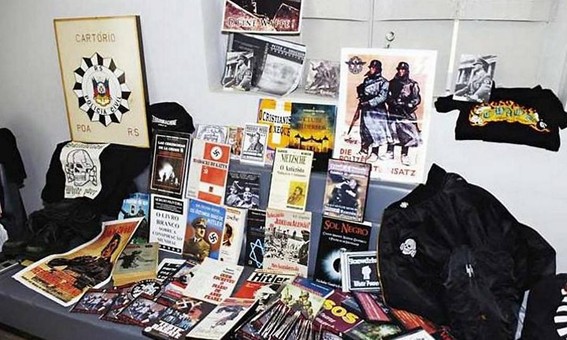
Among those arrested during the 2022 police operation in São Pedro de Alcântara was Gaúcho Laureano Vieira Toscani, sentenced in June of that same year to 13 years in prison for participating in the beating and stabbing of the Jewish Gaúchos in 2005, and considered one of the main neo-Nazi leaders in the state of Rio Grande do Sul. That same year, 2022, barely a month after the verdict convicting him for the Cidade Baixa attack 17 years earlier, Laureano was arrested by police for violating the terms of his parole. The police feared he might flee Brazil, most likely to the United States, where he has contacts with a number of other neo-Nazi groups.
A few years after the knife attack on the two Jews in Rio Grande do Sul, specifically in 2009, Bernardo Daryell Pedroso, 24, and Renata Waetcher Ferreira, 21, were leaving a party at a rural property in the city of Campina Grande, in the state of Paraná. They had been persuaded to go out to get more beer for the celebration. The next morning, April 21, their bodies were found next to the car, on the shoulder of the road at kilometer 6 of the BR-116 highway, in the municipality of Quatro Barras. The party the two victims had attended the night before was celebrating the 120th anniversary of the birth of Nazi leader Adolf Hitler. The couple was celebrating the date with a dozen neo-Nazis from across the country—and this is where the motive for the killing comes in: an internal dispute over the leadership of a neo-Nazi group that had become known as “Neuland” (“New Land,” author’s translation). The mastermind behind the murder was economist Ricardo Barollo, sentenced in 2025 to 48 years in prison, who planned to get mayors and city council members elected in the small Santa Catarina town of Balneário Piçarras. His intention, in his own words, was to establish a white, Nazi country, free from “Semitic influence.” The Paraná police investigation revealed the group’s national and international connections: from the Argentine origin of the weapon used to kill the couple, to messages revealing contacts with neo-Nazi leaders in Chile and England.
Although the number of Nazi Party members in Brazil represented only 0.5% of the country’s population of German descent, it was the largest contingent of Nazi members outside Germany, surpassing Argentina and the United States.
So what is so special about southern Brazil that there are so many active neo-Nazi groups there? The three southern states have the highest concentration of people identifying as white in the country (in Rio Grande do Sul, this figure reaches 78% of the population, followed by Santa Catarina with 76% and Paraná with 65%); they are also the ones that received the largest influx of German and Italian immigrants, especially Santa Catarina and Rio Grande do Sul. Let’s take a step back to understand why immigration was directed toward this region of the country. German and Italian immigration to southern Brazil is a history closely tied to racial issues. At the end of the Brazilian Empire (late 19th century) and during the First Republic (early 20th century), the Brazilian government adopted a policy of “whitening” the nation, following eugenic ideas then very much in vogue in Europe. Thus, the first German colony in southern Brazil emerged in 1824 in the city of São Leopoldo, in the state of Rio Grande do Sul, about 35 kilometers from Porto Alegre.
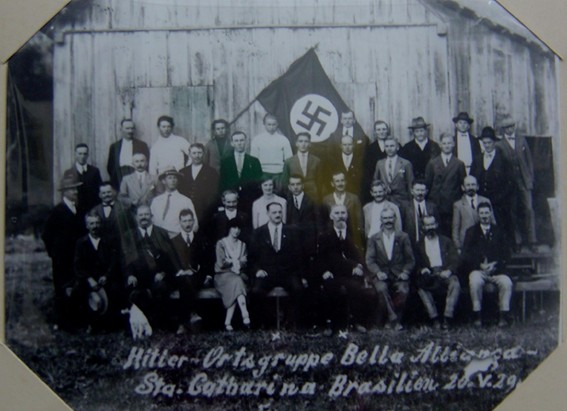
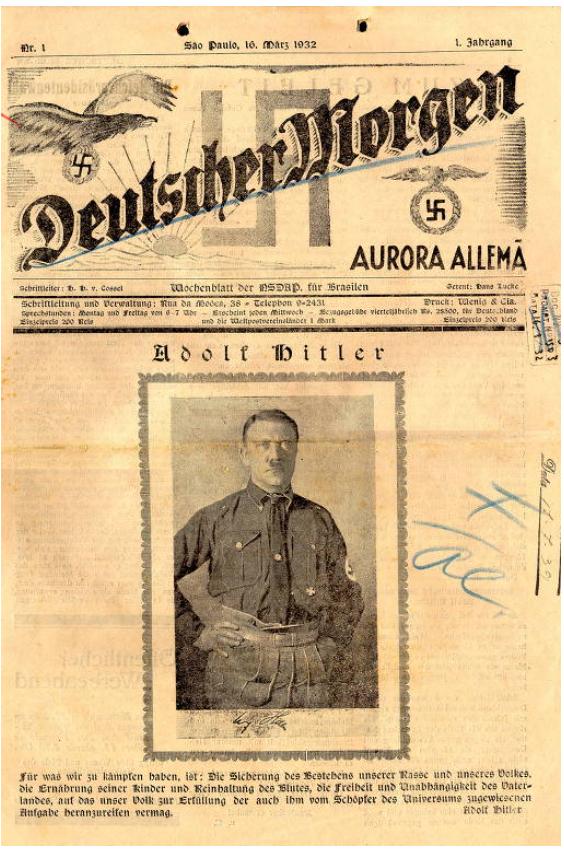
Italian immigration, for its part, began mainly in the mid-1870s in the rural areas of Santa Catarina and Rio Grande do Sul, intensifying at the turn of the 19th and 20th centuries. But the most significant historical phase for our analysis is the fourth—and final—wave of German and Italian migration, which occurred during the interwar period through the end of World War II and brought with it a set of fascist and Nazi ideas among the immigrants. To gauge the depth of antisemitism’s roots in southern Brazil, the Nazi Party in Brazil had, between 1931 and 1938 (the year it was outlawed by President Getúlio Vargas), approximately 3,000 members and some 15,000 to 20,000 sympathizers (Germans who attended events, read its newspapers, frequented community associations, and participated in other activities linked to the Nazi Party in Brazil). The party’s headquarters were concentrated mainly in Santa Catarina and, to a lesser extent, in Rio Grande do Sul. The party did not accept Brazilians without German ancestry, and although the number of Nazi Party members in Brazil represented only 0.5% of the country’s population of German origin, it constituted the largest contingent of Nazi members outside Germany, surpassing those in Argentina and the United States.
As for fascism, Italian immigrants also embraced, to a relative but significant extent, Mussolini’s ideas. The ideas of the fascist regime circulated through consulates, government-funded cultural associations, and Italian schools in the country. There were also periodicals in São Paulo and Rio Grande do Sul that propagated the ideas of the fascist regime. Under Benito Mussolini’s regime, there were approximately 5,000 to 7,000 members of the Fasci Italiani all’Estero (fascist organizations outside Italy) and between 30,000 and 50,000 sympathizers, meaning that about 1% of Italian immigrants in Brazil were formally affiliated with fascist organizations, and 2% to 3% were sympathizers.
Based on this history of the German and Italian presence in southern Brazil, we can understand the key element in the proliferation of Nazi and fascist racial ideology in this region: branquitude (“whiteness”). As psychologist Lia Vainer explains (2014, p. 84), the concept of branquitude corresponds to a national imaginary in which the White person is associated with a position of racial superiority, since the imaginary position of the White person in Brazil is that of subjects who “have been systematically privileged in terms of access to material and symbolic resources”; in other words, branquitude reproduces the imaginary of a guarantee and a promise that these privileges of power constitute a state of law, political and/or economic order—an effect generated “initially by colonialism and imperialism, and which persists and is preserved in contemporary” Brazil. This is a social and political project reinforced by the way German and Italian immigration was promoted in southern Brazil as a policy to “whiten” the national population, which was predominantly composed of Black people descended from slavery and the slave trade, as well as various Indigenous peoples. Thus, according to Lia Vainer: “To understand branquitude, it is important to understand how the fundamental, concrete, and subjective power structures upon which racial inequalities are anchored are constructed” in Brazil.
The concept of branquitude corresponds to a national imaginary in which the White person is associated with a position of racial superiority, as the imagined position of the White person in Brazil is that of subjects who “have been systematically privileged in terms of access to material and symbolic resources.”
For the Black Brazilian anthropologist Alberto Guerreiro Ramos, branquitude in Brazil is an ideological product of a mixed-race society, accompanied by a promise of privilege. When white Brazilians, who feel they do not enjoy the level of privilege associated with American or European “whiteness” that was supposedly promised to them, are denied access to certain imagined privileges, this intensifies their racial identity—leading to a heightened assertion of their “whiteness.” Put another way, partial access to what Brazilian whites expect from their identity would further reinforce their attachment to the racial identity of whiteness.
It is within this framework of subjective identity construction, centered on the supposed racial superiority of Southern Brazilians—which they are deemed to possess by right, because they allegedly inherited it from German and Italian immigration—that Southern Brazil, along with São Paulo, has become a breeding ground for a subjective “whiteness” conducive to the recruitment and radicalization through neo-Nazi ideas and discourse. This explains the persistence of the phenomenon of neo-Nazi militants in southern Brazil. Added to this phenomenon, within the dynamics of the spread of neo-Nazi ideas across the country, the rise of Bolsonarism, a product of Brazil’s new far right, which has unified and galvanized groups ranging from the democratic right to the radical right around the former president—currently sentenced to 27 years in prison for attempting to violently abolish the democratic rule of law, among other crimes—Jair Messias Bolsonaro.
The Jew is embodied as capital itself, as its incarnate form; and thus, the discontent stemming from the unfulfilled promises produced by capital is directed toward the Jew.
Anthropologist Adriana Dias estimated the increase in neo-Nazi cells in Brazil at over 270% in the period following Bolsonaro’s election, from 2018 to 2021, totaling 530 cells and more than 10,000 members. In a report by the Anti-Defamation League (ADL), Brazil was identified as the country with the highest growth of the far right worldwide in 2022. In this context, the states with the most neo-Nazi cells in Brazil are, in order: São Paulo, Santa Catarina, Rio Grande do Sul, and Paraná. In Santa Catarina—the second-whitest state in the country by self-reported population and the site of the arrest of eight Hammerskins neo-Nazis—the strongest growth in neo-Nazi cells nationwide is concentrated. Although the state accounts for only 3% of Brazil’s population, Santa Catarina is estimated to have approximately 320 active cells; the city of Blumenau alone—with a population of 365,000, predominantly of German immigrant descent—is estimated to have 63. This led the current Brazilian government, under the presidency of Luís Inácio Lula da Silva, to send a human rights mission to the state of Santa Catarina in 2024 to develop strategies to combat the growth of neo-Nazi cells in the state.

The construction of a European imaginary, fueled by the European ancestry of a portion of the population in southern Brazil, combined with the unease caused by the dismantling of the welfare state (access to and guarantees of rights), appears to be the combination that explains, at least in part, how the figure of the Jew fits into the imaginary composition of this Brazilian southern “whiteness.” The responsibility for the degradation of this civilization—which promised them superiority in their quality of life—is projected onto the figure of the Jew, thereby allowing them to avoid the true cause of the problem: the contemporary developments of capitalism—as Moishe Postone and Robert Kurz have masterfully argued in their analyses of antisemitism. The Jew thus becomes once again the embodiment of those responsible for the capital that is corrupting the civilization that promised their white superiority: his mobilization as a scapegoat reinforces support for neo-Nazi cells in the south of the country. As Moishe Postone explains in “Antisemitism and National Socialism” (2021, p. 48): “Modern antisemitism […] is a particularly pernicious form of fetishism. Its power and danger stem from its all-encompassing worldview, which explains and gives form to certain modes of anti-capitalist discontent that, by attacking the personifications of the social form, leave capitalism intact.” Put another way, the Jew is materialized as capital itself, as its embodied form; and thus, the discontent arising from the unfulfilled promises produced by capital is directed toward the Jew.
A possible way out of this situation might lie in the creation of new forms of identity-based subjectivation in southern Brazil, combined with collective struggles to improve quality of life. The bad news for us is that democracy and the welfare state do not seem to be in vogue anywhere on the globe. It is no coincidence that, from the Global North to the Global South, what we are observing is, on the contrary, an increasingly strong adherence to nationalist identitarianisms that easily slide toward white supremacy, with a strong neo-Nazi undertone.