#275 / Editorial
In K., we have often wondered what the nature of the anti-Zionist position is, and even whether it is truly possible to be anti-Zionist. Continuing our country-by-country exploration of the European political landscape with regard to this issue, this week we turn our attention to a case that is both unique and revealing: that of Northern Ireland. After the Northern Ireland Assembly nearly collapsed in November 2025 following a minister’s visit to Israel, political scientist Cillian McGrattan contributed an essay to us that examines the Irish anti-Zionist obsession by situating it within the political history of the country and its Troubles. The observation is the following: today, being an Irish nationalist necessarily means being anti-Zionist. But since no one seems capable of explaining what it means to be anti-Zionist—or at least what it implies politically, beyond virtuous posturing and imaginary identifications—the Irish nation’s conception of itself appears emptied of all substance. McGrattan thus highlights the political function of Irish anti-Zionism, which is to plug a gap in national historical and political self-reflection, and to shift to a distant stage—where one can apparently pontificate without consequences—the handling of conflicts from a past that refuses to fade away.
Related articles
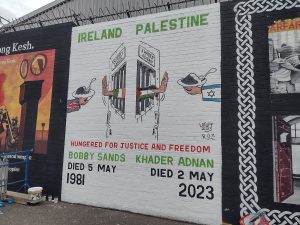
Israel, an Irish Obsession
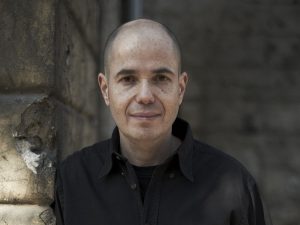
"The Hungarian state turned local people into collaborators."
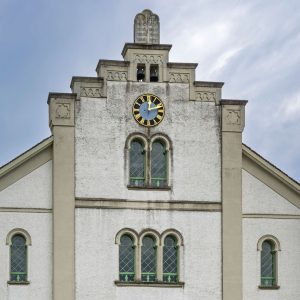
The Swiss villages where synagogues told the time
Turning to another past, apparently just as difficult to come to terms with, this week we explore the legacy of the Shoah in communist Hungary, the difficulties faced by Jews returning after the extermination and dispossession, and their contemporary repercussions. Liam Hoare spoke for K. with the Hungarian writer and essayist Gábor T. Szántó, who has long examined these issues and recently published 1945 and Other Stories, a collection of short stories devoted to the aftermath of the catastrophe. In the interview, they discuss the dark chapters of Hungarian history, how the state orchestrated the population’s complicity in its campaign of dispossession, and the future of Jewish life in Hungary.
Lastly, we look back at Switzerland, from the 17th to the 19th century, where the villages of Lengnau and Endingen were the only places where Jews were allowed to establish permanent residence. Today, only the stonework remains as a reminder of this bygone era. For K., journalist Évelyne Dreyfus and photographer Éric Béracassat returned to these lands to document the traces of a community that has almost disappeared.