“The Hungarian state turned local people into collaborators.”
Expropriations, Restitutions, Communism: An Interview with Gábor T. Szántó on the Aftermath of the Shoah in Hungary.
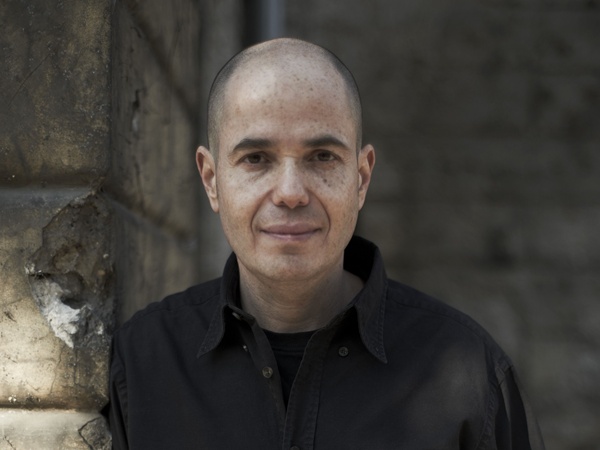
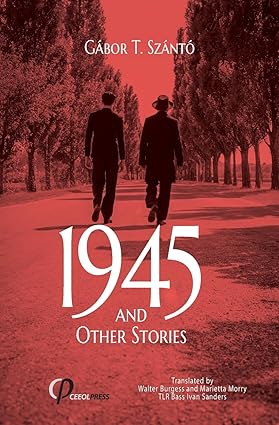
A writer, essayist, and editor-in-chief of the Hungarian Jewish magazine 'Szombat', Gábor T. Szántó has spent several decades exploring the legacies of the Shoah, the transformations of Jewish identity in Central Europe, and the gray areas of contemporary Hungarian history. In 2024, he published ‘1945 and Other Stories,’ a collection of short stories devoted to the aftermath of the catastrophe, which he discusses here for K. with Liam Hoare. From the reappearance of survivors in a Hungary that believed them to be gone to the ambiguities of Jews’ relationship with communism, Szántó revisits the often-overlooked history of the post-Shoah era in Hungary.
Liam Hoare : The initial focus of your book is on this period after the Second World War, and on the flight, expulsion, and displacement that took place and how it affected people, including Jews who returned from the camps. What drew you to this subject specifically as a subject for literature?
Gabor T. Szanto : I’ve always been interested in the post-Holocaust era, my literary imagination always attached to it, because that was my impression that everybody was talking about the Holocaust, about the loss of six million Jews in Europe, about half a million of them Hungarian Jews, and that there was a great empty void afterwards. What happened after the Holocaust? Why aren’t people talking about what happened to Jews after the Holocaust? when they came back, when they were participating in the communist regime, when they were suppressed by the communist regime. Nobody, too, wanted to talk about Jewish life and Jewish identity in the present tense. Most of my writing, therefore, takes place in Europe, or in Israel, after the Holocaust.
LH : Before we go any further, could you explain what this period in the aftermath of the Holocaust and the Second World War looked like in Hungary? And for Hungarian Jewry, since you mentioned the return of Jews who survived to Hungary and the institutionalization of the communist regime.
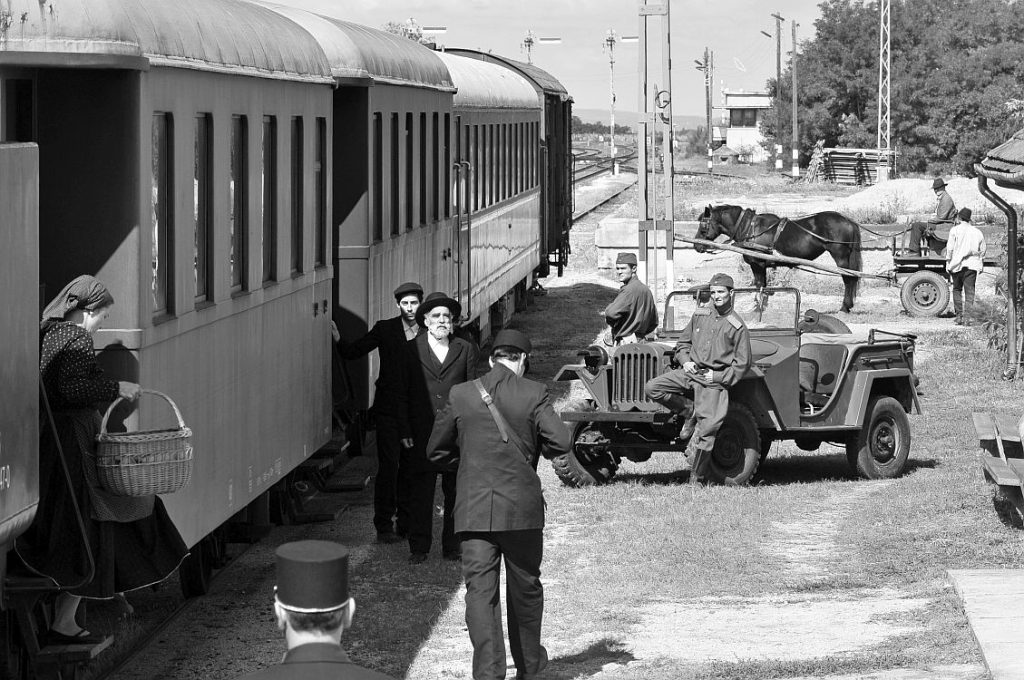
GS : The return of Jews to Hungary was a time of dramatic conflict. The locals, especially outside of Budapest where there were no remaining Jews after the summer of 1944, believed that the Jews would not come back, so when survivors arrived back to their towns and villages, and asked for their property back, it created a very difficult situation. Jews wanted their houses back, and the locals who got this property mostly did so on a special basis from the state through discounted auctions. That’s how the Hungarian state turned local people into collaborators.
It was a very tense time. Some Jews got their property back, some did not. In some places they received a warmer welcome, in others there were pogroms—more so in Poland, though there were serious conflicts in Hungary too. These were the impressions I grew up with, because they were the stories I heard from my family. In the village where my mother survived, parts of her family arrived back, and they received a warm welcome. In the case of my father’s mother, she found someone else living in their apartment, someone who had fled from Transylvania to South Hungary and got the apartment from the local government. So, she had to find another apartment.
I felt this was a story that had to be told, to be written, and that’s how I started to write “Homecoming, 1945,” the first story in the collection. But I also became interested in the communist period, too, because that was a story that also hadn’t been told. For Jews, it was tragic, or perhaps tragicomic. Many Jews who survived the Holocaust wanted to forget the past. They wanted to have a new identity, a universal identity that unified the people, Jews and non-Jews, not separate them from one another. They were positive, optimistic about the communist regime, though others, meaning religious Jews, Zionist Jews, were oppressed by that same regime. This created strange conflicts wherein Jewish communist found themselves having to investigate and interrogate Jews who were oppressed by the communist regime, something I wrote about in the novel, Eastern Station, Last Stop. The far-right in Hungary has always accused the Jews of being responsible for the communist regime, but that was an exaggeration, a false accusation, because the communist regime was a far more complex phenomenon than that. Support for communism came from Jews, the poor, the working class, the peasantry.
LH : How do you account for the fact that, if you compare Hungary to other central and eastern Europe countries—Romania, Bulgaria, Poland—that a relatively large Jewish community lived through the communist period and remains in Hungary today?
GS : The first phase of communism between the end of the Second World War and about 1953 was more-or-less the same across central Europe. In Hungary, there were one or two years before the revolution of 1956, when the regime was more open, the dictatorship softened. After 1956, there was a cruel counterrevolution by the communist regime that lasted five to six years: 300 people were killed, many were jailed. By the 1960s and into the 1970s and 1980s, however, Hungary’s communist regime was less tough then in Romania, in Poland—that was ‘goulash communism.’ It was still a dictatorship of course, but intellectual life was more open, more flexible. There was a kind of grey zone in which artists and intellectuals could work, and a number of very important books and films were made during that period that continue to hold up today.
Many Jews who survived the Holocaust wanted to forget the past. They wanted to have a new identity, a universal identity that unified the people, Jews and non-Jews, not separate them from one another. They were positive, optimistic about the communist regime.
LH : When you look at these two phenomena we’ve been talking about—the return of Jews to Hungary and Jewish life under communism—what do you think their historical legacy is? How do Hungarian Jews today look back on their own history?
GS : I think there’s a difference between how the average Hungarian remembers that period—which is that the communist period was a cruel dictatorship—and how the average Hungarian Jew remembers it, because the average Hungarian doesn’t have the memory of persecution by the Nazis, including deportation and the extermination camps.
For the average Hungarian, however, we needn’t forget that 200,000 Hungarian soldiers died on the Eastern Front in the Second World War between 1941 and 1944. It was also a tragic time for the average Hungarian too, and there were almost no families were no one lost a relative to the war. It was a traumatic time for the Hungarian people.
LH : As you mentioned, in 1945 and Other Stories, you don’t only write about the return of Jews to Hungary after 1945, but also other experiences of displacement and population transfer. In Berlin, there is now the Documentation Centre for Displacement, Expulsion, Reconciliation that narrates the experiences of displaced and expelled Germans after the Second World War and sets those experiences in the context of other forms of flight and displacement that took place in the twentieth and twenty-first centuries. But do you think we can talk about Jewish displacement and the displacement of other peoples in the same breath?
GS : The expulsion of ethnic Germans from central and eastern Europe, which was some kind of revenge because of the experiences of Nazism, caused another very serious trauma. These ethnic Germans were not necessarily Nazis, though maybe they were happy when the German army arrived. In the end, they lost their homes, and had to go to Germany—and that was a non-disputable trauma. But the Holocaust—the mass murder by bullet, the extermination in the gas chambers—is absolutely unique. Its incomparable to anything in European history.
I think there’s a difference between how the average Hungarian remembers that period—which is that the communist period was a cruel dictatorship—and how the average Hungarian Jew remembers it, because the average Hungarian doesn’t have the memory of persecution by the Nazis, including deportation and the extermination camps.
LH : You said, too, regarding this topic of return, that you yourself had grown up with stories about this in your family, though I wondered what, in the process of writing these stories, did you come to understand about the Jewish experience of return that maybe you didn’t know or fully comprehend before?
GS : The complexity of how the locals got their property from expelled Jews. I didn’t know before about the discounted auctions, how the state turned the locals into collaborators. It was a kind of gesture from the state that the local people could not turn down, because they were offered properties at such a cheap price.
LH : Turning to the present day, in addition to your work as a novelist and a short story writer, you also edit the journal Szombat (Saturday). Perhaps you could just say what Szombatis, who its readers are, and what the issues are that you have been focusing on lately. What are the issues that are of interest to your readers right now in this moment?
GS : Szombat is an intellectual magazine, which focuses on politics and culture. We publish reports, commentaries, essays, pieces of historical analysis, literature, articles on history and sociology. That’s in the print version, and then on the web, we publish daily reflections of politics and Jewish communal life. Of course, we also publish the printed material later on online. In that way, Szombat is very open.
At Szombat, we try to represent the whole Hungarian Jewish community by publishing different ideas, different opinions. In the last couple of years, Israel became a hot topic, and we’ve published a lot of news, analysis, and debate on the Israeli-Palestinian conflict, on the Gaza War, and the reaction in Europe to the war. Another issue is the new wave of antisemitism in Europe, which has cast a very dark shadow over the western world over the past couple of years.
Szombat has a Hungarian focus, but we also try and give our readers a broader, international perspective to make them more informed, more conscious of the phenomena happening now in a global context.
LH : On the issue of antisemitism, allies of the previous government in Hungary would tell you that Hungary under prime minister Viktor Orbán was a kind of paradise for Jewish people where there was no antisemitism, while the opposition would point to the antisemitic campaigns led by the state against George Soros as evidence against that assertion. How you would characterize the reality of Jewish life under Orbán? Of course, we’re talking about the lives of 100,000 people, but perhaps you can do so in a broad way.
GS : This government changed Hungary’s position on Israel around 2013. It became an ally of and really tried to demonstrate its friendship with Israel, for example by voting against European sanctions toward Israel. So they tried to build up this connection, and it seems to me that they tried to do so on the basis of common values. It’s not just the theatre—they really did feel close to anti-liberal, nationalist regimes.
There are mixed feelings towards the Orbán regime in the Jewish mind—it’s a very strange situation. For those who feel that the connection to Israel is important, they would argue, ‘Well, this regime was good for the Jews, because compare it to Western government that are critical towards Israel. They are pro-Palestinian, while the Orbán regime was very much for Israel.’ But for younger Jews, its politics created conflict between them and the Orbán regime.
There are mixed feelings towards the Orbán regime in the Jewish mind—it’s a very strange situation.
LH : Over the course of the past few years, there has also been a conflict between Hungary’s organized religious communities—between the neolog Mazsihisz and the ultra-Orthodox Chabad vis-à-vis Chabad’s takeover of the former Orthodox community. What’s the current status of that conflict?
GS : The previous government was very much pro-Chabad because the Chabad made gestures toward the government, but they promised things that they couldn’t deliver, so the government stepped back a bit from its support of Chabad. Overall, while they were still pro-Chabad because they felt some kind of closeness to their ultra-conservative ideology, at least in the last two years, the new leadership of Mazsihisz established better connections with the government. And the Mazsihisz, the government felt, represents a larger part of the Jewish community than Chabad did, so it made steps toward Mazsihisz too.
LH : One of the stories in your book, “Trans,” deals with gender identity, and specifically gender identity in a religious context. The Hungarians government’s position on these issues is well known. Where did the idea for this story come from and why did you want to write it? Also, how are these issues, by which I mean sexual orientation and gender identity, tolerated, handled, and discussed in Hungary’s Jewish communities today?
GS : It’s not a hugely debated topic in the Hungarian Jewish community. There are some critics in the neolog movement, but the younger generation in the community is for the most part very open toward different gender identities, and there is a lot of support towards the LGBTQ community coming from the Jewish community. There is a solidarity Shabbat held every year during Pride month, and we at Szombat publish articles on these topics. And it’s not a problem.
The idea of the story came from me wanting to show that this issue is still a kind of internal problem in the religious mind, because religious thinking holds to traditional conservative views on the phenomena of sexual orientation and gender identity. The story explores how these two things—religion and gender—can be in the conflict in both the mind and the body, and it also reflects in a way on the particular Central European religious mind, which is more conservative than the Western European or American, which went through a process of modernization in the mid-to-late twentieth century.
Do you do you think that that failure to go through a process of modernization threatens the long-term future of organised religious communities in Hungary?
I think there is no danger for the neolog community, which will go through to a process of modernization. I think it it will become a more colorful community and will integrate in itself into Western forms of modern conservative Jewish identity. That will help it survive, as most Jews feel and will feel attached to this kind of more open, colorful identity as opposed to ultra-Orthodoxy in Hungary.
LH : I have one more question, which actually is a related question: Are you optimistic about the future of Jews in Hungary?
GS : I’m not an idealistic, optimistic guy. I’m more of a realist. I think there will be no tragic ending for Jews in Europe. I don’t see the present antisemitic wave getting worse, and I think when the Gaza War comes to an end, antisemitism will abate a bit. Still, Jewish life won’t the same as before the Gaza War, because there is another sociological factor to consider which is that we are getting further and further removed from the Holocaust, from the memories of the Holocaust. The inhibition caused by the Holocaust in the European mind will recede, and European liberals and leftists will become more critical toward Israel, which would cause more problems in the future. I hope that in Hungary there won’t be such tough criticism of Israel on the political left on among liberals, and I think Hungary, as well as the other post-communist countries in central and eastern Europe, remember the anti-Zionist Soviet campaigns.
Liam Hoare
Liam Hoare is a Vienna-based journalist covering politics, culture, and Jewish life in Europe. He is Haaretz’s Europe Correspondent and writes “The Vienna Briefing”, a weekly newsletter on Austrian current affairs.