#270 / Editorial
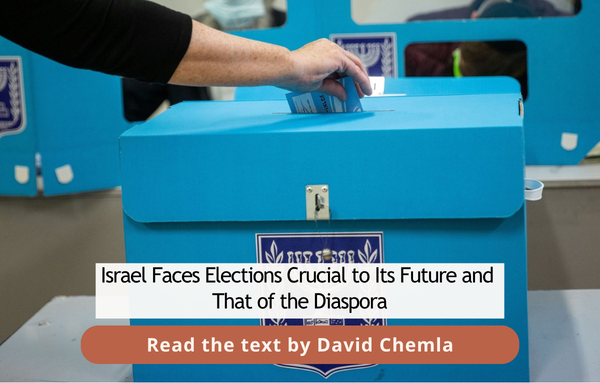
Events are unfolding rapidly, as Netanyahu’s coalition government will ultimately not serve out its full term. Indeed, just as the opposition, with the support of the Orthodox parties, was preparing to bring a bill to dissolve the Knesset to a vote, the government preempted the move. Elections will therefore likely be moved up slightly, and the election campaign, which was beginning to gather momentum despite the war in Iran, is now officially underway. K. will offer, throughout this campaign, where a real choice of regime for Israel is at stake, a series of detailed analyses of the issues at play. To kick off this series, we have asked David Chemla to present a slideshow outlining the political forces at play and the dividing lines along which they are positioned. Drawing on useful insights from electoral sociology and highlighting some unique features of the Israeli electoral system, David Chemla analyzes the realignments within the electorate and the issues they highlight, from the relative distrust expressed by the Likud base toward its party to the strategic nature of voting for Arab parties – one of which could, as in the past, join an alternative coalition despite statements to the contrary. But what appears to be the decisive issue of this campaign is, first and foremost, Israel’s relationship to war, as signaled by the collapse of the coalition over the issue of military service for the Haredim. While Netanyahu has spent the last few years promising total victory in Gaza, Lebanon, and Iran, the opposition will focus the debate on the possibility of failure in the war. The course chosen for Israel’s future will then depend on how different segments of the electorate position themselves regarding the war, that is, the goals the Jewish state should pursue in relation to its neighbors.
Related articles
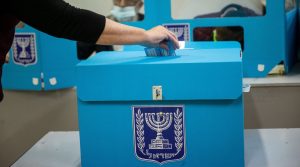
Israel Faces Elections Crucial to Its Future and That of the Diaspora

Visible Jews, Invisible Jews

In the footsteps of Georges Perec
Following Esther Offenberg’s article last week, which revisited the turmoil faced by British Jews amid a series of antisemitic attacks and a sense of being abandoned by the government, we continue our coverage of the situation in the United Kingdom. Sociologist Keith Kahn-Harris, who previously published in K. “Why should Jews serve any purpose?”, offers an analysis of the April 29 attack in Golders Green, apparently orchestrated by Iranian intelligence, and what it reveals about how Jews experience a shared destiny in the face of fear. In fact, he explores a paradox: why, when antisemitic attacks primarily target the most “visible” Jews, is the threat felt so directly by those whose Jewishness remains “invisible”? What emerges here is a distinctive feature of the Jewish minority in the way it relates to its visibility and its place in the public sphere, where being reinforced in one’s invisibility, even if chosen, is experienced as a manifestation of pervasive antisemitism.

To mark the 90th anniversary of Georges Perec’s birth, the Archives de Paris is dedicating an exhibition to the writer that juxtaposes his work with traces of his lost childhood. To celebrate the occasion, documentary filmmaker Ruth Zylberman is launching a series of interviews. In this first installation, she speaks with historian Claire Zalc, co-curator of “Georges Perec, Archives of a Childhood”, who recounts the long-term research that underpins this project. A conversation on the intersection of literature and history, and on what documents still allow us to glimpse of a shattered childhood.