In the footsteps of Georges Perec
To mark the 90th anniversary of Georges Perec’s birth, the Archives de Paris is dedicating an exhibition to the writer that explores the connection between his work and the traces of his lost childhood. Co-curator of “Georges Perec, Archives of a Childhood,” historian Claire Zalc speaks with documentary filmmaker Ruth Zylberman for K. about the long-term research that underpins this project. A conversation on the intersection of literature and history, and on what documents still allow us to glimpse of a shattered childhood.
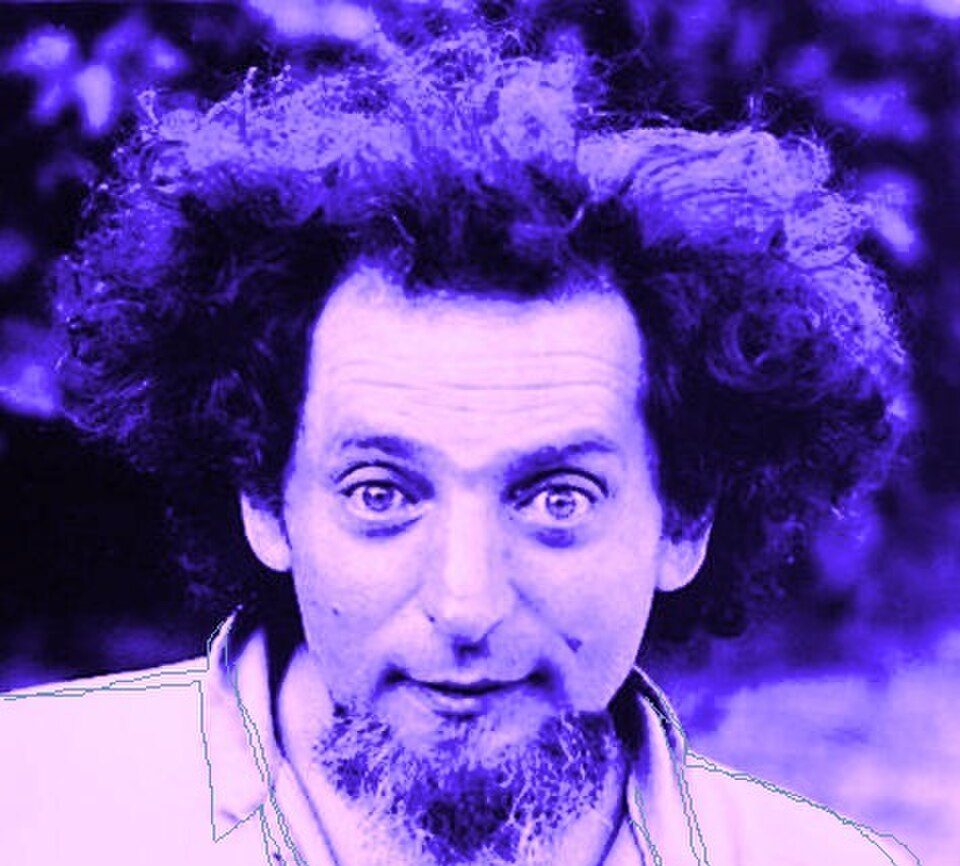
It is 1969; Georges Perec is 33 years old when he writes to his publisher, Maurice Nadeau, to present a vast autobiographical project he is in the process of developing. This project, still a work in progress, is intended to unfold across several texts. He first mentions Lieux (Places), which would consist of a 12-year-long description of 12 Parisian locations associated with memories or significant moments in his life.
He also mentions Lieux où j’ai dormi (Places Where I Slept), which he envisions as a kind of evening autobiography. And Perec also speaks of W, which he describes at the time as an adventure novel. Finally, and most importantly, he presents a more ambitious project titled L’arbre, histoire d’Esther et de sa famille (The tree, the story of Esther and her family).
Regarding the latter, he writes, “It is the most precise description possible of the family tree of my paternal, maternal, and adoptive families. I have already done a great deal of work on this project. I have made a few draft outlines, but I will still need quite a bit of research and refinement before I can really get started. It is a project that is very dear to me, but I think I am a little afraid to really dive into it.”
As is well known, W, or the Memory of Childhood, a singular text that alternates between fiction and an autobiographical narrative marked by the fragment “Gaps and Forgetfulness” – as announced by its opening sentence, “I have no childhood memories” – was published in 1975. In contrast, Lieux (Places) and L’arbre (The Tree) remained unfinished at the time of Georges Perec’s death in 1982.
The research files preserved at the Arsenal nevertheless attest to the scope of the work undertaken. They include, notably, the outline of the family tree he had begun to reconstruct for several branches of his family, as well as some administrative documents, his parents’ marriage certificates, his birth certificate from 1936, the death certificate of his father, who died in combat in 1940, as well as the certificate of disappearance for his mother, who was arrested, interned at Drancy on July 23, arrested, interned at Drancy on January 23, 1943, and then deported to Auschwitz on February 11 of that year. A few rare archival traces, then, the only traces of life and memories, now inaccessible.
Ruth Zylberman: Claire Zalc, you are a director of studies at EHESS and a research director at the CNRS, a historian of migration and persecution. You are the author of several important works, including Melting Shop, une histoire des commerçants étrangers en France (Melting Shop: A History of Foreign Merchants in France), Face à la persécution 991 juifs dans la guerre (Facing Persecution: 991 Jews in the War), about the Jews of Lens, the collective work Pour une micro-histoire de la Shoah (Toward a Microhistory of the Shoah) and finally Dénaturalisés, les retraits de nationalité sous Vichy (Denaturalized: The Revocation of Citizenship under Vichy).
In addition, you co-edit the legendary journal Les Annales. A few months ago, you also presented a remarkable series on the radio channel France Culture, “Les lieux de Georges Perec” (The places of Georges Perec) which attests to the special connection you have with this work and its author. You are currently co-curating with Béatrice Herold a deeply moving exhibition currently on view through May 22 at the Archives de Paris.
It is titled “Georges Perec, Archives of a Childhood” and brings together Georges Perec’s texts with previously unpublished archival materials, drawn primarily from the Archives de Paris but also from other collections. These documents reveal new traces of his history and, according to Pierre, shed new light on both his childhood and his work as a writer.
Perec and you, if I may say so, have a long history together, and I’d like to start by discussing your career as a historian and the deep connection you have with the life and work of Georges Perec.
How, in the course of your research – you who have worked in particular on small foreign shopkeepers in the Paris neighborhood of Belleville and on persecution – did you cross paths with Georges Perec and his family?
Claire Zalc: Completely by chance. I was living in Belleville when I started this dissertation – a dissertation on small foreign shopkeepers – and I had a historiographical epiphany regarding microhistory. So, I decided to explore the path of Georges Perec and his family and to focus on a neighborhood as my subject. I did something that would become something of a trademark in my approach to research subjects. I didn’t choose the neighborhood where I lived, but the one right next to it. I combed through every single census list to find all the foreign artisans and shopkeepers. And among them, at number 24, was Icek Perec.
And so, it was completely by chance that I stumbled upon him while working on my dissertation. And then, it became a sort of common thread, but a very intimate one, where I look in each of my research areas to see if there’s anything about Perec, without it being at all planned.
RZ: We can clearly see how, ultimately, Perec and his family are like little white pebbles throughout your research spanning 10, 20 years. But we obviously also sense in you, beyond your research, a very intimate dialogue with his work.How would you describe this resonance, this dialogue?
CZ: In fact, it is much more anecdotal. For me, there is a very important text by Perec, which is the text on the « infra-ordinary », which, for me, describes a way of doing history. I am a social historian, not a historian of the extraordinary. And I have always tried to give voice to the voices of ordinary people, those we don’t talk about.
And in that sense, it really resonates with me. This text is like a kind of motto to try to show what is happening in the streets of these beautiful cities, among the small shopkeepers, the grocery store on Rue du Passage Pékin, the grocery store on Rue Pia, and to try to understand a little how it all played out, while remaining extremely committed to the methods of history. And that is the second affinity.
It’s that Perec is someone of constraint and method, methodical, his work and thought organized. And I also completely recognize myself in this systematic approach, in the fact of working systematically, of working around constraints.
There are texts that are very moving, and there are texts that are very direct. This question of directness, of the difficulty of a systematic approach appeals to me. I also recognize myself in this way of working.
It is in that dialogue, on the question of writing, of writing history,in the relationship to art and creation. In the exhibition we worked hard to create a dialogue between these two approaches: the historian’s approach and the writer’s approach.
RZ: I’d like to revisit the podcast on France Culture that I mentioned in the introduction. One senses that the question of places, of small neighborhoods, is also something you share – it’s not just the protea that you have in common with Georges Perec.
And this podcast was about Georges Perec’s places (“Sur les lieux de Georges Perec”). What did you want to achieve with this podcast? How did it serve as a prelude to the exhibition we can see today?
CZ: “Sur les lieux de Georges Perec” was a way to experiment with another form of historical writing by working with sound. It was about experimenting with how sounds – because sounds are never present in the written word – could come through, and also exploring another form of archive: the sound archive. I spent months listening to all the recordings, including many previously unreleased ones of Perec on the radio.
It’s also a very different exercise. Regarding Georges Perec’s places, it’s about starting from four locations to try to understand the relationship between men, women, and the places they pass through. I work on uprooting, on detachment, on attachments. And what I find quite extraordinary in Perec’s case is that he writes about places, but his own trajectory also traverses different places – and thus the place of childhood, the place of love, which is a rather little-known place in Perec’s work and is also something that is more hidden. It’s this question of love in Perec – the place of passage and a non-place, Ellis Island – and then the place of origins, which is Lubartów, a town I’ve been working on for over ten years.
For me, it’s important to show that roots are malleable, that one can build one’s roots, take root wherever one chooses to do so. And Belleville, for that reason, is still a rather extraordinary neighborhood today, since it’s a neighborhood of welcome and rootedness – chosen and then left by a number of migrants throughout the 20th century and across different waves of immigration.
I love taking walks in Belleville and walking my students around Belleville to show them precisely that it’s not a Chinese neighborhood, nor a Vietnamese one, nor an Arab one, nor a Polish or Tunisian Jewish one, but that all of that is still there in the end. It’s all these waves blending together with a deep attachment to this neighborhood.
RZ: In the first episode of this podcast we’re referring to, it turns out that the research you conducted you came across new archival materials that you’re actually featuring in the show. And ultimately, I imagine it was also these new archives you were able to find that gave the exhibition its momentum.
CZ: I immediately had the idea to go to the Paris Archives to film, to have people read these archives, etc. And the day I arrived there, the director pulled out new archives – all the school records. I was very moved because I discovered a photo of Perec and a photo from the exhibition archive, of the poster for Perec’s exhibition when he was 15, which was an unpublished photo
It’s true that I unearthed previously unseen items in the Paris archives. Plus, a very good relationship developed at that time with the curator, my co-curator for this exhibition, Béatrice Herold, who is the director of the archives and who, a few months after the podcast, called me to say she wanted to put together an exhibition based on that.
Of course, I said yes immediately. With the podcast it was extraordinary to let Perec’s voice be heard and it really changes how you relate to Perec.
But to fully grasp the physicality of the archives it also involves the sense of sight, vision. And so the exhibition is really a complement to the sound of the podcast.
RZ: When designing this exhibition with Béatrice Aroll, what were some of the choices you made?
CZ: The first thing was to create a dialogue between the literary work and the archive. For Perec, archives are just these somewhat odd documents. He never did any research in the archives. For him history remained a very event-driven narrative – history with a lowercase “h”. But that’s precisely what interested me – it was that dialogue within a dialogue that never took place, and trying to construct it in the exhibition.
The exhibition is constructed as a dialogue, an echo between the work, the archive, and history derived from the archive. For each sequence, we display a text by Perec – sometimes even in the display cases next to the archives – to create a dialogue between the text and the archive each time. That is the first approach.
The second approach is to focus precisely on the work itself, and that is very Perecian. It’s about staging the work, and that is the scenography. Thanks to Martin Michel’s rather brilliant scenography we were able to build a scenography around the construction site.So, it’s also about construction and demolition, since we end with the demolition of Vilin Street.
The third choice here is to structure it chronologically, whereas Perec rarely works chronologically. He goes back and forth a lot. For example, the manuscript of « The Tree » isn’t structured chronologically at all. The question that haunts me is: how he would have constructed this narrative?
We choose to follow his journey in a quasi-chronological manner, starting from before his birth in Poland and ending with the demolition of Rue Vilin, which is like a second destruction for Georges Perec.
RZ: I find it fascinating regarding the relationship to the linearity of time in Perec’s work. And we wonder what Perec would have done with his archives. That’s a big question.
But aren’t these archives, ultimately, the fullness of the nothingness of that disappearance from which Perec ultimately never ceased to live and work? That is, this notion of fullness and emptiness. I realize that this might be an excessive contrast.
But is there something along those lines?
CZ: There’s definitely something along those lines. Right from the start of the exhibition, we go to Lubartów in Poland, where Perec’s father was born, along with his brothers and sisters and Perec’s grandparents. Georges Perec once visited Lubartówin 1981. He spent just one day there, then returned to Warsaw.
Afterwards a group of writers asked him, “So, did you find anything?” And he replied, “Nothing, everything has been erased.” And for me, that “nothing, everything has been erased” – that’s where I hide, too.
I’ve never said that publicly, but having searched for over ten years for sources and worked on the history of the Jews of Lubartów, is to show that not everything has been erased. I found Perec’s house, even though he wandered around the city that day without finding it because I think he hadn’t looked in the archives. It’s also a reminder that history serves a purpose. Compared to literature, I don’t think history will endure. But what will remain is Perec. It’s obvious: what remains is Mendelssohn, not Hilberg. But without Raoul Hilberg, there is no Mendelssohn.
I often say that we are a bit like the cement of cathedrals, and the archives are the foundation of that cement. And that’s what’s in the exhibition.
The exhibition begins in Lubartów, the hometown of Georges Perec’s paternal family, where my research led me to identify the house in which his grandparents lived and, nearby, in Lublin, to uncover a photograph of their grocery store. More precisely, it was his grandmother Rose’s shop. Through meeting her granddaughter, Sylvia Richardson, I came to understand that Rose was a particularly active figure who ran the business herself, while her husband played a more secondary role. These discoveries were made possible thanks to the remarkable work of a local archival association in Lublin – a city to which I am very attached, not least because it was largely spared destruction and retains a strong sense of historical continuity.
What is especially striking is the continuity in Rose’s trajectory: after migrating, she reopened a grocery store in Belleville, on Passage Pékin, near the synagogue on Rue Julien-Lacroix. In that sense, she represents a revealing case – one of those migrants who carried not only their belongings but also their skills and trades across borders. The shop she established in Paris was extremely modest, far removed from what we might imagine today: a tiny space with very little stock, as we know from later descriptions, especially when it was confiscated and liquidated during the Occupation. Yet finding the photograph of the original shop in Lublin, and tracing this continuity into Paris, was deeply moving.
The exhibition also presents photographs of Perec himself in Lubartów from his 1981 visit – four previously unpublished images. Along with a large portrait at the entrance, they give him a strong presence throughout the exhibition. In a way, he inhabits the space, reappearing in the very places where his family history began.
RZ: On Rue Vilin, nearly everything seems to converge: at number 1 lived Georges Perec’s mother, and at number 24, his parents. In a sense, an entire family history unfolds along this single street. What is striking is how this space becomes both a chronological anchor – particularly for the interwar period – and a kind of stage on which a whole world takes shape.
This raises a central question: Among the materials presented in the exhibition, which archives seem most capable of capturing that dimension of the infraordinary – of revealing, in the context of interwar Rue Vilin, the lived experience behind the records?
CZ: It’s all the more impressive since the address of Rue Vilin has disappeared, which also echoes another text by Perec that is very important to me, which is Species of Spaces and Other Pieces. When he says, “I wish there were stable places, immobile, intangible, untouchable, untouched, etc.” But such places do not exist, and it is because they do not exist, because space becomes a question, ceases to be self-evident, ceases to be embodied.And there, we’re actually in doubt. Was there ever a Rue Vilin? To pull out this census record where we see the entire family of Cécile Szulewicz, Georges Perec’s mother it’s a reminder that she existed.For the exhibition, we even devised a small exercise for younger visitors: to track the different first names used for the same person across the archives. In the census register, for example, Georges Perec’s mother appears as “Cécile.” This already tells us something essential about how archives are produced: they reflect what is declared by the head of the household to the census taker. As a result, names are often standardized or “Frenchified.” In this case, alongside siblings with similarly adapted names, she is recorded as Cécile, daughter of Aaron.
Yet when we place this document next to her marriage certificate, another name reappears: Cyrla, the name she was given at birth in Warsaw. What emerges, then, is not a stable identity but a series of shifting identifications, depending on context, language, and administrative framework. Highlighting these variations is one way of revealing the experience of migration through the archives themselves.
Other documents, such as trade registers, are equally revealing – not only for what they show, but for what they omit. They expose discrepancies that are particularly striking. For instance, the family hair salon is officially registered under the father’s name, Icek Perec, in 1935, even though, at that very moment, he is listed elsewhere as an employee. These inconsistencies point to the limits of the archive and remind us that historical knowledge is built from fragments that do not always align.
Such disjunctions are central to the exhibition. They underscore the fragility not only of places, but of history itself. There is no single, unified truth waiting to be uncovered; rather, historical understanding emerges from engaging with these gaps, overlaps, and contradictions. In this sense, the work of the historian resonates with Perec’s own writing, which is marked by hesitation, enumeration, and a constant search for the right word.
That is why we chose not to smooth out these inconsistencies. Even in the exhibition labels, we retained the names exactly as they appear in each document. As a result, Perec’s parents appear under multiple first names, sometimes even different surnames. Rather than resolving these differences, we wanted to make them visible – so that visitors could experience directly the instability and uncertainty that lie at the heart of both archival work and lived experience.
RZ: This fundamental instability of names – which, in a way, echoes the instability of places – is something Georges Perec himself reflects on. He writes movingly about the uncertainty surrounding his father’s name: was it André, Icek, Jack?
If we move forward from the 1930s to 1940, when his father was killed during the French campaign, we encounter this same uncertainty within the archives themselves. Could you tell us more about the documents from that file and what they reveal?
CZ: One of the previously unseen documents presented in the exhibition is the file held at the Defense Historical Service concerning the attribution of the “Died for France” designation. It contains, in particular, the administrative steps taken by Georges Perec’s mother – identified variously as Cyrla or Cécile – after the death of her husband in 1940. Listed in the file as “Madame Veuve Perec,” she appears before the military administration to request an official death certificate, a necessary step to obtain the status of war widow. For a Jewish woman at that time, this status could offer a degree of protection; it also meant that her son would be recognized as a ward of the state.
What is especially striking is the visit form preserved in the file, where she states that she is requesting the certificate for her husband “André Jack”. The document is deeply moving, not least because it echoes Perec’s own later reflections on the uncertainty surrounding his father’s name – whether it was Icek, André, Jack, or another variation. Here, the instability of the name becomes part of an administrative struggle: a struggle for recognition, for the official acknowledgment that he had indeed “died for France.”
Even once that designation is granted, the archive records a correction imposed by the Vichy administration. The document meticulously reinstates what it defines as the “proper” names: the widow is no longer Cécile but Cyrla, and the deceased is no longer André Jack but Icek Judko. In doing so, the administration effectively reassigns them to their foreign origins, marking them as other even in the act of recognition. The archive thus reveals both inclusion and exclusion at once.
More broadly, this file also points to a largely overlooked history. Perec’s father was one of tens of thousands of foreign volunteers who enlisted in the French army. These men were often placed on the front lines, poorly equipped and particularly exposed during the 1940 campaign. Many died in circumstances that remain insufficiently studied. He was killed on June 16, 1940, at the moment of the French collapse – an almost absurd death, in the sense of its timing and conditions. That absurdity, I think, sheds light on the trajectory of his son’s work, shaped as it is by loss, fragmentation, and the difficulty of reconstructing a coherent past.
Another remarkable document from the same period is the census of March 8, 1936, taken the day after Perec’s birth. On that date, we find his mother listed in a maternity ward on Rue de l’Atlas, in the Belleville area, among other women who had just given birth. The newborn himself does not yet appear – likely because he had been born only hours earlier – but his mother is clearly present, identified among a group of predominantly Jewish women. The institution, known as Villa Annette, had been founded by a Russian Jewish woman and seems to have primarily served migrant populations. This coincidence of dates makes the document particularly striking: it captures, almost in real time, the moment of Perec’s entry into the world, while at the same time reflecting the social and migratory context into which he was born.
RZ: What does the archive of the grocery store we discussed earlier, which was subject to “Aryanization”, reveal about the fate of Perec’s paternal grandparents, whose business was confiscated in 1941?
CZ: To be precise, I was not the one who discovered this particular archive. The confiscation file had already been identified by Denis Cosnard, and, independently, two of my students came across it during a research workshop. So I don’t claim the discovery itself. What I did do, however, was choose to bring this document to light – especially through the podcast – because of its extraordinary significance.
At the heart of the file is a letter written by the grandparents of Georges Perec in protest against the confiscation of their grocery store during the Occupation. For me, this is an essential document, because it challenges the idea that persecuted individuals remained passive. Alongside measures such as denaturalization, identification, and dispossession, there were also acts of protest – voices raised, however precariously. This letter is one such voice.
What makes it particularly moving is not only its content but its material form. When you see the document, it becomes clear that the grandparents – then aged around seventy and sixty-five – did not write it themselves. They most likely turned to a public scribe, someone in the neighborhood who could write in French on their behalf. The letter bears visible traces of this process: different inks, corrections, and blanks that were filled in later. The body of the text is written in one hand, while certain details – such as their ages or their son’s name, André Perec – appear in another.
These details reveal what it meant, concretely, to protest under such conditions. For people who may not have mastered the language, the act of writing involved seeking help, dictating their words, revising them, and ultimately sending the letter – an effort that required both determination and courage. It is a simple document, in appearance, yet it conveys something profoundly powerful about agency in the face of persecution. It is, for that reason, one of the pieces to which I am most attached.
RZ: Let’s turn now to a very different moment in the exhibition – one that takes us into the postwar years. This time, we are dealing with an archive you uncovered yourself, and one that is particularly unexpected. It concerns Georges Perec in the immediate aftermath of the war: a child whose father was killed in 1940, whose mother was deported in 1943, who spent the war years in hiding in Villard-de-Lans, and who, upon returning to Paris in 1945, was taken in by his aunt.
This is also the period of his schooling, which, as we know, was at times somewhat irregular. What do these newly uncovered documents reveal about that little-known moment in his life?
CZ: For me, one key point of reference for this period is Les lieux d’une fugue (Places of Escape), one of Georges Perec’s most striking texts, and in fact the only one that directly recounts these years. It describes his experience of running away, although the precise circumstances remain uncertain: whether he fled from the school on Rue des Bauches, or slightly later, after moving to the 16th arrondissement.
What made the archival discovery so compelling was the possibility of comparing that literary account with his actual school records. These documents include teachers’ observations on his behavior, character, intelligence, and academic performance. They date from 1945, just after his return from Villard-de-Lans. At that point, he is an orphan, having lost both parents, and undergoes a profound social shift, leaving Belleville for the 16th arrondissement, where he is taken in by a relatively well-off family. The contrast is striking.
The reports describe a lively, intelligent but scatterbrained and undisciplined child, whose work is irregular and sometimes careless. Yet despite these difficulties, he is admitted to the sixth grade at the Lycée Janson-de-Sailly. It is likely around this time that the episode of running away occurs.
Thanks to the work of the Paris archives, we were able to reconstruct his entire school file. When he later entered preparatory classes at the Lycée Henri-IV, all his earlier records were compiled, which allowed us to access a continuous set of report cards. Among them are those from the Collège des Tournelles, where he was sent to boarding school following a period of psychotherapy, likely with Francoise Dolto, after his disappearance had alarmed his guardians.
These reports are particularly touching. They show a child who accumulates disciplinary punishments, struggles in subjects like history and geography, yet is consistently recognized for his intelligence. What emerges is a portrait marked by ambiguity: neither that of a model pupil nor of a failing one, but of a complex, unsettled trajectory.
This ambiguity is important to preserve. It reminds us that this orphaned child of immigrant parents, whose early life was marked by rupture and displacement, would go on to become one of the major figures of French literature. Highlighting this gap – between the uncertain student and the future writer – is, I think, essential, especially in a school context, where success is so often reduced to a single, linear narrative.
RZ: You mentioned earlier your long-term research on Lubartów – a project initially rooted in the hometown of Georges Perec’s father, but which has since extended far beyond him, even if it remains guided by his work and its questions.
In the file on L’arbre (The Tree), preserved at the Arsenal, there is an unfinished project that Perec worked on, in which he noted a quotation from Alfred de Vigny: “If I write their story, they will descend from me.” This phrase is striking because it suggests a kind of creative or even generative power of writing – almost a reversal of time, where writing does not merely look back, but produces something forward, reshaping temporal relationships themselves.
It also raises a more general question that runs through your work: if research and writing are not only about recovering the past, but also about producing forms of presence, what is it, ultimately, that you seek to bring into being through your own historical practice?
CZ: This is a major question among historians: are we here to bring the past back to life? I don’t think I belong to that kind of historiographical approach. In particular, I don’t write about “my own people” – I keep a distance, I step aside.
What interests me instead is something different: understanding processes of erasure and resisting them. That is not the same thing as reviving the dead or restoring life. It is more modest, and perhaps more demanding. It is about an attachment to traces, to archives – what one might call the historian’s “DNA.” And if I use that term, it is not by chance, since it also echoes the contemporary fascination with genealogy, with origins, with the search for lineage. My own work is indeed concerned with origins, but not in the sense of reanimating the past or entering into a dialogue with the dead, as some historians have described their practice.
In that respect, I also do not think Georges Perec was in such a dialogue either. Which brings us back to the phrase we mentioned earlier: “If I write their story, they will descend from me.” What does that mean, exactly? It is, in a sense, a question of filiation, of generation – of bringing something into being.
In Perec’s case, this idea is inseparable from his own trajectory. He did not complete the project in question, and I think it is important to take that incompletion seriously – not only the ambition of the work, but also its failure. His situation is also singular: this idea of descent, of lineage, when one has no living parents, when one is an orphan of both father and mother. Reconstructing a genealogy becomes a way of anchoring oneself, of producing a form of existence through writing.
For my part, I work constantly between the “I” and the “we,” between the singular and the collective. What interests me is precisely how individual trajectories illuminate broader histories. In that sense, the Perec case is both unique and exemplary and also where the force of literature lies: it is precisely its singularity that allows it to open onto something more and ultimately touch the universal.
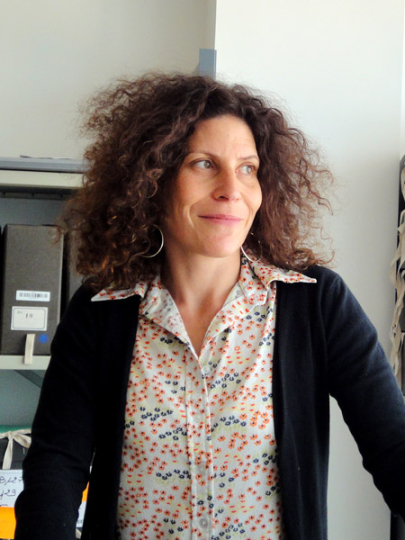
Claire Zalc