Visible Jews, Invisible Jews
Golders Green, the pervasive antisemitism, and what our experience is worth
On April 29, 2026, a man armed with a knife attacked passersby in the most Haredi part of Golders Green, a Jewish neighborhood in north London. British sociologist Keith Kahn-Harris (a contributor to K., where he published, in July 2025, “Why should Jews serve any purpose?”) responded in the days that followed in his Substack newsletter (It doesn’t matter how scared I am). The text he presents here is an expanded and in-depth version of that response. Starting from an observation that appears to be geographical – why did the attacker choose this part of Golders Green rather than another? – he offers an analysis of the distinction between visible Jews and invisible Jews, and of what the concept of pervasive antisemitism reveals about the way in which Jews, beyond their actual exposure to danger, share a common experience of fear.

April 29 in Golders Green
There’s no mystery why Essa Suleiman chose Golders Green as an appropriate location for his antisemitic attack on 29 April 2026. The North London neighbourhood is well-known for its Jewish population, its clusters of Jewish shops and cafes, its synagogues and its other Jewish institutions. There was no shortage of potential victims and, in retrospect, it seems almost a miracle that only two men were stabbed by Suleiman and that neither of them were killed. He was prevented from accessing his next target, a greengrocers, when the people in the shop barricaded themselves inside. He was then apprehended by police, assisted by the Shomrim (a Jewish emergency service) and is currently awaiting trial for terrorist offences.
The consequences of the 29 April attack continue to reverberate in the UK. Beleaguered Prime Minister Keir Starmer swiftly announced new security funding but was booed when he visited the site of the attack by some Jewish residents. The local member of parliament, Sarah Sackman, who is herself Jewish and a minister in Starmer’s government, also received a frosty welcome. Green Party leader, Zack Polanski, who is Jewish, got into difficulties after questioning what he saw as the heavy-handed actions of the police when apprehending Suleiman. In contrast, Nigel Farage of the fast-rising far right Reform party, made political capital out of his forthright denunciations and his well-received visit to the site of the attacks. At a large demonstration held outside 10 Downing Street on 10 May, a Labour minister received a frosty welcome and a Reform politician was warmly received.
On top of this intense political reaction, the attack made headline news in the UK media and beyond. It sparked considerable political controversy over what Starmer should be doing in response, the right-wing press hounding him for his supposed ineffectiveness. It’s not clear whether the Labour Party’s dismal showing in the May local elections was in any way related to criticisms of Starmer’s government’s approach to antisemitism, but it certainly didn’t help.
The degree of publicity and controversy that accompanied the Golders Green attack had less to do with the severity of the attack – after all, last Yom Kippur, two people died in an attack on a synagogue in Manchester – than the fact that it seemed like an escalation after weeks of other antisemitic incidents. These included arson attempts on a number of synagogues and four Hatzola ambulances being set on fire in March close to the site of the April Golders Green attack. There is informed speculation that a number of these attacks might have been ‘commissioned’ from local small-time criminals by online Iranian-linked proxy groups.
The Geography of a Jewish Neighborhood
Given the intense interest in antisemitism in the UK at the moment, it seems odd to point out that one of the most striking aspects of the Golders Green attack has not been extensively discussed: Essa Suleiman didn’t just choose Golders Green for his attack, he chose a particular part of Golders Green. And that choice (which is possible was someone else’s choice but as yet we have no evidence for this) tells us something both about antisemites and about how Jews respond to antisemitism.
There are two central arteries in Golders Green. One is Golders Green Road and the other is Finchley Road, part of which is also known as Temple Fortune. Both roads converge at a crossroads marked by a clock tower, just outside Golders Green underground and bus station. They end at two separate intersections of the North Circular Road, a major London thoroughfare.
Beleaguered Prime Minister Keir Starmer swiftly announced new security funding but was booed when he visited the site of the attack by some Jewish residents.
Around the point where they intersect, Golders Green Road and Finchley Road are fairly similar in character. The clusters of shops and cafes, many of them part of well-known chains, attract a mixed clientele that includes Jews (mostly not Haredi) and non-Jews. The latter population is quite diverse, as is the case in most London neighbourhoods. Golders Green is less famous for its Iranian, Japanese and Korean population than for its Jewish population, but they are a significant presence nonetheless.
The further you go down each road, the more that Golders Green Road and Finchley Road diverge sociologically. Heading north, after you pass some housing and the turnoff to a Jewish cemetery, Finchley Road becomes Temple Fortune. The population of this sub-neighbourhood includes Jews of all backgrounds, with a strong bias towards prosperous middle class Jews, some of whom are modern orthodox but few are Haredi. The shops reflect this; while there are kosher shops, delis and cafes, they are interspersed with high and low end chain shops and cafes.
Temple Fortune is dominated by a kind of North London Jew that is instantly recognisable to other North London Jews, but much more difficult to parse by anyone else. In contrast, the further you travel down Golders Green Road, the more orthodox and Haredi it becomes. Near the top there are outlets like KFC, Costa Coffee and a couple of banks. Further down there is a dense cluster of kosher restaurants and cafes. After that, the road becomes more Haredi with every step you take. You pass shtiebels, glatt kosher butchers and supermarkets and, just before you get to the North Circular, an impressive newly-built Sadigura shul.
Essa Suleiman chose that end of Golders Green Road as the site of his attack. In fact, there is reason to suspect that he selected the location carefully, or maybe it was selected for him. If he only knew that Golders Green was full of Jews, he would have likely got off the underground at Golders Green station. He actually got off at Brent Cross station, one stop down and much closer to the Haredi end of Golders Green. Apparently, neither Temple Fortune or the diverse end of Golders Green by the clocktower were ‘Jewish enough’.
Visibility as a trap
The reason I have laboriously described the Jewish geography of Golders Green is partially because it confirms what has long been known – the most visibly, stereotypically dressed Jews, are often at the sharp end of antisemitic assaults. For Jews, visibility is often a trap. That also includes visibly Jewish buildings and events too. Finchley Reform Synagogue, which was targeted in an arson attack earlier in April, might have been a less tempting target if the attackers had noticed the unsatisfactory invisibility of its congregants. At night, it was as good as an orthodox shul (and ironically more visible than the kinds of discreet shtiebel’s that most Haredim attend).
The most visibly, stereotypically dressed Jews, are often at the sharp end of antisemitic assaults. For Jews, visibility is often a trap.
It takes very little effort and imagination to expand one’s targets beyond the most visibly obvious Jews. Yet, right now, that effort seems to be rarely made. Perhaps invisible Jewish targets are less satisfying. When invisible targets are chosen it may be a sign of greater capacity and is therefore concomitantly more serious. One such target is the Sternberg Centre, a site in North London which houses a Jewish primary school, a Masorti synagogue, the headquarters of the Progressive Judaism movement and Leo Baeck College (the rabbinic seminary where I teach). It is surrounded by a high wall, and, while it’s common to see men and women wearing kippot going in and out of the site, you almost never see black hatted and bearded ultra-visible Jews doing so. In March 2026 it was revealed in court that two men with links to Iran had conducted surveillance of the Sternberg Centre as other Jewish communal sites. A nation state has the capacity to think beyond the obvious Jewish targets.
When invisibility no longer offers protection
While, from the perspective of risk assessment and security measures, visibility is a crucial variable to take into account, in one respect it doesn’t matter at all. It has been striking how far invisible Jews felt as personally threatened by the Golders Green attack as the visible ones did. While there was certainly mounting concern in the weeks before the attack as the incidents of vandalism and arson mounted up, the 29 April stabbings seemed to have been the moment when antisemitism became perceived a crisis: My social media feeds were full of British Jews expressing their anger and fear, synagogues and other Jewish organisations organised emergency briefings and politicians rushed to show solidarity. While the 29 April attack was targeted at a visibly Jewish neighbourhood, Haredi or even modern orthodox Jews were rarely the public face of the incident in the media and politics (although Chief Rabbi Mirvis was highly visible in the days after the attack and, bearded as he is, some may have mistaken him for a Haredi Jew).
Regardless of how Jews draw the boundaries of Jewish peoplehood, they are usually drawn to their widest extent when Jews consider the threat that antisemitism poses to them.
One conclusion we might draw from the Jewish reaction to the April 29 attack and its predecessors, is that most Jews do not take their level of visibility into account when they process and experience antisemitism. It is rarely much comfort for Jews who do not look stereotypically Jewish and do not spend much of their time in visibly Jewish buildings, that violent antisemites are not thinking of them when they look for targets. Regardless of how Jews draw the boundaries of Jewish peoplehood, they are usually drawn to their widest extent when Jews consider the threat that antisemitism poses to them.
It is sensible for Jews not to assume that invisibility will save them. Trusting in the poor intelligence gathering and lack of imagination of violent antisemites is a very shaky kind of hope to rely on. Yet the reasons for the collapse of the visible/invisible Jewish distinction when Jews worry about antisemitism also stem from a different source than feelings of insecurity and the bonds of shared Jewish peoplehood. There is something else going on that needs discussion and gets to the heart of one of the most significant aspects of how Jews have responded to antisemitism in recent years – or at least how invisible Jews have responded to it.
Ambient antisemitism
Over the last few months I have been working on two qualitative research projects that explore Jewish experiences of antisemitism in two European countries. Although not all respondents could be said to be living in fear, plenty said they were. And even the less fearful respondents often saw antisemitism today as having become ubiquitous and threatening. What was also striking was that, while some respondents had horrible stories of antisemitic assault and intimidation targeting them personally, that was not the norm. It was common to prefix statements about the ubiquity of antisemitism with caveats that they themselves had not been directly threatened.
Only a small minority of respondents in these two research projects were visibly Jewish. They could and often did go about their lives without experiencing antisemitism and did not feel discriminated against in their daily lives. Many simply did not tell people they were Jewish. Yet the fact that they could be protected from antisemitism through invisibility brought little or no comfort. The ones who had been more visible did not want to hide themselves and the ones who had never been visible resented pressure to stay that way. Forced invisibility is experienced as directly as any antisemitic assault.
One concept that is useful in understanding this kind of Jewish experience is ambient antisemitism, developed by my colleague at the Institute of Jewish Policy Research1 Jonathan Boyd, as well as elsewhere. Ambient antisemitism is the antisemitism Jews see around them, the ‘environment’ in which Jew-hatred occurs. It’s easy to see how ambient antisemitism can seem overwhelming to Jews right now. Ubiquitous media, including social media, means that there can be little escape from the steady feed of stories of ‘yet another’ antisemitic incident. The democratisation of voice on social media means that the views of the other are unrelenting. Against this background, antisemitism can seem to be everywhere, an incessant presence that reaches into the private sphere. That collapse of the public-private distinction also means that the lines between visibility and invisibility become blurred. One can be invisibly Jewish on the street and highly visible engaging in social media in one’s own home.
The ones who had been more visible did not want to hide themselves and the ones who had never been visible resented pressure to stay that way. Forced invisibility is experienced as directly as any antisemitic assault.
Ambient antisemitism also makes personal assessment of risk much more difficult. If antisemitism is everywhere and can be experienced as intensely in private as in public, it’s easy to fall into despair and feel like a target 24/7. And let’s not forget that for some antisemites all Jews everywhere are a target 24/7, in person or online. Ambient antisemitism offers a golden opportunity to antisemites: Just a few, as-yet non-fatal incidents in the UK in the last few weeks have put many Jews into a state of fear. Ambient antisemitism is amplified antisemitism.
It is very easy to point to Jewish fears in the UK today and see them as not proportionate to the actual danger. Certainly, talk about antisemitism can often be intemperate and Jewish allusions to the 1930s are hard to justify. There can also be a marked reluctance to engage with the very real differences in risk between the Jewishly visible and invisible. The problem is that challenging Jewish perceptions of risk can be experienced as itself antisemitic, regardless of intention. Certainly, the refusal across swathes of the left to face up to antisemitism in their ranks can sometimes produce an antisemitic discourse that, at best, sees Jews as existing in a state of hysteria, stoked for cynical reasons by Israel and its minions.
In the qualitative research I mentioned, many respondents were deeply upset by constantly having their fears downplayed or ignored. Fears of antisemitism aren’t simply inculcated and stoked by Jewish communal leaders and cynical politicians. But it’s also true that Jewish perceptions of ambient antisemitism can leave Jews open to manipulation by those who claim to ‘hear’ them. Nigel Farage’s own history of antisemitism is conveniently overlooked by some Jews who hear in his words the kind of full-blooded response to antisemitism that validates their most extreme fears and desires.
What my experience is worth
Ambient antisemitism raises fundamental questions about the nature of experience and the authority it should or should not be accorded. Speaking personally, that is one of the issues I have been struggling with over the last few weeks. The truth of the matter is that I am not living in fear right now. I work for two Jewish organisations, regularly attend synagogue and spend time in Jewish neighbourhoods. I am definitely shocked and upset. I am certainly much more conscious of risk and I am preparing myself for the worst that may be to come. But scared? Not really. That might change tomorrow or later today. But not right this minute.
I am someone who lives in fear much of the time. I am terrified of a future of authoritarian politics, climate change and economic chaos. When it comes to my Jewish life, I am calm, clear-eyed and focused on rationally assessing risk. It’s quite possible I sometimes underestimate those risks, but frankly I am determined not to change my behaviour regardless. My line in the sand is that I will accept the risks of living an openly involved Jewish life if I have to.
What I have come to understand though, is that my experience of antisemitism doesn’t really matter that much. My own perception of risk is not important because it doesn’t invalidate the fears of Jews who are more scared than I am. It would not be reasonable of me to ask that policy-makers in the Jewish community and outside it respond to antisemitism in a way that validates my own perceptions.
We live in an age where everyone has a platform, when experience can be spoken of, loudly and repeatedly. That leads to intractable problems when experience is treated as the foundation for policy-making.
Many British Jews are scared right now, and they need a response to antisemitism that acknowledges those fears and seeks to address them. Such a response may or may not resonate with me emotionally. That doesn’t matter. My own risk assessment won’t allay anyone’s fears. If you are seeking to respond to fears, one thing that doesn’t help is saying ‘well I’m not scared, you’ll be fine’. And when has saying ‘calm down’ ever calmed down anyone? As a fearful person myself, it has certainly never calmed me down.
I am not saying that speaking of my own experience necessarily undermines the experiences of others; it’s just that it doesn’t override them or constitutes a veto on the kind of policy responses that are necessary. It doesn’t mean that the more fearful experience of antisemitism should be the one that takes priority but it does mean that a policy response to antisemitism that fails to take serious account of those Jews who are suffering most, can never fully succeed.
We live in an age where everyone has a platform, when experience can be spoken of, loudly and repeatedly. That leads to intractable problems when experience is treated as the foundation for policy-making. What if we found a way of listening to the other that takes experience seriously, but without treating experience as the only source of truth in the world? What would happen if we listened to Jews – Jews from across the political spectrum – on antisemitism while also recognising that no Jew can realistically expect to mould the world according to their experiences? And what would happen if we made it a particular priority to listen to those who are suffering the most?
Ultimately, events of the last few weeks have shown that the categories of visible and invisible Jews may matter very much to antisemites looking for targets and they matter in terms of assessing Jews’ relative exposure to risk. But the distinction doesn’t matter that much when considering those Jews who experience antisemitism most intensely. The 29 April attack may have physically occurred in the Haredi part of Golders Green, but its reverberations spread much further. This is a grim reminder that even the most ignorant of antisemites has the potential to assault Jews they don’t even know exist.
- Institute of Jewish Policy Research (JPR): An independent research organisation based in London, specialising in the study of Jewish life and antisemitism in Europe. Jonathan Boyd is its director. See his interview in K. ↩︎
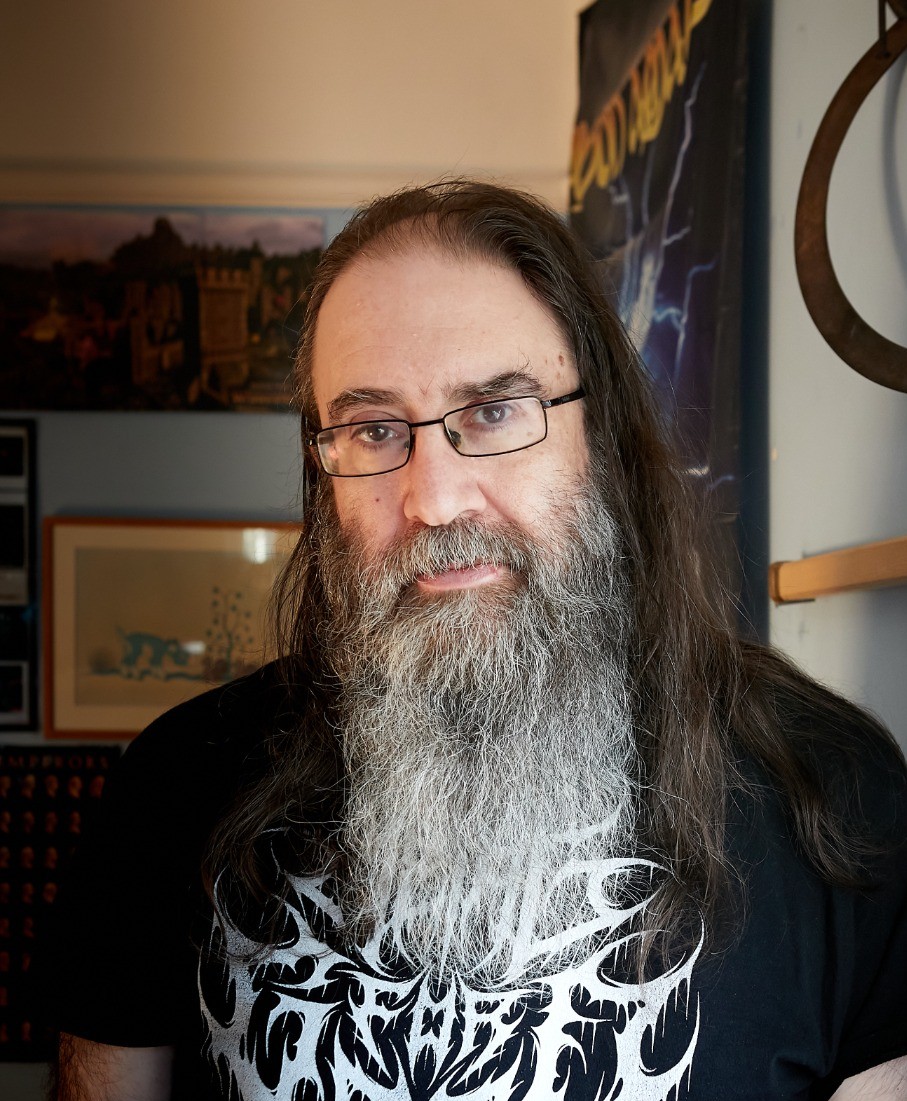
Keith Kahn-Harris
Dr Keith Kahn-Harris is a Senior Lecturer at Leo Baeck College and a Senior Research Fellow at the Institute for Jewish Policy Research, both in London. He is project director of the European Jewish Research Archive. His latest book is Everyday Jews: Why the Jewish people are not who you think they are (Icon Books, 2025). He has also published eight further books and dozens of articles for academic and general readerships, including two important studies of the UK Jewish community: Turbulent Times: The British Jewish Community Today (Continuum, 2010) and Uncivil War: The Israel Conflict in the Jewish Community (David Paul, 2014).