# 260 / Editorial
From Israel’s point of view, war with Iran is part of a logic of justification that has been available from the outset, and which the events following October 7 have only made more tangible. Since the Islamic Republic has declared its desire to destroy Israel and has followed up its threats with actions, the prospect of war seems inevitable, waiting only for the right moment to happen. Now, for circumstantial reasons that are not easy to pinpoint, what was latent has become a de facto proposition: Israel has committed itself, alongside the United States, to open war against Iran. The deliberate shift into this war calls into question the logic that justified it, first in that it raises the question of the objectives pursued in this war and their relevance to the actual political problems. This is where the contradictions arise, and the testimony of Israeli writer Zeruya Shalev, written to the sound of explosions and sirens, attests to the fact that they are keenly felt by Israelis. For what Shalev reminds us is that the existential threat currently hanging over Israel is not only, or even primarily, the external threat represented by the mullahs’ regime. At least as pressing, she believes, is the threat of internal division within Israeli society and the questioning of its democratic character, which has also become inevitable since the constitutional reform project raised the specter of civil war. Identifying without ambiguity the political benefits that the Netanyahu government expects to gain from the current war, Shalev points to the contradiction in which some Israelis find themselves trapped.
Related articles
Zeruya Shalev on Israel and the war in Iran
The real reason for the war between the United States and Iran may have nothing to do with Israel
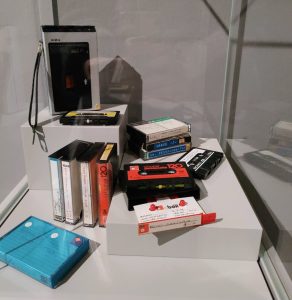
Before ‘Shoah’, the voices: Lanzmann’s forgotten tapes
On the American side, the political situation is drastically different, primarily in that the attack on Iran seems to be waiting for something to justify it. We see Trump and his administration hesitating between posing as the liberator of the oppressed Iranian people, asserting an unapologetic imperial logic, and invoking the threat that the Islamic Republic of Iran poses to the United States. With little success, it must be said, since popular support for the war, already singularly low, is falling as its economic consequences become apparent. What’s more, we see Trump’s base divided on this issue, especially, and this should come as no surprise, when it is framed as “support for a war wanted by Israel”. Rob Eshman’s article draws attention to the Trump administration’s lack of clarity about its own strategic objectives in Iran, and to the interpretative vacuum this creates, which is conducive to conspiracy theories and antisemitism. At a time when MAGA influencers are increasingly claiming that American political problems are the fault of Jews, in a context where mere hours ago a synagogue in West Bloomfield, Michigan was attacked by a gunman, and over in Europe, where in France the far-left political party LFI is playing on the pronunciation of Jewish names, while in Belgium an attack targeted the synagogue in Liège this weekend, we cannot ignore the repercussions this war will have on the rise of antisemitism.
At the Jewish Museum in Berlin, an exhibition features more than 220 hours of previously unheard audio recordings made by Claude Lanzmann and his assistants between 1973 and 1978, during the preparatory phase of the film Shoah. Esther Offenberg—member of the editorial staff of K. and coordinator of its English, Italian, Spanish, and Portuguese versions—spoke with Tamar Lewinsky, the curator of this exhibition, which aims to highlight the uncertain and tentative nature of the research undertaken on a subject that was then poorly understood. She discusses the genesis of this project, the challenges posed by these sound archives, and what these voices, recorded half a century ago, can still teach us.