On the evolution of the IDF: Interview with Yagil Levy
Much has been said and written about the Netanyahu government's conduct during the war in Gaza and its attack on Israeli democracy. But very little analysis has been offered on the role of the IDF, which is nevertheless a key player. Julia Christ interviews Israeli sociologist Yagil Levy on a subject he specializes in: the transformations in the composition, organization, and doctrine of the Israeli army. His uncompromising remarks are introduced by a short introductory text and supplemented by a set of critical notes.
Introduction
Combating the proliferation of anti-Zionism cannot consist solely of recalling the true history of Zionism, its roots in European emancipation policy, and its constitutive role in Jewish existence. It also means confronting the current reality of Israel, without evasion or pretense. The line we have set for ourselves in K. has never wavered in this regard. It has remained the same before and after October 7. From the diaspora, and even more so from the place where Zionism was forged, it is up to us to give the Jewish diptych that emerged after the Shoah a higher awareness of itself and its demands. Between the European diaspora and Israel, it is therefore necessary to make room for a reciprocity of perspectives. But this must be done with full knowledge of the facts, that is, by measuring how much, in Europe, the exercise is undermined, as any critical judgment of Israel is exposed to the capture and misappropriation of militant anti-Zionism, with the antisemitism that permeates it.
We must recognize that European Jews are naturally more aware of this difficulty than Israeli Jews. But for this very reason, they often remain apologetic about Israel and refrain from the criticism that their attachment to democratic ideals demands. This is a mistake, just as it is a mistake on the Israeli side to develop self-criticism in the name of these same ideals without taking into account the use that anti-Zionism makes of them when it seizes upon them and converts them into arguments aimed at the disappearance of Israel. In both cases, we are moving away from the reciprocity of views that we need. What must be recognized instead is that criticism of Israel is not anti-Zionism when it is constructive; it is even necessary for Zionism to continue to fulfill its function for Jews. In truth, it is the best antidote, the only effective one, against anti-Zionism.
The aim of Yagil Levy’s work is to determine what has become of the IDF as a result of long- and medium-term sociological developments and political choices made during the Netanyahu era.
In K., echoing the democratic protest movement that arose in Israel in March 2023 against government policy, and following its demonstrations throughout the war, we kept the most sensitive issues open in the magazine: the growing influence of the Israeli far right, the damage caused by the warmongering and colonialism of its various religious and non-religious factions, and the contradictions in which the Jewish state finds itself caught between a quest for ever-precarious security—a precariousness that the October 7 attack brought back to the fore in an unprecedented way—and the violations of rights it commits in the name of a pure policy of force.
Among these issues, the most important is undoubtedly the evolution of the IDF, the Israeli army, the backbone of both the state and society. As we know, it is around this pivot that collective identity has largely been formed, in the course of a history that has never seen the disappearance of the objective existential threat, but which has also been one of continuous military occupation since 1967, accompanied by colonization that was first tolerated and then encouraged, and control exercised over several million Palestinians outside Israel’s borders.
To address this issue, we turned to Yagil Levy, the sociologist who, in Israel, is the author of the most informed and most critical books devoted to the IDF in recent times. His analyses reveal a deterioration whose depth must be measured realistically and without looking away. While controversial, their empirical solidity and well-argued nature mean that no one can dismiss them out of hand. Admittedly, when we interviewed him, we were confronted with precisely the lack of reciprocity in perspectives that we had feared. The focus of Yagil Levy’s work is Israel, and it is primarily intended for internal consumption. It seeks to determine what has become of the IDF as a result of long- and medium-term sociological developments and political choices made during the Netanyahu era. Only then can we hope to improve the situation in Israel, which means making Zionism more lucid about what it needs to do to continue to assert itself. In short, Yagil Levy’s analyses are part of an Israeli debate on the IDF whose premises and expectations are shared by all participants in the discussion, however opposed they may be to each other, without it being necessary to spell them out. However, it must be noted that this is not the case when his remarks are transposed into the European public debate, where, on the contrary, the lack of evidence for the Zionist project has become dominant, and where the significance of the IDF, in its structuring dimension for both Israeli history and society as a whole, is generally not perceived.
To correct this asymmetry, we have therefore endeavored, in our questions, to provide the missing context. Similarly, whenever necessary, we ourselves have brought to the public’s attention the references and sources that our interlocutor did not feel the need to mobilize in support of his arguments. These references and sources can be found in the notes. Finally, we sought to shift the discourse in order to reintroduce the perspective of the Jewish diaspora into the examination of this issue, which cannot be ignored by any consideration of Israeli policy, insofar as it is concerned with remaining on its Zionist path. We would even add that this is less true today than ever before, at a time when Israel is undoubtedly experiencing an ideological crisis that is increasingly taking the form of an identity crisis.
PART ONE: THE ARMY AND THE SOCIETY.
Let us begin with a question that may seem elementary but is not: what is the IDF? You served as an officer and then devoted your career to studying it: what is the actual place of this army in Israeli society? How does it differ from the Western armies we are familiar with?
The IDF differs fundamentally from Western armies. It was indeed influenced by the legacy of the French Revolution, which gave rise to the idea of citizen armies, as well as by the romantic aura that surrounded Western militaries in the nineteenth and twentieth centuries. Yet even at their peak, armies operating within democratic societies were not perceived as institutions enjoying supremacy over civilian bodies. Rather, they were understood primarily as instrumental organizations tasked with preserving security and generally maintained relatively impermeable boundaries between themselves and civil society.
The IDF differs from these models in a profound way. From its inception, it was shaped as a “people’s army”—an institution that defines the identity of Israeli society itself. As such, it has been perceived as a national melting pot, an integrative mechanism, a body that delineates the boundaries of Israeli citizenship, and an institution that has assumed distinctly social roles in the realms of education, immigrant absorption and settlement.
You say “people’s army.” Does that mean everyone is integrated into it?
But even if one accepts the ideal as a point of departure, the IDF’s standing has undergone sustained erosion since the 1980s as well as the army’s negative contributions to social formation in Israel—for example, the exclusion of Arab citizens and the entrenchement of the subordinate status of women and Mizrahim1, Jews who emigrated from Arab countries.
The army is built on an egalitarian ethos, yet in practice it operates through selective conscription that leaves nearly half of the country’s citizens outside military service2. It promises social integration, but sustains an “ethno-class” tracking system: socially advantaged groups are overrepresented—relative to their demographic weight—in the army’s prestigious technological units, while lower-class and religious groups are overrepresented in the less sophisticated and less rewarding ground combat formations. The army presents military service as the ultimate test of citizenship, yet in practice that service yields diminishing social rewards for those who complete it.
The result has been a systematic increase in support among Jewish citizens for abolishing compulsory conscription, to the point that, prior to the Gaza war, supporters of ending the draft had become a majority3. The war temporarily deferred the crisis, but with its conclusion, signs of renewed support for abolishing compulsory service are already re-emerging. The persistent political failure to conscript the ultra-Orthodox population, which remains exempt from mandatory service, has been a major catalyst in this process—but it is not the only one.
Which groups are currently shaping the IDF’s identity?
The “people’s army,” ostensibly universal, has become in recent decades a highly charged arena of identity struggles. While the secular middle class—the historical backbone of the army and of its professional ethos—seeks to preserve the IDF’s traditional identity as a relatively restrained military organization, subject to law, hierarchical political authority, and standards of rational professionalism, two major right-wing groups are actively working to undermine this identity.
The Haredi sector (Hardal) has pursued this challenge since the 2005 disengagement from Gaza, questioning the very subordination of the military to political and judicial authority in the name of religious-national imperatives. This sector promotes halakhic stringency and a messianic worldview. It constitutes the ideological core of the settlement movement, controls a dense network of hesder yeshivas and religious pre-military academies4, and is represented politically by the Religious Zionism party. Alongside it stand the “blue-collar fighters”—lower-class groups staffing ground combat roles—who began articulating an independent political voice following the Elor Azaria affair in 20165 and who in recent years have been backed by Minister Itamar Ben-Gvir. These two groups are not merely criticizing the military leadership; they seek to fundamentally transform the army’s normative identity.
What do they want?
The vision they promote is that of a military whose commitment to international law and liberal norms is weak, if not marginal; a military that no longer regards restraint as a virtue but as a weakness; a military that is no longer uneasy about the use of violence but is willing to proudly present it as evidence of its moral standing; and a military that elevates “victory” to a supreme value, even at the cost of eroding democratic principles, human rights, and gender equality.
In this way, the army has become an active arena in the struggle over its identity. Its structural bifurcation—between the ground forces, where militant identity groups are concentrated, and the “high-tech army” of the air force, intelligence, and advanced technological units—deepens internal divisions and undermines the possibility of a shared military ethos.
This struggle is not merely spontaneous. It enjoys explicit political backing from right-wing parties. Under these conditions, the question of the IDF’s identity ceases to be a purely professional matter and becomes a political–regime question of the highest order.
You describe dynamics, groups, tendencies—but who decides, in the end? Reading you, the IDF appears as a field of forces rather than a unified institution. Are there open conflicts within the senior command? Internal resistance to what you describe? Oscillations in the army’s general policy depending on the balance of power at any given moment? In other words: is the senior military command itself a site of battle, or has it already tipped?
The war made clear that this is not an abstract disagreement. Especially in the ground forces, commanders possess substantial discretion to translate their own interpretations —often rooted in identity-based worldviews —into operational practice. When a division commander educated in Hebron, Brigadier General Yehuda Vach, declares that there are no innocents in Gaza, a position that is not the official doctrine, he is not merely expressing an opinion. He is institutionalizing his interpretation in fire policies and implicitly challenging the authority of the senior command.
This contrasts sharply with the approach taken by Central Command head Yehuda Fox, who sought to restrain settlers’ extremist behavior in the West Bank and, as a result, faced fierce political attacks from the right.
The army you present appears to be traversed by intense identity struggles. But for many Jews in the diaspora, the IDF remains an army that defends Israel and also guarantees, by protecting Israel, that Jews everywhere in the world will never again be defenseless. Is there not a kernel of truth in this vision of the IDF as a defensive army of the Jewish people? Is that not also part of its identity? And if so, from when, and how, has this kernel been covered over by the dynamics you describe?
There is no contradiction here. A military can be deeply committed to its defensive mission and still serve as an arena in which different groups compete over how that mission is interpreted. There is no fundamental disagreement between soldiers in special units commonly associated with the center-left and right-wing soldiers operating within the framework of territorial defense in the West Bank regarding the army’s basic defensive role. What is contested is not the mission itself, but its meaning and limits. Competing interpretations of what “defense” entails—who is to be protected, against whom, and by what means—are increasingly shaped by identity-based worldviews.
I would add that in recent decades the dominant conception of defense has been framed primarily in terms of defending the state and its territorial control, rather than defending the Jewish people as such.
Your book Shooting. Not Crying was published in February 2023, eight months before October 7. In it, you described a “new style” of militarization no longer primarily grounded in the myth of shared sacrifice, but rather in a promise made to the Israeli middle classes that war could be waged while keeping Israeli human costs to a minimum. Can you explain this mechanism?
The ability to sustain a war for nearly two years—at a time when it is clear to most of the public that it has not achieved its declared objectives, and when a substantial portion of the public also recognizes that it delays the return of the hostages and in practice endangers their lives—is indeed a profound puzzle. It is a deep socio-political question: how is legitimacy maintained for such an ostensibly costly war over such an extended period?
One central explanation lies in Israel’s success in conducting the war at relatively low costs—first and foremost, low human costs on the Israeli side. Let me illustrate this through what may be termed the “blood price.” During Operation Protective Edge in 2014, the military prevented the government from occupying Gaza, estimating it would cost hundreds of soldiers’ lives. That ground campaign lasted two and a half weeks; 44 soldiers were killed.
By contrast, in the current war—far more intensive and vastly longer—fewer than 500 soldiers have been killed in ground operations in Gaza after roughly 21 months and about 3000 were injured. This is a extremely painful toll, but in relative terms it represents a reduction of tens of percentage points in the Israeli blood price.
How was this outcome achieved?
It is the product of a principle that has become paramount in Israeli warfare since the withdrawal from Lebanon in 2000: the transfer of risk from soldiers to enemy civilians.
This principle has been implemented through a wide array of practices: an aggressive fire policy6 that includes aerial strikes authorizing collateral damage—namely, the killing of civilians—on an unprecedented scale; extensive use of artillery fire and the systematic demolition of buildings at the entry points to populated areas; the creation of “sterile killing zones” in which any man entering a defined space is deemed a legitimate target; rules of engagement that leave little room for doubt or discretion…. The result has been an extremely heavy civilian death toll in Gaza.
How do you explain that there was no protest comparable to previous wars?
Even the price ultimately paid in the prolonged ground campaign did not trigger a bereavement-driven protest of the kind Israeli society had experienced in earlier wars. One explanation lies in the changing social composition of the fallen. Whereas in the First Lebanon War of 1982 secular middle-class soldiers constituted about two-thirds of the fatalities, in the current war their share has dropped to roughly one-third. The burden has instead been borne primarily by other groups: religious soldiers, settlers, and lower-class combatants.
For these groups, military death has not necessarily been framed as a tragedy prompting criticism. Particularly among religious communities, it has often been presented as a source of pride—as proof of their status as the “new military elite,” and specifically as those who sacrifice themselves to “correct” the mistakes of the secular elites, from the Gaza disengagement to Oslo. In this way, one of the key societal mechanisms that previously constrained prolonged wars has eroded.
And the economic burden, the weight on reservists—did that not take its toll?
Alongside the reduction of risk to soldiers, defensive systems such as Iron Dome and other technologies have enabled extended warfare while dramatically reducing Israeli civilian casualties, even as the fighting expanded to Lebanon and later to confrontation with Iran. This has granted Israel an exceptionally wide margin of military freedom of action, almost devoid of a domestic “home-front price.”
Even the widespread perception that the reserve burden in this war was exceptionally heavy warrants critical scrutiny. Though significant, it was mitigated: the military transformed the model into something closer to a voluntary–professional force, with generous compensation, a one-week-on/one-week-off structure, and paid volunteers as substitutes.
The economic burden was absorbed through public debt—shifting costs to future generations—while rising stock indices mitigated wealth losses among those most capable of translating economic harm into political action.
Taken together, the war has been conducted in a manner that systematically displaced its costs—human, economic, and political—away from key social groups. This displacement is a central condition for sustaining a prolonged war even when its achievements are in doubt.
This analysis of “risk transfer” is striking. But is there not a degree of over-rationalization of social logics on your part? You describe mechanisms that have been taking shape over decades—yet you apply them to a society that has just experienced October 7 as a pogrom. How do we distinguish between what stems from a long-term moral transformation, which you have been documenting for years, and what might be a reaction—disproportionate—to an unprecedented trauma? Moreover, this “risk transfer”—is it really a principle, something thought through and assumed within the institution, or is it rather your interpretation of a convergence of practices whose cumulative effect no one explicitly intended? The distinction matters: in one case, we are facing a doctrine; in the other, a drift. And responsibilities are distributed differently.
Risk transfer is not merely a pattern of behavior – it is a doctrine7. It is clearly reflected in operational practices whose logic has been explicitly articulated by commanders, past and present: the imperative to spare soldiers’ lives8. When force protection is perceived as insufficient and soldiers are harmed because commanders are seen as prioritizing the protection of Gazan civilians, protest emerges—either from the right or from within the ranks themselves. This pattern has been clearly observable since the Second Intifada. What is new is its escalation and its culmination in the current war. One way to trace this escalation is to examine the ratio of Gazan civilians killed to Israeli soldiers killed. That ratio has grown dramatically, indicating a steady reduction in the risk borne by Israeli forces and a corresponding transfer of risk onto enemy civilians.
You describe the erosion of a certain military ethos. But allow us to aks the question that is often avoided: faced with an enemy like Hamas, faced with October 7, what would a military response faithful to the principles you lament seeing disappear look like? Not in the abstract, but concretely: what should the IDF have done differently?
This issue can be approached from two distinct perspectives. The first is legal–moral. Armed forces are bound by legal obligations, and these obligations do not vary according to the morality of the enemy. A civilian is a civilian, and the duty to protect civilians from hostile action is not in doubt. International law does allow wide interpretive flexibility regarding the circumstances under which civilians may be harmed, but the overall scale of killing and destruction still matters. It is precisely this cumulative magnitude that has to Israel’s actions being framed, by some, as genocidal. The second perspective is political. From this standpoint, there is no rational logic to the catastrophe Israel has inflicted on Gaza. My argument is that Israel is now in a worse security situation than before the war. On its southern border are two million people living in extreme density, many of them homeless. Some will seek revenge, while there is no longer a sovereign authority in Gaza with whom Israel can manage arrangements, as it did in the past—without complacency, but with a governing actor capable of restraining violence by the population. From this perspective, Israel’s course of action was a strategic mistake from the very outset9.
In Israel’s Death Hierarchy, you show how casualty aversion has restructured the hierarchy of lives to be protected. Did this hierarchy play a role in the current war?
The death hierarchy played a central role in the current war. It operated along two complementary axes: first, by shifting risk away from soldiers onto enemy civilians; and second, within the military itself—by transferring risk from soldiers drawn from the secular middle class toward lower-class and religious groups, as a result of the “ethno-class” logic discussed earlier10. This hierarchy facilitated the prolongation of the war even in the absence of clear achievements.
How was this transfer of risk to Gazan civilians made ideologically acceptable?
A broad ideological apparatus was mobilized. On the religious right, Gaza’s population was framed as “Amalek,” with no innocents. On the center-left, passive support emerged, grounded in a lethal logic: if the risk is not borne by them —Gazan civilians—, it will be borne by us.
How does this represent a change from previous decades?
To grasp the depth of this ideological shift, it suffices to recall that in previous decades Israel witnessed a vivid public debate over how much risk soldiers should assume in order to prevent harm to civilians—a value also enshrined in the IDF’s code “the IDF’s spirit.” This debate not only disappeared after October 7; raising it became illegitimate in itself.
It is crucial to emphasize that this shift is not confined to the right. In a postwar survey, approximately 70 percent of Jewish respondents who identified as left-wing awarded the military a high moral rating for its conduct during the war. Even exceptional statements by left-wing leaders—most notably Yair Golan’s remarks about the killing of children11—alongside the accumulation of reports and evidence of war crimes, failed to undermine this support. The center-left largely internalized the logic of war: the transfer of risk came to be seen as a necessity, and the human cost on the other side ceased to function as an effective moral boundary even for those who had previously defined themselves as a critical moral alternative.
You claim that the center-left has “internalized the logic of war.” But is this center-left not itself traversed by deep tensions? And above all: what place do you accord, in this “internalization,” to the repeated experience of the Palestinian partner? After the suicide bombings of the Second Intifada, after the withdrawal from Gaza followed by Hamas’s takeover and rocket fire, after October 7, the Palestinian Authority’s inability to propose a political project—is it not possible that this internalization is also the product of a painful learning process, of a series of disappointments that eroded the belief that another relationship was possible? Should we not in this way complicate your diagnosis of a purely endogenous transformation?
My answer has two parts. From a historical perspective, there is more than one narrative explaining what led to the outbreak of the Second Intifada and how it unfolded. But beyond competing narratives, my basic analytical stance has always been to ask: what is the responsibility of the Israeli side to change reality? Not because I absolve the other side of responsibility, but because Israel’s leadership is accountable to me—and it is toward that leadership that I direct my voice. Ultimately, the Intifada ended. The Palestinian side signaled a willingness to return to a political track. Prime Minister Ehud Olmert attempted to pursue such a course but ran out of time. Since Netanyahu’s return to power in 2009, efforts at dialogue were effectively frozen. The Israeli left has been paralyzed since the Second Intifada. It failed to accumulate the political energy needed to present a genuine alternative, despite sustained anger over Arafat’s conduct in 2000. In that sense, the left shares responsibility for entrenching the status quo that ultimately led to the current disaster.
But there is a second part to my answer. The left, wherever it exists, has a historical moral role. That role does not disappear because trauma is deep or pain is real—as it certainly is after October 7. The assumption that revenge is legitimate, or that there are no innocents in Gaza, cannot guide those whose task is to offer an alternative. Look at what happened after October 7: the right had a clear answer about what should be done; the left largely confined itself to demanding the release of the hostages. It is hardly surprising that the right’s path prevailed.
Let us return to the question of national solidarity. You seem to call it into question…
I suggest distinguishing between solidarity on the one hand and repression and political engineering on the other. The war erupted after months of intense struggle by the center-left against the attempted regime overhaul, amid a widespread sense that civil war might be imminent. The outbreak of the war suspended the judicial overhaul and made it possible to mobilize broad support for the war effort.
But was this broad support an entirely fictitious solidarity?
The initial solidarity began to erode as the struggle over the release of the hostages intensified. This struggle became the central identity marker of the left: prioritizing the return of the hostages offered a way to oppose the war indirectly, by framing the conflict around a value capable of mobilizing cross-partisan support. Yet it quickly generated a sharp left–right conflict, which escalated to the harassment of the hostages’ families themselves. These attacks coincided with the renewal of the regime overhaul and with a campaign by the right accusing the center-left of responsibility for the Hamas attack, allegedly due to the protest movement’s weakening effect on the military.
Thus, the war did not produce deep national solidarity. Rather, it functioned as a mechanism for accelerating processes of internal delegitimation and political engineering. Under the guise of unity, a struggle unfolded over the definition of loyalty, the legitimacy of criticism, and the very boundaries of belonging to the legitimate collective. The death hierarchy did not merely distribute risks unequally; it also served as a tool for sorting citizens—determining who is worthy of sacrifice, who is entitled to criticize, and who is to be silenced.
Can we then say that at the beginning of the war, immediately after October 7, the army was the expression of the intense national solidarity that nonetheless inhabits the Israeli people—and indeed the Jewish people as a whole, since the diaspora mobilized, financially at least, for Israeli soldiers—and that it was the duration of the war that shattered the deep political cleavages of Israeli society while forcing the progressive part of society to fall silent in the name of national solidarity, but a solidarity now instrumentalized by the ruling political class?
To some extent, that is true. The military became a focal point of identification. Soldiers moved to the center of public attention. Even the Jewish left supported its young men and women who enlisted, or at least restrained itself from criticism, whether out of solidarity, fear generated by the events of October, or a sense of guilt over having allegedly weakened the army during the protests against the regime overhaul. But it is crucial to recognize a syndrome that exists everywhere, yet is particularly powerful in Israel: identification with soldiers. The call to support the troops tends to paralyse criticism of the military. In Israel it even operates through a reversal. Criticism of the military as an institution, an organization that shapes policy and bears responsibility for its implementation, is reframed as criticism of the troops. In reality, this is a highly effective framing strategy employed by actors on the right to silence criticism from the left. And it works.
Your 2015 work on the “divine commander” describes the religious invasion of the IDF’s normative spheres through yeshiva networks. Can you explain the dual process you identified?
My argument is that since the early 2000s the IDF has been undergoing a dual process: religionization and theocratization. These are not identical processes, but they intersect and mutually reinforce one another, producing a profound transformation in the character of the military and in its relationship with society and state institutions.
What do you mean by “religionization”?
Religionization is reflected in the growing prominence of religious symbols, norms, and values in military culture. Its manifestations include strict enforcement of Sabbath and kosher regulations, unit-level prayers, “modesty” norms restricting women, and the expanding presence of religious discourse. This is not merely a function of an increase in the number of religious soldiers, but rather a shift in the organizing norms that structure military life.
And “theocratization”—how is it different?
This process has been intertwined with theocratization, in the deeper sense of rabbinical authorities intervening in the management of the military and in the exercise of force. Thus, the military consulted rabbis prior to deploying units for the evacuation of settlements; consulted rabbis in formulating policies governing the joint service of female soldiers and religious male soldiers; and enabled a significant expansion of the authority of the Military Rabbinate, which over time has become a central educational arm of the IDF—overshadowing the secular Education Corps. Ethical discourse within the military has likewise been influenced by religious symbolism, including the growing use of theological metaphors such as “Amalek,” even prior to the current war.
How was your book received at the time?
When my book was published in 2015, it was met with sharp hostility within the national–ultra-Orthodox (Hardal) sector, but also with considerable skepticism among many secular Israelis, particularly those close to the military establishment. Much of that skepticism has dissipated in recent years—and with particular intensity during the current war.
What have you observed during this war?
The Hardal establishment has advanced an agenda aimed at promoting graduates of its educational institutions into senior command positions. Religious commanders stood out during the war—both in their visibility and in the values they sought to advance. They were especially prominent in promoting a discourse of revenge, a discourse that had previously been marginalized in Israeli culture in general and in military culture in particular, in part because it was considered illegitimate. It was religious commanders and soldiers who promoted calls for a return to Gush Katif, after seizing areas in Gaza during the early stages of the ground operation from which settlements had previously been evacuated. These calls, emerging from within the military, later inspired a civilian political movement. Military rabbis also affixed mezuzot to the homes of Gazan residents. In the West Bank, religious influence has been even more pronounced.
What does this mean for the army ?
All of this framed the war as a messianic campaign, one aimed at advancing settlement in Gaza, and cast the military as “God’s army.” Yet precision is necessary. These public portrayals were exaggerated. The prolongation of the war and its aggressiveness did not stem primarily from a desire to renew settlements, but from a new security doctrine seeking to realize “permanent security” in Gaza. Moreover, even as the military became more religious, it was in practice secular pilots who were responsible for the highest levels of killing and destruction—and not out of a religious ethos. The depiction of the military as “religious” thus also served the secular middle class—the stronghold of the center-left—as a means of distancing itself from the war’s most troubling practices and attributing responsibility for them to “others.”
In what way does this religionization pose a problem for Israeli democracy?
Religious influence is not merely a cultural problem; it is a regime problem. A Hardal minority, comprising only a few percentage points of the Jewish population, leverages its influence over the military through a structural threat: if its demands are not met, it will encourage its students not to enlist in combat roles. In this way, it succeeds in shaping arrangements that restrict women’s service, strengthen the Military Rabbinate, and constrain the military’s actions in the West Bank. The IDF is the only military in any democracy that consults rabbis on matters concerning troop deployment and personnel policy—and it does so through informal channels, not via transparent legislation or overt political decisions.
In this sense, religionization and theocratization are not marginal cultural trends but a direct challenge to democratic sovereignty. When the military derives legitimacy from rabbinical authorities, operates under a sense of religious mission, and consults actors outside civilian oversight mechanisms, it ceases to be exclusively subordinate to democratic civilian rule. The proliferation of sources of authority—law, command, rabbi, God—does not enrich democracy; it weakens it. It diffuses responsibility, blurs the boundaries of obedience and disobedience, and reduces the state’s capacity to restrain the violence carried out in its name. This is particularly evident in the West Bank. In this context, religious influence may well obstruct any future political attempt to de-escalate the Israeli–Palestinian conflict, or even to resolve it through the evacuation of settlements. Such an attempt would likely provoke resistance within a military whose religious component is far more substantial than it was at the time of the evacuation of Gush Katif in 2005.
PART TWO: THE OCCUPATION AND THE SETTLERS
You have developed the concept of the “policing army” to describe what is happening in the West Bank. What do you mean by that?
My argument is that since the Second Intifada, in the early 2000s, a structural split has emerged within Israel’s military12, effectively producing two armies. On the one hand stands the official army—the IDF—formally subordinate to political authority through the senior command and deployed primarily in external arenas. Alongside it, a policing army has taken shape in the West Bank: a permanent force embedded in the territory and within settler communities, operating according to a distinct logic of authority, oversight, and the use of violence.
What is this “policing army” made of and how does it function ?
This policing army is composed of Border Police units, settler militias operating under the framework of “regional defense,” and regular army units permanently deployed in the West Bank. Formally, it is subordinate to the commander of the Judea and Samaria Division and, through him, to the senior military command. In practice, however, this subordination is only partial. It functions as a force embedded within settler communities and shaped by its daily interaction with them. This embeddedness rests on blurred boundaries between military forces and settler communities: joint frameworks involving soldiers and militias; overlap among regular soldiers, reservists, and members of local security squads; and dense personal, ideological, and religious ties between commanders and settler leadership.
How is oversight of this force exercised?
Oversight of the policing army is not hierarchical but matrix-based13. It is exercised through a network of civilian and religious actors: settler communities themselves; local security coordinators in the settlements; “internal” monitoring by religious soldiers and settlers; rabbis issuing halakhic rulings that prohibit soldiers from participating in the evacuation of settlements; and, alongside all of these, a divisional command increasingly staffed by religious commanders and settlers. The current head of Central Command, Maj. Gen. Avi Bluth, responsible for the sector, is a graduate of the national–ultra-Orthodox (Hardal) educational system—a fact that is not incidental in this context.
What are the consequences of this matrix-organizational structure?
Over time, this structure has produced a clear bias in how the policing army understands its role. It increasingly sees itself primarily as a force protecting settlers, rather than as one charged with protecting the Palestinian population under its control. The result is the systematic toleration of settler violence against Palestinians—both physical violence and property destruction—and the failure to provide Palestinians with effective protection.
In recent years, settler violence has intensified, and since the outbreak of the war an additional shift has occurred: soldiers no longer merely “stand by” in the face of violence against Palestinians but at times actively participate in it. The war has also led to a significant expansion in the distribution of weapons to settlers, many of whom operate within the framework of regional defense and, as such, inflict harm on Palestinians. At the same time, violence by military forces themselves has escalated. Part of this has been described as “Gazafication”—the importation of methods from Gaza, such as the killing and destruction inflicted in the Jenin refugee camp. As repeated reports demonstrate, the likelihood that a settler will be punished for harming a Palestinian is low, and the likelihood that a soldier will be prosecuted following a complaint involving the killing of a Palestinian in the West Bank is almost nonexistent.
How would you analyze this failure of the army?
The argument I advance consistently is that this is not an incidental failure of the military to confront settler violence. First, it is a structural failure, stemming from the very nature of the policing army and the matrix-based oversight within which it operates. Second—and this is the central point—it is a deliberate process. Since the return of Netanyahu-led governments in 2009, the policing army has become a gray arm of the state: a mechanism that advances the de facto annexation of the West Bank through the use of violence, the displacement of Palestinian communities, restrictions on Palestinian agriculture and presence on the land, and the establishment of illegal outposts under the watch of the military.
This is an arm that carries out in practice what the official State of Israel cannot do openly due to constraints imposed by international law. In this sense, the policing army is not a deviation from policy; it is one of the central instruments through which policy is implemented. This poses a serious threat to the rule of law, to civilian control of the military by the elected political leadership, and to the possibility that policy in the West Bank reflects the collective will of the public.
You recently wrote an article for Foreign Policy titled “How Settler Violence Serves Israel’s Interests.” Israeli security officials publicly express concern about this violence, and yet it continues. How do you explain this apparent paradox?
First, as I have argued earlier, settler violence serves a central interest of the center-right and right-wing governments since 2009: the creeping annexation of the West Bank. To make sense of the state’s and the military’s seemingly ambivalent response to this violence, I propose a distinction between functional and dysfunctional settler violence.
What is “functional” violence?
Functional violence advances annexation without destabilizing security or seriously damaging international legitimacy. It is routine and low-profile: assaults on farmers, property damage, harassment, obstruction of access to land. This violence is not perceived as exceptional but as part of the everyday reality on the ground.
Clear evidence of the functionality of this violence emerged during the war. Settlers used violence against Palestinian communities to force them off their land, thereby creating territorial contiguity between settlements—including illegal outposts. The army did not directly expel Palestinians, but it acquiesced in the expulsions, failed to return communities after they were displaced, and refrained from protecting them—even in cases where the Supreme Court explicitly ordered that communities be returned to their land and defended by the military. This is a clear indication that even when the army is not the direct executor of expulsion, it views such outcomes as not opposed to its interests.
And “dysfunctional” violence?
By contrast, dysfunctional violence is large-scale, overt, and well documented. A paradigmatic example is the attack on the town of Huwara in February 2023, following the formation of the Netanyahu government. Even when military forces drag their feet or fail to prevent such attacks, this form of violence is perceived as problematic from the state’s perspective, because it attracts international attention, risks broader escalation, and undermines the ability to manage the West Bank “under the radar.”
For this reason, dysfunctional violence is met with public condemnation by both political and military authorities. It is crucial to stress, however, that such condemnations are irrelevant to functional violence, which continues to flourish precisely because it serves the governing logic of control on the ground.
How does the army respond to this dysfunctional violence?
One of the more innovative ways in which the military has responded to dysfunctional violence is not by restraining settlers, but by proactively deploying violence against Palestinians itself. Thus, in August of last year, the head of Central Command ordered the uprooting of approximately 3,000 trees in a Palestinian village to which a Palestinian who had attempted to attack settlers had fled, and declared that this would henceforth be the mode of operation. Rather than allowing settlers to carry out independent acts of revenge—commonly referred to as “price tag” attacks—the army carried out the punitive action itself. This reflects a pattern not of restraining extremists, but of aligning with them: an effort to prevent challenges to state authority by adopting their methods.
In sum, what is often portrayed as the military’s impotence in the face of settler violence is not a functional failure. It should instead be understood as an integral component of the operational logic of the policing army.
Your distinction between “functional” and “dysfunctional” violence is analytically powerful, but it risks being read as a form of state cynicism pushed to the extreme. Do there exist, within the Israeli security apparatus, actors who genuinely oppose this logic? Or has the structure you describe absorbed any possibility of internal resistance?
This is my interpretation. I am not claiming that senior decision-makers consciously articulate such distinctions, but this is how I read the logic of state behavior over time. The dominant narrative among senior officials and military officers who are troubled by developments in the West Bank is that the state is helpless in the face of the settlers. This is the familiar story of a state that has been “captured” by the settlement movement. However, for more than a decade, I have argued that this explanation is insufficient. A form of “capture” that is so deep and so sustained cannot persist unless it serves a broader configuration of state interests. Take the expulsion of Palestinian communities as an example. If these expulsions were truly contrary to state interests, the military would have returned the communities to their land and protected them, even if it had failed to prevent their initial displacement. The fact that this does not happen suggests not paralysis, but accommodation.
PART THREE: SOCIETY AND THE FUTURE
What state is Israeli society in today? And do you see a connection between this current state and the transformations you have been studying?
There is no separation between the war, the military, and the regime overhaul. What the current government is pursuing is not a temporary deviation but the outcome of a deep transformation in Israel’s power structure. For the first time, two right-wing groups—the national-ultra-Orthodox (Hardal) sector and the lower middle-class Mizrahi right associated with Itamar Ben-Gvir—are attempting to remake the regime itself.
What is their target?
Their target is the traditional mamlachti order: secular rule of law, a strong public service, limited but real democratic constraints, and formal commitment to international law. Central to this project is the dismantling of the secular middle class’s remaining power bases—above all the Supreme Court, the civil service, the media, academia, and the senior military command.
This struggle has been unfolding inside the military for years. It aims to undermine the symbols associated with the secular middle class: the “high-tech army,” the military’s secular educational system, the Military Advocate General, the relative autonomy of the General Staff, and principles such as gender equality. Structural changes made this possible: the withdrawal of the secular middle class from ground combat roles and the rise of religious and lower-class groups in combat and command positions. The army is no longer an integrative institution; it has become a site of social confrontation.
The pilots’ role in resisting the regime overhaul dragged the military fully into this conflict. The war then accelerated the process, allowing political leaders to shift blame for October 7 and for the failure to “win” onto the old military elites. Undermining the General Staff is therefore not incidental—it is a core front in the struggle over Israel’s regime.
Your analysis produces a stunning effect. You locate a tipping point at the 2005 Gaza disengagement: that is when the Hardal sector began to contest the army’s subordination to political authority, and it is since then that it has systematically worked to place its graduates in command positions. If we follow your reasoning to its conclusion, does this mean that a future peace agreement involving evacuations of settlements in the West Bank would today be unenforceable? In other words: would the Israeli army of 2025 obey a political order to dismantle settlements, or has the transformation you describe made such a scenario structurally impossible?
As early as 2009, Chief of Staff Gabi Ashkenazi stated that the military would not take part in the evacuation of illegal outposts, effectively closing the door on such evacuations. I am convinced that the military will do everything possible to avoid placing itself in a situation that would force it to carry out evacuations. For this reason, solutions such as leaving settlements under Palestinian sovereignty or relying on voluntary evacuation arrangements are likely to play a role, primarily as a means of preventing a direct confrontation between the military and the sector from which not only many soldiers are drawn, but also an increasing number of senior commanders. In 2005, there were religious officers in the IDF, but those from the national-ultra-Orthodox sector did not rise above the rank of lieutenant colonel. Today, there are generals from this sector.
You are an Israeli academic who regularly publishes highly critical analyses. How is your work received in Israel today? And how do you deal with the problem that your critical analyses, however true they are, are appropriated by radically anti-Zionist movements in the West?
Nearly twenty years ago, I assumed the role of a public sociologist. That role has become far more essential—and far more difficult—since October 7, as the moral landscape of my country has been transforming before my eyes. My writing has provoked intense hostility. I have been ostracized by various circles and am frequently subjected to verbal abuse. None of this deters me.
I cannot—and will not—refrain from criticism out of fear that radical groups abroad might instrumentalize it. In any case, I believe my potential negative impact in that regard is marginal. My primary obligation is to foster critical self-reflection within Israeli society itself.
Since October 7, such critique is no longer merely an intellectual stance. It has become a necessary component of a long and difficult process of reckoning and repair within a society undergoing a profound moral, political, and social crisis.
You say that your primary obligation is to foster critical self-reflection within Israeli society, and that you cannot refrain from criticism out of fear of being instrumentalized. This is an intellectually coherent position. But it seems to rest on a presupposition: that Israel is the only place that matters, the only terrain where the future is at stake. Yet the Jewish world has always been composed of several centers; it is substantively polycentric. When an Israeli intellectual says he is concerned only with what happens at home, he is also saying, implicitly, that what happens elsewhere—the rising antisemitism in Europe, the Jews who find themselves called upon to answer for every Israeli act—is not his concern. Do you not risk, by this position, treating the diaspora exactly as you reproach the army for treating certain groups: as a group onto which costs can be transferred? And conversely: this diaspora could be your ally. It often shares your concerns about the drift of Israeli society, but it cannot join you in your struggle if Israeli discourse leaves no room for what it is experiencing. How do you envision this link—or its absence?
The very fact that I am giving this interview reflects the importance I attach to the diaspora, and especially to progressive allies within it, whom I see as potential partners in the long and difficult process of healing Israeli society.
- On the historical exclusion of Arab citizens and the subordinate status of women and Mizrahim in the Israeli army, see Levy, Israel’s Death Hierarchy: Casualty Aversion in a Militarized Democracy, New York University Press, 2012, pp. 38-42; also Shafir and Peled, Being Israeli: The Dynamics of Multiple Citizenship, Cambridge University Press, 2002, pp. 96-109. While there has indeed been a movement toward integrating these groups since the 1980s—the percentage of positions open to women rose from 56% in the 1980s to around 90% in 2008, and the share of combat roles held by women rose from 1% in 2001 to 3% in 2008 (Levy, “The Theocratization of the Israeli Military,” Armed Forces & Society, 2014, p. 278)—Levy shows that this has been accompanied by a redistribution of the military burden toward these same groups, at a time when the secular Ashkenazi middle class has been withdrawing from it (Levy 2012, pp. 64-66).
↩︎ - This figure of “half” can only be understood by adding together several distinct categories: approximately 25% of Jewish male draftees do not serve (Levy, “The Theocratization of the Israeli Military,” Armed Forces & Society, 2014, p. 272), including 11% ultra-Orthodox exemptions in 2007—up from 2.5% in the 1970s (ibid., p. 279)—and approximately 15% exemptions for psychological or other reasons (Levy, Israel’s Death Hierarchy, 2012, p. 48); Palestinian citizens of Israel (approximately 20% of the total population), formally excluded from military service since the founding of the State (Levy 2012, pp. 40-41); and religious women, traditionally exempted by law (Levy 2014, p. 278). ↩︎
- The fact that supporters of ending the draft had become a majority prior to the Gaza war is well documented. According to the Israel Democracy Institute (IDI), which has tracked public opinion on this issue since 2017, support for abolishing mandatory conscription and transforming the IDF into a professional army rose steadily over the years. In 2017, 59% of Jewish Israelis opposed the transition to a professional army, while only 38% supported it (Israel Democracy Institute, “Changing Public Perceptions of the IDF: Special Survey,” November 2021, https://en.idi.org.il/articles/36683
). By November 2021, a historic reversal occurred: 47% of the Jewish public supported abolishing conscription, against 42% who opposed it—the first time supporters outnumbered opponents since IDI began polling on this question (ibid.; see also “Nearly half of all Israelis support abolishing draft,” Israel Hayom, November 26, 2021). This trend was particularly pronounced among younger Israelis, with more than 55% of those aged 18-44 supporting the shift to a professional army model (Amichai Cohen, “Back to the People’s Army,” Israel Democracy Institute, May 31, 2024, https://en.idi.org.il/articles/54408
). The war reversed clearly this trend: by November 2024, support for a professional army had dropped to 27%, while opposition climbed to 62% (Israel Democracy Institute, “High Levels of Trust in IDF More than One Year Into the War,” November 2024, https://en.idi.org.il/articles/57204). ↩︎ - Levy does not explicitly identify the ethnic origin of the rabbis leading these institutions, but the evidence strongly suggests Ashkenazi leadership. The rabbis named in his article—Eliezer Sadan (founder of the mechinot), Avraham Shapira (“the leading rabbi of the Zionist religious sector”), Avraham Brun (former director-general of the yeshivot hesder union), Shlomo Aviner, Elyakim Levanon—all bear distinctively Ashkenazi names (Levy 2014, pp. 278-287). Moreover, Levy notes that the national-religious movement emerged as a challenge to the “secular middle class (comprising mostly Ashkenazim)” (p. 274), and that the Gush Emunim movement (1974), “the ideological foundation that underpinned the settlement project,” marked a turning point within national-religious Zionism (p. 274). Religious soldiers themselves include both Ashkenazi and Mizrahi backgrounds: “Some of them, mainly the Ashkenazi segment, belonged to the middle class, and others were lower-middle-class Mizrahim” (Levy 2012, p. 66). The institutional leadership thus appears predominantly Ashkenazi, even as the rank-and-file includes significant Mizrahi representation. In other words, what Levy describes may be less a reversal of ethnic elites than a transition from secular Ashkenazi to religious Ashkenazi leadership—with Mizrahim continuing to occupy subordinate positions within the new ideological framework. ↩︎
- On March 24, 2016, in Hebron, IDF medic Sgt. Elor Azaria shot Abdel Fattah al-Sharif, a neutralized Palestinian assailant, in the head after he had stabbed an Israeli soldier. Filmed by B’Tselem, the incident sparked a major political crisis in Israel. Convicted of manslaughter in January 2017, Azaria was sentenced to 18 months in prison (serving nine), despite widespread right-wing support portraying him as a hero. The case highlighted tensions over military impunity and rules of engagement. ↩︎
- The relationship between political and military authority over rules of engagement in Israel is complex. According to Basic Law: The Military (1976), the IDF is subordinate to the government, with the Defense Minister operating “on behalf of the government.” However, in practice, specific Rules of Engagement (ROE)—including acceptable civilian casualty thresholds (Non-Combatant Casualty Values, NCV)—are set at the military command level, though senior political echelons can authorize higher thresholds for strategic targets. According to a New York Times investigation (December 2024), Israeli military leadership issued orders on October 7 granting mid-ranking officers authority to risk killing up to 20 civilians per strike against low-ranking Hamas fighters—significantly looser rules than in previous conflicts. IDF Chief of Staff Herzi Halevi stated that he was never restricted by political authorities. This suggests that while the political echelon sets overall war aims and strategic objectives, the operational implementation of fire policies largely remains within military discretion, though with implicit political endorsement through inaction. ↩︎
- The concept of “risk transfer” operates simultaneously at three levels. As a military doctrine, it refers to the shift from labor-intensive to technology-intensive warfare—what Levy terms the “counterfire doctrine” and its successor, the “Dahiya Doctrine,” which rely on standoff firepower, aerial strikes, and precision weapons to minimize soldiers’ exposure to risk. As a political doctrine, it structures civil-military relations by enabling rapid war decisions, constraining contingency plans, and giving military commanders control over cost-related discourse. As a social doctrine, it reflects what sociologist Martin Shaw (2002) termed “risk-transfer militarism”: the tendency of Western democracies, facing rising casualty sensitivity, to transfer risks away from their own soldiers toward enemy civilian populations, local allies, or private contractors. These three dimensions are deeply interconnected: the military doctrine emerges from social pressures (casualty sensitivity), while the political doctrine legitimizes both the military means and the social redistribution of risk. (See Shaw, Martin. 2002. “Risk-transfer militarism, small massacres and the historic legitimacy of war.” International Relations 16(3): 343-360; Levy, Yagil. 2012. Israel’s Death Hierarchy. New York University Press, esp. chapters 1, 3, and 6.) ↩︎
- Levy’s analysis explicitly grounds the imperative to spare soldiers’ lives in broader social transformations rather than in military organizational logic alone. He identifies three interconnected social processes that “engendered” casualty sensitivity: (1) the transformation of Israel into a “market society” through neoliberal reforms and globalization since the mid-1980s, which challenged collectivist commitments and reframed the Arab-Israeli conflict as an obstacle to economic integration; (2) a perceived decline in external threat; and (3) the “decoupling of soldiering from citizenship,” whereby social rewards became attainable through market success or political power rather than military contribution. As Levy puts it, “the rise of individualism came at the expense of dedication to serving one’s country and actually contradicted the very values of military service, such as sacrifice and discipline.” The military doctrines of risk transfer thus represent an adaptive response to these prior social transformations—not their cause. (See Levy, Yagil. 2012. Israel’s Death Hierarchy, esp. chapters 1-2; Shafir, Gershon, and Yoav Peled. 2002. Being Israeli: The Dynamics of Multiple Citizenship. Cambridge University Press.) ↩︎
- The author judges that the Israeli offensive constituted ‘a strategic mistake from the very outset.’ Other analysts argue conversely that Israel has never been better positioned, due to the collapse of the Iranian axis (fall of Assad, decapitation of Hezbollah and Hamas, isolation of Tehran). The journal does not settle this debate in terms of ‘good’ or ‘bad’ military strategy. It observes, however, that both readings share a state-centered and security-focused framing, which leaves out the human cost of the war as well as the absence of any political prospect for Palestinians. ↩︎
- The “death hierarchy” and its internal redistribution of risk cannot be understood apart from the broader individualization of Israeli society. Beginning in the 1970s and accelerating after the mid-1980s, the transformation of Israel into a “market society”—through economic globalization and neoliberal reforms—primarily affected the secular middle class, whose members were most integrated into the global economy and had the most civilian alternatives to military service for acquiring status and resources. The resulting erosion of the legitimacy of sacrifice manifested in concrete avoidance behaviors: psychological exemptions (a “middle-class tactic” that rose 65% between the mid-1980s and 2007), assignment to technological rather than combat units, and collective protest movements that challenged the justification for military deaths. By the mid-2000s, 25% of eligible Israeli men were not serving at all.
Faced with this manpower deficit in combat units, the IDF actively recruited from peripheral groups—national-religious youth, Mizrahim from the periphery, immigrants from the former Soviet Union and Ethiopia, Druze, and Bedouins—creating special programs and frameworks to encourage their enlistment. This was not a policy of egalitarian integration but a response to operational necessity. The proportion of casualties from the secular middle class fell from 68.5% in the First Lebanon War (1982) to 45.5% during the Al-Aqsa Intifada, while religious soldiers rose to constitute 10% of combat forces and settlers 13% of combat company commanders by the late 2000s.
Crucially, these peripheral groups accepted combat service under conditions that the secular middle class had rejected, because they had not undergone the same process of individualization: national-religious soldiers viewed military service as a religious commandment; Mizrahim from development towns had fewer economic alternatives; immigrants sought integration into Israeli society. Yet this apparent “democratization” masks a fundamental asymmetry: while the historical secular elite converted military service into substantive social and political rights, peripheral groups today receive primarily symbolic recognition and expectations of future gains—without the bargaining power to negotiate their way out of dangerous assignments. The capacity to avoid combat risk remains distributed along class lines. (See Levy 2012, chapters 1-3; Shaw 2002 on “risk-transfer militarism.”) ↩︎ - In a May 2025 Kan radio interview, Israeli opposition leader and former IDF Deputy Chief of Staff Yair Golan accused the government of leading Israel toward pariah status, stating: “A sane country does not fight against civilians, does not kill babies as a hobby, and does not give itself the aim of expelling populations” amid the Gaza war. Golan targeted far-right ministers like Ben-Gvir and Smotrich, later clarifying criticism aimed at the government, not IDF soldiers, whom he called “heroes”. The comments drew fierce backlash: Netanyahu labeled them a “blood libel” against troops, Defense Minister Katz called for Golan’s ostracism and barred him from IDF reserves, and even opposition leader Lapid condemned them as a “gift to enemies”. ↩︎
- The split within the IDF that Levy describes concerns specifically the units deployed in the West Bank. Since the Oslo II Accords (1995), this territory has been divided into three zones: Area A (18% of the territory, comprising major Palestinian cities) under Palestinian Authority civil and security control; Area B (22%, Palestinian villages) under Palestinian civil control but Israeli security control; and Area C (approximately 60%) under exclusive Israeli control. It is in this latter zone that all Israeli settlements are located (approximately 400,000 settlers in some 230 settlements), along with military bases and firing zones. Logically, the “policing army” described by Levy operates primarily in Area C, where the blurring between soldiers and settlers occurs. This policing army developed through three components: territorial defense units (settler-controlled militias authorized to police Palestinian villages in the vicinity of settlements), the Kfir Brigade battalions (permanently deployed for occupation duties, staffed largely by religious soldiers from hesder yeshivot and pre-military academies linked to the National Orthodox movement that spearheaded the settlement project), and Border Police units (affiliated with the Israel Police, charged with enforcing law on both populations). The matrix of control Levy identifies includes: deployment of units within or in close proximity to settlements, civilian security coordinators appointed by the military but employed by local settlement authorities, and rabbinical authorities who leverage their influence over religious soldiers to constrain military policy regarding settlement evacuation. Purely military operations (nighttime raids, arrests), by contrast, extend into Areas A and B, where the Israeli army has intervened regularly since Operation Defensive Shield (2002), and fall more squarely within the classic hierarchical chain of command. See Yagil Levy, “Who Controls the Israeli Policing Army?”, Israel Studies Review, vol. 35, no. 2, Autumn 2020, pp. 58-76. On the legal framework of the occupation and Israeli Supreme Court jurisprudence, see David Kretzmer and Yaël Ronen, The Occupation of Justice: The Supreme Court of Israel and the Occupied Territories, 2nd ed., Oxford University Press, 2021. ↩︎
- By “matrix” rather than hierarchical control structure, Levy means that the policing army is not supervised through the conventional top-down chain of command (from political echelon to IDF General Staff to field units), but rather through a web of competing, overlapping, and often extra-military mechanisms—settler communities, civilian security coordinators, rabbinical authorities, and human rights organizations—each exerting influence on soldiers’ conduct from different directions and with divergent aims. As Levy puts it: “this policing army, unlike the official army, is controlled by a matrix rather than a hierarchical structure. Characterized by a web of mostly extra-military mechanisms, it is embedded within the civilian communities of the Jewish settlers, and this embeddedness shapes the form of control by creating several control mechanisms” See Yagil Levy, “Who Controls the Israeli Policing Army?”, Israel Studies Review, vol. 35, no. 2, Autumn 2020, pp. 58-76, p. 58 et 62. ↩︎

Yagil Levy
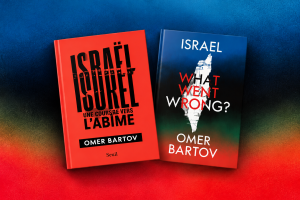
Professor Yagil Levy is the head of the Israeli Open University Institute for the Study of Civil–Military Relations. His most recent book in Hebrew, Shooting, Not Crying: The New Militarization of Israel in the 2000s, was published by Lamda Scholarship in 2023. From 2013 to 2015, Levy served as President of ERGOMAS—the European Research Group on Military and Society. He also publishes op-ed articles regularly in the Israeli newspaper Ha’aretz.

Julia Christ
Julia Christ is a philosopher and research fellow at the CNRS. A specialist in critical theory, she works on the transformations of universalism and liberalism in dialogue with European Jewish history. Part of her research focuses on the place of Jews in modern political constructions, antisemitism, and the ways in which the Jewish perspective challenges classical categories of political thought.