The Second Round: Victory Without a Majority, a Majority Without Victory
On the evening of 27 October 2026, exit polls gave the Israeli opposition the edge; as the night wore on, the balance of power was reversed. But neither camp has a majority on its own, and another battle has begun, over how to read the vote: a “second round” whose outcome the “Arab lists” could, for the first time, decide. Who can govern Israel, with whom, and at what cost to its democracy?
A Night of Reversals
Haham amar et dvaro. The people have spoken. That was the phrase every commentator kept repeating on the main Israeli channels at 10 p.m. on Tuesday 27 October, as the exit poll results came up on screen. All of them gave a slight lead to the opposition bloc. Then, throughout the night, as the actual results were counted, the balance of power between the two blocs reversed, reminding many Israelis of what they had lived through in the 1996 elections, when they went to bed with Shimon Peres as Prime Minister and woke up with Netanyahu.1
The only result announced at 10 p.m. that did not change was the turnout: 77.97%, a level unseen since 1999 (78.7%). Expatriates, who cannot vote abroad, also turned out in exceptional numbers: according to the American organization Fly & Vote, 67,000 of them came to vote.
And yet, despite all this mobilization, the results fall short of the hopes of the liberal camp, to which the polls of the three main channels had given a lead over the right-wing bloc in the preceding weeks (see “Israeli Elections: What Scenarios Lie Ahead?”, in K., 22 October 2026). Once the double envelopes2 were counted, the final results were as follows:
Netanyahu bloc (53 MKs):
- Likud: 27
- Hatzionut Hadatit (“Religious Zionism”), led by Bezalel Smotrich: 6
- Otzma Yehudit (“Jewish Power”), led by Itamar Ben Gvir: 7
- Yahadut Hatorah (“United Torah Judaism”): 7
- Shas: 6
Anti-Netanyahu bloc (67 MKs):
- Yashar (“Straight”), led by Gadi Eizenkot: 21
- Beyahad (“Together”), led by Naftali Bennett and Yair Lapid: 12
- The Democrats, led by Yair Golan: 8
- Yisrael Beiteinu, led by Avigdor Liberman: 7
- HaReshima Hameshutefet (“The Joint List”): 11
- Ra’am, led by Mansour Abbas: 8
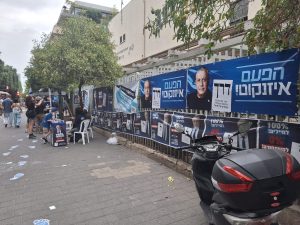
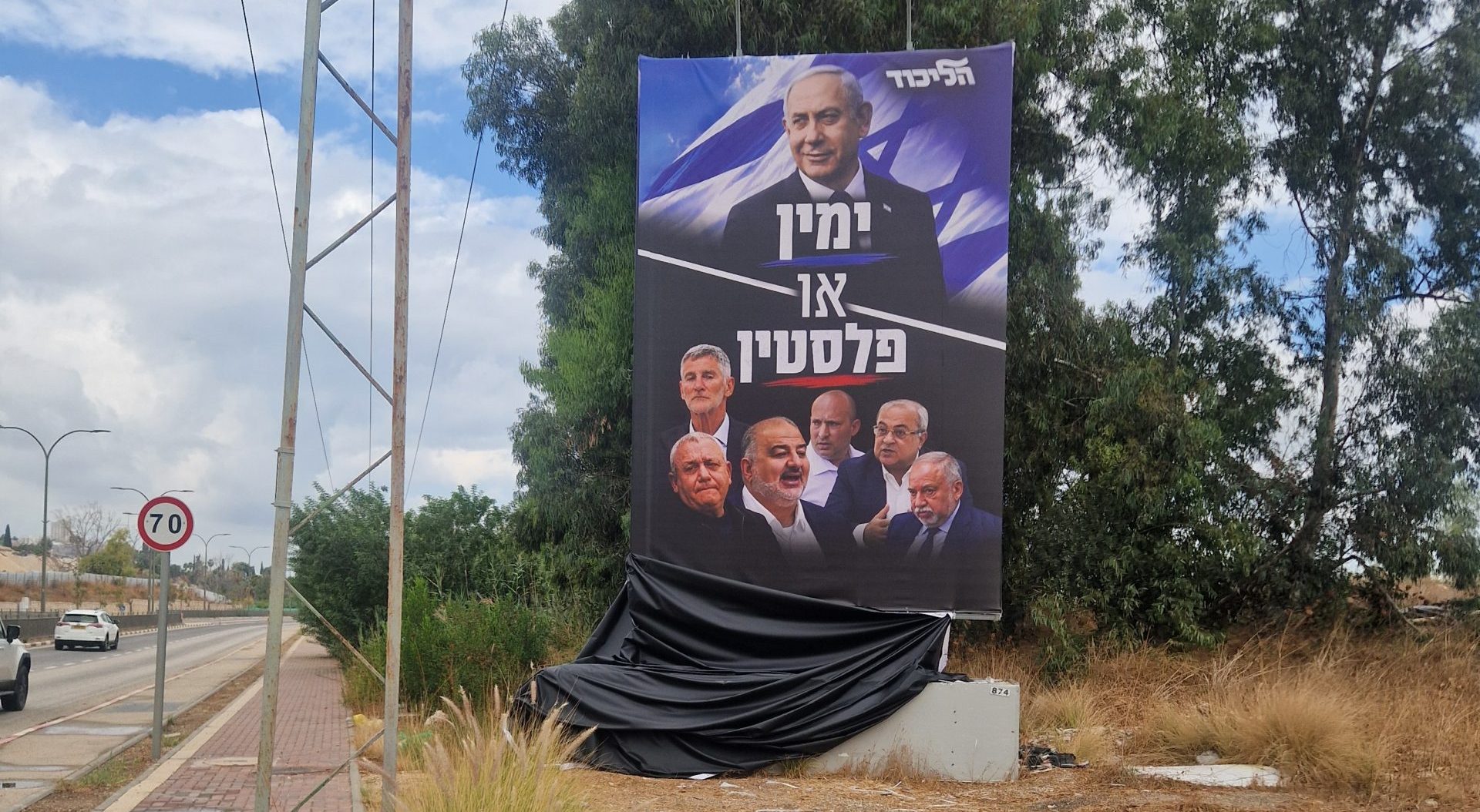
Anticipating a sharp rise for the Arab parties, Netanyahu’s office had prepared, before the elections, a campaign to disqualify them (on the accusations of a “stolen” election made by Netanyahu, see “A Historic Opportunity for Israel”, by Michael Brenner, in K., 5 November 2026). On the eve of the elections, it had passed information to the police about money transfers to members of the Ra’am party intended to influence voters. At 6 a.m. on 27 October, the police, without a court warrant, searched the homes of three of them and arrested them. This news circulated on social media all day and certainly influenced the vote of some electors. The Central Elections Committee, to which Likud submitted numerous complaints of fraud in Arab towns and villages, concluded that the elections had been conducted properly. It nevertheless entrusted the Shin Bet with pursuing these investigations. Its head, David Zini, appointed by Netanyahu a year ago, sought to summon the leaders of the Arab parties without presenting any evidence, which the government’s legal adviser, Gali Baharav-Miara, refused; in her view, the material since passed on to the police does not reveal any fraud. During President Herzog’s consultations, with Yahadut Hatorah abstaining, Eizenkot received the 67 recommendations of the opposition bloc and Netanyahu only 46. On 8 November, Herzog tasked him with forming the government. It is the first time that, after an election, the “Arab lists” have recommended a Jewish candidate for Prime Minister to the President of the State. It is a historic event, marking the will of Arab Israeli citizens and their representatives to take part in running the country.
The Political Translation of Public Opinion
Each camp presents the results to its own advantage: this reading is part of its campaign in the phase opened by their announcement, which is in fact a second round.
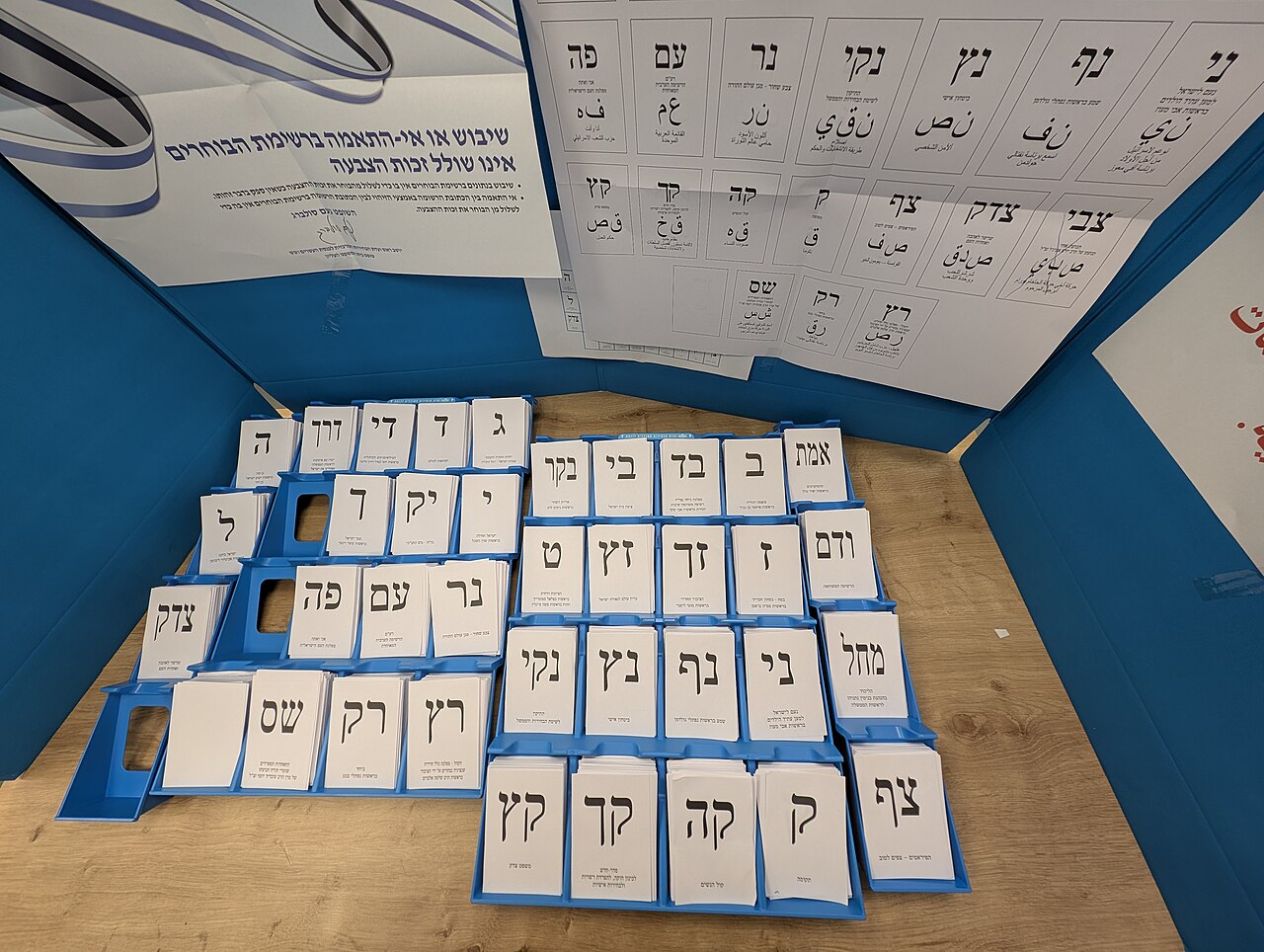
The first observation is that, after a long campaign and an unprecedented mobilization, this result reflects the state of opinion in the country. One may like it or not, but it will have to be dealt with. Holding new elections would not change it. It would even be better for the outgoing coalition, because Netanyahu would prevent the small lists that cost his bloc nearly 200,000 votes3 from running again, and expatriates will certainly not turn out to vote in such numbers again.
“This result reflects the state of opinion in the country. One may like it or not, but it will have to be dealt with.”
– Seen from the Netanyahu bloc: a deceptively triumphant narrative
While all the polls, except that of Channel 14, put Likud behind Eizenkot’s Yashar party, Netanyahu can boast of having kept his party the largest in the country. He achieved this relative success by playing on tactical voting, siphoning off part of the votes of electors who were considering voting for one of the two small right-wing lists, which consequently failed to pass the electoral threshold.4 By excluding the 19 MKs elected on the “Arab lists”, labelled “anti-Zionist”, Likud presents the bloc made up of the parties of the outgoing coalition as the winner of the elections. This presentation conceals the fact that, since 2022, Likud has lost more than 92,000 voters, that is, more than 7%5 of its votes, and that the right-wing bloc has fallen from 68 to 53, a loss of 15 seats, its worst score since Netanyahu’s return to power in 2009. The decline is in fact greater if one takes into account that there are nearly a million more voters than in 2022 and that some of Shas’s 2022 voters voted for Likud in 2026.
The two parties representing the extremist religious current, Ben Gvir’s Otzma Yehudit and Smotrich’s Hatzionut Hadatit, together gained more than 100,000 votes, but given the high turnout6, they went down from 14 to 13 seats.
The ultra-Orthodox parties together saw a 9% decline, which translates into a loss of 5 seats. This decline concerns only Shas, which lost just under 100,000 voters. Their votes were probably spread among the other right-wing parties. But it cannot be ruled out that some also went to more centrist lists, as some voters repudiated the party leadership because of its refusal to allow young ultra-Orthodox men to be drafted into the army.
Despite all the declarations of “victory” on election night, Netanyahu knows very well that he does not have a majority. His whole strategy is therefore to disqualify the MKs elected on the “Arab lists” by accusing them of collusion with Hamas, so as to make it difficult for the leaders of the Zionist opposition parties to form a government with their support.
One can be certain, however, given Netanyahu’s political skill and duplicity, that members of his entourage have already made contact with opposition MKs, some of whom are defectors from right-wing parties, to try to persuade them to come back and support the right-wing bloc. Likewise, offers have been passed on to Liberman asking him to join Netanyahu in exchange for a promise to hand him the premiership after two years. Given past experience with Benny Gantz, when Netanyahu never honoured similar commitments, Liberman will obviously give this offer no credence.
At the same time, those close to Netanyahu are multiplying calls for a national unity government backed solely by the Zionist parties, but remaining under his leadership and keeping Amir Ohana as Speaker of the Knesset (this was the second scenario considered, and deemed unlikely, in “Israeli Elections: What Scenarios Lie Ahead?”). He is well aware that these conditions are, as they stand, unacceptable to the opposition parties. But by maintaining a discourse that disqualifies the “Arab lists”, he puts pressure on some MKs from Yashar, Beyahad or Yisrael Beiteinu who are hostile to their participation, in order to prevent the formation of an Eizenkot government with their support, which would necessarily lead to a return to the polls that could only benefit him.
– Seen from the bloc for change: is a majority possible?
However the results are presented, 67 MKs were indeed elected on lists that repudiate Netanyahu and the policies he has pursued over the past four years. Admittedly, the result of the four Zionist opposition parties falls short of the expectations raised by the pre-election polls. Nevertheless, with 48 MKs between them, 5 fewer than the Netanyahu bloc, these parties are in a better position than the latter to try to form a coalition. Indeed, they benefit from a safety belt of the 19 MKs of the “Arab lists”, who will certainly not join a coalition led by Netanyahu with Ben Gvir and Smotrich in it.
“If there is one undisputed winner in these elections, it is the two ‘Arab lists’, which together grew by more than 63%.”
Another way of presenting the election results would be to separate those of the non-Zionist parties7 from the others, which would give:
- Eizenkot: 48
- Netanyahu: 40
- “Arab lists”: 19
- Ultra-Orthodox parties: 13
This breakdown allows Eizenkot to assert that, with 48 MKs from the Zionist parties supporting him, he outnumbers the 40 elected representatives of Likud, Otzma Yehudit and Hatzionut Hadatit, which gives him legitimacy to form a Zionist government.
It also has the advantage of separating the MKs of the ultra-Orthodox parties, Yahadut Hatorah and Shas, from the Netanyahu bloc, and of opening the door to one of them possibly rallying to the bloc for change. This could concern Yahadut Hatorah, which might give even external support to an Eizenkot minority government, by not opposing it, in exchange for an agreement on the sensitive issue of drafting young yeshiva students into the army. One of the signs pointing to such a scenario is the statement by Rav Landau, one of the leaders of the Council of Torah Sages of the Degel HaTorah movement, one of the two components of Yahadut Hatorah, authorizing the opening of contacts with Eizenkot’s teams. Moreover, unlike Shas, which recommended to President Herzog that Netanyahu be designated to form a government, Yahadut Hatorah made no recommendation.
If there is one undisputed winner in these elections, it is the two “Arab lists”, which together grew by more than 63%. With a historic turnout estimated at over 80%, they won 19 seats between them. Unlike in previous elections, the Arab parties ran on two lists and none of them fell below the electoral threshold. This exceptional mobilization of the Arab electorate is first of all the consequence of the policy pursued by Itamar Ben Gvir, the National Security Minister, who allowed crime in the Arab sector to grow unchecked until it reached levels the population could no longer bear. It is also the consequence of the courageous choice made by Mansour Abbas and the other leaders of his party to place Yoav Segalovitz, a former senior police officer and former deputy minister of public security in charge of the Arab sector in the Bennett/Lapid government, second on their list. This choice prompted many Jewish voters to vote for Ra’am. In any case, it marks a shift in the positioning of Arab Israelis who, while asserting their identity as Palestinians of Israel, claim their Israeli citizenship and want to take part in running the country (see “Arab Israelis: The Decisive Minority”, by Danny Trom, in K., 5 November 2026).
What Are the Most Likely Scenarios?
Netanyahu knows there is little chance he will manage to draw to his side MKs elected on opposition lists. So he lets those close to him make statements calling for a national unity government, justifying this choice by the security situation. This scenario has no chance of materializing, given the Zionist opposition parties’ rejection of Netanyahu. As for the security situation, all the leaders of these parties are warning Netanyahu against launching a new war that would be unjustified in security terms and waged solely for political reasons. After the Republicans’ stinging defeat in the US midterms, due in particular to the American public’s rejection of the war in the Middle East, it is unlikely that Trump will embark on a new armed confrontation with Iran.
“They also know that if they fail to set up a government of change, their voters will not forgive them. So they are condemned to succeed.”
The leaders of the opposition parties know they have no interest in returning to the polls. This result, disappointing as it may be compared with their expectations, is the best they could have obtained, given the strong mobilization of their camp and the disarray of Netanyahu’s. They also know that if they fail to set up a government of change, their voters will not forgive them. So they are condemned to succeed.
Arithmetically, the easiest scenario to set up would be a minority government, possibly with the external or internal support of at least one of the two “Arab lists” (this was already the scenario deemed most likely in “Israeli Elections: What Scenarios Lie Ahead?”). But politically, it is the one that will be hardest to get public opinion to accept, given the ostracism of the “Arab lists” by the right-wing parties (see “A Historic Opportunity for Israel”, by Michael Brenner, cited above) and the commitments made during the campaign by Liberman and Bennett not to include representatives of the “Arab lists” in a coalition.
Yet, according to various polls conducted before and after the elections, voters of the liberal bloc are more open to this scenario than their leaders.8 It even wins the support of a relative majority of Liberman’s Yisrael Beiteinu voters, with 46% in favour, 27% against and 27% undecided.
It is worth noting in this respect a petition signed by more than a hundred mayors and heads of regional councils, Jewish and Arab, including Likud officials, calling on the country’s leaders to apply at the national level the model of cooperation that works at the local level, built on mutual respect, civic equality and shared responsibility.
The other possibility would be to try to build a minority government with the support of Yahadut Hatorah, by finding a compromise acceptable to its MKs on the question of drafting the ultra-Orthodox into the army. Eizenkot has stated that it would be possible to exempt a small proportion of yeshiva students (around 10%) from this obligation, the others having to perform military or civilian service. This scenario does not automatically rule out the Ra’am party joining, all the more so since Mansour Abbas, its leader, has said that the four conditions set by Eizenkot for joining his majority posed no problem for him.9
The Liberal Bloc’s Two Parallel Strategies
To explain these two strategies, one must understand that the Knesset does not need to wait for a new government to be formed in order to start working and passing laws. After the MKs are sworn in, the Knesset must elect its new Speaker. Yet this election has often been postponed in recent years: in 2021 and 2022, it took place only several weeks after the opening session. In the meantime, the outgoing Speaker serves as interim. Under the Knesset’s law and rules of procedure, the formation of the government is the deadline by which its Speaker must have been elected. It in no way means that the election must wait until then.
The role of the Speaker of the Knesset is very important. He does not merely call MKs to order. He holds a great deal of power, notably that of appointing the chairs of parliamentary committees and setting the agenda of plenary sessions, as well as the schedule of debates and votes. He also heads the Knesset Presidium, which plays a decisive role in how legislative procedures function. In the current context, while negotiations to form a new government are under way, this authority is of considerable importance. The liberal bloc’s priority is therefore to have a candidate of its choice elected. He will keep his post for the entire term, unless he resigns or a three-quarters majority of MKs, that is, 90 out of 120, calls for his removal.
The four leaders of the opposition parties agreed that, as soon as the new Knesset was sworn in on 10 November, they would call for the election of a new Speaker to replace Amir Ohana. Their candidate is Matan Kahana. A former officer and fighter pilot and former MK for Gantz’s National Unity party, he joined Eizenkot when the latter founded his Yashar party. Amir Ohana has scheduled this vote for Tuesday 17 November.
They then agree to quickly pass a number of laws on which there is a broad consensus in the country, such as:
– Appointing a national commission of inquiry to determine responsibility for the 7 October massacres;
– Limiting a Prime Minister to two terms;
– Repealing all the judicial reform laws passed by the previous Knesset.
“The coming weeks will be crucial for Israeli democracy.”
Alongside this taking control of the Knesset, which will restore its full legislative role, Eizenkot and Golan want to swiftly appoint a minority emergency government so as to remove Netanyahu from power as quickly as possible. Liberman, on the other hand, prefers to take time before appointing it and to continue negotiations to broaden it to include at least one of the ultra-Orthodox parties.
Of the four leaders of the liberal bloc, Liberman is the only one who continues to state his opposition to forming a government with the internal or external support of the “Arab lists”. This is not the case for Bennett and Lapid, while Eizenkot holds to his four conditions for joining his government.
Eizenkot has 28 days to succeed in forming his coalition. This deadline could be extended, if necessary, by 14 days by President Herzog. If he fails, the latter may entrust another MK with the mandate to form a government. But nothing prevents Eizenkot from running the country with a minority government10. It is enough that there are not 61 MKs against him. Unlike the Bennett/Lapid government, which had the support of only 61 MKs and fell after two of them left, the liberal bloc today has, thanks to the 19 MKs of the “Arab lists”, a safety margin, provided there are no defections within its ranks.
The coming weeks will be crucial for Israeli democracy. If a government of change manages to form, it will be an opportunity to finally tackle two of the problems that have been undermining Israeli democracy for years:
– That of integrating Arab Israelis into running the country, which would contradict all the accusations of an apartheid state proclaimed by pro-Palestinian groups abroad (see Michael Brenner’s article cited above)
– That of finding a compromise with the ultra-Orthodox to make them bear a share of the burdens of running the country, which today rest solely on the secular population
This mixed election result could then, in the end, prove to be an opportunity for the country.
- For the first time in those elections, Israelis had to vote both to elect their MKs and to choose their Prime Minister. This system was applied only two other times, in 1999 and 2001 (the latter for the election of the Prime Minister alone), after which the country returned to the system still in force, in which they vote only to elect their MKs. ↩︎
- The only people allowed not to vote at their own polling station are soldiers, diplomats posted abroad, hospitalized persons and prisoners. ↩︎
- 95,663 for Winter’s Amcha Israel list and probably more than half of the 154,950 for Hendel and Zelekha’s Reservists list. ↩︎
- The electoral threshold was 184,947 votes. ↩︎
- In 2022, it had won 1,115,536 votes, to which must be added the estimated 144,160 of the list led by Gideon Saar, which was part of Mahane Hamamlakhti (“National Unity”), led by Benny Gantz, and which left it during the term to join Likud. This time, 1,167,458 voters voted for it. ↩︎
- There were 939,703 more voters than in 2022, an increase of nearly 20%. ↩︎
- The ultra-Orthodox parties do not define themselves as Zionist parties, but do not challenge the existence of the State. ↩︎
- https://www.haaretz.com/israel-news/israel-politics/2026-11-02/ty-article-magazine/.premium/israels-great-political-paradox-should-never-have-happened/000001a1-9bd3-d125-a3b1-ffd79abc0000 ↩︎
- The four principles that Eizenkot set out as the basis for any participation in a future government are:
– Recognizing Israel as a Jewish, democratic, liberal and egalitarian State.
– Committing to respect the values of the Declaration of Independence.
– Imposing a service obligation on all Israeli citizens, in the form of military, national or civilian service.
– Recognizing Hamas as a terrorist organization and the need to destroy its military and governing power in the Gaza Strip. ↩︎ - This was the case of the Rabin government formed in 1992 which, after Shas left the coalition in 1993, governed with the external support of the “Arab lists”. It was thus that this government was able to pass the Oslo Accords. ↩︎