Arab Israelis: The Decisive Minority
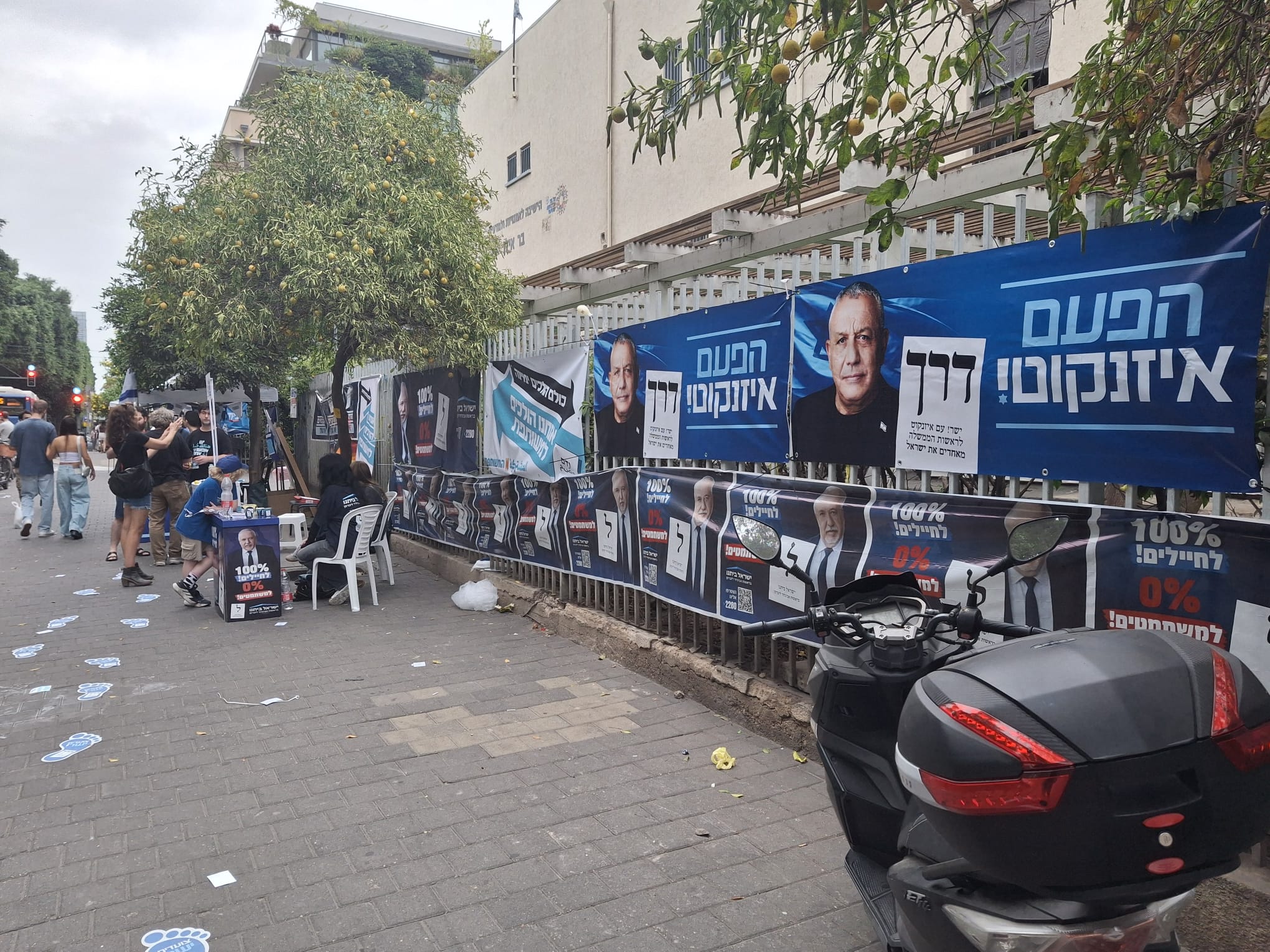
The Israeli legislative elections of 27 October 2026 have ended in deadlock: neither Benjamin Netanyahu’s outgoing coalition nor the ‘change bloc’ led by Gadi Eisenkot has won a majority. This deadlock reveals a structural feature of Israeli politics: two sectors that stand outside the Zionist consensus, the ultra-Orthodox and Israeli Arabs, now weigh on the fate of any coalition. Analysing the position of Israel’s Arab citizens, torn between ‘Israelisation’ and ‘Palestinisation’, and the breakthrough of the Islamist party Ra’am, the author argues for a minority government supported by the Arab parties. A narrow path, in a country still marked by 7 October, but perhaps the only way out of the impasse.
A political system seized up
The deadlock in which the Israeli elections have ended stems from a multiplicity of factors, both circumstantial and structural. It stems first of all from the almost fully proportional parliamentarism of the country’s political system, which tends towards partisan fragmentation and drives the formation of broad and often incoherent coalitions. In an election seen as a referendum pitting supporters against opponents of Netanyahu, the ‘change bloc’, with its 48 seats out of 120, failed to reach an absolute majority, while the outgoing governing coalition holds only 53 seats, against 64 in the previous Knesset. Both blocs can boast of blocking each other. But in terms of the chances of forming the next government, the opposition to Netanyahu is better placed, since a total of 67 members of the Knesset are determined to bring down the current government, the balance being made up by the two Arab lists. In choosing who is to form the government, the rule is that the President does not necessarily designate the party that won the most seats (Likud), but consults all the political parties in order to gauge in advance the chances that a candidate will succeed in forming a government; on that basis, it is Eisenkot who would logically be designated. Whether he will succeed is not certain: that is precisely what is at stake in the consultations and negotiations now under way among the components of the change bloc.
However loudly the weakened outgoing coalition proclaims that such a government would, in one way or another, be ‘hostage to the Arab parties’, claiming that it still commands a ‘Zionist’ majority itself, it fails to convince. It governed with the Orthodox political parties, which are certainly ‘Jewish’ but plainly not Zionist. Here it becomes clear that the deadlock stems from a structural feature of Israeli politics. For if by ‘Zionist’ one means a political party resting on the consensual premise that the State of Israel is a Jewish-majority country in the form it took at its creation, then two sectors of Israeli society, and the parties that emerge from them, are not Zionist. Both stand, albeit differently, in a fraught relationship with the state: Jewish society of the kind known as ‘Haredi’, represented by the non-Zionist Orthodox parties, wins 13 seats in all; the Arab-Palestinian parties, namely the Joint List with 11 seats (a protest list that includes Balad, a Palestinian nationalist party, as well as the former Communist Party, which defines itself as Jewish-Arab and is opposed to the existence of the State of Israel as the state of the Jews) and Ra’am (an Islamic party, yet one that favours the integration of the Arab minority into a Jewish-majority society recognised as such), together total a historic record of 19 seats. These two sectors, which stand in a relation of relative externality to majority Israeli society, feed parties on which the fate of any governing coalition now rests.
The ultra-Orthodox segment of Israeli society, whose parties, United Torah Judaism (Ashkenazi Orthodox)1 and Shas (Mizrahi Orthodox), were allied with Netanyahu, has always regarded the State of Israel as more or less illegitimate, which has never prevented them from joining coalitions, of the left as of the right, in order to advance the particular interests of their sector. The former, which unites the Hasidic and Lithuanian currents, holds to an unchanging anti-Zionist position, while Shas is more inclined to seek a compromise by carving out an ‘a-Zionist’ position for itself, which cost it a stinging electoral defeat, part of the party’s electoral base, identity-minded, traditionalist and in favour of conscription, having probably shifted to Likud. It was, moreover, the Haredi parties’ opposition to the conscription law, which amounted to a test of their forced integration into the state, that led them to leave the government in the summer of 2025, lastingly weakening Netanyahu’s coalition.
‘Any opposition to the nationalist right allied with the far right will, in one way or another, have to include the Arab parties in order to govern.’
The new power of the Arab parties
The other sector, represented by the Arab-Palestinian parties, turned out in force, whereas abstention there is generally above average, thereby converting its numerical weight into political power in the Knesset. Strange as it may seem, the next Knesset will include 32 members out of 120 who do not, stricto sensu, belong to the Zionist consensus; but this is a structural feature of Israeli politics, one that present circumstances exacerbate and that now leaps to the eye, so plainly does it lead to an impasse whose way out is obvious and yet problematic in the eyes of large sections of Jewish-Israeli public opinion. For what appears clearly this time, even more sharply than before, is that any opposition to the nationalist right allied with the far right will, in one way or another, have to include the Arab parties in order to govern. Yet the change bloc was unwilling to anticipate such a constraint, confident as it was of reaching an absolute majority on its own. Today, even if United Torah Judaism, out of sheer opportunism, is whispering that it is willing to negotiate joining the change bloc, Eisenkot, who presented himself as embodying the camp of those who perform military service (mesharetim), will have nothing to offer it other than the betrayal of his own promises. This requirement, however, does not weigh on the Arab sector, from which no one expects military conscription.
Making up 20 per cent of the Israeli population and consisting of the Arabs of Palestine who remained within the bounds of the State of Israel after its birth, the part that neither left nor was expelled during the War of Independence, this sizeable minority has formed a separate society ever since the state was born. A population initially placed under military government until 1966,2 it had to resign itself to living in a state born of its defeat, which it calls the ‘Nakba’. What is thus, for Zionist Jewish-Israeli society, its greatest achievement, namely the State of Israel, is a catastrophe for this minority. Integrating a population that sees the state within which it lives as the sign of its defeat: that was a formidable challenge, which the State of Israel nevertheless met successfully. The new state made the Arab-Palestinians within its borders into citizens, recognised as belonging to a ‘nationality’ (le’om) with collective religious, linguistic and cultural rights, together with an education system of its own, autonomy in matters of personal status, and the freedom to be represented in its particularity in the Knesset, which became effective from the 1980s onwards, whereas previously Arab candidates had appeared on ‘Zionist’ lists. The State of Israel is thus made up of two distinct political bodies, one Jewish, the other Arab, each with its own internal divisions, voting together in a single, large nationwide constituency.
The Arab sector is traversed by a twofold, contradictory process: on the one hand, its continuing ‘Israelisation’, marked by its ever deeper integration into Israeli society at the economic and social levels; on the other, a process of ‘Palestinisation’ that leads this group to understand itself as part of Palestinian society, the majority of which lives outside the borders of the State of Israel and partly under Israeli occupation. These two dynamics, in tension with each other, fluctuate in intensity and effect according to the political circumstances. Despite steadily advancing economic integration, rising living standards and a presence in particularly visible professions in the field of healthcare, which brings social inclusion in its wake, the partisan political expression of this sector long amounted to active participation in the democratic game at the municipal level, while turning its back on any participation in government at the national level, asserting that this state was not theirs. For its part, Jewish-Israeli society, especially since the right has been in power with the support of the far right, constantly confirms to the Arab sector that it does not belong. That these citizens are exempt from military service goes without saying for Jewish-Israeli society and for everyone, although a small percentage enlist on a voluntary basis.
‘The integration of the Arab sector into Israeli society had generated a political force recognising the Jewish character of the state.’
The Ra’am turning point
And yet, for the change bloc, something has changed since the Arab party Ra’am was a partner in the previous, short-lived coalition led by Bennett (religious Zionist) and Lapid (liberal and secular). The significance of this event has not been properly assessed. For the first time, an Arab-Israeli party was politically integrated into a coalition and, although its leader Mansour Abbas obtained only a modest post as minister without portfolio, it was a revolution: the integration of the Arab sector into Israeli society had generated a political force recognising the Jewish character of the state, eager to contribute positively to its future by foregrounding its Israeli citizenship and relegating its belonging to the Palestinian nation to second place, in order to work in the interests of Israeli Arabs as a minority that counts as an active force in national political life. It regards as an urgent priority the suppression of the mafia-style crime that keeps flourishing within the Arab sector. This demand for the state explains why Ra’am placed a former senior police official, Yoav Segalovitz, who declares himself Jewish and Zionist, second on its list, thereby appearing de facto as a mixed Arab-Jewish party, far more so than the Communist party Hadash, part of the Joint List, which declares itself Jewish-Arab while remaining faithful to the line of the anti-Zionist Marxist left. By almost doubling its seats (to 8), Ra’am has thus succeeded in giving political expression to the social integration of Israeli Arabs, breaking the rejectionist front that had dominated the political expression of this sector. One may therefore suppose that Ra’am attracted part of the Jewish electorate of the Zionist left party, the Democrats, given that all the signals sent by Mansour Abbas should logically have led to its formal inclusion in the change bloc. And yet that is not the case.
Whereas Haredi society strikes a large majority of Israeli Jews as irritating, if not harmful, but not dangerous, a subgroup that in the mind of this majority counts as a fragment of the Jewish-Israeli body politic, like an internal burden that has to be reckoned with, this same majority of opinion does not seem prepared to bring itself to associate the Arab sector, even in its Zionism-compatible form, with the sphere of political decision-making. Admittedly, in arithmetical terms, including Ra’am would not give the change bloc a majority, and yet it would strengthen a minority coalition while extending a hand to the part of the Arab sector that is ready to take the plunge.
But does the change camp actually want to send this signal? Here positions diverge. Liberman, leader of a right-wing party originally created to represent the large wave of Russian-speaking immigration of the 1990s and now the refuge of hard-line, secular, anti-Netanyahu right-wing voters, and himself foreign minister in an earlier Netanyahu government, has consistently maintained that this option was ruled out. Eisenkot said so too, in order to maximise his bloc’s chances of winning a majority and to avoid alarming wavering voters, but with less conviction, as did Bennett and Lapid, who had nonetheless already allied themselves with Ra’am in the past. Only ‘the Democrats’ (the merger of Labour [Avoda] and Meretz, brought together by Yair Golan) unambiguously support Ra’am’s inclusion in a coalition.
During the election campaign, however, Eisenkot did spell out the conditions for an alliance with an Arab party: recognition of the State of Israel, acceptance of universal national service, and condemnation of Hamas, coupled with the need to eliminate it. Ra’am, originally an Islamic-type party close to the Muslim Brotherhood, now seems to meet all these conditions, and yet it is asked to repeat and clarify, in Hebrew and in Arabic, its position on Hamas, as if none of its statements could dispel suspicions of insincerity. The fact remains that any viable minority coalition, with or without Ra’am, will in any case have to rely on the external parliamentary support, at least implicit, of the Joint List, some of whose members have distinguished themselves with remarks confirming that a segment of Arab society does indeed see itself as what the right regards as an ‘enemy within’, and what the parties of the centre and the left regard as thereby excluding itself from the political game.
‘No event in the short history of this state has shaken the public mind of Israeli Jews so profoundly, since with 7 October it was the State of Israel itself that tottered.’
The shadow of 7 October
How is the distrust of the Arab parties to be explained, despite the Abbas phenomenon? It stems from the dynamic that has developed in Israel since 7 October, putting Arab society to the test, especially once the cost of the war in Gazan civilian lives became exorbitant. Yet no significant support for Hamas came from Israeli Arab society. Even so, the precedent of 2021, namely the riots that broke out in mixed Jewish-Arab cities3 following the police intervention on the Temple Mount/Haram al-Sharif, which triggered Hamas rocket fire aimed at drawing the Arab-Israeli population into the confrontation, bred a distrust that the ordeal of 7 October has not managed to erase. The horror that followed the 7 October massacre turned into a generalised hardening of attitudes that rebounded negatively on the Arab-Palestinian citizens of Israel, into a distrust fuelled by fear, cutting across the divides between the so-called ‘Zionist’ parties. The overall dynamic follows a well-known cycle: the routine life of Israeli society shows every sign of calm, stable coexistence, whereas any critical juncture raises the suspicion and the fear that hostility is welling up from within the Arab sector, merely waiting for an opportunity to show itself. Thus the election campaign, entirely stamped with the seal of 7 October, was steeped in this illisibility, and yet the change bloc will have to make up its mind if it hopes to come to power. It will have to do so at the least propitious moment imaginable, for no event in the short history of this state has shaken the public mind of Israeli Jews so profoundly, since with 7 October it was the State of Israel itself that tottered.
Here, then, is yet another way of characterising what is at stake in this election: the driving forces of the coalition, Likud and its two far-right allies, are working to keep this event open, to hold on to it as still ongoing, whereas the change bloc wishes to close it by promising a political outcome to the many military campaigns waged on several fronts over the past three years. Not in order to forget 7 October, but in order to settle accounts by appointing a commission of inquiry, compelling the Netanyahu coalition, which failed to prevent the massacre and allowed a long vacuum to open up in the moment of collapse that followed, to shoulder responsibility for it and step aside. For it was indeed 7 October that plunged Israel into a long war on several fronts, requiring the recruitment of soldiers from the Haredi sector and precipitating the departure of the Haredi parties from the coalition. It is Netanyahu’s refusal to take political responsibility for having been unable to prevent this large-scale massacre, and to appoint an independent commission of inquiry, that united what is nonetheless a very heterogeneous opposition. It was also the extreme political polarisation brought about by an aggressive judicial reform that signalled to Hamas and Hezbollah (and therefore to Iran) that the moment to attack was ripe.
‘Israel will certainly not recover its tarnished reputation in Europe, but in its rapidly changing Middle Eastern neighbourhood, where minorities are regularly persecuted, the message will undoubtedly be received.’
A timely signal for minority rights?
The Israelis’ problem, then, is this: as long as Netanyahu remains in power, 7 October will continue to weigh on the vote of a public that clings, in substantial numbers, to the image of Netanyahu as the only one able to navigate the dangerous waters in which every wave takes on the appearance of an existential threat to Israel. Eisenkot, who entered the electoral race with a hastily cobbled-together list, seemed to offer voters the reassuring figure of a former chief of staff, neither of the right nor of the left, devoted to the public good and a man of integrity: a credible substitute for a Netanyahu weakened by a string of recurring scandals ranging from corruption cases to suspicions of misconduct bordering on treason. Eisenkot achieved an honourable but disappointing score, and from this relative failure emerges an opportunity for the State of Israel. Not to make itself dependent on the Arab parties, which the state of war renders impossible. The dynamic of Palestinisation within Arab-Israeli society excludes the Arab parties from any involvement in the decision-making bodies concerned with the State of Israel’s external security, which, moreover, Mansour Abbas accepts and proclaims in order to reassure the public. But what everyone can nonetheless take up and make use of is the distinction drawn implicitly by Mansour Abbas between two levels of political participation. The Arab sector remains outside this military sphere of citizenship, and this matter of facts, which may offend those attached to absolute equality, is not only viable but the only possible path, provided, as Abbas advocates, that compulsory civil service for the Arab sector can be implemented. In all other areas, it is in the State of Israel’s interest to encourage the political participation of the Arab parties, by stimulating the virtuous circle of their ongoing Israelisation, accelerated for decades by the wars tearing apart neighbouring Arab countries, by the corruption of the Palestinian Authority in the West Bank and by Hamas’s reign of terror in Gaza. The benefits of being citizens of a democratic and liberal state that grants collective rights to its minorities have impressed themselves upon the Arab citizens of Israel, while at the same time the regional wars and the continual colonisation of the West Bank provoke their recoil and a retreat into their Palestinian identity.
With the ‘Abbas’ proposal, the ball is now in the change bloc’s court. One may then hope that the President will look favourably on the option of a minority government with the explicit support of Ra’am and the implicit support of the Joint List, rather than favouring a government of national unity that would keep Netanyahu in the political game. On such a basis, the new Knesset, which will convene on 10 November, is already considering electing a Speaker from the ranks of the change bloc, so as to regain the initiative in setting up a commission of inquiry into 7 October and in taking measures to safeguard democracy, battered by the previous government, and to do so in the name of the whole opposition, without distinction, Zionist and Arab parties alike. As for the possibility of going on to form a government on this same basis, Eisenkot’s room for manoeuvre is narrow, since he risks running up against Liberman’s veto, unless he finds a price to pay to win him over to this option. That is to be hoped, for by thus cautiously taking the path of a partial recognition of its internal Arab component, Israel will certainly not recover its tarnished reputation in Europe, but in its rapidly changing Middle Eastern neighbourhood, where minorities are regularly persecuted, the message will undoubtedly be received.
- Yahadut HaTorah in Hebrew: an alliance of the Ashkenazi Haredi parties Agudat Yisrael (Hasidic) and Degel HaTorah (Lithuanian). ↩︎
- From 1948 to 1966, the Arab localities of Israel were placed under a military administration that restricted, among other things, the freedom of movement of their inhabitants. ↩︎
- In May 2021, during Operation Guardian of the Walls against Hamas, violent clashes between Jews and Arabs broke out in several mixed cities, notably Lod, Acre and Ramla. ↩︎
Danny Trom
Danny Trom is a political sociologist and Director of Research at the CNRS. His work combines the sociology of political experience with reflections on Jewish life in Europe, exile, and the State of Israel. His research focuses in particular on the persistence of Jewish existence, minority conditions in Europe, and the reconfiguration of relationships between diaspora, nation-states, and Israel.