# 255 / Editorial
For once, K. is publishing an interview this week that is not only controversial, but in which the magazine’s own perspective is difficult to discern, having been relegated to questions and footnotes. Nevertheless, we believe that this is an important contribution. It is important for us because it is in line with the critical reflection on Israel that we began before October 7, when the current Netanyahu government was elected, which is why we are adding a feature entitled “Crisis and Criticism of Israel.” It is also important for public debate, because it fills a void in analysis and factual information. The aim is to paint a realistic picture of the army which—let us remember that this is specific to Israeli democracy—is a pillar of society: the IDF. To do this, K. interviewed Israeli sociologist Yagil Levy, a specialist in the transformations of the army and its relations with the rest of society. He emphasizes that the conduct of the war in Gaza revealed an evolution in the organization, composition, and doctrines of the IDF that reflects the profound social transformations at work in Israel. Let us emphasize one point in particular that appears to be decisive: compared to previous military conflicts, there has been a decline in Israeli tolerance for the death of soldiers, leading to a change in engagement practices and the use of artillery, which is particularly costly in terms of Palestinian civilian lives. In other words, both the duration and the devastating nature of the war in Gaza can be explained, on the one hand, by the individualization of Israeli society, which is increasingly intolerant of the sacrifice of soldiers, a trend that is common to all liberal democracies. On the other hand, it can be explained by the deleterious influence of the religious Zionist segment, driven by messianic hubris, which, from within the army, threatens the traditional ethos of the IDF by showing little regard for Palestinian lives while pushing for the colonization of the West Bank, whose only horizon is the perpetuation of the conflict. Failing to consider this dual process alongside the dynamics specific to Palestinian society is detrimental to the analysis. Failing to consider it in light of the role that the State of Israel has come to occupy in a context of global antisemitism explains the persistent misunderstanding between the Israeli left and the diaspora, as further illustrated by our interview with Yagil Levy.
Related articles

On the evolution of the IDF: Interview with Yagil Levy
Crisis and criticism of Israel. How can it be rebuilt?
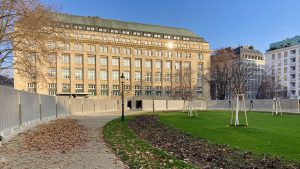
An Austrian Holocaust Museum: Time to Confront the Perpetrators
What would it mean for a perpetrator nation to build a Holocaust museum? As Austria moves toward a feasibility study for a national institution of remembrance, it is clear that imitation is not enough. A meaningful Austrian Holocaust Museum would have to center Austrian responsibility—political, social, and moral—rather than outsource guilt or retreat into abstraction. Weaving history, cultural memory, and present-day politics, Liam Hoare examines Austria’s role in the machinery of Nazi violence, the limits of Holocaust education as an antidote to antisemitism, and the risks of symbolic gestures under fiscal and political pressure. Without an unflinching confrontation with who committed the crimes and why, a Holocaust museum in Austria would fail at the very task it claims to serve…