An Austrian Holocaust Museum: Time to Confront the Perpetrators
As Austria considers building a national Holocaust museum, such an endeveaour—if it is to matter at all—must confront Austria not only as a site of victimhood, but as a nation of perpetrators. Tracing the political origins of the proposal, Austria’s long evasion of responsibility, and the country’s deep entanglement in Nazi crimes, Liam Hoare asks what a Holocaust museum in a perpetrator nation should look like, whom it should address, and what it should demand of the present. Set against rising far-right politics, faltering Holocaust knowledge, and tightening cultural budgets, Hoare contends that remembrance without accountability is empty—and that Austria may not be able to afford not to reckon, institutionally and publicly, with its past.
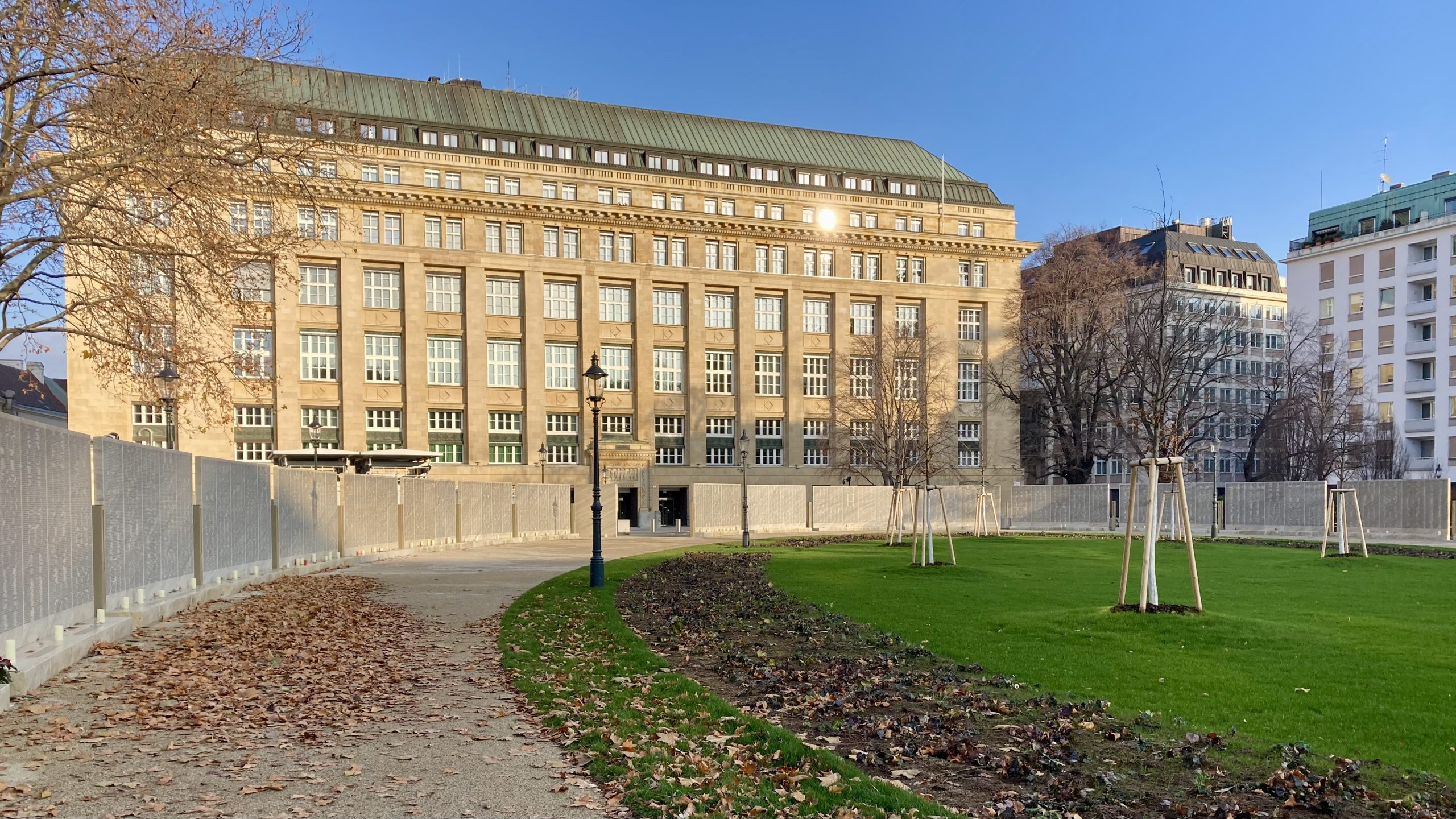
At the launch of the second iteration of their National Strategy Against Antisemitism in November 2025, the Austrian government announced three flagship projects designed to combat what it described as a new wave of antisemitism: “more open, more aggressive, and unbound online.” One of them was a feasibility study examining the possibility of building an Austrian Holocaust Museum in Vienna “as a place for remembrance, research, and education for the coming generations.”
Its inclusion in the strategy document was a sleight of hand. Austria’s cabinet had already decided on May 7 to initiate the process by which the federal chancellery, foreign ministry, and ministry for culture, media and sport will collate “detailed information about international places of remembrance and education that could serve as a model” for a Holocaust museum in Austria.
Following the research phase, the culture ministry will be required to produce a report on possible concepts, funding models, and organizational structures for the prospective museum. The document should include input from relevant stakeholders in Austria, though which remains unclear. Existing information, too, gives no indication as to which institutions the feasibility study will analyze, how much the study will cost, and when it might be published.
An Austrian Holocaust Museum has to be a museum of Austrian culpability and Austrian responsibility.
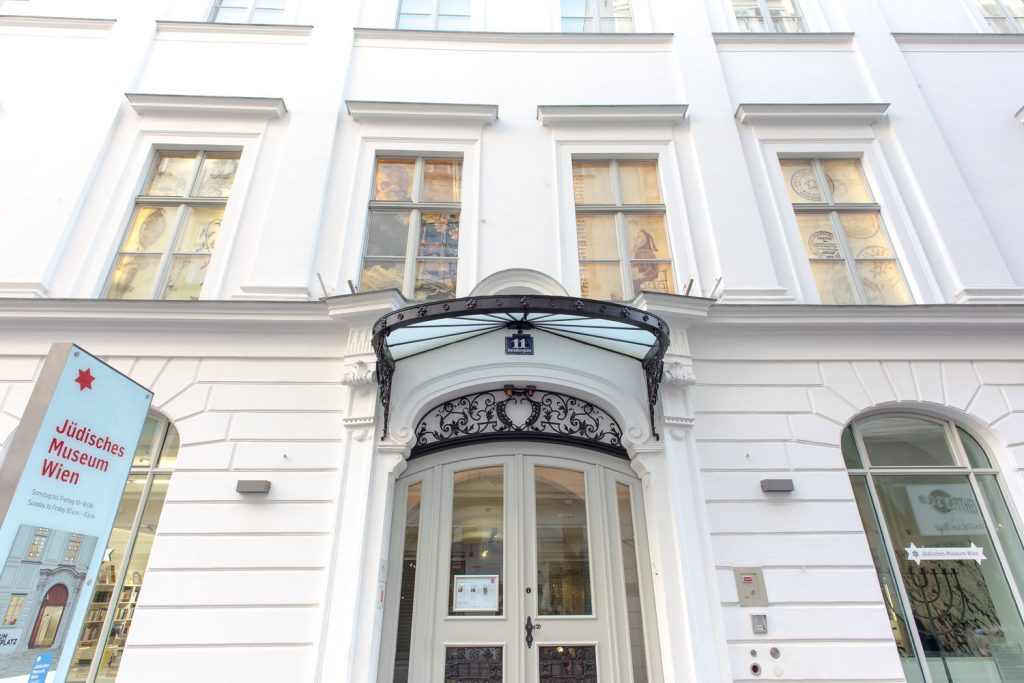
The idea of an Austrian Holocaust Museum is older still. Public debate stretches back to the turn of the millennium, when Holocaust survivor and Nazi hunter Simon Wiesenthal, the Jewish Community of Vienna (IKG Wien), and academic institutions called for Vienna to have an international center for Holocaust research. The result was the Vienna Wiesenthal Institute for Holocaust Studies (VWI), founded in 2009 and “dedicated to the research, documentation of, and education on all issues related to antisemitism, racism, nationalism and the Holocaust, including its origins and aftermath.”
A Holocaust center is one thing—a museum quite another. Thus did discussion about a Holocaust museum start up again in 2022 thanks to an intervention from IKG Wien president Oskar Deutsch, who called for a “Shoah Center” modelled on the Holocaust Museum in Los Angeles. That museum houses an exhibition called “Dimensions in Testimony,” which left an impression on Deutsch for it “enables people to ask questions that prompt real-time responses from pre-recorded video interviews with Holocaust survivors and other witnesses to genocide.”
Deutsch would soon gain the critical support of then-president of the Austrian parliament Wolfgang Sobotka, who had made the fight against antisemitism in Austria a focal point of his work. Sobotka retained power and influence within the governing conservative People’s Party (ÖVP), and prior to national elections in September 2024, a proposal to build an Austrian Holocaust Museum was anchored in the ÖVP’s manifesto. During protracted coalition negotiations with the center-left Social Democratic Party (SPÖ) and liberal NEOS following that vote, the ÖVP’s commitment to an Austrian Holocaust Museum made it onto their new government’s agenda.
What the Austrian government may be planning is unprecedented: a standalone Holocaust museum in a perpetrator nation. This necessitates a new approach, meaning Vienna cannot simply copy the work of “Dimensions in Testimony,” as Deutsch implied, or any other Holocaust museum in Europe. An Austrian Holocaust Museum would not only have to remember the victims, but also directly address and confront the role of Austria and Austrians as initiators and perpetrators of the Holocaust and cogs in the Nazi machine.
Austrians constituted around 10 percent of the Third Reich’s prewar population yet made up around half of its concentration camp guards. From Arthur Seyss-Inquart to Ernst Kaltenbrunner, Austrians assumed leading roles in the Nazi state, its occupation of Europe, and the Holocaust. 1.2 million Austrians served in Nazi German combat units during the Second World War, and around 700,000 Austrians were members of the NSDAP at one time or another. On the home front, “Austrian public life and high culture were saturated with Nazi sympathizers,” writes Tony Judt in Postwar, from the civil service to the Vienna Philharmonic.
Any consideration of Austria and the Holocaust also requires addressing Austria’s own deep-rooted history of antisemitism and Catholic and German supremacism as embodied in figures like Karl Lueger, the former mayor of Vienna from the fin de siècle. Important, too, is the collapse of its interwar parliamentary democracy four years prior to the Anschluss of March 1938: the conflict between socialism and Catholic conservatism, which ended in civil war and the institutionalization of Engelbert Dollfuss’s Austrofascist Ständestaat modelled in part on Benito Mussolini’s Italy.
What the Austrian government may be planning is unprecedented: a standalone Holocaust museum in a perpetrator nation.
An Austrian Holocaust Museum has to be a museum of Austrian culpability and Austrian responsibility. Responsibility, meaning, to the past in acknowledging the crimes Austria and Austrians committed and the duties that acknowledgement implies, but also to the present and the contemporary socio-political relevance of understanding how Austria’s criminals were created and their crimes occurred. An Austrian Holocaust Museum has to be both history and political education. But in what form?
Notwithstanding the aforementioned deficiencies in Deutsch’s proposal, he did hit on an essential truth about Holocaust education that the stories of individuals remain the clearest, simplest, and most direct way of communicating the Holocaust from one person to another, especially on the level of emotion and feeling.
I can think of three occasions over the past couple of years when I had cause to reflect upon and concur with the novelist Martin Amis who frequently said that our unquenchable fascination with the Holocaust as an event and Adolf Hitler as a historical figure derives from the fact that the midnight of the twentieth century is simply too big an event for human beings to comprehend and assimilate.
The first came in Poland at the former concentration camp Stutthof, which functioned within the network of concentration and extermination camps in occupied Poland as a kind of leather workshop. The shoes of victims of Auschwitz-Birkenau, Treblinka, Sobibor, and other metropolises of death were collected and transported to Stutthof, where they were either repaired or picked apart and made into something else. Those renewed goods were then shipped on to the Third Reich, finding a place in German households depleted by war.
The inherent challenge for any Holocaust museum is to make the incomprehensible assimilable in a single consideration.
The second came in Rotterdam at Loods 24, formerly the site of a warehouse in the port city’s old dockland where Jews were assembled prior to their deportation, first to the Westerbork transit camp, and then onto points east and death. The third came in the new National Holocaust Museum in Amsterdam, standing before a floor-to-ceiling glass display case containing boxes, each full of index cards, one for each Jewish resident of Amsterdam. About 70,000 Jews in Amsterdam at the time of the German occupation in 1940.
Each moment presented to me anew the overwhelming scale and complexity of the Holocaust: the number of hours, people, departments, and institutions from individual camp guards and civil servants to national railway companies it took in order to execute but one small part of a transcontinental project to exterminate the whole of European Jewry.
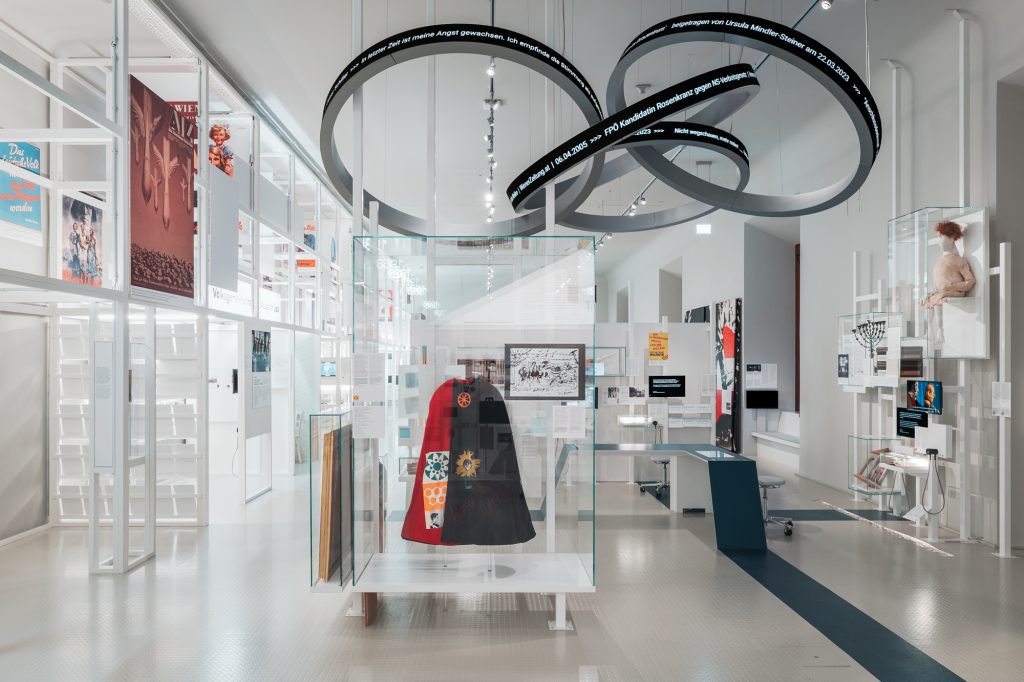
The inherent challenge for any Holocaust museum is to make the incomprehensible assimilable in a single consideration. It must do so while operating on two narrative levels: one functional and intellectual, the other emotional.
Perhaps an Austrian Holocaust Museum could use individual stories and invert the techniques of other Holocaust museums such as the United States Holocaust Memorial Museum (USHMM) in Washington D.C.—where, upon entry, visitors are presented with cards pertaining to the fate of a Holocaust victim or survivor that they carry with them through the main exhibition—to convey how it was that ordinary men became mass murderers.
Take Franz Stangl, the subject of Gitta Sereny’s 1974 book Into That Darkness. Sereny described Stangl as an unremarkable “provincial Austrian,” a police officer from the Salzkammergut who joined the Nazi Party in 1931—a time when the organization was still illegal—and, following the Anschluss of March 1938, rose through the ranks of the Nazi’s killing program to become the commandant of Sobibor and Treblinka. Stangl invaded justice for more than two decades after the war, only to be arrested in Brazil in 1967. Convicted by a German court in 1970, Stangl died in prison a year later while serving a life sentence.
Stangl is one example of an Austrian life that could be used to get at the very same objective at the heart of the USHMM’s work—“to focus on why the Holocaust happened and was allowed to happen”—albeit from the other end of the telescope. Who were Austria’s perpetrators? Why were they drawn to Nazism? What was the socio-political context in which they were acculturated? For what were they responsible? Why did they do what they did? Why were they able to invade justice or reassimilate into society after the war? Did they ever acknowledge their guilt or responsibility?
Such questions beget others: What do Austria’s perpetrators say about Austria itself? What relevance do their stories continue to have? What does ‘coming to terms with the past’ look like today? What does ‘never again’ mean to you?
These questions must be the central preoccupation of an Austrian Holocaust Museum, and as such, as the Austrian government looks for ‘places of remembrance and education that could serve as a model’ for an Austrian Holocaust Museum, it should focus on two specifically. First, the Topography of Terror in Berlin, whose permanent exhibition is about “the central institutions of the SS and police in the Third Reich and the crimes they committed across Europe.”
Second, the Munich Documentation Center for the History of National Socialism, which “conveys the history of National Socialism with a view to the present and the future” and “consider[s] the historical experience of the Nazi dictatorship in a current and global context”:
Our central concern is to use this historical perspective to take a critical look at the present and to ask questions that have a bearing on the future: What characterizes a strong democracy? What can weaken it? Where are minorities experiencing exclusion and persecution today? What values and what modes of behavior can sustain an open society based on a sense of solidarity? How do we want to remember the past?
An Austrian Holocaust Museum would be pointless if it does not try to make a connection between past and present—and talk about the Holocaust in a way that is relevant for contemporary Austrian society in a country transformed by waves of migration since the Second World War. It has to speak not only to grandchildren and great-grandchildren of the perpetrators, but also people with links to countries like Turkey and Serbia, Croatia and Syria whose Holocaust histories are very different to Austria’s.
The necessity of such work is clear. The political conditions in Austria are foreboding. The government’s popularity is fading to the benefit of the far-right Freedom Party (FPÖ) whose relationship with the National Socialist past is ambiguous at best and deceptive at worst. Were elections held this Sunday, it is likely that the FPÖ would receive at least one third of the votes, enough to constitute a blocking minority to any government seeking to pass constitutional legislation that requires a two-thirds majority. In this scenario, all roads to power would suddenly lead through the far-right.
Then there is the most recent study into antisemitic attitudes in the Austrian population, published in 2024, which produced uninspiring results pertaining to knowledge about the Holocaust and showed a correlation between knowledge of the Holocaust and antisemitic beliefs. The survey found that only 47 percent of Austrians were able to answer correctly that up to 6 million Jews were murdered during the Holocaust. 25 percent did not know; 9 percent thought the figure was up to 20 million.
Researchers asked Austrians whether they believed that the events of October 7, 2023 were a “despicable act of terrorism.” Of those who said they agreed entirely with that statement, 57 percent were able to correctly identify the number of Jewish victims of the Holocaust. Of those who disagreed, only 33 percent rightly told researchers that 6 million Jews were murdered during the Holocaust. The study also found that the older Austrians were and the higher their level of education, the more likely they were to know how many Jews died in the Holocaust.
A Holocaust museum that cannot fulfil its mission would be worse than having no Holocaust museum at all.
The study also investigated Holocaust-related antisemitism, and here again, researchers presented a mixed picture. 78 percent of Austrians rejected the idea that “much is overdone and overrepresented in studies about the concentration camps and the persecution of Jews during the Second World War.” A smaller number, however—52 percent—said, “I am opposed to people constantly bringing up the fact that Jews were killed during the Second World War,” indicating some pushback against remembrance culture from a minority of the population.
By tying a Holocaust museum to the National Strategy Against Antisemitism, it is evidently the government’s contention that a Holocaust museum can be a tool in fighting antisemitism. This view may be a mistaken one—it was Dara Horn who provocatively argued in 2023 that “I have come to the disturbing conclusion that Holocaust education is incapable of addressing contemporary antisemitism. In fact, in the total absence of any education about Jews alive today, teaching about the Holocaust might even be making antisemitism worse.”
But if a Holocaust museum is to be part of the struggle against antisemitism, and that antisemitism is ‘unbound online,’ then an Austrian Holocaust Museum would have to be more than four walls. A museum does contain the potential to break through to people on another level to a book or a movie, to someone’s teacher or something someone has encountered in the virtual world. Yet it is a somewhat old-fashioned idea to conceive of a museum as a temple to which people can be delivered and in which molded and transformed in the span of one visit.
An Austrian Holocaust Museum would also have to meet people where they’re at. The Mauthausen Memorial has started to do this via its own TikTok channel with varied success. An Austrian Holocaust Museum would be duty-bound to hire young social media professionals who can take the museum’s expertise and use it to create engaging video content for audiences on TikTok and Instagram. A fool’s errand, perhaps, but it is worth a try nonetheless.
The what and why would be challenging enough before the how were even addressed. Owing to the size of its budget deficit which hit 4.7 percent in 2024, in July 2025, the European Council opened an excessive deficit procedure against Austria, creating a pathway by which its nominal growth rate of net expenditure should decline to 2.0 percent in 2028. That same month, the Austrian government unveiled a two-year budget for fiscal years 2025 and 2026 that included forecast savings of €6.4 billion in 2025 and €8.7 billion in 2026 via a combination of spending cuts and tax increases.
Those savings included a €1 million annual cut to administrative costs in the art and culture department of Austria’s civil service as well as €5 million in reductions to state artistic and cultural subsidies. Federally operated museums such as the Belvedere and the Museum of Applied Arts—whose support has failed to keep up with inflation—look set to raise their ticket prices as a result. Culture budgets at the state and local level are also being scaled back, with Vienna’s due to fall by 7.6 percent going into 2026.
The possibility of founding an Austrian Holocaust Museum has arisen, therefore, in a time of scarcity, raising various possible outcomes to the process, none of them particularly pleasing. The first is that the feasibility study will conclude that now is not the right time to establish such a museum, a decision that would push the entire project back at least five years and, perhaps, signal its death.
The history of the Holocaust in Austria is inseparable from the history of Austria itself.
The second is that, due to the political support behind it, the museum project will go ahead, albeit under tight budgetary constraints, resulting in a pinched and crabbed outcome akin to the fate of the House of Austrian History, opened in 2018 in facilities in the Hofburg that were too small for it then and remain so today. A Holocaust museum that cannot fulfil its mission would be worse than having no Holocaust museum at all.
The third is that, in order to build a new Austrian Holocaust Museum, the Austrian government would have to rob Peter to pay Paul. In January, the government re-committed itself to reforming the House of Austrian History, establishing it as its own independent federal museum and relocating it to new premises across town in the MuseumsQuartier.
The problem is this project still has no timeline. Work was supposed to begin in the second half of 2026 and be completed by the end of 2028. A set of circumstances in which the House of Austrian History could become the Austrian Holocaust Museum’s victim is entirely foreseeable.
The government may decide Austria cannot afford to build a Holocaust museum. Perhaps it cannot afford not to. Notwithstanding its existing network of memorials and museums, there remains a compelling case for Austria to have a dedicated museum space in which Austria and Austrians’ roles as antisemites and authoritarians, Nazis and perpetrators of the Holocaust are confronted, discussed, and examined and questions about that past asked in ways that suggest something about Austria’s present and future: its democracy, rule of law, and coexistence.
At the start of January, in restating his government’s commitment to relocating the House of Austrian History, vice-chancellor Andreas Babler—whose ministry for culture, media, and sport has a leading role in the fate of an Austrian Holocaust Museum—said that “the new location with around 3,000m² of exhibition and educational space also offers the opportunity [for the museum] to intensively dedicate itself to the darkest chapter in contemporary Austrian history, the Shoah.”
There is, then, a fourth possible outcome to the feasibility study, perhaps the least bad of them all, in which political and financial reality collide to mean that in lieu of an independent Holocaust museum, the House of Austrian History is given responsibility of creating and maintaining a permanent Holocaust gallery or exhibition inside of its new premises. The precedent for this would be the Imperial War Museum in London, which has had a Holocaust exhibition since the year 2000.
This compromise would have the advantage of nipping a conflict between Austria’s memorials and museums over attention and money in the bud. The Jewish Museum Vienna, the Mauthausen Memorial, and the National Fund of the Republic of Austria could continue their excellent work in the fields of Holocaust education and remembrance. At the same time, the role of the House of Austrian History would be strengthened, an institution that has been maltreated like a problem child since its conception.
While a Holocaust museum would have its own symbolic power, a Holocaust gallery within the House of Austrian History would also be a fitting acknowledgement that the history of the Holocaust in Austria is inseparable from the history of Austria itself—that, as the House’s director Monika Sommer recently said, “Austrian contemporary history cannot be understood without antisemitism, the Holocaust, and Austrians’ shared responsibility for Nazi crimes.” And that, after all, is the point.

Liam Hoare
Liam Hoare is a Vienna-based journalist covering politics, culture, and Jewish life in Europe. He is Haaretz’s Europe Correspondent and writes “The Vienna Briefing”, a weekly newsletter on Austrian current affairs.