Crisis and criticism of Israel. How can it be rebuilt?
At a time when Israel is undergoing one of the most profound crises in its political history, this feature brings together ten articles that assess the current developments and their multiple causes. From the distortion of Zionism as seen from the European diaspora to the internal divisions threatening social cohesion, from the messianic surge to political experiments such as the “A Land for All” project, from the mobilization for the rule of law to the debate on the label of “apartheid,” K. examines the crisis in order to better consider what can still be rebuilt.
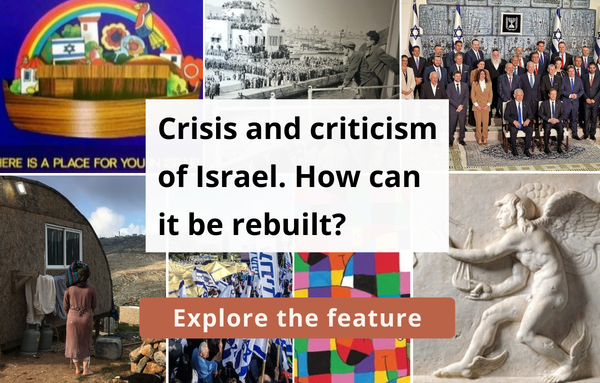
Home is where you are? Israel on the edge of Zionism
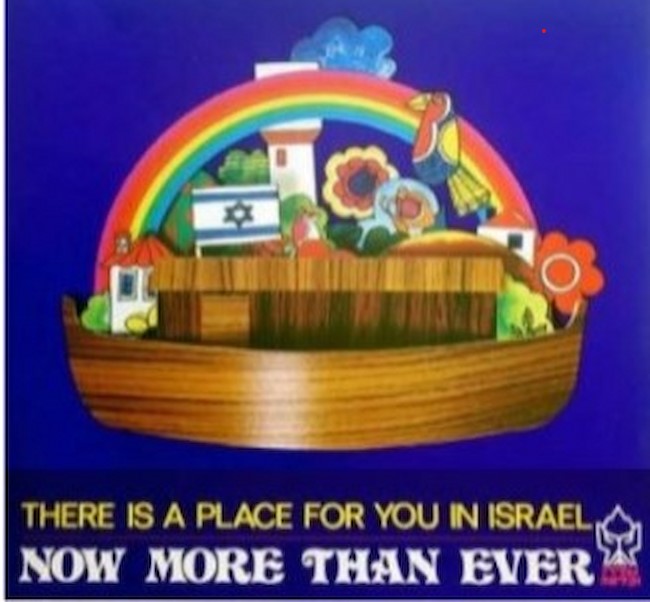
After the recent Israeli elections, the most right-wing government in the country’s history is expected to emerge. If the result is the effect of a long dynamic, it is nonetheless staggering. The philosopher Bruno Karsenti comes back in this text on what may well be a turning point in the history of Israel, and on the deviation of Zionism that it signals. A deviation that, in order to be avoided, implies re-understanding Zionism from the Diaspora, and particularly from Europe.
>>>Read the text by Bruno Karsenti
Israel: towards a rupture?
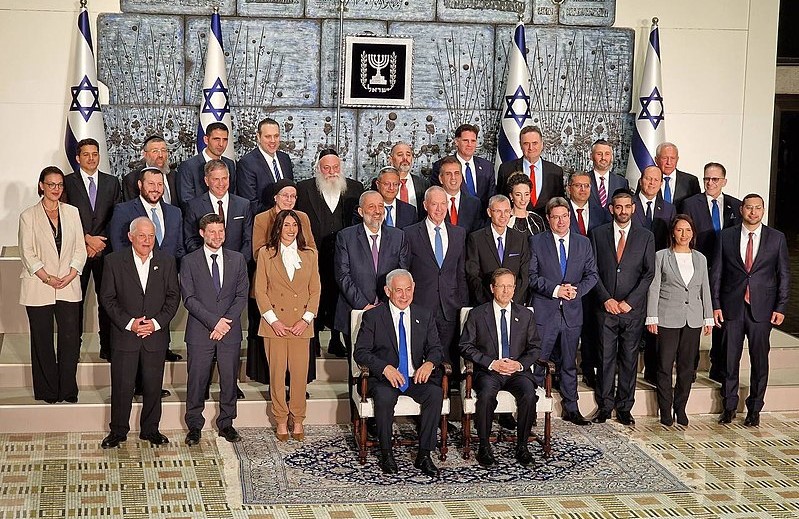
How can we understand the composition of the new government formed by Benjamin Netanyahu, which gives pride of place to religious Zionism and to a nationalism itself increasingly tinged with religious references? How can we understand it historically and circumstantially? Danny Trom looks back at this event, which marks a break in the history of Israel and of Zionism itself.
>>>Read the text by Danny Trom
Israel, on the cusp of civil war?

This text is a friendly but critical reaction to Danny Trom’s article – “Israel: Towards a rupture? – in K., which discussed the dramatic course of events in Israel since the last elections and, in particular, the plans of the new government to change key aspects of Israel’s regime and identity. In it, Israeli scholar of modern Jewish history Amos Morris-Reich emphasizes what he believes is difficult to see clearly from Europe: Benjamin Netanyahu’s active role in Israel’s crisis and the extreme fragility of the unity of its society.
>>>Read the text by Amos Morris-Reich
Eliad Shraga : “This government is a group of crooks with no regard for the benefit of Israel”

Continuation of Revue K.’s interviews and reports from Israel. Julia Christ and Elie Petit met with attorney and founder of the Movement for Quality Government, Eliad Shraga. One of our interviewees called him “the biggest judicial troublemaker in the country”. He is a leading figure in the fight against corruption and for the rule of law. His case for the drafting of ultra-Orthodox into the army will have its final decision on June 2nd and could represent an important threat to the current coalition.
>>>Interview with Eliad Shraga by Julia Christ & Élie Petit
Israel, 2023 : What We Hold on
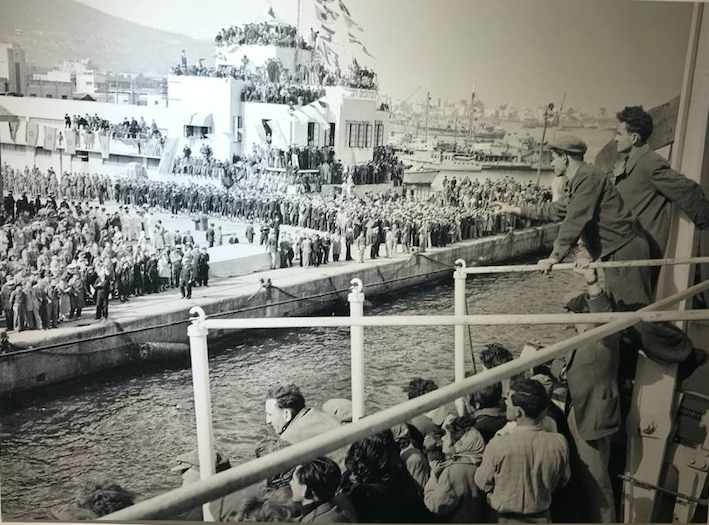
Examining the political situation that is inflaming Israel, Bruno Karsenti gives an account of the multiple fractures that deeply divide the populations living in the region. All the sub-groups in turmoil – religious Zionists, Israeli citizens demonstrating in defense of a modern democratic state now in danger, Palestinians in Israel and the occupied territories – are brought back to the same question, which touches on the feeling of belonging, which is felt in different ways. For although it is of equal intensity, it does not have the same content or the same meaning according to the perspectives involved. To belong or to possess? Sari Nusseibeh returns in this week’s issue of K. to the tension between these two words. Bruno Karsenti’s text reads like an introduction to the Palestinian philosopher’s contribution.
>>>Read the text by Bruno Karsenti
The Israeli crisis as an opportunity
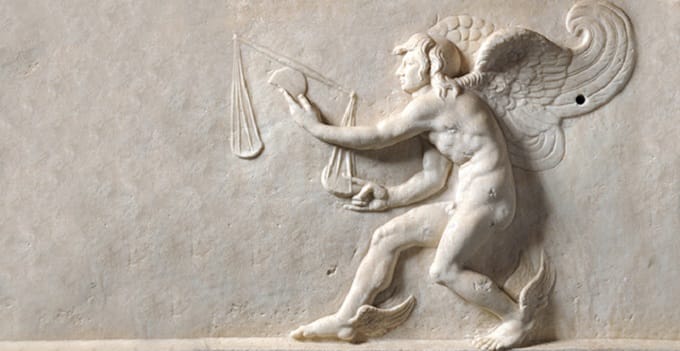
The crisis in Israel and the struggle for democracy that it is manifesting, among Israelis as well as within the Diaspora, has at least the merit of bringing clarity to a situation that until then appeared paralyzed and paralyzing. It forces us to seize an opportunity to take up some fundamental questions that affect the future of Jews as a whole.
>>>Read the text by Bruno Karsenti
When Messianics Dream “For Real”.
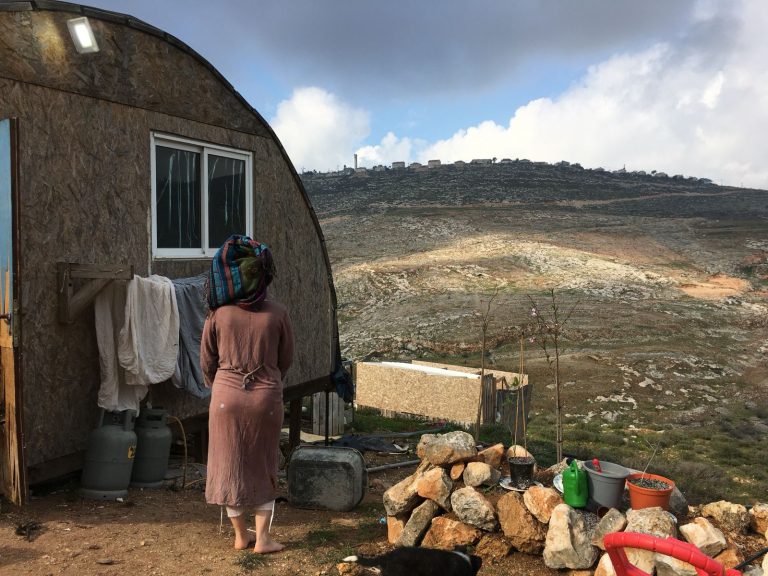
While messianism undoubtedly represents the most serious internal threat to Israel’s future, it nevertheless comes in many forms. Perle Nicolle-Hasid and Sylvaine Bulle examine its various currents here, starting with a fundamental divergence: the question of the relationship to realized Zionism, i.e., to the state. But whether it is the realists seeking to make the state a tool of messianism, or the purists detaching themselves from it to live according to ancestral Israel, the present of redemption overwhelms the horizon of Zionism.
>>>Read the text by Perle Nicolle-Hassid
Israel-Palestine: “Two States Plus” – The Urgency of a Real Utopia

As the situation in Gaza worsens and the Israeli political debate becomes increasingly radicalized, any plan for resolving the Israeli-Palestinian conflict seems out of reach. Yet many are working to prepare for the future. One political project, A Land for All – Two States, One Homeland, deserves special attention. It proposes two sovereign states linked by a confederation, each recognizing the national legitimacy of the other and organizing coexistence throughout the disputed territory. In a context marked by military deadlock, democratic fatigue, and the rise of anti-Zionist interpretations in Europe, including of this project, what can we make of such a utopian construct?
>>>Read the text by Julia Christ, Danny Trom & Bruno Karsenti
A conversation with Meron Rapoport from “A Land for All”
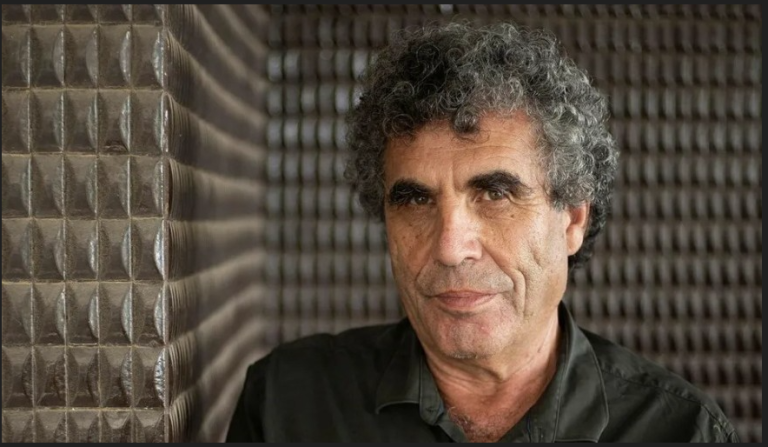
Israeli journalist and former reporter for Yediot Aharonot and Haaretz, Meron Rapoport co-founded the initiative A Land for All with Palestinian Honi Al-Mashni, which proposes a unique solution to the Israeli-Palestinian conflict: two fully sovereign states, but linked by a confederation, with Jerusalem as a shared capital, an open border, and a negotiated right of return for both sides. In this interview, Rapoport looks back on his personal journey, his break with the paradigm of separation, and the need to think beyond the logic of exclusion and toward a future based on sharing, reciprocity, and democracy.
>>>Read the interview with Meron Rapoport by Élie Petit
Apartheid – An Elephant Painted Red
An open letter entitled The Elephant in the Room was launched in mid-August to “call attention to the direct link between Israel’s recent attack on the judiciary and its illegal occupation of millions of Palestinians in the Occupied Palestinian Territories.” To date, it has been signed by just over 2,300 people—most of them academics (including eminent figures in Jewish history research) and personalities from Israel and the American diaspora—and has the dual characteristic of qualifying Israel as an “apartheid regime” and bringing together signatories who generally disagree with that qualification.