# 251 / Editorial
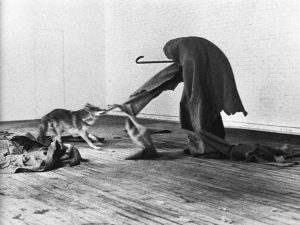
To kick off this new year, 2026, which we hope will be better for all of us than the one we have just left behind, we are publishing an article which, in the event that the situation of European Jews remains as dire as it has been over the past two years, seeks to understand the underlying causes. Gustave Kaplan takes as his starting point a recent text by French economist and philosopher Frédéric Lordon—and the revealing slip of the tongue he detects in it—to reflect on what he calls the “taboo” of post-Shoah Europe, namely the prohibition on every European from having a clear conscience. For it is on this taboo that post-Shoah Europe was built: after Auschwitz, Europe imposed on itself a requirement unprecedented in its history—that of never believing itself to be free, of never again being able to act in the name of an ideal, even that of emancipation, without suspecting its fallibility. Post-Shoah Europe was this curious political entity where no one claimed to have it: neither justice—always to be sought—nor truth—always to be questioned. Yet it is precisely this prohibition on the clear conscience of possessing justice and truth that contemporary anti-Zionism, in its jubilation at seeing the collapse of the “symbolic capital” built up around the Jewish signifier, is working to lift. The jubilant far left thus paradoxically joins, by other means, the camp of the reactionaries—unapologetic traffickers with a clear conscience—and that of the liberals lulled into their dream of peace already achieved. Between these three figures, Kaplan sketches the contours of a European crisis of which anti-Zionism is only one symptom—perhaps the most revealing of what we are in the process of losing. And yet, it is on the left, and nowhere else, that a policy remains to be built that would accept not having a clear conscience—and make this the driving force behind its action rather than an obstacle to be overcome.
Related articles
Unabashed anti-Zionism and a clear conscience

Saravá Shalom: Teshuvah in the Land of Enchantment
“I didn't want to be a female rabbi, I wanted to be a rabbi.”
The theme of the second article in this issue is quite different, taking us far from Europe and its torments to a scene where the memories of different groups persecuted by Europe intertwine without any sense of competition. Alex Minkin, anthropologist and filmmaker, presents his documentary Saravá Shalom, devoted to Brazilian syncretic Judaism. In Brazil, the Sephardic memory of forced conversion during the Inquisition intersects with that of slavery and colonization, giving rise to spiritual practices where Kabbalistic tradition, Afro-indigenous religiosity, and Kardecist spiritism intermingle. This documentary reveals a Judaism in perpetual transformation—a teshuva in the land of enchantment, where the return to one’s roots takes paths that the official rabbinate struggles to recognize, but which are nonetheless, as one of the film’s contributors says, “Jewish in their most radical sense”.
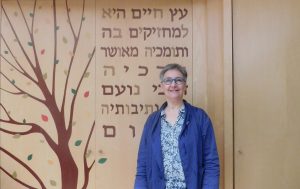
Finally, we publish an in-depth interview with Pauline Bebe, conducted by Ruben Honigmann. Thirty-five years after her ordination as France’s first female rabbi—an event that sent shockwaves through the French Jewish community—she looks back on her career and offers an unexpected reinterpretation of the history of French Judaism. In doing so, she also reveals the journey of a pioneer—a woman who, at the age of 25, unwittingly crystallized all the tensions of a Jewish world in the midst of change, and who had to face hostility from both men and women. “We still essentialize a lot”, she notes. “People asked me how I became a female rabbi. But I didn’t become a female rabbi: I was a woman, and I became a rabbi.” This distinction, as simple as it may seem, says everything about what remains to be accomplished—including in the debate on French Judaism itself, where too often only men have a voice.