“I didn’t want to be a female rabbi, I wanted to be a rabbi.”
Interview with Pauline Bebe
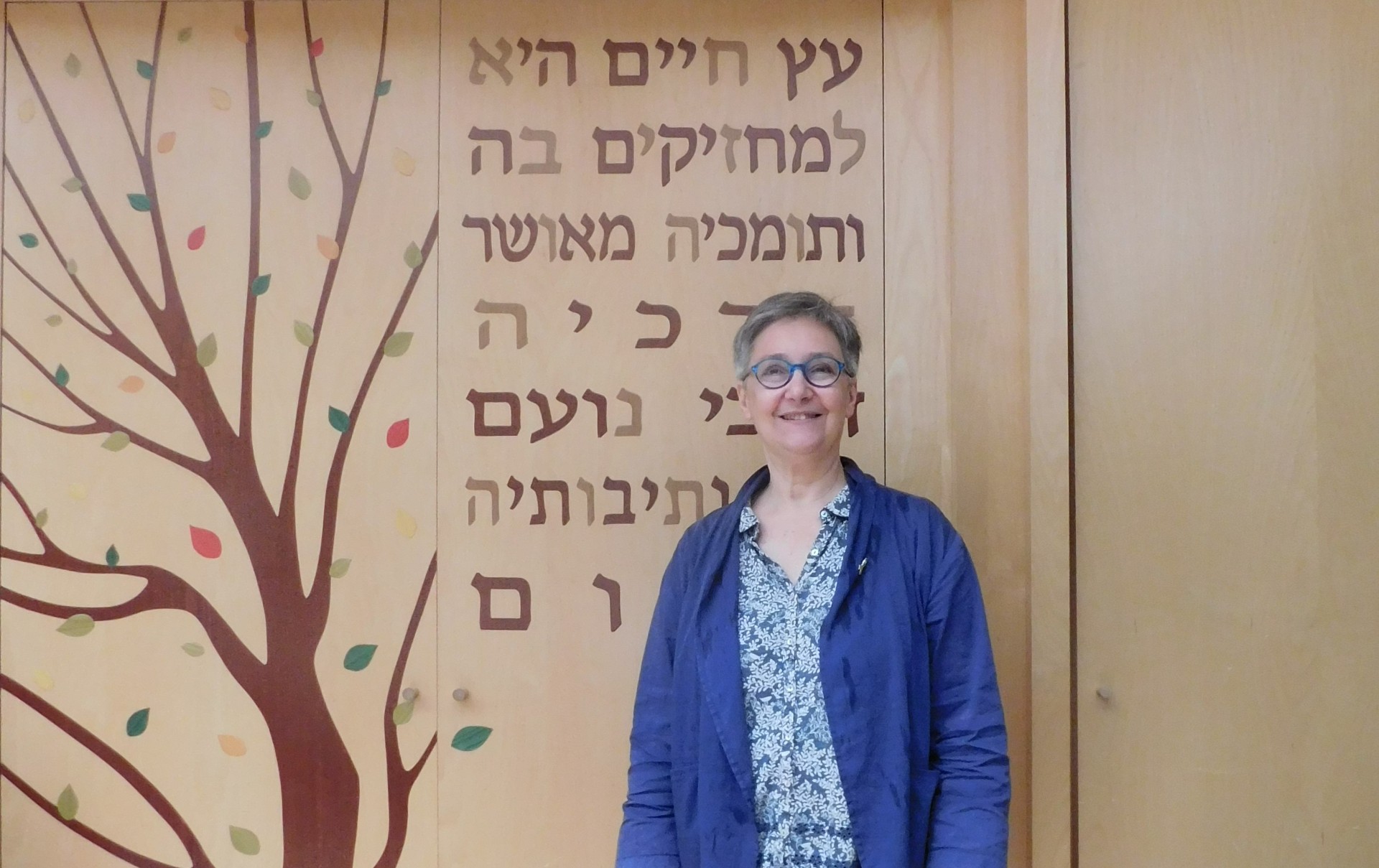
The first woman to be ordained as a rabbi in France in 1990, Pauline Bebe crystallized long-standing tensions within French Judaism: its relationship to tradition, equality, the Central Consistory of the Jews of France, and models of religious liberalism. In this interview with Ruben Honigmann, she looks back on her career and offers a historical reinterpretation of a Jewish landscape marked by little-known continuities, accepted ruptures, and ongoing recompositions.
In a text entitled “A sense of disarray hangs in the air—reflections on contemporary French Judaism”, Gabriel Abensour laid the first milestone in February 2024 in a series of reflections on the ruptures, continuities, and fundamental shifts that animate French Judaism.
Since then, Julien Darmon, David Haziza, and Jérémie Haddad have followed suit, offering their respective views on the state and changes in French Judaism, with their share of nuances and disagreements, particularly on the unspoken assumptions and retrospective biases that underlie the view of a bygone era and world. To these voices—to date exclusively male, which is perhaps symptomatic of what still “gets in the way” in French Judaism today—is now joined by that of Pauline Bebe. Her ordination in 1990 as France’s first female rabbi caused an earthquake in the French Jewish landscape, far beyond liberal and traditionalist circles. Against her will, the 25-year-old woman crystallized and catalyzed all the tensions, knots, and latent fault lines of French Judaism, which had already been largely transformed by post-Holocaust reconstruction, the arrival of Jews from North Africa in the 1960s, and the teshuva (“religious return”) movement that animated the post-1968 generation.
Ruben Honigmann: What kind of environment did you grow up in?
Pauline Bebe: In a family that was integrated into French society, as my father was a pediatrician and my mother a lawyer. Both my parents were born in France. It was a family that went into hiding during the war, in which the transmission of Judaism skipped a generation. The only thing they could transmit on was antisemitism, but they didn’t want to pass on something negative. So when my brother and I were old enough to ask questions about Judaism, they looked for a community that was egalitarian in terms of the place given to men and women and the importance given to Reason and Revelation. They found the synagogue on Copernic Street, which at the time was the only liberal synagogue in France. When I was nine, they enrolled me in Talmud Torah, and it was from the moment I began studying that, little by little, the whole family also returned to Jewish study and practice, notably by taking classes with Colette Kessler. In this way, they discovered what they had been deprived of because of the war. Then, in 1977, I had my bat mitzvah at the Liberal Jewish Movement of France (MJLF). It was the first bat mitzvah celebrated in this newly created community, and immediately afterwards I began teaching. I gave Talmud Torah classes at all hours, three days a week.
RH: You were teaching Torah at 13?!
PB: Yes. They came to trust me, and when I was 18, they appointed me director of Talmud Torah. Soon after, I started looking into how to become a rabbi.
RH: There were no female rabbis in France at that time. How did you know that this was even a possibility?
PB: I knew that there were women who were rabbis in England and the United States. I met a young American who had come to Paris to lead the youth group at the MJLF, and he told me, “If you want to be a rabbi, you have to go to the United States.” So I got my BAFA (youth leader certification), went to summer camp in the United States, and met some women rabbis there. It’s also related to the education I received.“ So I got my BAFA (youth leader certification), went to summer camp in the United States, and met women rabbis there. It’s also related to the education I received, which was completely egalitarian. I was taught that ”any job a woman wants to do, I can do, I can be.”
RH: Where did your parents’ egalitarianism come from?
PB: I think feminism had been around for a long time. I learned that my grandfather’s side of the family included the first female lawyer in Algeria. I also had a photo of my maternal grandmother, Marguerite Bloch, who celebrated her bat mitzvah at the Consistory, in a white dress at the Victoire synagogue. So I was raised with the idea that the Consistory, and this is also historically true, was liberal before, even before the explosion of liberal Judaism in the United States.
RH: Meaning?
PB: As early as the 1850s, liberal movements had a significant influence on the Consistoire. When you look, for example, at the speeches of Rabbi Zadoc Kahn, as well as his translation of the Bible into French, all of this shows a desire to integrate into French society. Within the Consistory itself, there were discussions about how to reconcile Jewishness and citizenship, similar to those in liberal Judaism. I have my great-grandmother’s prayer books, which were almost entirely in French, with only the Shema Israel in Hebrew. The organ was played at the large (Consistorial) Synagogue de la Victoire, including on Shabbat. And the Consistory was the first to institute a bat mitzvah for girls, without reading from the Torah, but with a ceremony nonetheless. There is also a letter from the Chief Rabbi of France after the Holocaust that says, “Don’t be too concerned about the identity of Jews. If they are only Jewish on their father’s side, they should be considered Jewish.”
RH: So, if we follow your reasoning, it is not liberal Judaism that has changed, but rather the Consistory.
PB: Absolutely.
RH: That said, there must have been a difference, otherwise the liberal movement would not have needed to emerge in France.
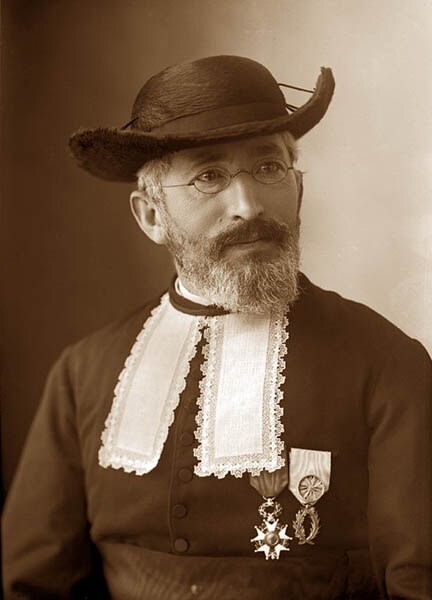
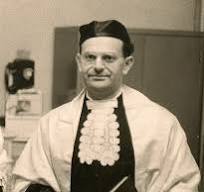
PB: This can be explained by the fact that there was a part of the Consistory that was influenced by the Enlightenment movements, called the Regenerators of France, and another part that was said to be traditionalist, which rejected these changes. For example, I don’t know if you’ve seen photos of Chief Rabbi Jacob Kaplan wearing a black robe, but these robes were influenced by those worn by Protestant pastors! When French rabbis arrived in Algeria, the local people were surprised to see them dressed like that. Within the Consistory, there was therefore this tendency, which was attracted to liberal thinkers, such as Rabbi André Zaoui, of whom I was the last student. He had studied at the Consistorial Jewish Seminary on Rue Vauquelin. He was a chaplain and became liberal during the war, and it was the Consistory that chose him to become the rabbi of the liberal synagogue on Rue Copernic.
RH: So it was the Consistory that sent Zaoui to the liberals?
PB: Yes, it’s funny, but indeed, when he became a liberal, he was told, “Take charge of this community.” And before Rabbi André Zaoui, it was Louis Germain Lévy, who I believe was previously the Chief Rabbi of Dijon, who was also attracted to liberal movements.
RH: So you say you grew up in a world where Consistorial Judaism was quite close to the liberal world.
PB: Yes, absolutely. At the time of Chief Rabbi Kaplan, it was still very open. Rabbi Zaoui explains that when he arrived at the Jewish seminary on Rue Vauquelin, he already knew Arabic and Hebrew, and the director of the seminary at the time told him that he had to enroll at the Sorbonne to learn Latin and Greek, because you can’t understand the world of the Mishnah without knowing those two languages, and that he also had to take courses in anthropology, psychology, and history. It’s incredible, how much water has flowed under the bridge since then! Then there were several turning points. When Sirat, who was also my teacher, became Chief Rabbi of France, he carried out three reforms: he banned the use of organs and microphones during Shabbat at La Victoire and he banned mixed choirs. After Sirat, Chief Rabbi Joseph Sitruk succeeded him and further accentuated the conservative momentum. In my opinion, it was also the withdrawal of the Consistory that led to the emergence of so many liberal communities.
RH: Do you also link this movement back to practice with the Sephardization of French Judaism?
PB: No, because the English example shows the opposite. In England, the Sephardim had been there for a long time and had largely assimilated, and it was only with the later arrival of the Ashkenazim that religious rigidity began. Populations that have been there for a long time assimilate; it is the newcomers who are more traditionalist. The common belief that Sephardim are more observant seems false to me. I have often been told that in Tunisia, where Jews were merchants, the rabbis knew they could not force them to close their shops. So they organized services at 8 a.m. to allow them to attend and then go to work. Moreover, contrary to popular belief, our community is largely Sephardic.
RH: So there would be stress generated by departure, by exile, which implies a need for reference points and security, which is met by resorting to tradition.
PB: Yes, I think that feeling like a stranger in a country makes you withdraw into yourself.
RH: Let’s go back to your career path. You said you were Rabbi André Zaoui’s last student?
PB: Yes, in Israel. And I feel very strongly about this passing of the torch at a time when we are creating a rabbinical school and are going to ordain our first rabbis (on September 7, 2025). Rabbi Zaoui created a school in 1955 (closed in 1969) called the International Institute of Jewish Studies, on Rue Servandoni, to train a whole generation of liberal rabbis.
RH: So in 1990, you were ordained in England at Leo Beck College and you arrived in Paris at the MJLF. And there, how did things unfold?
PB: The first few years were very difficult, even within the liberal community. The MJLF claimed to uphold the principle of gender equality, but in reality, this did not exist. So I encountered a lot of hostility, both within and outside the community. As with all first women, there was pressure to do as well as or better than a man in this role. People told me they were “waiting for me to slip up.” I received threats, even physical ones at times: during a radio interview, an individual burst into the studio. Internally, I was always very surprised because what interested me was being a rabbi, not “the first female rabbi in France,” which was a media label. I wanted to work discreetly, but there was such a media frenzy around the world that no one could remain indifferent. People were either passionately for or passionately against it. But all this media publicity also helped me a lot because it allowed me to get started and be accepted in my community, while also generating jealousy, inevitably.
RH: Is that why you’ve become very discreet in the media in recent years?
PB: I think being in the media is a job in itself, which takes up a lot of time. Josy Eisenberg, for example, was a media rabbi, and Delphine Horvilleur is a media rabbi. I just wanted to devote myself to my community and my projects. And I believe I am the first woman to have built her own community center (the CJL in Paris). I’ve written a dozen books, I helped write the first liberal commentary on the Torah, I’ve taught many midrash classes, I’ve inspired people to become rabbis, I’ve created support groups that don’t exist anywhere else, for parents who have lost children, for the sick, and for those who care for the sick. I have conducted many ceremonies, from birth to death, and I try to personalize them as much as possible. I spend a lot of time with people. That’s what being a rabbi is all about. Not a week goes by without a media request, but I sort through them and, above all, I don’t respond in the heat of the moment. So in the end, I’m happy with the way I’ve conducted my career—as a mother of four children—and it’s been exciting every day.
RH: To what do you attribute the fact that you have aroused so much hostility?
PB: I think people live with the idea that a rabbi is a man with a beard. A female rabbi upsets that image and the mental, sexual, and educational security that goes with it. It unsettles people with an uncertain identity. And that applies to women as much as it does to men. I’ve encountered very hostile reactions from women. You’d think women would support other women, but that’s not true. But sometimes people change their minds, rethink their prejudices, and that’s a good thing. Even today, I still meet people who are seeing a female rabbi for the first time and who come up to me at the end of a service and say, “I have to tell you, I was against this, but I’m really touched by the work you’re doing.” And those are extraordinary moments.
RH: Was wearing a kippah important to you from the beginning?
PB: Yes, because I think Jewish symbols are not masculine symbols. Whether it’s the kippah or tefillin, I think it’s important for women to reclaim them. If the kippah is a sign, a reminder that we are not unlimited, like a piece of sky that we wear on our heads, there is no reason why only men should wear it. In my community, I strongly encourage both men and women to wear it. And I am completely egalitarian, so in my community, which is not the case in all liberal communities, men also light the Shabbat candles. All the rituals are performed by everyone.
RH: It has been 35 years since your ordination. What has changed since then, in broad terms?
PB: I have seen liberal Judaism grow enormously. There is a very strong demand for it. What I see today, which is new, is that we are attracting people who come from traditional Judaism.
RH: To what do you attribute this change?
PB: I think there are many Jews who no longer identify with the official institutions. People tell me they come to us because it’s warm and egalitarian. But I think we all have reasons to exist, we all have the same goal, to pass on Judaism, whatever the nuances. I sometimes say to certain people, “If you don’t feel comfortable here, go and look at other synagogues .” I don’t see others as competitors. I don’t know the exact figures, but I would say that overall, 80% of the Jewish population still belongs nowhere: neither to the Consistory, nor to the Orthodox, nor to the Liberal. They are the silent majority, who don’t even come for Yom Kippur.
RH: The greater acceptance of the liberal movement is perhaps also due to those who have followed in your footsteps, Delphine Horvilleur in particular, I think.
PB: Yes, I think so. And there are now ten female rabbis in France, but for fifteen years I was alone. At first, I felt like a freak show. People addressed me as a female rabbi, not as a rabbi. They asked me how I became a female rabbi. But I didn’t become a female rabbi, I was a woman, I became a rabbi. There is still a lot of essentializing going on. When I look at my community, I don’t think to myself that there are so many men and so many women. I don’t have a gendered view of humanity.
RH: In the 19th century, there was a German influence on French Judaism. Berlin was the Jerusalem of the time. After the Holocaust, the center of gravity shifted to America. Many people who attend a liberal service find it very American. Is a specifically French liberal Jewish path possible?
PB: Yes, I think that in France, Judaism has been rejected for this reason, out of anti-Americanism, underpinned by this caricature of the American liberal synagogue where people don’t even wear kippahs. In fact, when people come here, they find it more conservative than in the United States. Liberal Judaism is also present in Israel. I believe there are 130 liberal rabbis there, which is not many compared to the number of rabbis in Israel, but the movement has been well established there for a very long time. So I don’t consider liberal Judaism to be specifically American. It’s true that a significant amount of liberal literature has been published across the Atlantic, but also in England. I was trained in England, where half of the Jews are liberal. I think we have another French specificity, which is why we were keen to create this rabbinical school: to train liberal rabbis for France, taking into account in particular the Sephardic component, which is virtually non-existent in England, Germany, and the United States. I remember a Tunisian Sephardic man here in my community who said to me, “I’m willing to accept a female rabbi, but if you come to put up the mezuzah in my home, you must cut off the head of a fish as a sign of prosperity.” Finally, there is the French tradition of reflection, philosophy, and literature. You don’t learn that elsewhere. I think it’s very important to build bridges with the artistic, literary, and philosophical culture of the country where you live. There is a school of thought in France, and that must be infused into rabbinical training. And then there’s the French language too, which is very important.
RH: Since 2019, liberal Jewish communities have been united under the umbrella of the association Judaïsme en mouvement (JEM). The Communauté juive libérale (CJL), which you lead and which has about 640 families, is not part of this association. Why is that?
PB: Before JEM, there was an organization called the Assembly of Liberal Judaism (AJL), created in 2016, which brought together the communities of the Federation of Liberal Judaism, to which my community belongs, plus Copernic and the MJLF. And JEM was created when it split from the AJL. So, as always, it all depends on how you tell the story.
RH: So it wasn’t you who didn’t join JEM, you simply stayed where you were. What is the difference between JEM and the Federation to which you belong?
PB: The Federation operates in a much more horizontal manner, while JEM is more centralized, a bit like the Consistory. It’s also worth noting that JEM didn’t want to include the word “liberal” in its name, because some rabbis didn’t identify with that label. Whereas we, on the other hand, proudly claim our liberalism and fully embrace liberal theology.
RH: Why do you insist on the label “liberal”? What does it mean to you?
PB: It implies an evolving tradition. In our siddur (prayer book), we mention the matriarchs (imahot) as well as the patriarchs (avot). The services include passages in French. In some communities, French is used less and less in prayer, but we continue to use it, while insisting on knowledge of Hebrew. We advocate a Judaism that truly adapts to the times while remaining respectful of tradition.
RH: How do things work today between JEM and the Federation? Do you still work together?
PB: Yes, of course. We talk to each other and we are on good terms. We are also united around Kerem, the rabbinical association that brings together all the rabbis, both from JEM and from the Federation.
RH: In a recently published book, Dov Maïmon and Didier Long announce the end of the Jews of France. How do you see things?
PB: I don’t share that impression. Of course, we cannot deny the antisemitism and concerns that have been sweeping France, particularly since October 7. But what I also see is that the Jewish community has extraordinary vitality. Communities are constantly being created and books are being written all the time. It is a community that produces enormously, artistically, intellectually, and religiously. That doesn’t mean it isn’t facing difficulties, but it’s what André Neher calls “the hard happiness of being Jewish.” What I also notice, which is counterintuitive, is that since October 7, there have been more and more people at the synagogue, and services are full. People need to come together, to have a place where they feel supported, a place where they feel safe, and the synagogue plays that role even more than before. Since October 7, not a day has gone by without someone contacting me saying, “I am Jewish, or of Jewish origin, and I have always wanted to know what Judaism is, I want to know why I am Jewish, what it means in a positive way, etc.” That’s what the sages say: “There is no evil from which good does not come.”
Ruben Honigmann
Born in 1983 in East Berlin, Ruben Honigmann grew up in Strasbourg. After studying at a yeshiva and completing a degree in history at university, he joined Akadem in 2008, where he now serves as editorial director.