# 248 / Editorial
The shooting at Bondi Beach in Sydney on December 14, 2025, left at least fifteen people dead during a Hanukkah celebration. It serves as a stark reminder that antisemitic violence is spreading, changing scenery but retaining its logic — and testing, here as elsewhere, the ability of states and societies to face the event head-on and call it what it is. In this regard, the Bondi Beach shooting also served as a reminder that Western societies are not up to the task, that they are currently unable to make the antisemitism they create a public issue. For while the killing was condemned, the general trend in reactions was nonetheless to frame antisemitism as someone else’s problem. That is, a problem that we do not have to deal with ourselves. This was clearly seen in the discourse insisting on the “necessary” distinction between anti-Zionism — killing Jews as Jews, no; but as Zionists? — as well as in those who clung to the term “Islamist terrorism” to ensure the foreign nature of the threat and the impossibility of fighting it other than with heavy police force. In both cases, it is the endogenous dimension of antisemitism that is ignored, the fact that it is indeed from within that it affects our democracies. And, as a result, the possibility of addressing the problem at its source, of confronting what enables these murderous acts, is lost. The editorial staff of K. was keen to express this observation with one voice in “Bondi Beach: License to Kill.” And since the issue at stake is clearly the embarrassment of Western democracies when it comes to the question of their antisemitism, we have decided to leave Bruno Karsenti’s text on the antisemitism of denial on the front page for another week.
Related articles
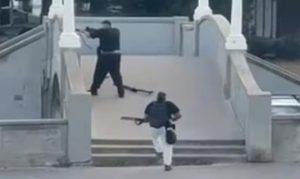
Bondi Beach: license to kill
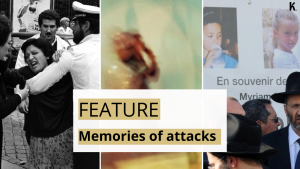
Feature: Memories of attacks

The antisemitism of denial and the new trial of the Jews
In addition, to highlight some precedents for last week’s attack in Australia, K. has compiled four articles published in recent years, which show that this event is part of a long series. Rome, October 9, 1982: a commando targets worshippers leaving the synagogue, and documented evidence suggests that a warning was ignored, raising the poisonous question of negligence — or even collusion. Djerba, after the Ghriba attack (2023): a story that captures the fear, the island as a refuge and a trap, and the difficulty of recognizing antisemitism without dissolving it. Toulouse, ten years after the attack on the Ozar HaTorah school: the interview with Franck Touboul measures the lasting effects of the shock, community life under constraint, wear and tear, but also the decision to persevere. Finally, Rudy Reichstadt’s analysis of the other front opened up by this latest massacre, that of the battle of words — and the way Jean-Luc Mélenchon spoke about Ozar HaTorah, between relativization, suspicion, and accusatory reversal. Reading these texts together, with Sydney in mind, is to grasp the repetition of the same scenario — in facts as well as in discourse.