#277 / Editorial
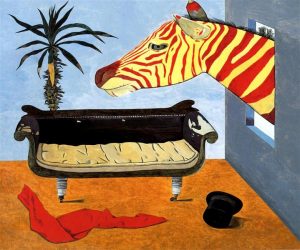
It can be said that the modern promise of universal emancipation was heeded by the Jews. But one can also listen with a distracted ear or a wandering mind, letting one’s thoughts drift to something else. Freud’s discovery of psychoanalysis drew conclusions from this. Intertwined with the ideals of scientific and individualistic modernity, and aiming to grasp the human condition at its most fundamental level, psychoanalysis nevertheless espouses a discourse that has often made it suspect in the eyes of the times. This raises a question: what is it about this incongruous positioning that echoes the minority experience of a Jewish reality that persists despite assimilation? What remains Jewish in psychoanalysis? A year ago, we published an excerpt from Joël Whitebook’s biography of Freud in the French issue of K., in which the Jewish character of psychoanalysis was situated within a certain spirit of heresy. This interpretation prompted a response from David Krausz and Déborah Gutmann-Krausz, who, in their essay, turn this thesis on its head. For them, in fact, it is rather the mystery of a Judaism devoid of content, yet irreducible, that has left its mark on Freud’s discovery. And it is perhaps in this focus on what remains, despite everything, that we must seek the originality of psychoanalysis’s relationship to speech, especially when it claims to be redemptive.
Related articles
What is it that remains Jewish in psychoanalysis?

When Antisemitism Disappears from View

Violence in the West Bank: The “protective presence” of Bnei Avraham
“Your sickening accusations of antisemitism no longer hold water; no one believes your victimization anymore; soon it will be time to pay the price. ” These are the kinds of remarks we now encounter daily on social media—commonplace elements of a political atmosphere that has become stifling. This “non-antisemitic” freedom of speech—since it is exclusively anti-Zionist—often takes vulgar forms, overflowing with the glee of being able to proclaim without guilt what one knows to be reprehensible. But stupidity craves the phrasing that will give it legitimacy, and nothing suits an intellectual better than the throne of an audience already won over. This is how a series of “organic intellectuals” of the non-antisemitic anti-Zionists emerged, concerned with drawing the watertight boundary demanded by their readership. Among the various iterations of this endeavor, the most serious is undoubtedly that of Mark Mazower in Antisemitism: Metamorphoses and Controversies, in which all the resources of social constructivism are mobilized to reduce contemporary antisemitism to a Zionist political fiction and to demonstrate the principled legitimacy of anti-Zionist criticism. Balázs Berkovits undertakes a close reading of this work in order to identify its implicit assumptions and limitations: must one deny the continued existence of antisemitism in order to be antizionist?
Lastly, we are resharing an interview with Dvir Warshavski, a religious activist on the Israeli left and co-founder of the organization Bnei Avraham, which accompanies Palestinian farmers on their land and defends them against attacks by settlers. Today, the expansion of settlement in the West Bank must be the object of our strongest rejection, for it represents precisely the point where the deviation is most radical. Warshavski describes the deteriorating situation of Palestinians in the West Bank, the growing blurring of lines between settlers and soldiers, and the gradual erosion of institutional safeguards. But he also testifies to how, on the ground, political actors are mobilizing their understanding of the authentic meaning of Zionism in its Jewish character and their struggle for coexistence with the Palestinian people.