#272 / Editorial
There is the very real Palestine, the one that should be the name of a Palestinian state, provided that the national identity of its population allows for it, and that the internal and external forces preventing its emergence, which are so powerful today, are finally defeated, and there is the imaginary Palestine of anti-Zionist discourse, which is not only foreign to it but is even one of the greatest obstacles to its affirmation. It is this latter Palestine that is the subject of this issue of K. At the center of the contemporary imagination of emancipation, the representation of an oversized, redemptive Palestine dominates the horizon. “Palestine will save us all”: in this slogan lies the confusion of a progressive mindset in search of bearings. For what exactly is there to be saved from, and where does the belief come from that this reified Name can guarantee liberation? This week, University of Passau researcher Tim Stosberg offers an analysis of the projections made by the American and European left regarding Palestine, examining the fantasies used to justify the hope of redemption through anti-Zionism. At the point where all struggles are supposed to converge, one can discern a nostalgia for a lost purity, an aspiration toward authenticity and immediacy, and an opposition between the organic nature of community and the abstract and artificial character of modern capitalist societies, embodied for the occasion in the Jewish state. What happens to the critique of modernity when it loses sight of the modern ideals that sustain it? It leans on the mirage of origin and begins to dream of a great redemptive shift. As for the demons that might be unleashed by this invocation, that has never been the concern of soteriologists.
Related articles
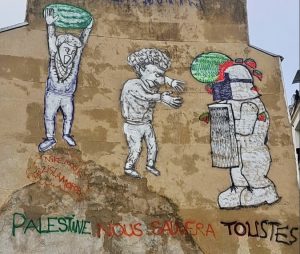
“Palestine Will Save Us All”
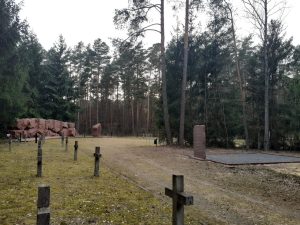
The De-Judaization of Treblinka: A Question
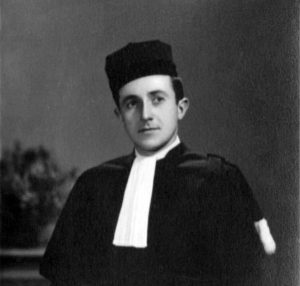
Daoud, Egyptian nationalist and Zionist
In Treblinka, the memory and history of the Shoah continue to be the subject of bitter battles against attempts at erasure and distortion. Researcher Elżbieta Janicka – who had previously brought this issue to the attention of K.’s readers in “Denialism Polish style” and “The Treblinka camp is not owned by officials” – has initiated a public discussion in the Polish press with the new president of the International Treblinka Council, historian Havi Dreifuss. The latter responded by acknowledging the gravity of the problem, while defending the need to take the time for rigorous institutional and scientific work. K. publishes this dossier, introduced by Jean-Charles Szurek, who highlights the issues at stake, concerning historical truth, the ethics of commemoration, and the place of Jewish victims in the memory of the Shoah..
“Even if the legacy of the Jews of the East has largely disappeared, I want to remember that it existed. And if it existed, it can exist again in a form yet to be invented. Jewish-Arab coexistence was not a concept for Moshe, Daoud, Maurice, and Elie: it was a daily reality,” writes Pierre Hazan in The Jews, the Arabs, My Family, and Me (Les Juifs, les Arabes, ma famille et moi), which has just been published by Éditions Textuel. We are publishing an excerpt from the book, dedicated to Daoud, this uncle who was a fervent Egyptian nationalist but also a staunch Zionist. He offers us a testimony to what the anti-colonial and universalist commitment was like to national self-determination, but also to his disillusionments…