Daoud, Egyptian nationalist and Zionist
Excerpt from “The Jews, the Arabs, My Family, and Me” (Editions Textuel)
“Even though the legacy of the Jews of the East has largely disappeared, I want to remember that it once existed. And if it once existed, it can exist again in a form yet to be invented. Jewish-Arab coexistence was not a concept for Moshe, Daoud, Maurice, and Elie: it was a daily reality,” writes Pierre Hazan in a book recently published by Editions Textuel. He blends family history with political history to explore what Jewish and Arab identities have long had in common and what has caused conflict between them. The excerpts we are publishing are dedicated to Daoud, an Egyptian nationalist and Zionist...
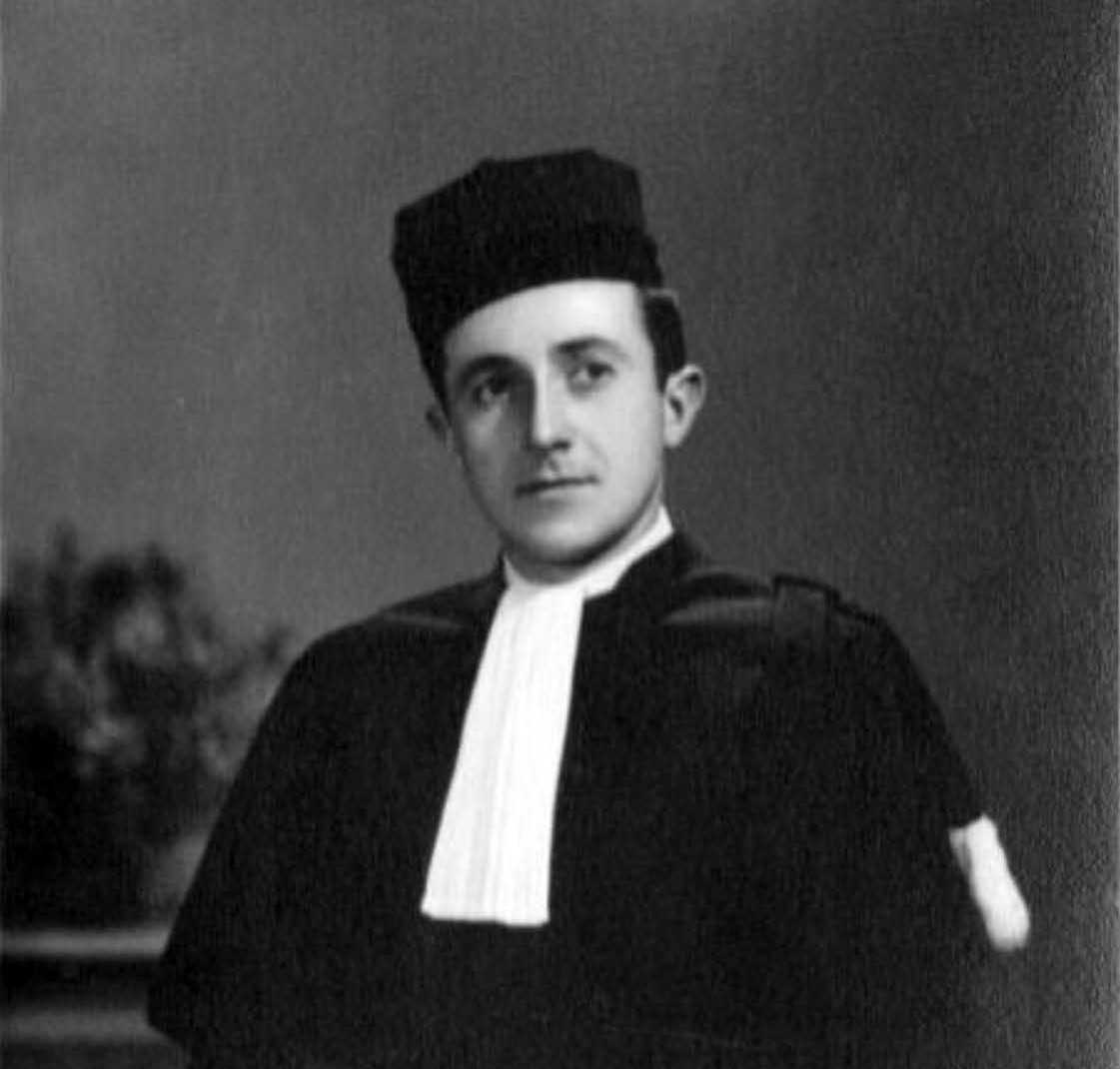
When David became Daoud
No one had ever spoken to me about my great-uncle David Hazan, Moshe’s grandson. He died in 1946, long before I was born. I discovered his existence almost by chance. Once or twice, as a child, I had heard his name mentioned in passing by my father or his cousin, David’s son. Nothing more. I had no photo of him, no information of any kind. On the rare occasions when my father and his cousin – both named Elie – agreed on anything, it was to say that David “was an oddball”. An oddball? The two Elies seemed to disapprove of the choices David had made, choices that were never talked about, at least not in my hearing. I thought I remembered them once saying that David had been an officer in the Ottoman army. That made no sense to me, and only added to the mystery: practically no one in my family had been inclined towards the military. What would this great-uncle have been doing in the Ottoman army? Especially since I believed that I was the first in many generations to have done military service, albeit in Switzerland. I began to doubt the few echoes of the past that came to my mind. I don’t think the family ever used the word “naive” to describe David but, in hindsight, I feel that they considered him a “loser”. I grew curious. How had he failed and why had the family written him off? Without knowing him, there was something about this great-uncle I had never seen that moved me. I sensed that he had ventured off the beaten path, far from the family’s conservatism – and this pleased me. What direction had he taken?
I dug around a bit and the Internet eventually yielded some clues. The 1942 Jewish Yearbook revealed David’s causes – and a few surprises. In his biographical entry, David Hazan is listed as Daoud Hazan, as David had Arabised his name. Why? And when? Arabising one’s name is no trivial matter, especially when one is the eldest son of the Chief Rabbi of Alexandria, himself heir to a long line of distinguished rabbis. I was just as surprised to learn that David was born in Jerusalem in 1869: I had assumed our Egyptian roots were much deeper. David-turned-Daoud was a Jew from Palestine.
That same yearbook entry noted that he had arrived in Alexandria in 1889. I would later find out that he had grown up in Tripoli, Libya, where his father had served as Chief Rabbi for 14 years and where my grandfather, Isaac, David’s brother, was born. The entry also contained the following lyrical lines, at once embarrassed and complimentary. They lifted the veil on David’s political beliefs:
Daoud Hazan had a fairly eventful career. Of a proud temperament, unwilling to accept insult or injustice, he was involved in all the nationalist movements of his time. A close friend of the Egyptian leader Mustafa Kamil Pasha and, after him, his brother Ali Bey Kamil, Daoud Hazan took part for many years in the political intrigues of the Egyptian National Party and was sentenced to death before being pardoned by the occupying authorities. He was granted the title of Bey by the Sultan of Turkey. Daoud Hazan is among those who served their homeland best.
Daoud – I’ll call him that from now on – had chosen his cause: Egyptian nationalism. I now better understood why, in the eyes of the two Elies, themselves expelled from Egypt, Daoud was an “oddball”. The yearbook remained vague, however, about exactly why he was sentenced to death: what crime had he committed against the British authorities to merit being hanged high and short? I grew even more curious. What had prompted this great-uncle, who was born in Jerusalem, spent his adolescence in Libya and had never lived in Egypt before the age of 20, to become a fervent Egyptian nationalist ready to give his life for the cause? I tried to piece together the story of his life.
How had he failed and why had the family written him off? Without knowing him, there was something about this great-uncle I had never seen that moved me. I sensed that he had ventured off the beaten path, far from the family’s conservatism – and this pleased me. What direction had he taken?
The Hazans arrived in Alexandria in 1889. Daoud had just turned 20, the eldest of a brood of about ten siblings. His father, Eliahou (1845–1908), the city’s new Chief Rabbi, was a Talmudic scholar charged with providing spiritual guidance to a fast-growing community in a city expanding at a phenomenal rate. His eldest son, who had grown up in two much sleepier towns – Jerusalem and Tripoli – would have had to adapt to a port city buzzing with life. I read that Alexandria was one of the first cities in Africa to have a tramway, in 1863. The Suez Canal, completed in 1869 – the year of Daoud’s birth – had transformed the land of the pharaohs into a strategic hub on the route to Asia. The boom in Egyptian cotton, which kept the textile mills of Manchester and elsewhere running, provided another boost. Alexandria’s economic dynamism attracted Syrian–Lebanese, Armenians, Italians, Maltese and Jews from North Africa, the Ottoman Empire and Europe. It also attracted capital and new ideas. Alexandria was one of the first cities in the world to have a cinema, in 1897. Its energy spilled over to Cairo, where the bourgeoisie followed European fashion, ate Italian or French food and delighted in the new Swiss patisserie Groppi, which had just opened near Tahrir Square. The Khedive, Ismail Pasha, was said to have declared, “Egypt is now part of Europe and has turned its back on Africa and the past.” I learned, again to my surprise, that French had become the official language of the court.
It was in this rapidly modernising Egypt, at the turn of the twentieth century, that Daoud witnessed the emerging forces of anticolonialism and socialism as they played out against the backdrop of the crumbling Ottoman Empire, fuelling nationalisms, Turkish, Egyptian and Jewish in particular. He was fascinated by this intellectual ferment. My friend Leila Kilani, a specialist in the nineteenth-century Arab world, explained to me that Daoud was part of the “generation of rupture”, those struck full force by the shock of European modernity. I suspected that Daoud experienced a double rupture, one caused by modernity in both the Arab and the Jewish world, the Nahda and the Haskala. Did he rebel against his religious and traditional father? Most likely, yes. How could he not? Along with other young men, Daoud also rose up against Great Britain, which had imposed the “veiled protectorate”. Officially, the Ottoman Sultan still ruled Egypt, but it was London that called the shots, having crushed, in 1882, the first nationalist uprising led by Colonel Ahmed Urabi, whose slogan was “Egypt for the Egyptians”.
In that environment, Daoud was a progressive student, an anti-colonialist who was passionate about justice, at odds with the traditionalist, conservative world his father represented. A Jew from Palestine, he projected himself as part of this modernising Egypt, in particular the cosmopolitan city of Alexandria.
Daoud did not stay long in Alexandria, barely a few months, but long enough for the city to become his adopted home. He boarded a steamer to study law in Paris, the shining capital of the age. I imagine him haunting the smoke-filled cafés of the Latin Quarter, devouring one book after another and engaging in spirited discussions. It was an intense period, the era of the Third Republic and anarchist attacks in Paris. Édouard Drumont had just launched his nationalist and antisemitic newspaper La Libre Parole. The Panama Affair brought down industrialists and politicians: members of the French government had taken bribes to remain silent about the financial troubles of the Panama Canal Company, in what was considered the biggest monetary corruption scandal of the nineteenth century; nearly half a billion francs had vanished. In that environment, Daoud was a progressive student, an anti-colonialist who was passionate about justice, at odds with the traditionalist, conservative world his father represented. I imagine him eagerly keeping up with current events, following the news out of Egypt, furious that it remained under the British heel. A Jew from Palestine, he projected himself as part of this modernising Egypt, in particular the cosmopolitan city of Alexandria.
Intimately familiar, as he was, with the Arab world in which he had grown up, he must have fumed at the condescending and orientalist views of Ernest Renan (1823–92), one of the great intellectual figures of the day, who a few years earlier, in 1883, had declared in a widely influential lecture, “All those who have been in the Orient or in Africa are struck by the narrow-mindedness of the true believer, by the kind of iron ring that encircles his head and makes it entirely closed to science, incapable of learning anything or opening up to any new idea.”
Each weekend, he would have bought the Journal d’Abou Naddara from his local newsstand. The Private Eye of its time, the Journal was published in Arabic and French, printed in Paris and secretly circulated in Egypt, where it was banned. Daoud would have delighted in its satirical tone, caricatures and biting humour. Its rallying cry – “Egypt for the Egyptians” – was the same slogan Ahmed Urabi had adopted a decade earlier; Daoud made it his own. The Journal was a thorn in the British authorities’ side. Its founder, Yacub Sanu, was a Jew from Egypt and one of the earliest advocates of Egyptian nationalism. Exiled and living in Paris, he continued to fight for his country’s independence under the pseudonym Abu Naddara (literally “the man with glasses”). He gave his nom de plume to his weekly. More than a century later, in Syria in 2010, an anonymous group of videographers would adopt the same name to document the uprising against Bashar al-Assad’s dictatorship.
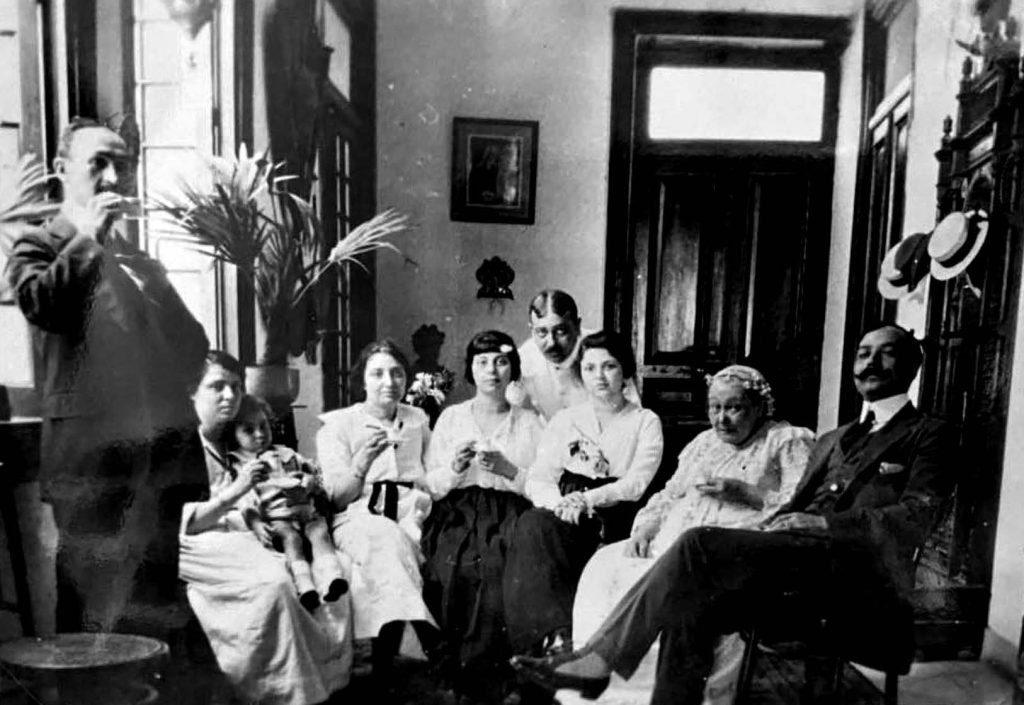
Commitment to the nationalist cause
Upon returning to Alexandria in 1892, now a young lawyer called to the bar, Daoud had a decisive encounter. I don’t know the circumstances under which he met Moustafa Kamil (1874–1908), one of the fathers of Egyptian independence, but the two young men formed a “close” friendship, to paraphrase the Jewish Yearbook. The son of the Chief Rabbi and the offspring of an engineer in the Egyptian army were brimming with life. They had both studied law in France, they were virtually the same age, Francophiles and ardent nationalists. Moustafa, with his fez and moustache, was an early activist. At 18, he had led a group of demonstrators to ransack the offices of Al Muqattam, a newspaper that supported the British presence. In 1900, he founded the nationalist paper Al-Lewa’a, Daoud at his side.
Moustafa Kamil and Daoud Hazan were both pragmatic, drawing on every possible resource. Never short on ideas – both were under 30 – they started lobbying in France for Egyptian independence, hoping that Paris would support them against London. A picture is worth a thousand words: in June 1895, Moustafa distributed a poster to French parliamentarians depicting him presenting a petition to Marianne at the “Temple of Reason”. In the image, Moustafa appeals to Marianne to liberate Egypt from the British yoke, while destitute Egyptian masses stand behind him. He confronts the British lion, personified as a soldier of His Majesty, holding a half-naked woman symbolising enslaved Egypt. Moustafa and Daoud also acted strategically. They hoped that if they supported Sultan Abdul Hamid II at the head of the Ottoman Empire, he in turn might persuade the British to leave Egypt. This pleased Istanbul: the Sultan bestowed upon Moustafa the title of pasha, and upon Daoud that of bey, equivalent to the rank of colonel in the Ottoman army.
The 1906 Dinshaway incident was a key moment in the anti-colonial struggle, and not just for Daoud and Moustafa. The event itself was seemingly trivial: flouting the will of the local villagers, British officers went pigeon hunting in the Egyptian countryside. A British officer was killed in the ensuing clashes. The subsequent repression was brutal, the trial a farce – the gallows were being set up in Dinshaway before the trial had even taken place. No transcript was made of the court proceedings. The 52 accused were tried in 34 minutes, barely long enough to read out their names. It was a mockery of justice before a bench of five judges, three of them British and two Egyptian, including the Minister of Justice, Boutros Pasha Ghali, who became a traitor in the eyes of his compatriots. The judges sentenced the accused to death for “premeditated murder” – a further absurdity – and four villagers were immediately hanged. Others were publicly flogged. The trial satisfied London, which thought it had made an example of the villagers, but it outraged Egyptian society. Dinshaway became – and remains to this day – a byword for British tyranny and marked the awakening of the Egyptian national consciousness. A museum commemorates the event in al-Minufiyah, 75 kilometers from Cairo. I’ve thought of going there, but haven’t yet done so. In 1906, I imagine that Daoud and Moustafa were enraged at the flagrant injustice. They decided to act. Backed by Daoud, Moustafa founded Egypt’s first independence party in 1907. Thus was born the National Party, which demanded Britain’s departure.
Two months after the party’s first congress, Moustafa Kamil died of illness at the age of 33. His death was a terrible blow for Daoud, who lost not only a friend and comrade-in-arms but, soon after, his place within the party. The new leader, Mohamed Farid, was a devout Muslim who had corresponded regularly with Lenin between 1912 and 1917. The two men agreed on the need for an alliance between the two revolutions they aspired to lead: proletarian in Europe and of national liberation in the Middle East. For Farid, Egypt’s struggle for liberation required oppressed Islamic peoples to rise up in solidarity against the yoke of the European colonial powers. His pan-Islamist vision alienated the sizeable Coptic minority and, by default, excluded the son of the Chief Rabbi of Alexandria. Within the party, Daoud and Moustafa’s brother, Ali Kamil, tried to preserve the ideological orientation of an Egypt open to its various national communities. Their efforts failed in what must have been a source of despair for Daoud – he had been involved in the anti-colonial struggle from the very beginning, but the National Party no longer considered him one of its own, simply because he was not a Muslim. I imagine his bitterness at being rejected, not for his ideas, but for being “guilty” of his origins. Daoud Hazan “took part for many years in the political intrigues of the Egyptian National Party”: I finally understood the enigmatic wording of the Jewish Yearbook, which hinted at the rejection of my great-uncle by the first Egyptian nationalist political formation that he had helped to create.
What is a nation?
It was a period of intense intellectual activity in Egypt. Napoleon’s incursion had been brief – barely three years, from 1798 to 1801 – but it had shaken the Arab world to its core. Napoleon had arrived with 50,000 soldiers who defeated the Mamluk army in the War of the Pyramids in July 1798. He was also accompanied by 160 scholars, geographers, architects, draftsmen, naturalists, physicians, astronomers, engineers and artists tasked with studying the country. I try to picture that extraordinary armada, at once military and scientific, landing in Egypt and seizing control within a matter of weeks. It must have both terrified and fascinated the local population. Chroniclers of the time, like contemporary historians, speak of how the Arab world suddenly awoke to its own backwardness in the face of European modernity. The stakes were enormous: to ensure that the choices of the present did not destroy the future. Every society faces such crucial moments, when it must determine its fundamental direction: could Egypt follow the example of Enlightenment Europe without breaking faith with itself?
He had been involved in the anti-colonial struggle from the very beginning, but the National Party no longer considered him one of its own, simply because he was not a Muslim. I imagine his bitterness at being rejected, not for his ideas, but for being “guilty” of his origins.
Daoud was immersed in the discussions of national identity that absorbed everyone’s energy. Words became a matter of intense debate. What was the best translation of “nation” into Arabic: the Islamic Ummah, the fatherland or the people? How best to reconcile Islamic traditions, the country’s pharaonic and Arab heritage, national aspirations and European models? Multiple possible identities – Egyptian, Arab, Islamic, Ottoman, socialist, secular, liberal – started to take shape, at times competing with each other, at others endeavouring to merge. Some called for a reform of Islam compatible with modernity, while others promoted a return to religious orthodoxy or, on the contrary, to radical secularism. It was this latter modernist and liberal current that resonated with Daoud: he was resolutely republican. That’s how I see him and can identify with him. He had studied at a French lycée and university, embraced republican ideals and saw in the universality of human rights an ideology in which he recognised himself: a Jew born in Palestine, who spoke Ladino with his brothers, worked in French and Arabic, and recited a few words of Hebrew to please his rabbi father. Like his late friend Mustafa Kamil, he was influenced by France and envisioned Egypt as a modern nation-state, while also acknowledging Egypt’s Muslim Ummah as an expression of national identity alongside those of other communities united in the struggle against imperialism, including the large Coptic minority and the Jews.
The debate over national identity in Egypt echoed similarly passionate discussions in Europe, particularly in France and Germany. Daoud no doubt felt closer to the idea of the nation as defined by Ernest Renan, despite his disapproval of Renan’s Orientalism. Renan emphasised the spiritual principle of the nation based on “the possession of a rich legacy of shared memories, present consent, the desire to live together, the will to continue to make the most of the heritage passed on”, as opposed to the essentialist theses advanced by the German philosopher Johann Gottlieb Fichte. Fichte, for his part, emphasised race, soil and language as the unifying ferment of the nation. Fichte’s words must have made Daoud’s skin crawl; they definitely have that effect on me, since they posit the idea of an identity purity whose ravages we are all too familiar with, right up to the present day: “So let there appear before you at last in complete clearness what we have meant by Germans. The true criterion is this: do you believe in something absolutely primary and original in man himself, in freedom, in endless improvement, in the eternal progress of our race.”
Fichte’s ideas emerged in the context of a Germany humiliated and traumatised by the crushing defeat Prussia has just suffered at Jena in 1808 at the hands of Napoleonic troops. That defeat resulted in Addresses to the German Nation, in which Fichte preaches the moral regeneration of a people cast to the ground. In Egypt, itself defeated by the same army, I sense that Fichte’s ideas – like those of Renan and many others – nourished the controversies over national identity that were unfolding there and throughout the Arab world.
I would not venture to push the analogy between Germany after the Battle of Jena and Egypt defeated by Napoleon and later colonised by the British any further, but I do know that wounded peoples can sometimes seek refuge in withdrawal, losing themselves in dreams of purity by mythologising the past as a golden age. I do not believe for a second that Fichte’s essentialist theses hit home with Daoud. He was far too republican, in the French sense, for that. And yet, would the need for purity not subsequently find an outlet in the essentialist ideology of the Muslim Brotherhood? It would later weigh on Daoud’s life, and on that of many others.
Daoud reminds me of Fabrice, Stendhal’s character in The Charterhouse of Parma, who finds himself on the battlefield at Waterloo and sees only dust and chaos. He’s incapable of grasping any broader vision. Just as we, today, are immersed in the present, how could Daoud possibly have foreseen the major movements – nationalism, Islamism, socialism, pan-Arabism — that were beginning to take shape and would rattle Egypt throughout the twentieth century?
Sentenced to death
With the outbreak of the First World War, Britain shed its mask and formally declared Egypt a protectorate. Sultan Mehmed V (1844–1918), ruler of the Ottoman Empire (and thus of Egypt), allied with Germany. Daoud must have thought that the wheel of history was finally turning in his favour. He no doubt hoped that an Ottoman victory would rid Egypt of its British masters. In Maurice Mizrahi’s book L’Egypte et ses juifs, I found Daoud’s exultant words when he learned, on 18 November 1918, that the Ottoman Empire had entered into war against Great Britain. Dressed in his lawyer’s robes, he was pleading a case before the Mixed Courts of Alexandria when he suddenly received the momentous news. He impulsively launched into a fiery political harangue before judges thunderstruck by his conduct, which was flagrantly at odds with courtroom decorum:
When the Ottoman Empire entered the war alongside Germany in 1914, the news reached the courtroom where Daoud Hazan was pleading. He burst out in joy and, carried away by his nationalist fervour and hatred of the occupier, made violently seditious anti-British remarks. He was arrested and a British court martial sentenced him to death. Influential figures intervened to have his life spared and he was soon released.
Daoud placed great hope in the Ottoman Empire’s entry into the war against Great Britain. For years, he had been convinced that the Sultan of Constantinople – who had made him a bey – would serve as a counterweight to British domination. The path to Egypt’s salvation and independence, he believed, passed through Constantinople. At that moment, Daoud still believed passionately in an independent Egypt, a modern country in which he would find his place.
I contacted Daoud’s grandson and my distant cousin, Paul, to ask what he knew about his grandfather. He had no information for me but he put me in touch with Ginette Argy, Daoud’s granddaughter, who lives in London. She is the only living member of my family who has memories of Daoud from when she was about 12: “We children adored him, but he made us toe the line.” She remembered exactly what Daoud really said that day, 18 November 1914, in court: “Fuck the King!” As an anti-colonial militant, Daoud had blasphemed the personification of the occupying power, King George V.
Unlike him, many Jews in Egypt were racing to obtain European passports. That wasn’t Daoud’s style. He considered himself every inch an Egyptian – and wanted the passport to prove it.
Ginette remembered that Daoud was thrown into prison for his words. With a fond, nostalgic smile, Ginette added a charming detail: “My grandmother told me that she took him food in prison, because he had a delicate stomach and was very picky about what he ate.” She also told me that although the family of the Chief Rabbi of Alexandria disapproved of one of their son’s ideology, they didn’t abandon their “oddball”: Daoud’s wife ruined herself paying substantial bakshish – bribes – to the influential figures who intervened on his behalf. The investment obviously paid off: his sentence was commuted to imprisonment and he was soon released.
Daoud shared his law practice with his three brothers – Moses, my grandfather Isaac and Abramino, the youngest. They let Daoud be “Daoud”. What choice did they have? Cautious by nature, they weren’t consumed by the nationalist cause. Their brother belonged to the small minority of Jews who had joined the struggle for independence early on. He walked the talk. Ginette Argi told me that he even renounced his Italian passport, inherited from a distant ancestor from Livorno, to take Egyptian nationality at a time when many Jews in Egypt were racing to obtain European passports. They sought the protection of foreign powers (French, British, German, Italian, Austrian), believing it to be a better guarantee of their safety and prosperity. Their situations varied greatly, as the Jewish population was itself divided into multiple groups, united by almost nothing, not rituals, culture, language or customs. There were the Karaites, who rejected the Talmud and were often destitute and indistinguishable from poor Muslims; the Sephardim, who were originally from the Iberian Peninsula and formed the bourgeoisie to which my family belonged; more recent arrivals from the Ottoman Empire; and the Ashkenazim, the most recent arrivals.
These divisions were reflected in the relationship to nationality. Daoud saw himself as fully Egyptian, while my maternal grandfather Maurice believed his security rested on his British passport, a sentiment promoted by the circumstances: certain countries – Italy in particular – sought to extend their influence by being “generous” in issuing passports to relatively well-off Jews and Christians, hoping to find support among those minorities. Around half the Jews of Egypt held Egyptian nationality (most would lose it decades later), while the other half had a foreign nationality. For many, a foreign passport offered protection without necessarily implying an attachment to a European “motherland” they had never seen. That wasn’t Daoud’s style. He considered himself every inch an Egyptian – and wanted the passport to prove it.
Daoud the guerrilla fighter
The end of the First World War marked the dismantling of the Ottoman Empire. In 1914 Daoud had staked everything on the Ottomans against the British. He lost. Yet the new era seemed full of promise: in a major speech to the US Congress, American President Woodrow Wilson championed the right of peoples to self-determination. For the Egyptian nationalists, the message was clear: the rising power was on their side. They resumed the struggle for independence with renewed vigour. At some point – I don’t know exactly when – Daoud joined the new nationalist party, the Wafd, led by Saad Zaghloul, a liberal and a Freemason. Thus was the groundwork laid for the 1919 revolution against British domination. Bloody riots, strikes, sabotage – the movement spread to every segment of society: men and women, students, workers, peasants.
Daoud threw himself into the revolution body and soul. It was the moment he had been waiting for. He didn’t write – he acted. An article in Al-Ahram commemorating the 80th anniversary of the 1919 uprising casts Daoud in heroic terms: “The most famous revolutionary was David Hazan, who was a member of a clandestine organisation involved in assassinations.” Good heavens! Assassinations? Who might he have killed? Did he personally take the lives of British soldiers at the age of almost 50? Did he make or plant bombs? What clandestine organisation was he part of? Much to my frustration, I have never been able to find out. A friend unearthed other Arabic-language articles in the Egyptian press referring to Daoud’s covert struggle against the British occupier. Using Google Translate, I read, “One of the most famous Jewish guerrilla fighters was David Hazan, who carried out acts of assassination against occupation soldiers.” According to another article, “David Hazan was arrested in 1922 and later executed.” Daoud was not executed – he died in his bed in 1946 – but I wonder how many times he might have been sentenced to death: once in 1914 and again during or just after the 1919 revolution? It seems more likely that some writers wanted to embellish the revolution and showcase a people, including the Chief Rabbi’s son, united against the British occupier.
There is no doubt that Daoud took part in the 1919 revolution, even if there is no way of knowing what acts of violence he actually participated in. The goal was to create a liberal Egypt in which everyone would have a place. Daoud stood at the forefront of this struggle, which a huge majority of Jews supported. They held Saad Zaghloul in high regard, appreciating the fact that his secular nationalism was purely Egyptian, with no pan-Arab or pan-Islamic tendencies. I found confirmation of this in the appeal that Zaghloul issued that same year, 1919, to foreigners residing in Egypt, inviting them to fully integrate in their homeland: “We desire to broaden our law of naturalization in the most liberal sense so that the entry into the Egyptian national family will be made possible for all who wish to cast in their fortunes with us.” A breath of freedom was sweeping the country. For Daoud, a new era was beginning, a vindication after the pan-Islamist turn taken by the National Party under Mohamed Farid a decade earlier.
The first historical account of the 1919 revolution, Al-Wafd al-Masri, was published in 1927, during Saad Zaghloul’s lifetime. It contains an entire chapter on the participation of Jews in the struggle for emancipation. It recalled how the Rabbi of Cairo had taken the initiative to collect proxy votes so that Saad Zaghloul could become the spokesperson of the Egyptian people, and how Jewish-organised demonstrations against the colonial power were joined by that same rabbi. During this crucial period in Egyptian history, the Jews had never been so fully integrated into society. A broad identity was emerging for all Egyptians, beyond their community affiliations.
Daoud stood at the forefront of this struggle, which a huge majority of Jews supported. They held Saad Zaghloul in high regard, appreciating the fact that his secular nationalism was purely Egyptian, with no pan-Arab or pan-Islamic tendencies.
The reaction was immediate and brutal: the British arrested Zaghloul and his closest allies and deported them to Malta. They opened fire on crowds, killing hundreds of demonstrators, declared martial law and carried out mass arrests of students, intellectuals and workers, all the while working to sow division between the Copts and the Muslims. Daoud would surely have been despondent at the failure of the 1919 revolution in which he had invested so much. All was not lost, however. In 1922, the British granted Egypt formal independence. A monarchy was established, first with Fuad I, then with his son, Farouk, who inherited the throne in 1936. Wafd and conservative prime ministers alternated at the head of various governments for three decades, albeit with London continuing to pull the strings.
I see in this revolution the premises of everything that could have been: a Near East transformed for the better. I find myself dreaming of a counterfactual narrative, an imaginary world in which Saad Zaghloul’s revolution won, giving birth to the liberal multicultural democracy that Daoud dreamed of. The revolution could have triggered a virtuous cycle of change across the Arab world, instead of the succession of dictatorships that we’ve witnessed.
It’s painful to dream.
Christians and Jews in Egypt, and soon in other Arab countries, began to see a new danger, one that threatened to return them to the status of dhimmis from which they had been released since the mid-nineteenth century. In 1928, a Sunni schoolteacher and preacher, Hassan al-Banna, founded the Muslim Brotherhood in Ismailia, in north-eastern Egypt. A proponent of the Islamic Ummah, violently anti-Western, al-Banna championed an Islamic revival against “secular Western dominance” and “the blind imitation of the European model” in the Arab world. A reaction to British colonialism, which at the time still held sway in Egypt, this strict and conservative form of Islam gradually took hold in Egyptian society. The goal was no longer to modernise Islam, but rather to Islamise modernity. The rise of the Muslim Brotherhood in the 1930s and 1940s alarmed the Oriental Jews. Yet it was Arab nationalists, more than Islamists, who would drive the Jews into exile.
In Egypt, Jewish rights were further constrained by a new nationality law enacted in February 1929. Concerned about the influx of people (notably Syrian-Lebanese, Greeks, Armenians and Jews) from former Ottoman provinces and the significant presence of foreigners, the Ministry of the Interior issued a decree-law that made it harder for non-Muslims to acquire Egyptian citizenship and which effectively excluded many Jews who had been born and lived in Egypt.
It was in this context that the Jews of Egypt had to position themselves with regard to another ideology that had been asserting itself since the late nineteenth century: Zionism.
Anti-Zionists versus Zionists: Father against son
What to make of the Zionist movement? Daoud the Egyptian nationalist and his father Eliahou, the Chief Rabbi of Alexandria, had to take a stand on the cardinal question dividing the Jewish world since Theodor Herzl published his manifesto The Jewish State (or The Jews’ State) in 1896 and organised the first Zionist Congress in Basel in 1897. Herzl saw only one solution to the growing number of pogroms in Eastern Europe and the rise of antisemitism in France during the Dreyfus Affair: the Jews needed a homeland. Herzl himself made only one nine-day trip to Palestine, in 1898, even though he had been campaigning tirelessly for four years to encourage Jewish emigration there. Daoud and his father, by contrast, had lived in Jerusalem. Daoud had even been born there. For them, Palestine was not some mythical land. They had walked its streets. They were also fully aware of the antisemitism raging in Eastern Europe. The pogrom in Kishinev (today Chișinău, in Moldova) in April 1903 set a new marker for brutality, leaving around fifty dead and hundreds wounded. Dressed in flowing Ottoman robes adorned with eye-catching decorations that must have startled the Polish Jews he met, Eliahou travelled to Kraków to express solidarity with European Jews. Alongside his counterpart from Cairo, he proposed setting up a relief committee for the victims of the pogroms.
On the issue of fighting antisemitism, Daoud and his father were, for once, in agreement, but they diverged on the idea of a Jewish state. I imagine that they drew on different sources of information. Daoud was well-connected among journalists and “plugged into” political circles. He kept abreast of the debates in Paris and read several newspapers in which the Zionists, who supported the creation of a Jewish state, clashed with the assimilationists, who feared that Zionism would compromise their integration in France and Germany, and with the Bundists and socialists, who rejected Zionism in favour of cultural autonomy and the struggle for social rights in their respective countries. Chief Rabbi Eliahou would have read the papers, too, but he would also have information from his peers in Jerusalem and Europe, many of whom viewed this new ideology as far too secular for their taste.
I don’t know the tone of the discussions between Daoud and his father. I don’t even know whether Daoud still showed up for the shabbat dinner at his father’s home. I can imagine that their exchanges were tense, as their positions were diametrically opposed. Chief Rabbi Eliahou, a steadfast guardian of rabbinic orthodoxy, rejected Jewish nationalism outright. For Eliahou, the creation of a Jewish state before the coming of the Messiah was heresy. Daoud, for his part, likely shot back that the time of Jews bowing their heads in submission was over, that they, too, had a right to a homeland even if, for him, the nationalist struggle lay in Egypt. At that point, Daoud still firmly believed in a secular, or at least culturally pluralist, Egyptian nationalism. I like to think that Daoud, true to his convictions, envisioned an open and tolerant form of Zionism. Perhaps he had heard of the essayist Ahad Ha’am (1856–1927), who gave up on the idea of a Jewish state in favour of a spiritual centre in Palestine; or of the philosopher Martin Buber (1878–1965) and of Judah Magnes (1877–1948), one of the founders of the Hebrew University of Jerusalem, both of whom championed a binational state, like the political philosopher Hannah Arendt (1906–1975).
In Alexandria, Daoud was part of a small group of progressive activists who were both fervent Egyptian nationalists and devout Zionists. I find it remarkable that they saw no contradiction in supporting both nationalisms simultaneously. They were entirely out of step with our time. What seems utterly incongruous to us today was not so back then: for them, the Egyptian struggle for independence, with which they identified, went hand in hand with the Zionist cause. Both were motivated by the same call for freedom and peoples’ right to self-determination. Were they aware of Palestinian rights? Daoud surely was, having spent his early years in Jerusalem, but he likely had no idea of the exclusive nationalism that would take root with the creation of the State of Israel in 1948.
Chief Rabbi Eliahou, a steadfast guardian of rabbinic orthodoxy, rejected Jewish nationalism outright. For Eliahou, the creation of a Jewish state before the coming of the Messiah was heresy. Daoud, for his part, likely shot back that the time of Jews bowing their heads in submission was over, that they, too, had a right to a homeland even if, for him, the nationalist struggle lay in Egypt.
Exchanges between Zionists and anti-Zionists were fierce. One telling example is the incendiary letter written in 1919 by Léon Castro, a staunch Zionist who also served as political and legal advisor and roving ambassador to Saad Zaghloul, to Sylvain Lévi, director of the Alliance Israélite Universelle in Paris and a vocal opponent of the creation of a Jewish state. Castro accused Lévi of nothing less than murdering the Jewish nation and concluded in these terms: “You represent the Jewish capitalists of Paris. And that is why the Jewish people will no longer wish to shake the hand that you have the temerity to extend to them.”
The decades passed, including the human cataclysm of the Second World War. I eventually found a few more photographs of Daoud. In one of them, he wears a beret and a jacket – all he needs is a baguette to complete the picture of the perfect Frenchman. He appears as the total opposite to his father in his Ottoman robes. On 15 March 1946, after having been sentenced to death once (or perhaps twice), Daoud Hazan died peacefully in his bed in Alexandria. He died knowing that Egypt no longer considered him one of its sons. In the papers found after his death, it was revealed that he had helped Jews emigrate to Palestine, no doubt in the hope that this other nascent nationalism – Zionism – might meet his ideals of inclusiveness.
With the rise of the ideas espoused by the Muslim Brotherhood, Egyptian society asserted an Arab-Muslim identity that increasingly excluded the Jews and the Copts. Palestine was inflamed, the scene of raging confrontations between Jews and Arabs. The State of Israel, soon to be born, would expel hundreds of thousands of Palestinians, in direct contradiction to Daoud’s ideals. His two nationalist causes had given rise to two exclusive nationalisms. The time of fracture had come, bringing to an end a millennia-long Jewish presence in the Islamic world. And with the creation of the State of Israel, history was rewritten in Egypt: Daoud’s role and the role of the Jews in the Egyptian revolution were erased. They had become an embarrassment in a country that now defined itself as part of the Arab-Islamic world and that was at war with the new Hebrew state. The failure of the 1919 revolution, for which Daoud had been prepared to give his life, was a profoundly tragic event, the loss of a historic opportunity to create an open Egyptian nationalism that offered an alternative to the narrow nationalisms – Jewish and Arab – that would ultimately prevail.
>>>>>> This text is taken from Chapter 2 of Pierre Hazan’s book, Les Juifs, les Arabes, ma famille et moi (The Jews, the Arabs, My Family, and Me), published by Editions Textuel.
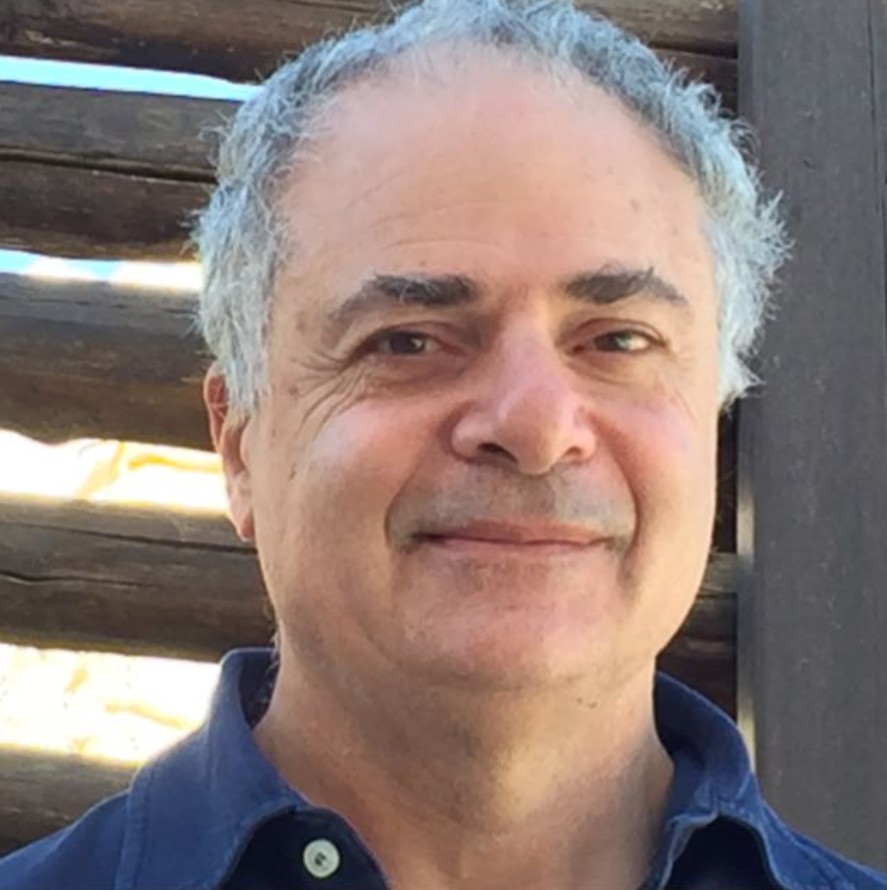
Pierre Hazan
Pierre Hazan specializes in issues related to international justice, amnesty, reparations, and truth and reconciliation commissions. He works in the field of mediation in armed conflicts. His publications include 'Négocier avec le diable. La médiation dans les conflits armés' ('Negotiating with the Devil: Mediation in Armed Conflicts’) (Textuel, 2022), ‘Du bon usage de l’amnistie dans les processus de paix’ (‘The Proper Use of Amnesty in Peace Processes’) (HD, 2020), and ‘La Paix contre la justice ?’ (‘Peace versus Justice?’) (AVE/GRIP, 2010).