#269 / Editorial
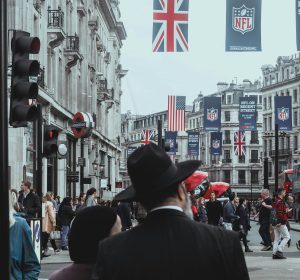
While most of European Judaism has been marked by the profound rupture of the Shoah, British Jews have long been able to frame their existence within a national narrative that was less directly ruptured, one in which it was possible to be both fully Jewish and fully British. That relative sense of security now seems to be wavering. Esther Offenberg reflects this week on the wave of antisemitic attacks that has struck the United Kingdom in recent months: a synagogue targeted, community ambulances set on fire, a memorial wall attacked, Jewish passersby stabbed… What is striking about this sequence is not only the violence. It is the exhaustion of the words that purport to address it. “Solidarity,” “tolerance,” “living together”: the official lexicon remains available, but it now seems to be spinning its wheels, as if antisemitism were recognized only on the condition that it does not force British society to look at itself as a whole. On the left, it is too often dissolved into a hierarchy of racisms where Jews do not occupy the right place. On the right, it is co-opted by forces that claim to defend Jews in order to better legitimize their own hostility toward other minorities. Caught between denial and exploitation, the British Jewish community thus finds itself forced to choose between those who do not want to see what is happening to it and those who want to use it.
Related articles
United Kingdom: The Jewish Community in Turmoil
George Eliot's Daniel Deronda: How one novel reshaped the image of British Jews
Antisemitism and the Anti-Zionist Exploitation of the Universal
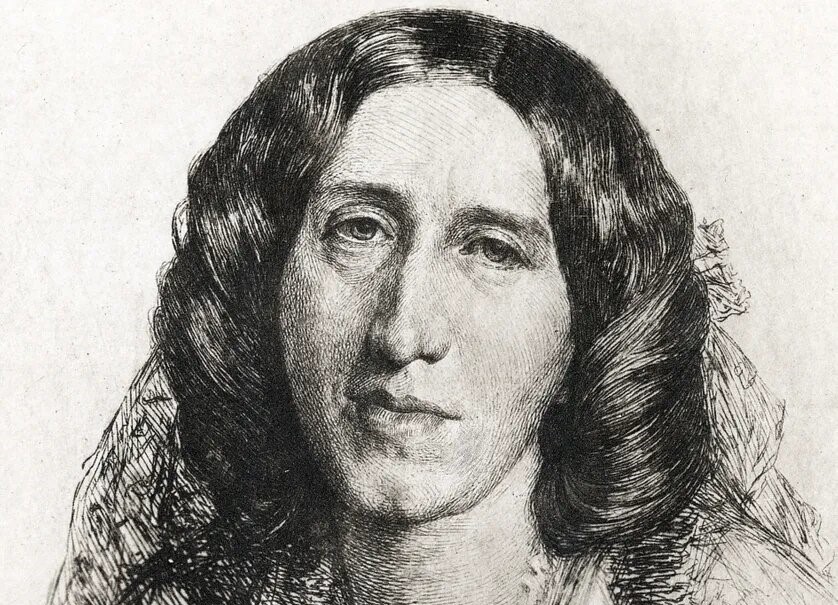
To gauge what might be unraveling, we may need to return to what had once been made possible.This is the focus of Josh Glancy’s essay on Daniel Deronda, George Eliot’s final novel, published in 1876, which current events in recent weeks invite us to reread. In Victorian England, Eliot attempted something extraordinary: to portray Jews not as allegorical figures, grotesque relics, or moral foil, but as fully realized human beings, bearers of a history, a language, a memory, and a national aspiration. His philosemitism was not based on vague sentimentality. It was grounded in an effort of intellect, study, and empathy, and in the acceptance of Jewish distinctiveness.
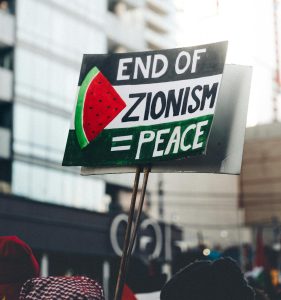
George Eliot’s novel posed this question in particular: can Jews live in a society that accepts them not only as assimilable individuals, but as a people bearing their own history that cannot be reduced to the categories of the majority? It is precisely on this point that the advance excerpts from Julien Chanet’s recently published book ‘L’Incendie Universel. Le sujet de l’antisionisme à gauche’ [The Universal Fire: The Issue of Anti-Zionism on the Left], published by Editions Crise et Critique) further reframe the issue. While universalism may hold the promise of emancipation, it can also become a mechanism for reproaching Jews for their persistence. Chanet demonstrates how a segment of contemporary anti-Zionism recycles, in secularized forms, an old motif of Christian anti-Judaism: the Jews should have understood the meaning of history, renounced their particularism, and consented to being merely witnesses to an outdated world. Yet, by reclaiming a political existence, by returning to history in the form of sovereignty, they have committed a transgression against the universal.