Antisemitism and the Anti-Zionist Exploitation of the Universal
Excerpts from Julien Chanet, ‘L’Incendie Universel. Le sujet de l’antisionisme à gauche’ [The Universal Fire: The Issue of Anti-Zionism on the Left] (Crise et Critique, 2026)
Last month, Crise et Critique published L’Incendie Universel (The Universal Fire). The subject at hand is left-wing anti-Zionism, as explored by Julien Chanet. From an anti-racist and anti-authoritarian perspective, the author develops a well-reasoned analysis of the history of Zionism and the place that anti-Zionism has come to occupy within a segment of the left, along with its unintended ideological consequences. We are publishing here an excerpt, in its first ever English translation, selected to explore the paradoxical recycling of Christian anti-Judaism through the falsely universalist logic of contemporary anti-Zionism.
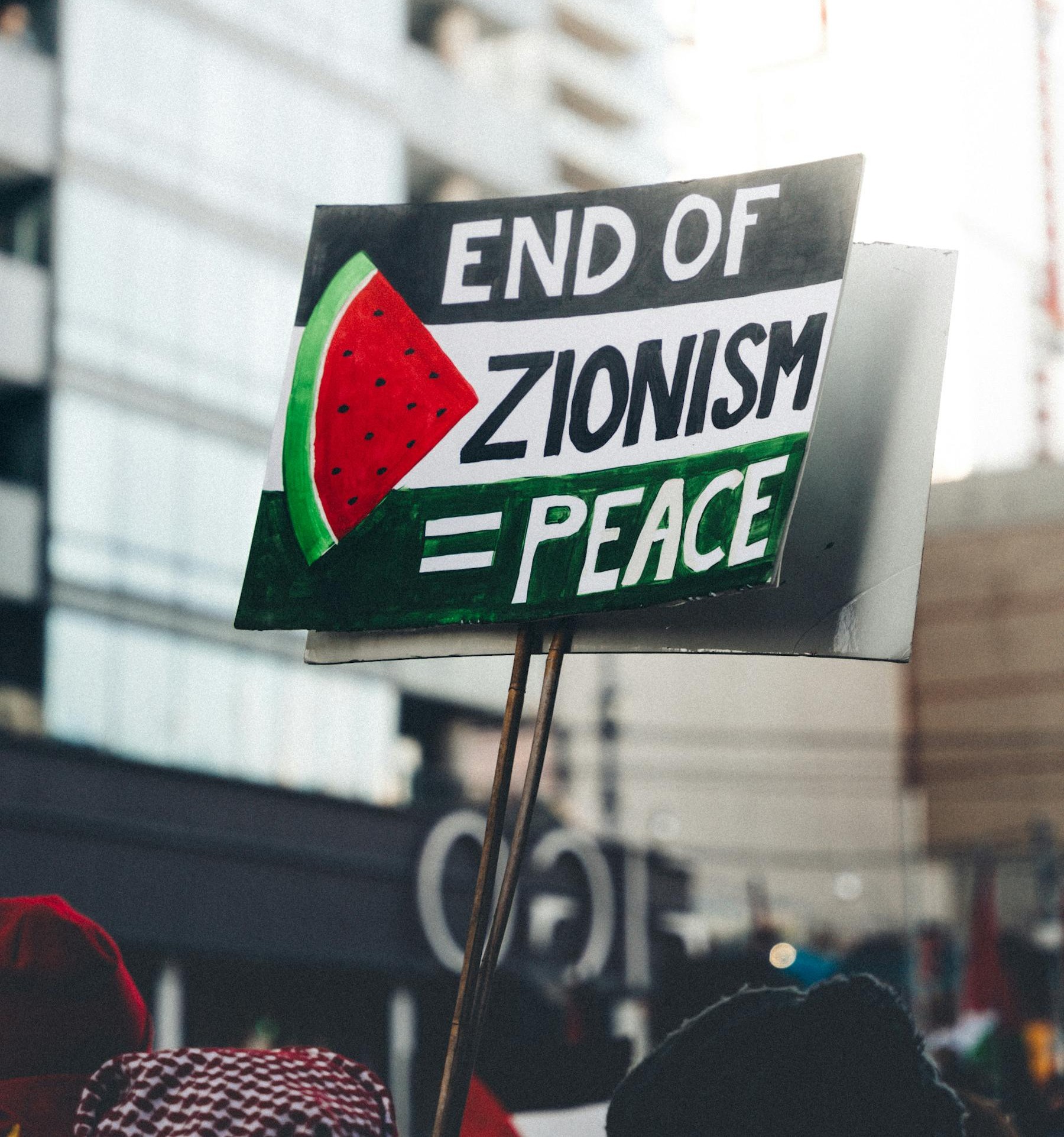
Let’s start with a lecture given by Jacques Ehrenfreund, a few weeks after October 7, to understand how an enthusiasm that was initially anti-Jewish, then anti-Israeli, persists and takes on new forms.1 In it, the historian recalls the fundamental drivers of traditional Christian anti-Judaism, at least up until the Second Vatican Council (1965), emphasizing the central role of replacement theology. This theology posits that humanity achieved a decisive advance with the advent of Christ the Redeemer, moving from a world of scattered tribal particularisms—that of the “Old Testament”—to the spiritual unity of the community of humankind, the people of God of the “New Testament,” now “freed from an obsession with the People and the Law.”
Christian universalism as the end of history
In this framework, Jews become the remnants of a bygone world: a minority small enough that their continued existence serves as a reminder of the past without threatening the horizon of a future universal communion. Such is, at least, the canonical conception of the early Church, notably formulated by one of its founding Fathers, Saint Augustine. Caught in the snares of a deeply xenophobic system of thought, he identifies the dangers threatening the world through a Jewish lens and presents “the Jews as the antitype not only of Christians, but also of human beings in general”.2 In contrast to the more absolutist view attributed to John, Augustine nevertheless advocates against killing the Jews. As David Nirenberg explains, “the Jews are the best guarantors of the truth of the Law. […] Like fossils for naturalists, the presence of Jews on earth is proof of an earlier, now-outdated stage in the evolution of salvation”.3 We must be precise here: Augustinian-inspired Christian anti-Judaism is constructed both against the Jews and independently of their actual presence, through the figure of the “hermeneutical Jew.” Nourished by both pagan anti-Judaism and the state xenophobia characteristic of the Roman Empire, it aims to contain and neutralize the symbolic power of Judaism in the aftermath of the fratricidal founding of Christianity. This endeavor involves reducing Jews to instrumental functions—“boundaries,” “exiles,” “pupils”—intended to mark the path toward a new understanding of the world, defined in opposition to them. Ehrenfreund notes that modern antisemitism, for a time, broke with classical Christian anti-Judaism to produce a figure of the Jew that was now purely negative, including in its fantasized power. This break was, however, short-lived.
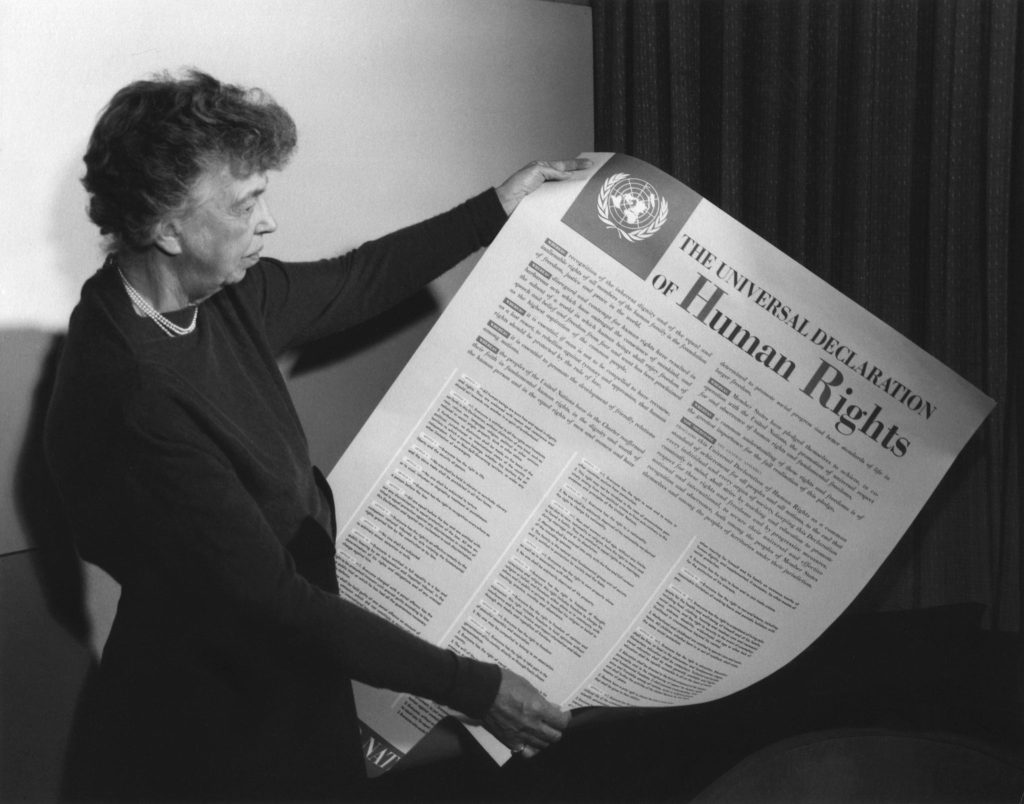
The memory of the extermination of the Jews paradoxically becomes the very foundation of this transcendence of history: it is called upon to guarantee entry into a pacified world, freed from the violence of the past. The year 1948, with the adoption of the Universal Declaration of Human Rights, is thus interpreted as the emergence of a new world reconciled with itself itself.
As Horkheimer and Adorno remind us, “the antisemites appoint themselves executors of the Old Testament: they see to it that the Jews, having eaten of the Tree of Knowledge, unto dust shall return.”4 In other words, modern racial antisemitism does not abolish the theological legacy, but radicalizes certain of its motifs. After the Shoah, a powerful movement to delegitimize racial antisemitism swept across Europe. Europe then returned to a form of “ambivalence” inherited from ancient anti-Judaism. The meaning of history is now conceived as a departure from a history of conflict, so that peace and the unity of reconciled nations may emerge, transcending particularisms and antagonistic national narratives. In this context, the memory of the extermination of the Jews paradoxically becomes the very foundation of this transcendence of history: it is called upon to guarantee entry into a pacified world, freed from the violence of the past. The year 1948, with the adoption of the Universal Declaration of Human Rights, is thus interpreted as the emergence of a new world reconciled with itself. This proclaimed break with particularism, with election, and with the national inscription of identity finds an emblematic philosophical formulation in Hegel: “It is only in the Christian principle that the individual personal spirit essentially acquires infinite, absolute value; God wishes to aid in the salvation of all people”.5 Christian universalism thus became the implicit normative framework of the postwar era.
It is in this context that the creation of the State of Israel in 1948—by forging a political and material bond between the Jews and a land—revives the old accusation of Jewish audacity in refusing to blend into the universal community. In other words, notes Ehrenfreund, “the Jews are proving once again that they have not understood the universalist message.” The Zionists thus appear as the Jews of the “Old Testament,” Jews swimming against the current of history. As historian Karma Ben Johanan writes:
“Critics of Zionism therefore do not hate the State of Israel because it is a Jewish project, as one might expect from die-hard antisemitic individuals. On the contrary, opposition to Israel is not hatred directed against Jews wherever they may be, but against Jews wherever they apparently refuse to understand the ‘true ’ meaning of Jewish history.”6 Ehrenfreund adds, in the same vein: “The Shoah should have made them understand that their particularism was over.” Yet the roots of Zionism—multiple and heterogeneous—are inseparable from Europe’s structurally inhospitable nature toward Jews, from the pogroms to the Shoah.7 They justified, in the eyes of its proponents, the imperative need to establish a state, with all that this entails in terms of sovereignty, defense, and borders. In this critical reading, Zionism is thus dismissed as an anachronistic relic—state nationalism—standing in opposition to the supposedly progressive course of history. The Jews are said to have drawn from the Shoah a “national and particularist conclusion,” which is precisely what they are criticized for: they are said to be on the “wrong side of history” . This teleological and mechanically progressive view of history, though largely outdated, nevertheless continues to be applied without genuine critical scrutiny when it comes to Jewish nationalism. The parallel with replacement theology lies, for both Ehrenfreud and Karma Ben Johanan, in a rejection of Jewish persistence—and even more so of its return to the political arena.
This is not without inconsistency, for it is precisely by positing the advent of post-national societies that one can characterize Zionism as an anachronism threatening the peace and unity of humanity, thereby shaping the contours of a contemporary anti-Judaism that does not always speak its name.
“Israeli Betrayal”: An Anti-Zionist… and Jewish Supremacist Narrative
However, there are theories that play this same anti-Jewish tune but go beyond this inconsistency. By aligning themselves with the nationalist (rather than postnational) character of today’s world, Jews are said to have betrayed an ideal of emancipation that they embodied through the figure of the Wandering Jew.8 Jewish nationalism, and its Zionist realization through the creation of the State of Israel, is theorized within this framework in the same way, but in reverse, as the place that early Christians, under Augustinian influence, accorded to Jews: it is the reminder and memory no longer of an inevitable progress, but of our nationalist decadence.9
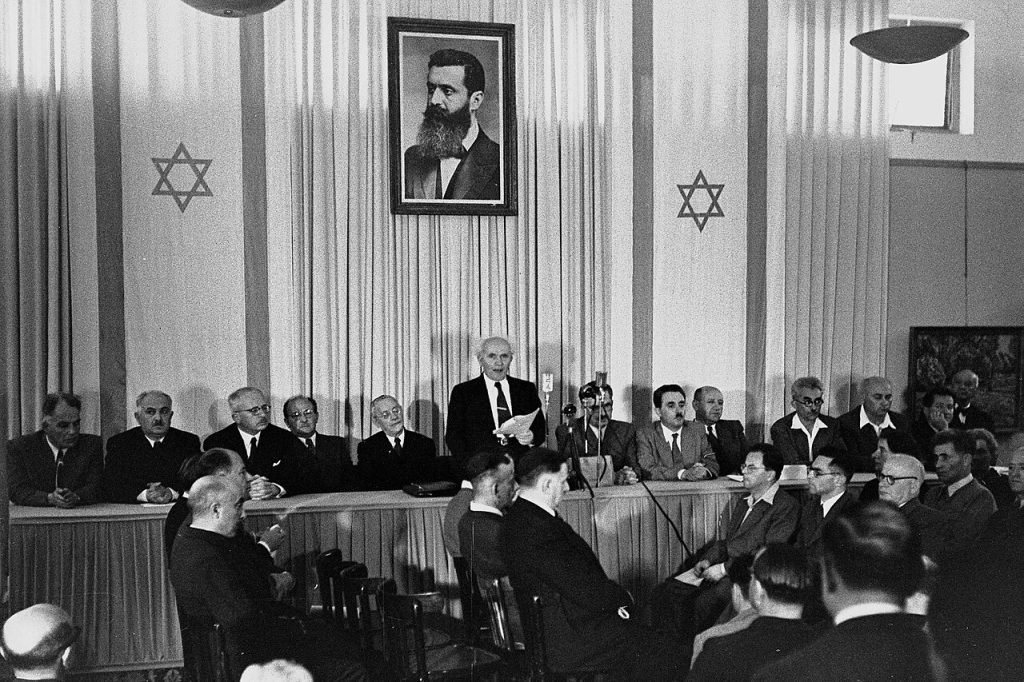
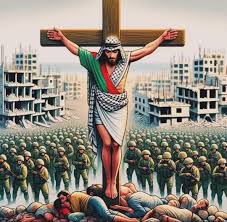
Objectification10 is not directed solely at Jews. The construction of the Palestinian Object-People11 extends not only as that of a Martyr-People, through the denunciation of genocide, but also as that of a Christ-People with redemptive virtues. Saint Augustine’s “hermeneutic Jew,” a negative symbol of a bygone worldview, is now countered by the “hermeneutic Palestinian,” a positive symbol, the redeemer of our imperialist, capitalist, and ecological sins. What we are witnessing here is an anachronistic, eschatological, and Western instrumentalization disconnected from reality, which, for its part, continues to strike hard. For criticism of Israel, when it is not based on an idle metaphysics of Zionism but on a “Kahanist” reality12, hits the mark. One must be dishonest not to see the paroxysmal state of a nationalist and messianic drift at work. This manifests as a debasement of standards, including those of warfare and the military, leading to a ruinous Spartan future in terms of both external power (war crimes, crimes against humanity) and internal affairs, as well as in the defense of Jews wherever they may be, as the Israeli state apparatus does not hesitate to forge alliances with genuine antisemitic individuals – facts documented, among others, by K13, so I will not dwell on them here. It suffices to add that, in this regard, a “pro-Palestinian” and, more broadly, “anti-imperialist” ” is entirely legitimate. Just as much as a “Zionist” position, which would at least refer to the Declaration of Independence, which now seems so distant, but whose neglect would only play into the hands of Israel’s internal destroyers, the very same ones who give free rein to the persecution of Palestinians14: “The State of Israel will develop the country for the benefit of all its inhabitants; it shall be based on the principles of freedom, justice, and peace taught by the prophets of Israel; it shall ensure full equality of social and political rights to all its citizens, without distinction of belief, race, or sex.”15 But anti-Zionism is on the wrong track, especially when it echoes “Palestinian hermeneutics.”
The roots of Zionism – multiple and heterogeneous – are inseparable from Europe’s structurally inhospitable attitude toward Jews, from the pogroms to the Shoah. They justified, in the eyes of its proponents, the urgent necessity of founding a state, with all that this implies in terms of sovereignty, defense, and borders.
In the West, “hermeneutic” or symbolic interpretations of the terms “Jewish” and “Palestinian” are distinguished by their worldview. The former being associated with injustices, lucidity and truth lie on the side of anti-Judaism, while error and falsehood lie within “Judaism”; the latter term, meanwhile, is associated with a form of redemptive mediation. But both share the status of “boundaries” of human progress, in the form of a Western good conscience.
Consequently, by making all of Hebrew antiquity an exclusively “Palestinian” expression – for example, by portraying Jesus as a Palestinian rather than a Jew – Israeli Jews not only embody exclusively the figure of the foreign usurper and land thief – a xenophobic position – but are also rendered complicit in a symbolic deicide: the murder of the Christ-People.
Israel’s Anachronism: The Relevance of an Ancient Controversy
It is with this in mind that we must read contemporary anti-Zionist texts. The British historian Tony Judt, in his book Israel: The Alternative (2004), navigates the murky waters of a theology of substitution applied to geopolitics.16 Advocating for a “single state”—multi-ethnic and multicultural—Judt seems above all eager to erase the Israeli state experience. In the preface to his book, he quotes Engels’s The Struggle of the Magyars, a text that bears heavy echoes of repressed Hegelianism—or quasi-Darwinian ideas, for the less indulgent—which makes socialism contingent upon the erasure of certain ethnic groups, orphaned by the historical and evolutionary process, and having found refuge under the protection of reactionary empires (in this case, the Austrian Habsburg Empire). Engels reproaches them, in the name of their self-determination, for having preferred to preserve their “national identity” rather than internationalism; this reactionary movement would thus have been the cause of the revolutionary failures of 1848. The parallel then emerges: Israel, by seeking to preserve its Jewish identity and placing itself under the protection of an empire (the United States), would be on the wrong side of history—that of ethnic nationalism against socialist internationalism. For Judt:
“The problem with Israel, in short, is not—as is sometimes suggested—that it is a European “enclave” in the Arab world; but rather that it arrived too late. It has imported a characteristically late-nineteenth-century separatist project into a world that has moved on, a world of individual rights, open frontiers, and international law. The very idea of a “Jewish state”—a state in which Jews and the Jewish religion have exclusive privileges from which non-Jewish citizens are forever excluded—is rooted in another time and place. Israel, in short, is an anachronism.”17
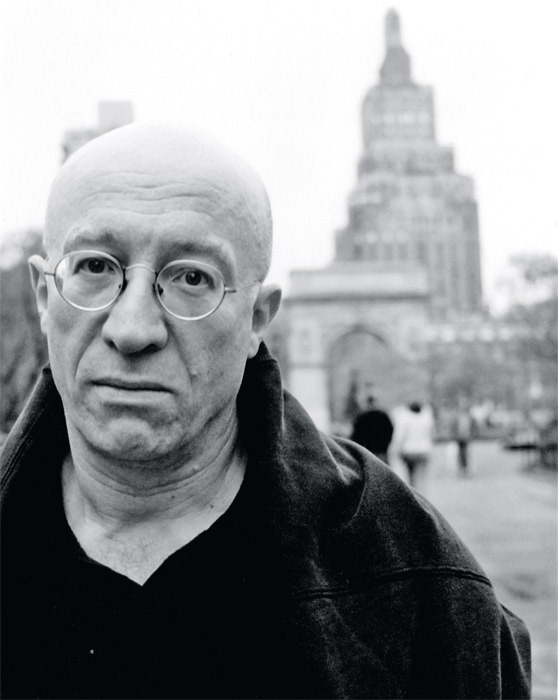
Tony Judt, who died in 2010, thus wrote in 2004 that Jewish nationalism in Palestine would be anachronistic. While he thus aligns himself with a post-Shoah anti-Jewish tradition, as we have defined it with Ehrenfreund, this critical stance can only raise questions in light of the regional context. The contemporary “Middle East” is indeed not exactly known for its post-national enthusiasm, and the region’s so-called “secular and socialist” states – in Iraq as well as in Syria – have not shied away from establishing regimes of terror and employing mass state violence. Yet Judt asserts that there now exists a status quo of “post-racial” states, so to speak, whose peace is threatened by the “hidden nation” that is – curiously enough – Israel. He cites Israel’s nuclear weapons as the main obstacle to non-proliferation; he asserts that “Israel was a major reason for the US invasion of Iraq, with Syria on deck.”18 The “single state,” multiethnic and multicultural, championed by Judt thus rests on premises that are, to say the least, dubious, if not paradoxical. Zionism, presented as a traitor to a post-racial modernity supposedly already realized elsewhere, must be overcome in order to allow for the advent of post-national sovereignty on a global scale. The burden of proof then falls on the Jews themselves, who are called upon to embody this universalist hypothesis—at the cost of erasing their own historical and political experience.
Zionism, presented as a betrayal of a post-racial modernity supposedly already realized elsewhere, should be overcome in order to allow for the advent of post-national sovereignty on a global scale.
Zionism, while following its own path, is by no means impervious to the various political conceptions of its era, and can be understood as the continuation of Jewish emancipation in the mid-19th century19, rather than as its opposition. Zionist modernity thus works to extend the promise of emancipation, no longer by rooting itself in a nation-state now deemed incapable of defending and protecting Jews – even when they play the game of modernity – but by embracing the necessity of “nation-building” for themselves.
This national, and later state-based, emancipation – itself fraught with pitfalls – was permeated throughout by the tools of self-interpretation characteristic of the liberal perspective. Emancipation thus internalized and repeated certain flaws – including within Zionism – but not all of them.
The State of Israel, a state for the Jews, thus appears as the site of a dialectical synthesis between exile and territory, between the universal and the particular. Zionism, as the pursuit of Jewish emancipation in the mid-19th century, thus constitutes a leap into “modernity,” to borrow the words of Bruno Karsenti20, which can first be understood in its internal dimension: “If the nation consists of specific social relations, it neither exists nor comes into being outside of these relations: it results from a history, and this history is social. This is why it does not denote a pre-established character whose substantial sharing would suffice to define real identity, but a way of life constructed and won through certain practices.”21 […]
While there is no inevitability for peoples—understood as nations—nor for states—sometimes without a defined nation—to constitute themselves as nation-states superimposing political community upon ethnic community, both are nevertheless driven to engage in state-national engineering so as not to be relegated to the rank of “reject nations ,” the losers in the inter-state-national game, mediated by the world-system of capitalist social relations. Since modernity must be understood from a dialectical perspective, it itself generates oppositions to the criminal or homogenizing tendencies inherent in the quest for sovereignty, notably through supranational legal or ethical channels, by focusing, for example, on human rights. These rights must themselves be subject to dialectical critique, in order to separate the wheat (solidarity, freedom, and equality, and the need to deepen them together) from the chaff (the discourse of human rights in the service of a policy of market efficiency).22
What does the “destruction of Zionist institutions” mean?
Having established this point of political theory, it at the very least warrants deep suspicion toward anyone who claims to want the destruction of Israel – even if merely as a “Zionist institution” – while asserting that they do not wish to destroy Israeli society or, a fortiori, harm the lives of its members. A Durkheimian approach to the state radically rejects such a dissociation. Since the state is the locus where the social and symbolic manifestations of a society are institutionally embodied – that is, politically and legally – the destruction “from above” of state structures necessarily amounts to the will to destroy the social structures themselves, leaving the field open for a new elite to control the population. Admittedly,
institutions are not limited to the state; but, conversely – unless one adopts a neoliberal interpretation – they constitute the very architecture of the state. The goal then becomes clear, though rarely stated as such: by attacking “Zionist institutions,” the aim is to authoritatively reject any return of Jews to the sphere of autonomous politics and to definitively close the Israeli chapter. A sham imperium, magical thinking, anti-dialectical and profoundly anti-Marxist, the destruction of Israel as a “Zionist institution” by external forces has in reality nothing to do with the Marxist theory of the withering away of the state. Similarly, post-state, confederal, or federalist perspectives belong to distinct theoretical horizons that should not be confused with a pure logic of destruction. Consequently, at a time when Jean-Luc Mélenchon — for whom Volodymyr Zelensky is now nothing more than the “president of nothing23” — supports Russia, and thus de facto Vladimir Putin, for whom Ukraine “is nothing,” and is celebrated by “decolonial” pseudo-Marxists in the midst of a theoretical drift, it is perhaps no surprise that, by the sheer force of abstract thought – coupled with Judeophobic imperialism – some might wish to see a country they dislike disappear.
Since the state is the arena where the social and symbolic expressions of a society take institutional form – that is, politically and legally – the destruction “from above” of state structures necessarily amounts to a desire to destroy the social structures themselves, leaving the field open for a new elite to control the population.
Against anti-Zionism and the instrumentalization of universalism: moving beyond nationalist and reactionary dross
It should also be noted that, during this period of emancipation, the integration of “Jewish nations” – paroxysmal collective figures of the Other, long perceived as living outside of history – into the modern project took on exemplary significance. If a people thus essentialized as alien to history could attain political modernity by drawing on their own tradition and unique history, then any other group should, in turn, be able to join this project. In this regard, following bitter debates24, the Jewish nations came to be seen as veritable “textbook cases” of integration, closely linked to the idea of national community.
The nineteenth century indeed saw European states reconfigure themselves, absorbing the various “nations” that comprised them and consequently demanding that Jews – the quintessential outsiders – renounce their traditional forms of organization in order to fully integrate into the modern project. However, the success of this integration was such that it soon aroused suspicion: how could a people reputed to have lived for so long “outside of general history” participate with such ease in social, economic, and intellectual life? This is where the modern “Jewish problem” arises. For antisemitic authors like Drumont, this integration is only superficial: Jews are said to regroup into ethnic sub-groups, perpetuating their traditions despite – or even against – the modern project. “They” were not playing along with the liberal game of individual emancipation, but were acting through invisible networks, evading civic transparency and thereby becoming untrustworthy. The result is a paradoxical situation: the legal and social status of Jews evolves toward integration, while simultaneously renewing the terms of the “Jewish problem.” Their very success becomes suspect, reinterpreted as the concealment of persistent traditional structures. The resulting antisemitism is therefore no longer primarily racial, but presents itself as the diagnosis of a “social evil” . The homogenization mechanisms inherent to the modern nation-state thus become one of the driving forces behind the oppression of Jews at the very heart of modernity, while simultaneously constituting – an additional paradox – a profoundly modern motivation for the creation of a distinct political “homeland.” The modern project, to which Jewish communities had largely responded, indeed involves the construction of a national imagination tending toward forms of cultural, linguistic, or ethnic homogenization.25 While the “existential heterotopia”26 intended to realize the Zionist utopia initially sought to distance itself from the romantic canons of European nationalism, its actual realization nevertheless adopted certain of its defining features. This evolution can be explained both by internal conflicts within the Zionist movement, which gradually led to a national-state consensus, and by a hostile geopolitical environment, as well as by complex relations with allied Western powers and Arab countries during the 1920s and 1930s. None of this, however, was a foregone conclusion. As Gershom Scholem points out, the intense debates and deep differences between the various currents—socialist, nationalist, state-oriented, or cultural—bear witness to a genuine “pluralism of currents and [the] interplay of factions. […] This diversity refutes the thesis of a dogmatic and unitary vision.”27 Yet the thesis of a supposed “Zionist” unity persists. This reading of a monolithic history is fueled both by certain factions of the Israeli ruling class, who play on the sentiment of security – the Palestinian enemy serving to unite Israeli society around a “homogenized ” – and by a large part of the anti-Zionist movement, for whom Zionism is indistinguishably conflated with racism, capitalism, colonialism, or imperialism. This refusal to consider the Zionist tradition in its full historical scope, its internal plurality, and its dialectical construction, reducing it exclusively to the reactionary version of Zionist ideology promoted today by the State of Israel, constitutes a reductionism that is problematic, to say the least – even suspect – on the part of activists who claim to be critical and progressive. It is no longer a matter of analyzing a political tradition, but of freezing a convenient signifier, immediately mobilizable as an enemy. As such, the very name “Zionism,” elevated to the status of a stable and readily available adversary, falls into the same rhetorical register as other disqualifying categories — “racialist,” “indigenist,” “Islamo-leftist,” etc. — whose primary function is to quickly provoke rejection, disgust, and a sense of unity among the audience, to the detriment of any historical and political intelligibility.
Excerpts taken from Julien Chanet, L’Incendie Universel. Le sujet de l’antisionisme à gauche, Crise et Critique, 2026, pp. 199–207. (Modifications for this publication by the author)
- Jacques Ehrenfreud, “The Return of War, the Jews, and the Crisis of History,” Museum of Jewish Art and History, December 14, 2023. The text of the lecture was published in K. ↩︎
- David Niremberg, Antijudaïsme, un pilier de la pensée occidentale, Geneva, Labor et Fides, 2023 (2013), p. 169. ↩︎
- Ibid., p. 191. ↩︎
- Dialectic of Enlightenment, Max Horkheimer and Theodor W. Adorno Edited by Gunzelin Schmid Noerr Translated by Edmund Jephcott
March 2002, p.153. ↩︎ - Quoted by Ivan Segré, Les pingouins de l’universel, Antijudaïsme, antisémitisme, antisionisme,
Paris, Lignes, 2017., p. 38. ↩︎ - Karma Ben Johanan, « Les Juifs, encore à contresens de l’histoire… », K. La revue – Les Juifs, l’Europe, le XXIe siècle, January 24, 2024. ↩︎
- Specifically, the pogroms that took place during the Russian Civil War (1918–1921): “at least 100,000 killed, 200,000 wounded and disabled, tens of thousands of women raped, 300,000 orphans in a community of some 5 million people,” in Nicolas Werth, Lidia Miliakova (eds.), Le livre des pogroms. The Prelude to a Genocide, Ukraine, Russia, Belarus, 1917–1922, Paris, Calmann-Lévy, 2010, p. 30. ↩︎
- See Michel Feher, Redevenir juif. Les mésaventures d’un pacte de blanchiment réciproque, La découverte, 2026. “In Redevenir juif, philosopher Michel Feher defends the culture and condition of Diaspora Jews—the nightmare of antisemitic individuals—against identity-based isolationism and Israel’s drift.” Xavier De La Porte, Le Nouvel Obs, May 7, 2025. ↩︎
- The theme of the memory of ancestral Jews and betrayal is very prominent in French “decolonial” literature, particularly in the works of Houria Bouteldja. ↩︎
- The borrowing of this term from psychoanalytic vocabulary serves to describe a pathological relationship with an object that satisfies a drive. The Palestinians, who are deprived of their ability to appear as agents of their own destiny, but also as unique agents within the very oppression they endure, are treated as a means, a projection screen, or a tool for satisfaction. ↩︎
- The instrumental and objectifying reduction of the “Palestinian cause.” The concept of the “People-Object” is intended for Western audiences and does not describe reality (following the same model as Orientalism). It constructs, at the expense of Palestine, a metaphysical (hylomorphic) theory consisting of matching a matter (the defense of Palestine) with its form (the militant practice of anti-Zionism). See Julien Chanet, L’Incendie universel, Le sujet de l’antisionisme à gauche, Crise et Critique, 2026, p. 118. ↩︎
- From Meir Kahane, founder of the fascist, racist, white supremacist, and homophobic party Kach, which was banned in 1988. The Kahanist ideology is embodied by Itamar Ben Gvir. See Nicolas Zomersztajn, ”Kahane est mort, son idéologie raciste est vivante,” Regards, No. 1075, September 27, 2024. ↩︎
- Consider the recent “International Conference on Combating Antisemitism,” held in Jerusalem on March 27, 2025. See, in K., The Conference of Shame, Michael Brenner, March 26, 2025. ↩︎
- Isabelle Mandraud, En Cisjordanie, l’impunité absolue des colons israéliens ayant commis des crimes, Le Monde, April 17, 2026. ↩︎
- https://langloishg.fr/documents/guerre-et-paix/la-proclamation-de-letat-disrael-14-mai-1948/ ↩︎
- See John-Paul Pagano, “Tony Judt and the Velvet Genocide,” The Socialism of Fools, January 10, 2010. ↩︎
- Tony Judt, “Israel: The Alternative,” The New York Review, October 23, 2003. ↩︎
- John-Paul Pagano, “Tony Judt and the Velvet Genocide“, art.cit. ↩︎
- “Since their emancipation in 1791, French Jews have gradually climbed the social ladder, from one generation to the next, and in all fields. The legal equality promised by the Revolution was fully implemented under the July Monarchy. Under the Second Empire, the government contributed to this rise, promoting their assimilation on the basis of an inclusive nation-state. Their economic, social, and cultural advancement accelerated under the Third Republic. Many of them “identified their own interests with those of the Republic, to which they were grateful for having emancipated them; the alliance between the Republic and the Jews thus became natural,” in Grégoire Kauffmann, “Rothschild & Cie. La bourgeoisie juive vue par Édouard Drumont,” Archives Juives, vol. 42, no. 1, 2009, pp. 51–68. ↩︎
- Bruno Karsenti, La question juive des Modernes, Paris, PUF, 2017
↩︎ - Bruno Karsenti and Cyril Lemieux, Socialisme et sociologie, Paris, Éditions de l’EHESS, 2017., p. 17.
↩︎ - See Justine Lacroix and Jean-Yves Pranchère, Le Procès des Droits de l’homme. Généalogie du scepticisme démocratique, Paris: Seuil, 2016; Les droits de l’homme rendent-ils idiots ? Paris: Seuil, 2019. ↩︎
- Mathieu Dejean, “Ukraine: At the Amfis, La France Insoumise Caught Up in Partisan Politics,” Médiapart, August 23, 2025. ↩︎
- See, for example: Pierre Birnbaum, Est-il des moyens de rendre les Juifs plus utiles et plus heureux ? Le concours de l’Académie de Metz (1787), Paris, Le Seuil, 2016. ↩︎
- Currently, white supremacist fervor is a symptom of this pitfall, as are the Indian and Chinese (Han) identity movements with their xenophobic tendencies, all of which are intertwined in the dialectic of the simultaneously nationalist and imperialist orientations of capitalist policies. ↩︎
- When it emerges in modernity, Israel is heterotopic in the sense that it constitutes that singular space which, according to Michel Foucault’s definition, “has the power to juxtapose in a single real place several spaces, several locations that are in themselves incompatible.” While Foucault is thinking here of cinema, theater, or gardens, the heterotopic dimension of Zionism is necessarily confronted with this plurality of scales, this coexistence of historical, symbolic, and political registers – in other words, with a multiscalar and profoundly “intersectional” dimension. […] The [Israeli] heterotopia found itself immediately confronted with an already inhabited space, traversed by histories, affiliations, and conflicts that cannot be reduced to any compensatory projection.” See Julien Chanet, L’incendie universel, op. cit., pp. 145–154. ↩︎
- Denis Charbit, « Les sionismes au XXe siècle, entre contextes et contingences », Vingtième siècle. Revue d’histoire, 2009/3 no 103, p. 27-46. ↩︎

Julien Chanet
Julien Chanet is a community worker based in Brussels. He holds a degree in Information and Communication from the Université catholique de Louvain and a degree in Political Science from the Université libre de Bruxelles. An independent researcher and member of ARRAC (Association for Research and Action on Racisms and Contemporary Antisemitism), he focuses on political theories and the tensions within left-wing movements, particularly anti-Zionism and antisemitism.