«The moment there was a political path to defeat Hamas and release the hostages, the war became unjust.»
Interview with Michael Walzer
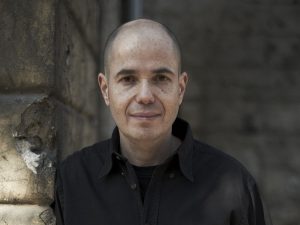
“As soon as a political path to defeating Hamas and freeing the hostages emerged, the war became unjust.” Interview with Michael Walzer The renowned American philosopher Michael Walzer, having unreservedly defended Israel’s right to retaliate against the attacks of October 7 (see his October 2023 interview in K), now examines in hindsight how the war unfolded in Gaza. He analyzes how, in his view, it has become unjust and threatens Israel’s very future. In this interview with Haaretz (conducted in January, before the “Roaring Lion” and “Epic Fury” operations), the specialist in the ethics of war - whose greatest pride, he says, is “having four Jewish grandchildren” - calls for an Israeli examination of conscience.

>>> Read the introduction to this interview: “Michael Walzer: From Just War to Politics That Have Become Unjust” by the editorial staff
*
In the spring of 1967, the young philosopher Michael Walzer traveled across the United States, passionately speaking out against the Vietnam War wherever anyone would listen. Then the Six-Day War broke out – and the Harvard lecturer defended Israel’s attack with the same passion.
From the Vietnam War to the Theory of Just Wars
“Some people thought it was inconsistent,” he recalls, “and I wanted to explain that there are just wars and unjust wars. But I discovered there was little available literature on the subject. The last to deal with it were medieval Christian philosophers, and their theories were taught only at Catholic universities.”
Walzer began working on a secular version that would examine when wars are justified and when they are not. This decision changed his life and made him one of the most influential political thinkers of the past 50 years, and the world’s leading authority on the ethics of war.
“I worked on the subject for 10 years,” he tells Haaretz in a marathon three-hour conversation during a recent visit to Israel. Walzer read, he says, countless texts of Catholic philosophy and military history, and in order to deepen his understanding, he spoke with many soldiers. “I approached the field even though I never served in the army,” he explains in a half-apologetic tone. “I was too young for Korea and too old for Vietnam.”
His book,”Just and Unjust Wars,” was published in 1977. “I was a young leftist,” he says,”and to my amazement, within a few months of publication the book was added to the required reading list at the U.S. Military Academy at West Point. Since then, they have invited me there many times.”
It’s not obvious that an academic philosophy book would have such influence.
“[Philosopher Ludwig] Wittgenstein once said that philosophy doesn’t make anything happen, and he was right. But my argument about just wars became part of international rules, and it also influences how soldiers think. There are officers in the U.S. military who told me they took my book with them to Iraq.”
Jus ad bellum: the legitimacy of going to war
Can you briefly explain what makes a war just?
“The most important thing is self-defense. That is the basic principle that justifies going to war. To that you can add intervention to stop a massacre. For example, when the Vietnamese invaded Cambodia to stop the Khmer Rouge – that was justified. An important distinction is between a preventive war and a pre emptive war. The first is when you initiate a war because you think an attack might occur, so it’s more speculative. The second is when you know an attack is about to occur, there is no doubt, and you strike first. That’s what happened in 1967.”
Was the war against Hamas just, according to your principles?
“It must be remembered that the war was also against Iran’s axis of resistance. For most Israelis, the focus of the war was Gaza, but it was a multi-front war, which included a strike against Iran. And that was justified, because Iran was part of the joint attack on Israel. Israel was lucky that the attack was not coordinated – maybe because Hamas feared a leak. If it had come simultaneously from three directions, with the weapons Iran supplied, it would have been very dangerous for Israel. And it’s important to remember that.”
As someone who studies war and morality, I can say that at the moment when there was a political path to defeat Hamas and release the hostages, the war became unjust.
Not surprisingly, Walzer states unequivocally that the war Israel launched after the October 7 attack was completely just. “Every country in the world would go to war after such an attack,” he says. But as time passed, questions began to arise. “There is an important ethical distinction between the justification for going to war – what is called in Latin jus ad bellum – and the moral justification of how the war is conducted – jus in bello. Going to war was just; afterward, things became complicated.”
Jus in bello: The Conduct of War Put to the Test
Walzer weighs his words carefully. “I assume that the Israel Defense Forces fought fairly at the beginning of the war,” he says. “But it’s not easy to fight against a militia that hides within a population and uses human shields. The accepted rules say that after identifying a military target, the attacking side must assess its importance and the number of uninvolved people who would be harmed, and then determine whether the value of the target justifies killing that number.”
Is there an accepted ratio?
“No, because the ratio depends on determining the value of the target. Therefore, it is very problematic. Still, armies do tend to create rules about a justified ratio of killing. In previous operations in Gaza, there was such a ratio, and according to media reports, senior Israeli officers said that in the current war Israel changed the ratio to justify killing more civilians. It’s hard for me to say anything precise about this when I live in New York, but in the bombings in the later stage of the war, it seemed as though no assessment was being made at all.
“What people saw on U.S. television was, for example, a six- or seven-story building that collapsed entirely after a bombing. And then a spokesperson for the IDF appeared and said that on the roof there had been a Hamas observation unit. Everyone who saw that thought: That does not justify the destruction of 40 apartments. The attacks looked disproportionate, as though they were intended to make Gaza uninhabitable.”
Alongside his criticism of Israel’s conduct, Walzer stresses that Hamas’ use of civilians in Gaza was unprecedented. One of the most important questions in the ethics of war concerns the degree of risk soldiers must accept in order to minimize harm to civilians, he explains.
“When you talk to soldiers, they often tell you about taking some degree of risk to reduce civilian deaths. But in Gaza there was a double use of civilians, which is something we had not seen before. First, Hamas integrated its people within the civilian population – inside hospitals, schools, family apartments. But beyond that, there was also the underground city. I know they called them ‘tunnels,’ but this was in fact a city.
“There were three levels, some with ventilation, which requires pumps and electrical power. And all of this was protected by the city above. I have found nothing like this in military history. This is a new kind of war, and it’s difficult for me to determine what the rules are and what risks soldiers should take.”
Hamas essentially planned an attack that Israel could not respond to without killing civilians, destroying homes, and displacing people.
In such a case, those who bear the greatest responsibility are sometimes not the generals or legal advisers who approve strikes, but the people directly on the ground.
“In different armies, at different times, many soldiers have tried to fight according to moral principles, and the most important are the officers on the ground,” Walzer says. “Some units fight well, and some fight barbarically, and a lot depends on the junior officer. Not only on his morality, by the way, but also on his cool headedness. In Vietnam, when there were mass killings, it was usually the result of junior officers who panicked. I spoke with an Israeli officer whose unit, in a previous operation in Gaza, was searching for tunnel entrances. He told me that these entrances always include some kind of trap, an ambush, and he said to me,’If the commander is level-headed and calm, he can usually get his men out of the trap without assistance from artillery or the air force – which leads to the killing of many civilians.'”
But the larger trap in this war was not for the units in the field, but for the entire IDF and for Israel as a whole. “Hamas essentially planned an attack that Israel could not respond to without killing civilians, destroying homes, and displacing people,” Walzer says. “This is a common feature of asymmetric wars – wars between a high-tech army and a low-tech organization. The organization hides among civilians, and the army kills many of them. There was a series of asymmetric wars, beginning with the French in Algeria. All of them were disasters.
The trap of asymmetric warfare
“The army does most of the killing and it loses the war unless it destroys the population, as the Russians did in Chechnya or the Sri Lankans against the Tamils,” he continues. “But you can only do that if no one cares. The French, the Americans, the Israelis – they can’t act that way, because the world is watching. Hamas was particularly effective at embedding itself in the civilian population, and the death and destruction were part of its plan. Israel had no choice but to walk into that trap, but when you walk into a trap you must think carefully about how to get out of it. You can change the trap through policy and diplomacy – as recommended by people in the IDF and in the U.S. administration – or you can blast your way out, which is what the Israeli government chose to do.”
That is how you understand the choice of Israel’s leadership?
“The trauma of October 7 created a crazed rhetorical response, calling for revenge and indiscriminate killing. Leading Israeli politicians spoke about how there are no innocent civilians, about how everyone should be killed. The shock and trauma of the attack created a rhetoric that will be used against Israel in every future discussion about how the war was conducted and about the question of whether genocide occurred.”
These reactions also filtered down into the field, Walzer says. “It led to moral problems that should have been addressed and were not. On social media there were horrific videos of soldiers boasting about the war crimes they committed. No doubt this was a minority, but it illustrated a loss of discipline in the army. At the same time, settler violence increased to the point of” – he hesitates – “pogroms, with the police and army watching from the sidelines. There were also credible reports of abuse of detainees. The refusal to give access to the Red Cross was wrong, even if it stemmed from a desire to pressure Hamas to allow visits to the hostages.”
The most serious ethical problem, he argues, was the siege imposed on Gaza. Here too, he maintains a measured but sharp position.
“It was a partial siege, with pauses, but it was still a significant part of Israel’s military effort, and it may be the most critical aspect in the debate over the justification of the war – what responsibility Israel had for the medical and nutritional situation of Gaza’s residents. After the October 7 attack, many Israelis, and many Jews around the world, believed that there was no such responsibility given the celebrations in Gaza over the attack. But that was a mistake.”
Hamas’ leaders wanted to kill Jews, but they also wanted Jews to kill Palestinians. The widespread death in Gaza was part of their plan. Therefore, the siege was a political mistake.
Why is it a mistake to think like that? After all, Hamas is supposed to bear the responsibility for Gaza’s residents.
“Think about the structure of a siege. You surround a city, block supplies, then wait. The residents become hungry, they pressure the leaders, and throughout history that’s what has led leaders to agree to negotiations or to surrender. But that story assumes a moral or political connection between the city’s residents and its leaders. There was no such connection between Hamas and the people of Gaza, and the decision-makers in Israel knew that.
“This is one of the main reasons that Hamas has been so widely condemned. Its leaders wanted to kill Jews, but they also wanted Jews to kill Palestinians. The widespread death in Gaza was part of their plan. Therefore, the siege was a political mistake, and more seriously, it was morally wrong. It cannot be described as having military value.”
The siege: a political mistake, a moral failing
But if the leaders of the Gazans don’t care for them, why should Israel?
“As strange as it sounds, in an asymmetric war the well-being of the civilian population is the responsibility of the high-tech army. First, because civilian deaths are an asset to the other side. Even if Hamas stole some of the fuel and food and profited from it, it profited more from the destruction created by the siege. One of the senior commanders of the U.S. Army in Afghanistan once said,’The more civilians we kill, the more likely we are to lose the war.’
“That is a strategic consideration. But another consideration is that whoever causes destruction must care for the helpless and innocent victims on the other side. And Israel did not do that. Israel intended that there would be no easing of suffering until there was a ‘total victory’ – a victory that was not possible and that no one, including the IDF, truly believed in.”
Walzer, who was born in the Bronx in New York, has long been considered an unequivocal friend of Israel. On October 7, he reacted with shock and anger and was convinced that a harsh military response was justified and essential. He said as much to Haaretz in November 2023.
“From the beginning of the war, I emphasized Hamas’ responsibility – not only for the October 7 attack,” he says now. “There were people in the United States who condemned the attack and then wrote about the war as if Hamas were not part of it and only the IDF was on the battlefield.”
The effort to win when there was no way to win without destroying Gaza was a criminal effort. Wars are sometimes necessary, but they must have an end and a goal
Was there a particular moment when your view of the war changed?
“When Joe Biden and his advisers came to Prime Minister Netanyahu and said, you’ve caused enough damage, now you can continue the struggle against Hamas diplomatically. As someone who studies war and morality, I can say that at the moment when there was a political path to defeat Hamas and release the hostages, the war became unjust.
“The effort to win when there was no way to win without destroying Gaza was a criminal effort. Wars are sometimes necessary, but they must have an end and a goal. Your government refused to commit to any end or goal, except for conquering the Strip and expelling all or most of its residents – but a better end was possible.
“I am speaking now as an American who voted for Biden and admired him. On October 8, with mental and moral clarity, Biden stood with Israel and the Jews as no American president ever had. He sent aircraft carriers and formed a coalition to defend Israel from missiles. And he had a plan to end the war – at least a year before Donald Trump copied the same plan. Of course, Biden’s plan was not perfect, and neither was Trump’s. Both have risks.”
Walzer arrived in Israel at the invitation of the Van Leer Jerusalem Institute and the Israel Academy of Sciences and Humanities, which organized a conference marking his 90th birthday. The hall at Van Leer was almost completely full. In the audience one could see former Supreme Court President Aharon Barak, former Minister Dan Meridor, and the who’s who of the Israeli philosophy world. Even a small delegation of lawyers from the Foreign Ministry attended to better understand the situation from the point of view of the great expert. It is somewhat comforting to know that someone there still cares, even if the lawyers noted that they came on their own initiative.
Historian and writer Fania Oz-Salzberger described Walzer in a moving speech as the last father figure remaining for the local liberal camp. There are no such figures left in Israel, the professor noted, after the deaths of former Prime Minister Yitzhak Rabin, left wing icons Yossi Sarid and Shulamit Aloni (in our camp, there is no gender exclusivity to the role of father, God forbid), and writers A.B. Yehoshua and Amos Oz. In her remarks, Prof. Yael Sternhell noted that the left is becoming an endangered species in Israel – even if not in that particular hall. For a brief moment at Van Leer one could indulge in the illusion that the ethics of war is still an important topic in Israel. Alongside Walzer, Kant and Aristotle, the speakers quoted the reporting of Haaretz reporters Sheren Falah Saab and Nir Hasson.
At the reception before Walzer’s lecture, a long line formed at the modest refreshments table. No one pushed. Even the guest of honor’s wife, Judith Borodovko Walzer, waited patiently. Over a small plate of crackers and sun-dried tomato spread, graying philosophers shared with me tales of glory from better days. One of them recounted how he once told Walzer, with regret, that he had not been accepted to Princeton for his doctorate. Walzer replied: “What do you need Princeton for? It’s too refined, too polite. Go to Harvard!” (He himself taught at Harvard for 14 years before going on to teach at Princeton’s Institute for Advanced Study, where he is now emeritus professor.)
Whoever causes destruction must care for the helpless and innocent victims on the other side. And Israel did not do that. Israel intended that there would be no easing of suffering until there was a ‘total victory’ – a victory that was not possible and that no one, including the IDF, truly believed in.
“I admire the Israeli civil society that took to the streets and demanded the release of the hostages and an end to the war,” Walzer said to the crowd’s applause. “I want to imagine that if I were here, I would join. I admire those who go to the [occupied] territories to protect Palestinians from bullies.”
But the war, he said,”was a joint production,” and citizens “must recognize their responsibility for the destruction and the killings in Gaza. Of course, there is also room to recognize the courage of the soldiers in the face of the difficulties in the war. There is room for pride, but also for guilt over the injustices committed in your name. There will be an international response that will likely be one-sided and unfair. Therefore, it is essential for Israel’s future that you conduct your own soul-searching,” he concluded almost pleadingly. “Please do it right.”
The interview with Walzer took place a few days after the conference, in the spacious lobby of the hotel where he was staying in Tel Aviv. Through the large windows, the beach was still lively, even in early December. “I worked on the speech for a month,” he says. “I wrote and rewrote it again and again. I couldn’t sleep at night. What can I say from New York about what is happening here?”
The Paradox of Liberation: When Secularism Gives Rise to Fundamentalism
But sometimes, to quote a well-known Israeli saying, what you see from here is not what you see from there. Walzer has written 27 books and more than 300 articles. One of his books, which has become especially relevant today, is “The Paradox of Liberation” from 2015. One of the most prominent political phenomena of recent decades is that oppressed peoples who gained independence through an act of modernization and democratization, after a period of prosperity – shorter or longer – abandoned democracy and secularism and turned toward religious, anti-democratic directions. In this book, Walzer tried to understand the reasons for this process.
His explanation is that although the liberation movements fought against European occupiers, their leaders were themselves Western-educated – secular people who sought to establish democratic regimes. Meanwhile, the peoples they sought to liberate were traditional and distinctly non-European. Over time, the newly independent population would vote democratically for religious parties, sidelining those who founded the state and portraying them as treacherous elites disconnected from the spirit of the people.
In the book, Walzer focused on the shift from secular liberation to religious fundamentalism – a process that has taken place in Israel, India and Algeria. “The argument in the book is that the liberators were committed to two struggles – against the colonial power and against their own traditional society,” he explains. “Nehru fought both the British and the caste system. The Marxist FLN in Algeria fought against the French and against Islam. And Zionism sought national independence and also the rejection of the idea of Diaspora; that is, effectively, the rejection of Judaism as it existed for 2,000 years.”
The religious reaction against secular national liberation would have happened anyway, but Netanyahu figures in a big way in its political success.
This is the paradox of liberation according to Walzer: Liberation is not only from the yoke of the colonial conqueror, but also from ancient self-conceptions – and the two do not coexist. While national liberation is achieved, the secular liberation not only fails – it leads to a more extreme fundamentalism than what existed before independence, precisely because of the forceful attack on the traditional and religious foundations of the people.
How should the early Zionist leaders have acted?
“Apparently there was no choice but to reject important aspects of life in the Diaspora, but the rejection was too extreme. Over 2,000 years, existence in the Diaspora managed to preserve national life without territory and sovereignty. That’s an achievement that should have been respected and incorporated into the Zionist movement. Some tried. Bialik, for example, created a collection of midrash stories. In retrospect, there should have been recognition of the value of the Diaspora. It would have helped with the Mizrahi immigration, which was more traditional. But I admit it would not have been simple to do so.”
One critique of your book is that the theory you present is not universal, and that in Christian countries that gained independence, no such reversal occurred. Do you think there is something in Judaism that draws toward extremism?
“In France after the revolution, there was a Catholic reaction. The same in Germany – it becameenlightened and then turned extreme. But it may be that Protestantism is more open to liberal government than Catholicism, Islam and Judaism. Those who claim a direct connection to God are the dangerous ones, while Protestantism throughout history has tended to break itself into many groups. By the way, so did Judaism, which became a religion with several streams – Haredi, Reform, Conservative. This fragmentation worked in Judaism’s favor.”
It seems that in the decade since “The Paradox of Liberation” was published, the situation in the countries you examined has not improved.
“That’s right. In Algeria, the FLN, opposing Islamic zealotry, created an authoritarian military regime, contrary to what the leaders of the liberation struggle had sought. In India, the power of Hindu nationalism has grown even stronger. And in Israel, there is a more religious and more right-wing regime, in part because Netanyahu brought the extremists into the cabinet.”
There are degrees of dirt. The good leader will try to minimize the corruption and lies he must dirty himself with in order to win elections. I once had lunch at Golda Meir’s home, when she was prime minister. She had political ambitions, but not economic ambitions.
Perhaps Netanyahu is not responsible for the process, which according to your book would probably have occurred anyway, as it did in other countries.
“I think that for the State of Israel, Netanyahu is a terrible leader. First, because of his incitement against Rabin and his opposition to ending the occupation and to coexistence with the Palestinians. He has consistently undermined every effort. He approved or funded the settlements and formed coalitions with very extreme figures, both nationally and religiously. The religious reaction against secular national liberation would have happened anyway, but Netanyahu figures in a big way in its political success.”
What do you think about Netanyahu’s trial? In another article of yours, about “the problem of dirty hands,” you argued that one cannot lead without getting dirty.
“If you lead people, you have to get your hands dirty. Even a leader who wants to improve the condition of the poor or create a better health care system will not win elections without shouting all kinds of nonsense at rallies that he knows he will not be able to deliver. That’s how democracy works, and one must understand that there is no political leader with clean hands. You cannot afford to be a purist in democratic politics. Leaders are necessarily flawed, but you still want the leader to be as little flawed as possible.”
What does a leader who is flawed but only a little look like?
“There are degrees of dirt. The good leader will try to minimize the corruption and lies he must dirty himself with in order to win elections. George Washington, for example, was a good leader. There were Republicans who did not want the masses to rule and proposed giving the president great power. Washington refused, and after two terms he went back to his farm. A good politician does not use his office to accumulate wealth for himself.
“I once had lunch at Golda Meir’s home, when she was prime minister. It was a small, very simple apartment, about like the apartment I grew up in in the Bronx when we had no money, and she served lunch in a small kitchen. She had political ambitions, but not economic ambitions. She sought power, but not wealth. Begin was like that as well.”
The separation between political power and economic power stands at the center of Walzer’s important book “Spheres of Justice,” which proposes a theory of social equality.
Complex Equality and the Corruption of Power
“There was once a notion that equality should be absolute – that everyone should earn the same, that there should be no inheritances, that there should be no rich or poor in society,” he explains. “But I thought that to reach such a situation, you would need suppression that is too strong. So I proposed a theory of ‘complex equality.'”
What is meant by complex equality?
“The idea is that it’s okay for there to be inequality in society, but it must remain confined to specific spheres. You don’t demand, for example, that all writers receive the same reviews and sell the same number of copies. The same in the sphere of power – there will always be someone who wins elections and someone who doesn’t. Inequality is unavoidable, but we want to confine it, meaning that inequality in one sphere of life should not affect other spheres.
If you look at the whole of history, I think that the United States, even today, is one of the best places for Jews to live.
“We don’t want, for example, that someone who won elections – meaning he is strong in the sphere of power – should also be able to allow his children to attend a better school, meaning he would also be strong in the sphere of education. The same goes for wealth. It’s fine if someone earns more money than others. But money should serve only to buy what money is supposed to buy – for example expensive vacations or jewelry. It should not allow inequality in other spheres, such as health care, education or power. Such a system limits inequality.”
That sounds very reasonable, but very far from our current situation. Is there any society approaching the realization of your idea?
“I was recently on a panel that also included a social democrat from Sweden. He said they’re close to something like that.”
This is Walzer’s 46th visit to Israel, he says with undisguised pride. The first was in 1957.
“I was 21, Judith and I had just gotten married,” he recalls. “I was studying in Cambridge and we drove across Europe to Piraeus. We boarded a ship there to Israel. We were the only paying passengers, because it was a refugee ship. It brought to Israel Jewish refugees who fled Egypt after the Sinai Campaign1, and Jewish refugees who fled Poland, after that year the regime there turned the educational system Catholic. The Egyptians were bourgeois, traditional. The Poles were communists, atheists.
“We befriended a Polish man, and his son, when he saw the Egyptian Jews praying, said to him: ‘I thought Jews were people who don’t pray.’ When we saw Mount Carmel, one of the Poles began to sing ‘Hatikva.’ That was the moment I became a Zionist.”
Despite his Zionism and frequent visits to Israel, Walzer remained in the United States. He sees himself as a secular Jew, but he goes to synagogue every Shabbat. “I need the company of Jews,” he explains. “They laugh at my jokes, they share my anxieties.”
– Looking back at life, what are you most proud of? – “That I have Jewish grandchildren. All four of them.”
It seems that American Jews today have good reasons to be anxious.
“If you look at the whole of history, I think that the United States, even today, is one of the best places for Jews to live. Jews have succeeded in the U.S. to an exceptional degree. The academic world in the U.S. in the 1960s was Jewish, the entertainment business was Jewish, popular music was Jewish. That’s changing now, also because of immigration.”
You don’t encounter a rise in antisemitism?
“There has always been antisemitism. In my childhood my parents moved from New York to a town in Pennsylvania, and at the golf club and country club there they did not admit Jews and Blacks. But personally, I never experienced antisemitism. In high school, there were 75 kids in the class, five of them Jews, and I was elected president of the student council. In the academic world of the 1960s, it was even an advantage to be Jewish. It’s true that we attract attention. In the 1980s, I met in Jerusalem a French journalist. He told me that the most important position in French journalism is to be a correspondent in Jerusalem. There’s something crazy about that.”
In the last election in New York, Walzer voted for Zohran Mamdani. “He is a good social democrat – and an anti-Zionist that people like me will have to argue with,” he says. “The right-wing Jewish campaign against him was hysterical; they talked about pogroms in the streets if he were elected. And what was the first thing he did? Appoint a Jewish woman as police chief.”
At the end of the marathon interview, Walzer’s son-in law, John Barrett, invited me to join the family table.
Over a plate of overpriced hotel hummus, Walzer said he is now working on a memoir.
Looking back at life, what are you most proud of?
“That I have Jewish grandchildren. All four of them.”
What future do you see for them?
“The political situation in the U.S. doesn’t look good, but we must remember that things can always change. I think about some of the political changes I’ve seen in my lifetime, like the fall of Nazism or the fall of the Soviet Union. In politics, you must be ready to be surprised. I may not live to see the change, but it will come.”
This interview with Michael Walzer appeared in Haaretz in January 2026, before the war in Iran.
- The 1956 Sinai Campaign, also known as Operation Kadesh (in Hebrew: מבצע קדש), refers to the offensive launched by Israel against Egypt in October 1956, in the context of the Suez Crisis. Pursuant to a secret agreement between Israel, the United Kingdom, and France (the Sèvres Agreements), Paris and London subsequently intervened under the pretext of separating the belligerents and protecting the canal. Israeli, British, and French forces seized their objectives without a fight, but were forced to withdraw quickly under joint pressure from the United States and the Soviet Union. ↩︎

Michael Walzer