Israel: Start-up Nation and Soup Kitchen Nation
As Israel’s October 27, 2026, legislative elections approach, security, war, and identity divides dominate the public debate. The humanitarian NGO Latet aims to encourage candidates to address another major issue: poverty, which affects more than 20% of the population and, according to its founder Gilles Darmon, threatens the very cohesion of the country. Founded in 1996, this organization, which fights poverty and food insecurity, mobilizes tens of thousands of volunteers. Gilles Darmon looks back for K. on 30 years of commitment and argues that social justice must once again take center stage in Israel’s political decisions.
K.: How did a French immigrant living in Israel come to found Latet? What in your personal journey led you to establish this organization?
Gilles Darmon: When I arrived in Israel, my suitcase contained three T-shirts, a cassette player, and all my childhood memories, and I wondered what I could do for this country. It wasn’t a matter of saying, “I’m here now; I’m Israeli; I’m going to forget my French identity.”
My conception of humanitarian action is deeply tied to my French identity. I grew up in the 1980s, a time that was, in a way, the golden age of civil society in France: the founding of Restos du Cœur, the considerable influence of Doctors Without Borders… These initiatives embodied a form of commitment that extended political action through other means. When I arrived in Israel, I told myself that we needed to develop something comparable here, because it was missing. Latet is based on a model that didn’t exist in Israel: conceiving of humanitarian action as a mobilization of civil society around major issues that institutional policies neglect. It’s a transfer of French civic culture to Israel. It is therefore no coincidence that it was a Frenchman who spearheaded it.
K.: When you arrived in Israel, did you already intend to work on poverty and what is now called “food insecurity”?
G.D.: The term “food insecurity” emerged later, but the idea of taking a fresh approach to poverty was already there. We wanted to engage in the public debate by asserting that we could not allow the state to have a monopoly on measuring poverty while also being solely responsible for addressing it. Why poverty, then? For two reasons. The first is personal. As a Jewish and Zionist activist in France, one is condemned to engage with society solely through the prism of Israel: Is this good for Jews? Is this bad for Jews? Is something antisemitic, or not? By making my aliyah, I wanted to become a full-fledged citizen, capable of taking an interest in retirees, poverty, or any other issue without reducing everything to the triad of Jews-Israel-antisemitism. Poverty struck me as a universal issue, free from any identity-based lens, in a society that still had yet to be built. The second reason was strategic. We had to choose a topic that would allow us to say to Israelis: “Here is a major issue, and it’s up to you to take it on.” We had to stop systematically turning to the Diaspora for funding and expecting everything from the government. Poverty had to be a matter of civic responsibility that we needed to place at the heart of the Israeli consensus.
K. : Was the situation really that serious?
G.D. : When we first started, poverty hadn’t yet reached such proportions. The real breakdown—marked by a sharp rise in inequality—occurred in the 2000s. When Latet was officially founded in 1996, the situation was still relatively contained. But between 2000 and 2010, the poverty rate rose sharply. Since then, it has stabilized at a very high level—over 20 percent—placing Israel among the developed countries most affected by poverty. The decision to take on this fight arose from a combination of personal motivation and an intuition about the evolution of Israeli society.
K.: In France, the creation of Restos du Cœur and other similar organizations coincided with a sense of crisis in politics in general—and on the left in particular—which were seen as incapable of addressing social issues. Did this line of thinking play a role in your decision?
G.D.: To be completely honest, I didn’t have a political stance when I founded Latet. It wasn’t about filling an ideological void or denouncing the shortcomings of a segment of the Israeli political scene. That’s not what sparked my commitment. However, this dimension became central when poverty rose sharply and we had to ask the fundamental questions: Who is responsible? How did we get here? How can we reverse the trend? What role should the state play? And what place does the Zionist project accord to social issues? Faced with the scale of the phenomenon, our position thus became clearer: we had to remind people that social justice and the fight against poverty are an essential dimension of the Zionist project. Yet they have become the blind spot in both public debate and the state’s budgetary decisions. On paper, Israel is a welfare state. All the necessary mechanisms are in place (minimum income programs, old-age benefits, unemployment benefits, etc.). But as soon as one examines their duration and amount, it becomes clear that the state is not effective enough to bring about a lasting reduction in poverty.
“[Israeli economic policy] has generated wealth, but not trickle-down effects.”
Since the reform of the Israeli economy that began in the 1980s, all governments—both right-wing and left-wing—have followed the same course: a liberal policy inspired by the Chicago School and trickle-down theory. Taxes are cut, the deficit is strictly controlled, and it is hoped that the wealth created by entrepreneurs will eventually benefit the poorest segments of the population. The result is clear: this policy has generated value, but no trickle-down effect. Israel’s growth over the past thirty years has been exceptional. These were, in a sense, our “Glorious Thirty.” Excluding the 2008 financial crisis and the COVID-19 pandemic, growth averaged around 4 percent, reaching 7 percent in some years. With the exception of China and a few other countries, few economies have experienced such momentum over such a long period. It is a true economic miracle. But the economic model that made this miracle possible came at a price: rising poverty. Today, depending on the method of calculation, between 2 and 2.8 million people live below the poverty line in Israel.
Based on OECD figures, Israel is the second-most poverty-stricken country within the organization, just behind Costa Rica. Two realities coexist there: the “Start-up Nation” and the “Soup Kitchen Nation.”
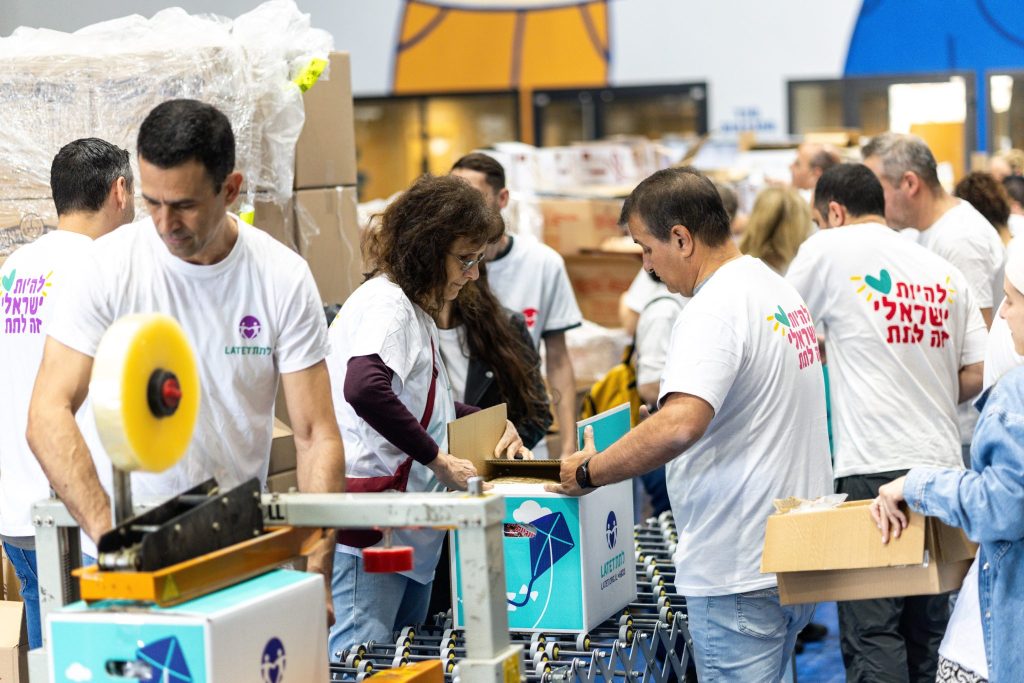
From the very beginning, we sought to anchor our approach within the Israeli public discourse in order to shift the conversation and ensure this issue remained at the heart of political concerns for the long term. It took time and significant effort to make our voice heard and to shed light on the issue of poverty in a country grappling with numerous conflicts and existential challenges. Today, after 30 years on the ground, Latet has succeeded in bringing this issue to life by conveying a message of hope and commitment rather than one that is unnecessarily alarmist and guilt-inducing. We still have a long way to go before making the issue of poverty a central concern for Israelis.
K. : Isn’t rising poverty one of Israelis’ major concerns?
G.D. : For the past twenty years, we’ve asked the same question every year: What do Israelis consider to be the most important problem facing society? We hoped to see poverty gradually rise in the rankings. But depending on the period, it’s education, corruption, security, or even political polarization that tops the list. The place of poverty among Israelis’ concerns is actually inversely proportional to the security situation. With every new crisis, security immediately rises to the top of the list, while poverty almost entirely disappears from the debate. It then slowly rises again, until the next shock, which relegates it once more to the background.
“Poverty’s place among Israelis’ concerns is, in fact, inversely proportional to the security situation.”
Unfortunately, we have not succeeded in making poverty a lasting top priority for Israelis. On the other hand, we have succeeded in more strongly promoting the idea of a duty of solidarity, as well as issues of resilience and social capital.
In the weeks following October 7, the concerns of the majority of Israelis turned almost exclusively toward the war and the fate of the hostages. It was virtually impossible to raise other issues that, nevertheless, had not disappeared. On the contrary: the war has only exacerbated the situation of poverty; as is always the case in times of crisis, the vulnerable become even more vulnerable and are the first to pay the price of the crisis.
K: Let’s talk specifically about those who are getting involved, starting with the volunteers. According to your 2025 report, Latet has mobilized approximately 46,000 of them. What is their profile? Has it changed since October 7, in the context of the widespread mobilization of Israeli civil society?
G.D.: Among our tens of thousands of volunteers, we have a core group of about 2,000 volunteers whom we know well and with whom we communicate regularly. Most are between the ages of 35 and 55, which is quite unusual.
Volunteering generally attracts many teenagers and retirees; we, for our part, have succeeded in engaging people in the prime of their working lives who choose to devote part of their time to social action. Has their profile changed since October 7? No. What has changed is their number: many more people have wanted to get involved. This phenomenon, however, remains cyclical. After October 7, participation reached an exceptional level: it is estimated that nearly 40% of Israelis volunteered or made a donation—that is, almost one in two Israelis. Since then, this figure has declined, but it remains at a relatively high level.
K: Are the beneficiaries mostly people from the Jewish population? Is aid provided regardless of background? Latet—does it operate throughout the country? I ask because when reading the word “Israeli,” some people—sometimes in bad faith—might wonder whether your work also reaches the Arab population, the Bedouins, and residents of the outskirts.
G.D.: Our criterion is vulnerability, not community affiliation. We work in all sectors of Israeli society, and—to answer your question—we devote a great deal of energy to separating our work from the political and national debate that all too often clouds public discourse in Israel. A response that’s too specific risks assigning us to one side or the other, which I refuse to do. I don’t want to fall into the trap of saying, “We do this; we don’t do that.” I prefer to stick to a clear principle: Latet has a humanitarian mission and a humanist vision to help, within the scope of its mission, people who are suffering. While Israeli identity is central to Latet, universalism and the deeply diverse nature of Israeli society are also part of our perspective.
We therefore help both the residents of Tel Aviv as well as Bedouins in the Negev, economically vulnerable ultra-Orthodox Jews as well as Arabs in the Galilee. Anyone who is part of the tapestry that is Israeli society can benefit from our assistance. Just like Bituah Leumi, Israel’s social security system, we assist anyone in need both within and on the margins of Israeli society.
K.: I’ll try to clarify my question, because the “ambiguity” you claim is itself highly political. Thirty years ago, when Latet was founded, the term “Israeli identity” did not encompass the same realities as it does today. Since then, society has become deeply divided, to the point where it sometimes feels as though we are on the brink of civil war. And this polarization centers precisely on two questions: What is Israeli identity? What is Zionism? The Israeli identity to which you refer remains, in part, an abstraction, even as conflicts—both in Israel and in the diaspora—crystallize around its definition.
I understand your approach: it is necessary and strategic, since you must bring together as broad a coalition as possible and make solidarity a shared responsibility. But you are operating in a field of conflicting forces where, for some, Israeli identity excludes Arabs, and for others, it excludes the residents of the settlements. How do you handle this, then? In the background, the same question always lingers: who can legitimately benefit from your aid? Does this polarization force you to rethink your definition of Israeli identity, or are you still managing to avoid taking a stance?
G.D.: I’m not trying to avoid this question—I confront it head-on, now more than ever. It is precisely because we are going through a period of extreme polarization, where everything becomes political and every position assigns you to a camp, that I strive, at Latet, to walk this fine line. If there is still a space for consensus capable of bringing all communities together, it must be social action. And if this consensus must be embodied somewhere, then let Latet be that place: everyone helps everyone else. Last year, more than 450,000 Israelis donated to Latet to support all of our beneficiaries. No one told us, “I’m donating, but only for the Haredim,” “only for Arabs,” or “only for secular people.” They donated to help everyone. For example, we regularly conduct fundraising campaigns within the Israeli Arab community. We did so recently, during Passover, at supermarket chains with a strong presence among this population, and the funds raised are then redistributed to all beneficiaries.
“If there is still a space for consensus capable of uniting all communities, it must be social action.”
For thirty years, we’ve been promoting this same message about a shared Israeli identity that transcends its diversity. If we can now draw on the credibility and legitimacy we’ve earned over time to help rebuild social bonds, then we must do so. Disagreements exist, of course, but we try not to let them dictate our actions. We must remain steadfast in our principles. Our primary criterion is vulnerability: when a person needs us or asks for our help, we must be there for them. Our only criteria are need and membership in Israeli society. It is obvious that, beyond the institutions, there is deep polarization and people who challenge this view. Will we one day reach a breaking point where these different “communities” will split apart? I do not know. On a personal level—and here I am distinguishing my position from that of Latet—I act as an Israeli citizen, even setting aside my French instincts. Israel forms a single entity: we must be able to live together and accept our differences. That is how I was raised, and I am committed to making it the guiding principle of Latet’s work.
K. : What are the different types of vulnerabilities specific to Israeli society?
G.D. : I’ll answer in two parts. There are, in fact, two major groups affected by poverty in Israel: the Haredi community and the Israeli Arab community. In the ultra-Orthodox sector, poverty is linked to the employment rate among men: a significant portion of them choose to study at the yeshiva, and the burden of supporting the household then falls exclusively on the woman, who must feed, often a large family, on a single income. Things are changing: today, the employment rate among ultra-Orthodox men is about 50 percent, whereas twenty or twenty-five years ago, it was only 20 percent. But we’re still far from the 87% employment rate among non-Haredi Jewish men. Conversely, in the Israeli Arab community, it is often the woman who does not work: the employment rate for Israeli Arab women stands at 49%, compared to the national average of 83%.
Interestingly, the employment rate for ultra-Orthodox women is now virtually identical to that of secular women. In terms of economic integration, the ultra-Orthodox community is making progress. But is it progressing fast enough? Beyond this phenomenon specific to Israeli society, we also see classic patterns of poverty—the same as in France—that primarily affect the elderly, single-parent families, and people with disabilities. In Israel, these groups are joined by many new immigrants who struggle to find their place in the job market.
K. : What is the situation for new immigrants?
G.D. : Some communities are experiencing a real failure to integrate. This is particularly true of the population of Ethiopian origin, where this failure is passed down from one generation to the next: it is undoubtedly the most glaring issue. We used to think that poverty would affect only the first generation, but we’re seeing that children, too, remain highly vulnerable. In Israel, poverty is closely linked to social and geographic marginalization. A recent study shows that a child born in Kiryat Malachi is twice as likely to experience poverty as a child born in Tel Aviv. Situations can vary from one city to another: prospects for social integration are less bleak in Sderot, but the risks are significantly higher in Dimona, Ofakim, Karmiel, or Shlomi. Yet new immigrants often concentrate in these peripheral areas. The situation for immigrants from the former Soviet Union is different. Many older adults arrived in the 1990s and 2000s with no savings and without having contributed to the Israeli pension system. Today, they live on a minimal allowance and public income support that is insufficient given the cost of living. A significant portion of this population therefore lives in poverty.
“A child born in Kiryat Malachi is twice as likely to experience poverty as a child born in Tel Aviv.”
K: Is racism also a factor in these situations?
G.D.: No, I don’t think so—or at least not in a decisive way. For immigrants from the former USSR, their poverty is primarily the result of economic factors. Many are no longer able to work. They did not contribute to the system long enough to qualify for a decent pension, often arrived with no resources, and have struggled to find jobs commensurate with their skills. Only the government could have corrected this situation. Yet it structurally underinvests in social policies in favor of security spending, among other things.
As for the situation of Israelis of Ethiopian origin, it is somewhat different. I am really not sure that the Israeli model of economic integration has worked; rather, I wonder if it is not partly a myth. Look at what happened with immigrants from Morocco, and then with Israelis of Ethiopian origin: instead of settling them at the heart of the country and the economic system, they were directed to the peripheries, particularly to populate certain regions. The first generation was, without a doubt, exploited in this way. Today, their poverty seems to me to stem less directly from their identity than from their social and geographic marginalization, even though the two dimensions are obviously linked. The fact of having been kept on the periphery for so long probably weighs more heavily than the fact of being Moroccan or Ethiopian in and of itself. But I should point out that this is a personal assessment: I do not have the figures to substantiate it.
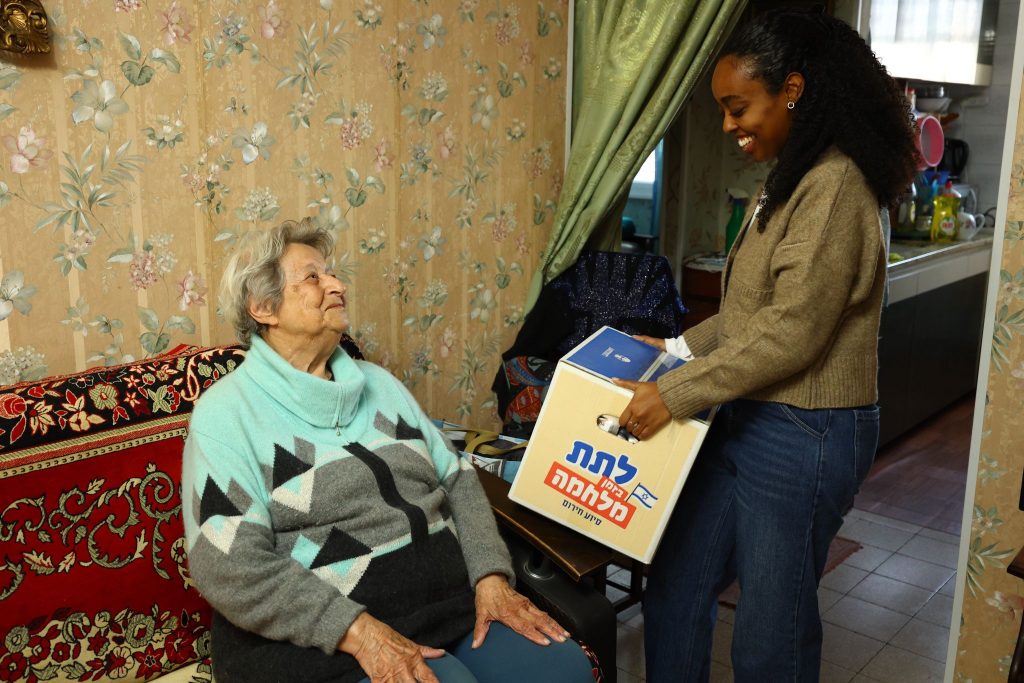
K.: And what about Latet’s work on behalf of Shoah survivors? As this generation gradually passes away, what conclusions do you draw from your efforts to ensure they have dignified living conditions?
G.D.: About twenty years ago, we launched a program to assist Holocaust survivors living in precarious circumstances, called Aid for Life. This program was created in part thanks to a partnership with the Foundation for the Memory of the Shoah, which was one of its main driving forces. After twenty years, the results are mixed. On the one hand, we have significantly improved the program’s effectiveness. Today, we are truly able to ensure decent living conditions for the survivors we support. Originally, our assistance was ad hoc and met only a small portion of their needs. Now, we know how to support them, almost as a family would. From this perspective, real progress has been made. On the other hand, the situation regarding poverty remains very concerning. Between 108,000 and 110,000 Shoah survivors still live in Israel.
Among them, more than 30,000 receive a supplemental livelihood allowance in addition to their regular benefits: this means they officially live below the poverty line. We continue to assist more than 1,600 people from this demographic through Aid for Life. How can we explain that in 2026, more than eighty years after the war, Israel has still not managed to ensure that no Shoah survivor lives in poverty? On good days, I tell myself that some people have fallen through the cracks of the system and that even the most efficient administration has its flaws. On bad days, I consider it a scandal and wonder why this issue has never been definitively resolved, even though the state steps in from time to time…
K. : Your position gives you a unique vantage point on relations between Israel and the diaspora. On the one hand, you emphasize the responsibility of Israeli society, which Latet mobilizes through volunteer work and donations. On the other hand, you also reach out to the diaspora. How do you bring the diaspora into this conception of Israeli solidarity? And how do you see its relationship with Israel evolving, against a backdrop of high tensions, particularly among young people?
G.D. : It’s important to understand that redefining the relationship between Israel and the diaspora is central to Latet’s mission. From the very beginning, we have strongly asserted that Israel must stop systematically relying on the diaspora to fund its social problems. When the Israeli nonprofit sector faces a challenge, its first instinct is often to turn to the diaspora. We have always maintained that these problems are first and foremost the responsibility of Israelis. Similarly, public institutions must stop viewing the Diaspora as merely a source of money or political support. For my part, I try to advocate for the idea that this relationship must be transformed. In practical terms, Israeli resources have always accounted for the vast majority of Latet’s funding. For a time, they even constituted the entirety of it.
For twenty years, we refused to raise funds abroad. We then concluded that we had reached the limits of what we could mobilize within Israel and that we needed to seek additional resources from the diaspora. But our message remains very clear: the majority of our aid is provided by Israelis themselves; we ask the diaspora to supplement this effort, not to replace it. The Latet project makes it possible to move beyond the contentious issues surrounding support for Israel and to refocus the commitment to solidarity on a problem that is both real and universal, far from the quarrels and controversies that fracture the debate in the diaspora, just as they do in Israel.
That said, the diaspora’s support for Latet has grown significantly since October 7. In France, Jewish institutions immediately mobilized in response to the humanitarian emergency. I would like to thank the FSJU in particular for providing us with swift and substantial support at the very moment we needed it most to address the humanitarian crisis into which Israel had been plunged.
K.: We’ve just been talking about solidarity, fraternity, and collective responsibility within Israeli society. In the context of the upcoming elections, Latet—is it making specific demands of the various candidates?
G.D.: We’re launching a campaign that involves asking all candidates to present the social component of their platforms. Our goal is to make their proposals public, publicize them in the media, and enable voters to make informed decisions. We’ve asked them all the same question: “What is your position on poverty and social policies?” Several have already contacted us to better understand the issue. Very few politicians, on either the right or the left, are truly educated on social issues. This is rare even on the left, even though it should theoretically be at the forefront. We therefore believe that by bridging this knowledge gap and providing policymakers with the necessary tools, we can strengthen their commitment. There is a real need to educate Israel’s leadership: we must help them change their mindset.
As we have said, Israel’s survival depends not only on its security; it also depends on its social cohesion. Poverty and inequality pose a risk of social disintegration that someone will eventually have to fully address. Our work surrounding the elections therefore has two objectives: on the one hand, to explain to the candidates what can be done and why it is essential; on the other hand, to compel them to clearly state what they intend to do, so that voters can judge them on their proposals.
K.: Another issue emerges in your latest report: mental health. You note that 61% of the beneficiaries surveyed rate their psychological well-being as poor. Is this vulnerability likely to have even more lasting effects than poverty or food insecurity?
G.D.: Populations that were already vulnerable have become considerably more fragile during the war, and mental health is one of the most telling indicators of this deterioration. Some estimate that approximately 500,000 people in Israel currently suffer from post-traumatic stress disorder.
“We must stop treating resilience as a given or an axiom.”
This reality will shape Israeli society for years, perhaps decades. We must exercise caution when promoting the idea that Israeli society is a “model of resilience,” as this concept can all too easily be used to sweep problems we refuse to confront under the rug. We must stop treating resilience as a given or an axiom. The wound is deep and affects a significant portion of the population—likely for the long term. We have not yet seen the full extent of the scars of war on Israeli society.
K: During a visit by members of the editorial staff of K. about a year and a half ago, we met with several people involved in food aid to Gaza. Some explained to us that Israeli NGOs, drawing on their knowledge of the field, had continued to contribute to humanitarian efforts during the war, particularly by advising foreign organizations. Is that correct? Latet—was it, from the outset, set a limit on itself to operate only within Israel? Are there, despite everything, forms of cooperation with actors working in Gaza?
G.D. : Some Israeli NGOs have operated in Gaza or provided their expertise to international organizations on the ground. Latet did not participate in these actions. In the aftermath of October 7, it was difficult for us to go down that path, given the depth of our roots in Israeli society and the trauma the country has endured. We are an offshoot of Israeli society; one must understand the chasm that has opened up between these two worlds since October 7.
K.: Doesn’t the current political situation in Israel compel you to take a stand? Can this neutrality really be maintained?
G.D. : Yes, I think it’s possible. Within the Israeli mosaic, we stand alongside all those in need—that is our raison d’être. Social action is also a vehicle for inclusion in Israeli society. We are very clear about this stance: our commitment seeks to build consensus, not to divide or push each community back into its own circle.
How can we remain true to our principles in the face of these demands? How can we resist the centrifugal forces at work in Israeli society that push everyone to choose a side? We’re trying to find an answer as we move forward. These debates also take place within Latet’s board of directors, but so far we’ve managed to keep them in check by staying true to our identity. Sometimes we allow for a degree of ambiguity; when that happens, we embrace it. It’s a way of avoiding being pigeonholed into a partisan position. For now, it’s working. No one can seriously portray Latet as a right-wing or left-wing organization. We also act as an umbrella organization that coordinates the on-the-ground work of nearly 210 local NGOs, each with its own unique characteristics but all adhering to the same ethical charter, which we are committed to upholding. Structurally, everyone should be able to find their place at Latet; if you visit our offices or warehouses, you’ll find a cross-section representing the full diversity of Israeli society.
Poverty is not inevitable; it is a matter of resources and political trade-offs. Israel, the “Start-up Nation,” should have—and should provide itself with—the means to fund an ambitious social policy that would bring poverty down to the average level of other OECD countries.
That is what we expect to see in the political platforms—a clear roadmap that would define the poverty rate as a performance indicator for government action, just like inflation, the public deficit, or economic growth.
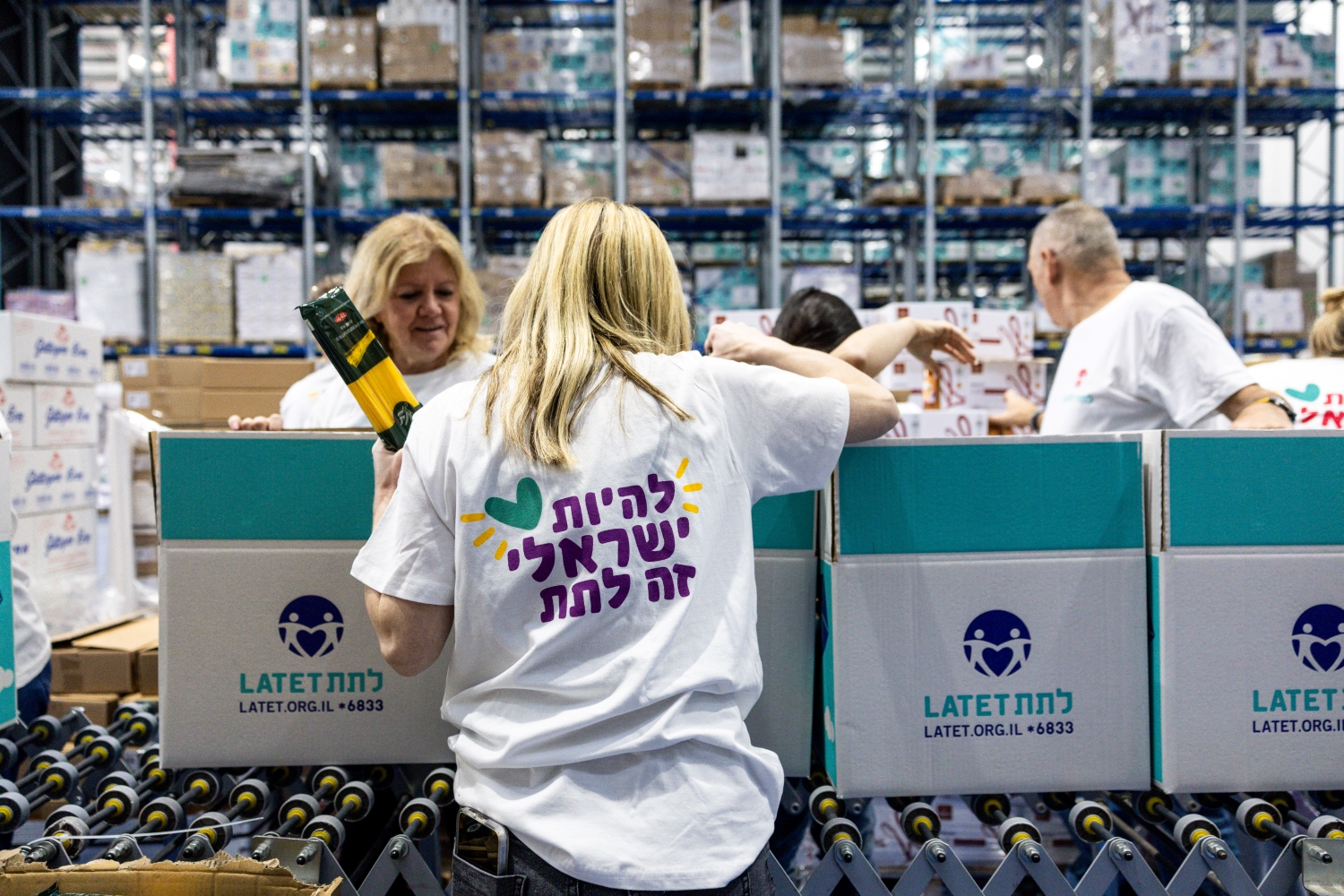
We must never grow accustomed to or resign ourselves to seeing our fellow citizens—our children, our elders—suffer from hunger. Being Israeli also means fighting this scourge; that is the origin of the Latet mantra: להיות ישראלי זה לתת (to be Israeli is to give; latet means “to give” in Hebrew).
This interview would not have taken place without Nathalie Rodach’s efforts to bring us together, for which the editorial staff extends its sincere thanks.
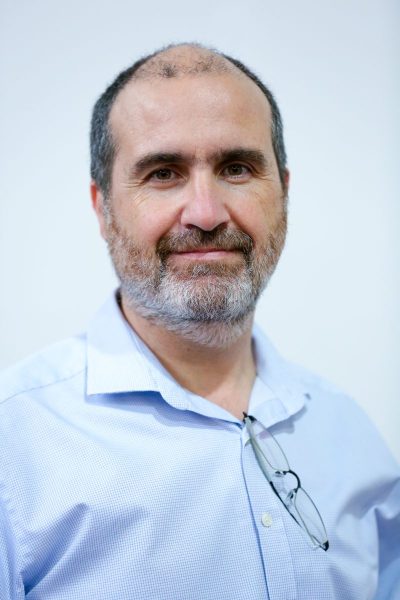
Gilles Darmon