#261 / Editorial
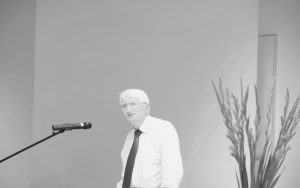
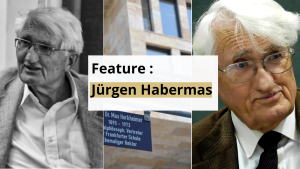
Jürgen Habermas passed away on March 14, 2026, at the age of 96. With the passing of this giant of philosophy, a thinker on the public sphere and communicative reason, Europe has also lost one of its most important and uncompromising political voices. For Jürgen Habermas never wavered on the intellectual and political demands arising from Europe’s historical responsibility. In her tribute to him, Julia Christ recalls the conviction that guided his work: after the Shoah, philosophy no longer has the right to consider itself eminent. A philosopher of the ordinary aspects of democratic life, a thinker on the procedures that enable the development of discursive reason, he was also a fierce polemicist against those who undermine the integrity required by our form of political life: “Jürgen Habermas was a dam, a breakwater in the sea of political emotions and attitudes that feed on the promise of heroic acts, virile decisions, or the elimination of the adversary.” This sums up what we owe him, and what we must continue to defend in his absence. Along with this obituary, we are including a special feature dedicated to the philosopher: it consists of his latest analysis, which he did us the honor of entrusting to us for its French publication; one of his statements during the war in Gaza; and Bruno Karsenti’s text “Habermas: Jews, Europe, Philosophy.”
Related articles
Jürgen Habermas: The Prosaic Bedrock

The Shiite Clergy, Zionism, and the Reception of Nazism in Iran
Feature: Jürgen Habermas
As the war unleashed against Iran by the United States and Israel continues to rage, reigniting Western political passions and fueling the wildest speculations, we have decided to take a step back by returning to the long-term perspective of historical analysis. Stéphanie Roza and Amirpasha Tavakkoli have just published Lumières et anti-Lumières en Iran (Enlightenment and Anti-Enlightenment in Iran) with PUF, a work analyzing Iran’s unique political trajectory through the lens of modernization processes and the traditionalist reactions they provoke. The authors thus describe a history of struggles, crossroads, and choices, rejecting both the culturalist narrative of a country inherently devoted to “political spirituality” and that of a linear modernization brutally interrupted. We are publishing excerpts from their book, exclusively translated into English for K. readers, including a passage that contextualizes the role of Jews in the political conflicts surrounding Iran’s modernization. Above all, they examine a striking paradox: during the circumstantial rapprochement with Nazi Germany in the 1930s, antisemitism was firmly rejected in Iran.