# 254 / Editorial
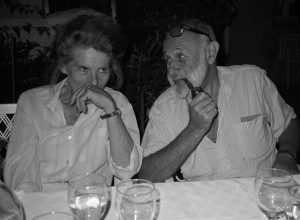
There are events that, even though we would prefer to stay away from certain issues, come back to haunt us and force us to question ourselves. For the philosopher Vilém Flusser—who had a distant relationship with his Judaism and was opposed to Zionism—the Yom Kippur War embodied this call for reflexivity. This week, K. publishes “The Jewish War”, an unpublished text by this thinker on communication and aesthetics, found in his archives. It is a surprising typescript in which Flusser wonders whether the war in which this state is engaged, which he believes has renounced the essence of Judaism, is not, despite everything, a “Jewish war”. In the background, there is a reflection on the exceptional nature of the Jewish experience and the impossibility of fitting it into the usual political categories. We can undoubtedly recognize here a gesture typical of a dated social constellation, although it is being revived by some today: that of condemning Zionism as the nationalist normalization of a Judaism with an idealized ethical and political vocation. However, it cannot be denied that this question, which Flusser develops in all its radicality, touches on a sensitive point in the relationship between Jews in the diaspora and Israel, which is constantly revived by the link between the singularity of the Jewish destiny and the existential threat hanging over it. The text is accompanied by a contextualization by Rainer Guldin and an analysis by Amos Morris-Reich, who examines its resonance with the war in Gaza.
Related articles
October 1973 - Vilém Flusser’s “The Jewish War”

Shibboleth

Lamed Vovniks
On a completely different note, that of literary testimony, we publish a text by Susan Daitch that plunges the reader into the eccentric urban world of Jewish Brooklyn. The American writer skillfully depicts the strange feeling of living in a stereotypical world—with its Sukkot advertisements and bakery windows filled with matzos—that nevertheless resists familiarization. It is as if, amid the hustle and bustle of everyday life, the figures of certain characters are superimposed, overwhelming the obviousness of routines: the Lamed Vovniks.