Israeli Elections: What Scenarios Lie Ahead?
On October 27, Israelis will vote for the first time since October 7, following four years of a government accused of cracking down on opposition forces and nearly twenty years of Benjamin Netanyahu’s almost uninterrupted dominance of the political landscape. A large portion of the electorate is hoping for a new Mahapach, comparable to the “upheaval” of 1977. David Chemla analyzes the voters’ mindset, the competing slates, and the strategies of the two blocs, then considers possible scenarios for the day after the election: since neither side appears capable of securing a majority on its own, the support of the Arab parties could determine the outcome.
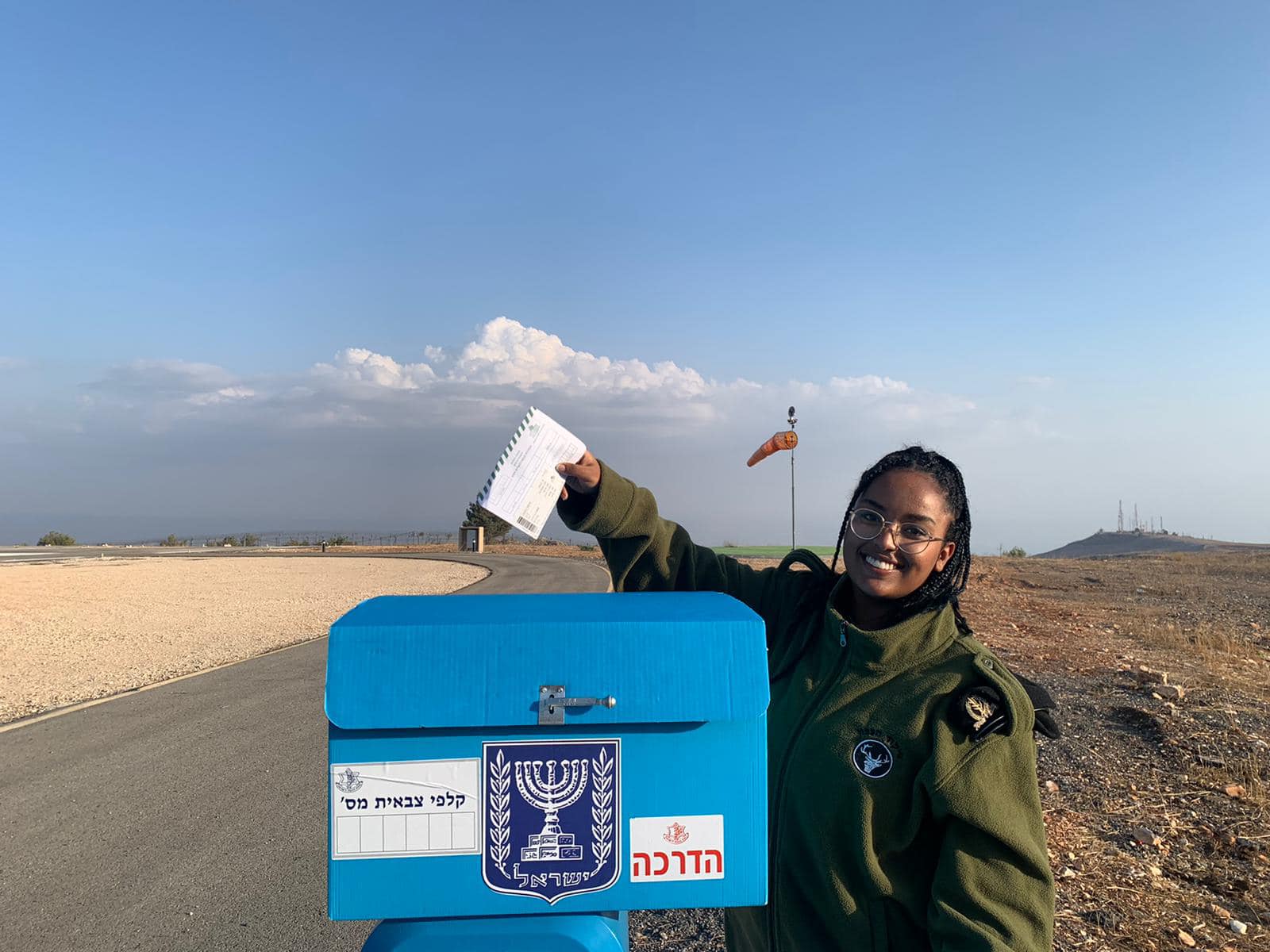
On October 27, Israel will hold its most important elections in decades. Although it is difficult to predict the outcome, a large portion of the population hopes they will bring about a new Mahapach (upheaval) similar to the one in 1977, when the Likud, led by Menachem Begin, came to power for the first time.
A Government at the End of Its Term
Why is there a consensus that these elections are crucial?
First, they are the first since the trauma of October 7, from which the entire population has not yet recovered. The significance of this event must be fully appreciated because it will shape the vote of a large portion of the electorate on October 27.1
Until October 7, Israelis had faced wars and terrorist attacks with confidence in their military and institutions. On that day, it was the residents of the kibbutzim and the southern cities who were attacked and who, due to the limited presence of the IDF on the front lines, had to defend themselves alone and suffered rapes and massacres. For the first time in their history, Israelis found themselves in the same helpless situation as their grandparents during the Shoah, despite the full might of their military. It was civil society2 that, starting the very next day, stepped in to fill the state’s role by aiding the displaced populations in the south and north of the country and feeding the soldiers sent to the front lines.
All military officials within the army and other security services who were on duty on October 7 resigned or were dismissed. But the political leadership—and especially those at the head of the state—remains in place and now seeks re-election.
Since this tragedy, the government has consistently refused to establish a state commission of inquiry to identify those responsible whose political and military decisions led to the massacre of nearly 1,200 people—most of them civilians—in a single day and the taking of 251 hostages, even though the majority of the population demands it.3 All military officials within the army and other security services who were on duty on October 7 have resigned or been dismissed. But the political leadership—especially those at the head of the state—remains in place and now seeks to be reappointed. This demand from the public has grown stronger following recent revelations that information about Hamas’s preparations for the attack had been passed on to Israeli leaders in the weeks leading up to October 7 October by Emirati and Egyptian officials4 and even by Sufian Abu Zaida, a former minister of the Palestinian Authority who served as a mediator between the Israelis and Hamas leaders in Gaza.5
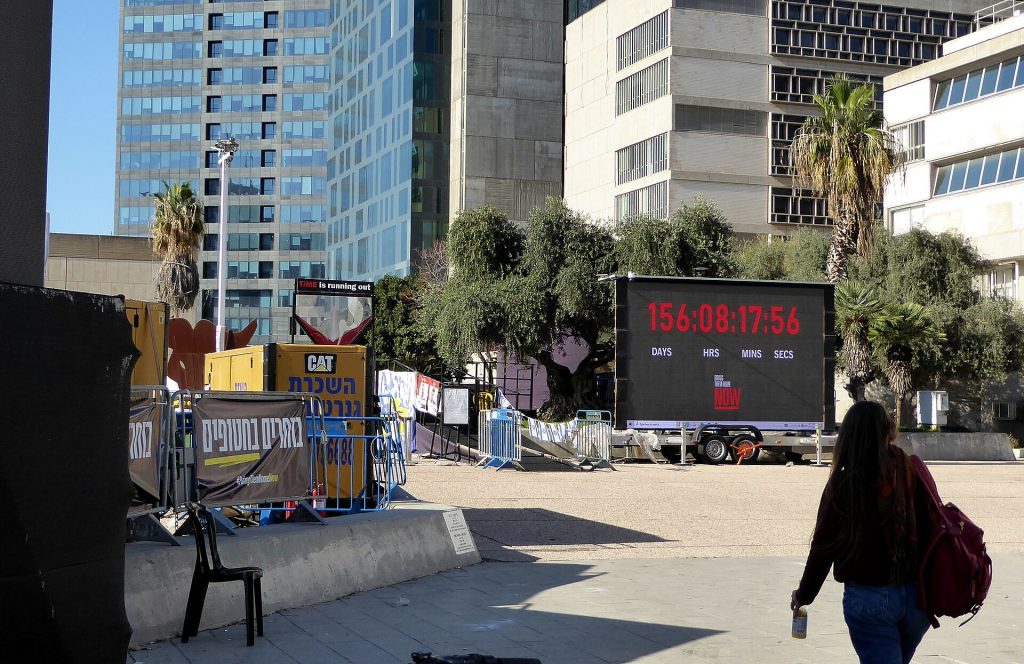
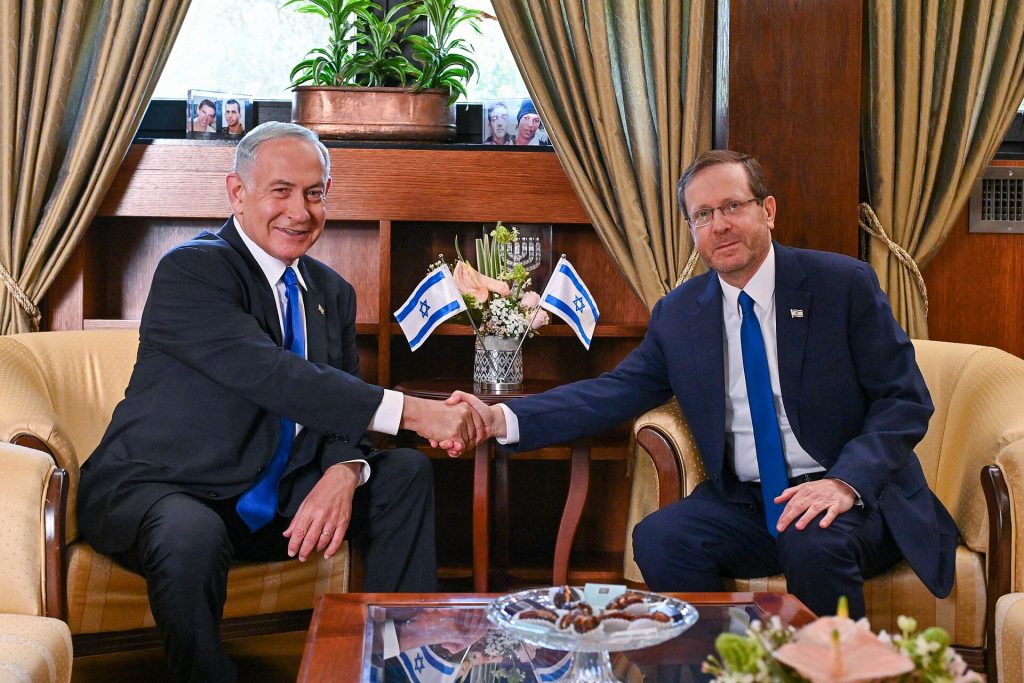
The second reason stems from the wear and tear of power. Netanyahu has surpassed Ben-Gurion in terms of longevity as the country’s leader.6 Since his return to power in 2009, he has dominated the national political scene. Nicknamed “the magician,” he has always been adept at forging alliances—particularly with religious and Orthodox parties—to secure stable coalitions. Ousted in 2021 by the Bennett-Lapid coalition, he managed to rally the opposition parties to disrupt the coalition’s functioning, ultimately bringing it down after a year.
Following his indictment on corruption charges and the start of his trial, he has consistently portrayed himself as a victim of the media and the judges and has redirected his voters’ anger toward them.
But time has run out for him as well, and his rhetoric is increasingly falling on deaf ears today, even among some Likud voters.7 Another sign of this loss of support is the refusal of popular figures whom he had approached8 to run as candidates on the Likud list in the upcoming elections.
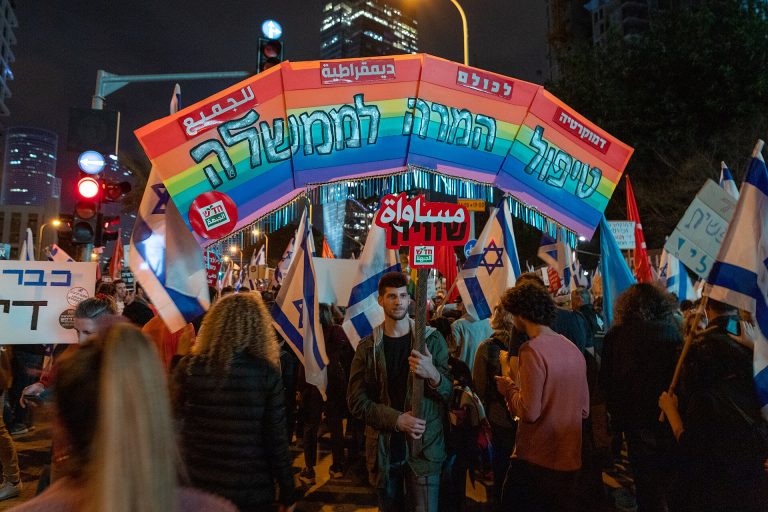
The third reason is that, for the majority of the opposition, these elections will determine whether Israel will continue to evolve into an increasingly autocratic society governed by extremist and messianic leaders, or whether it will remain a liberal democracy open to the world.
For the past four years, this government has systematically attacked the very foundations upon which Israeli democracy rests. By launching his judicial reform plan as soon as he took office as Minister of Justice, Yariv Levin sought to undermine the balance of powers by limiting those of the Supreme Court. Only the mobilization of civil society, beginning in January 2023, made it possible to slow down—or even block—this reform.9
Furthermore, there has been a loss of public trust in institutions such as the police,10 which are increasingly perceived as the militia of Itamar Ben Gvir, the Minister of National Security, while violence in society is on the rise.11 More than 3,000 people12 participating in the protest movement were arrested during the demonstrations. More broadly, over the past four years, the government has provoked and fueled a divide within the population, pitting “leftist Kaplanists”13 against the rest of the population and promoting conspiracy theories.14
The fourth reason is that the majority of the population is demanding a more equitable distribution of the burden, and these elections are a means of ending the dominance of the religious parties. Opposition voters, along with a large portion of right-wing voters, are united in calling for an end to the military service exemption for Orthodox students.
Despite the army’s manpower shortage—as it is engaged on multiple fronts—and the hundreds of days of mobilization completed by reservists over the past three years, the Orthodox parties have maintained their demands for exemptions in exchange for their support of Netanyahu. Having failed to reach a compromise acceptable to the right-wing parties, they succeeded in passing a law at the end of the legislative session to prevent the penalization of draft dodgers—a law that was subsequently overturned by the Supreme Court.
It is significant to note the absence, among all these issues, of the conflict and solutions aimed at resolving it.
Secular voters, increasingly exasperated by the influence of the religious establishment, are calling in particular for public transportation on shabbat and a rebalancing of public funds, which currently benefit settlers and the Orthodox community first and foremost.
It is significant to note the absence, among all these issues, of the conflict itself and of solutions aimed at resolving it. With the exception of Yair Golan’s Democratic Party, which advocates the need to separate from the Palestinians without defining the solution precisely, the other Zionist opposition parties say they oppose the creation of a Palestinian state.15 Since October 7, support among the Jewish population for the two-state solution has dropped sharply, while support for the annexation of the West Bank has increased; however, neither option has yet secured a majority.16 The majority of Jews still express indifference toward the situation of the Palestinians due to the massacres of October 7 and have been primarily concerned with the plight of the hostages. Furthermore, many of them fear further attacks launched from Palestinian cities in the West Bank located near Israeli urban centers. Bezalel Smotrich17 and Itamar Ben Gvir18 have taken advantage of this context to expand and fund19 settlement activity20 and to allow the daily abuses committed by extremist settlers against Palestinians and their property to go unpunished.
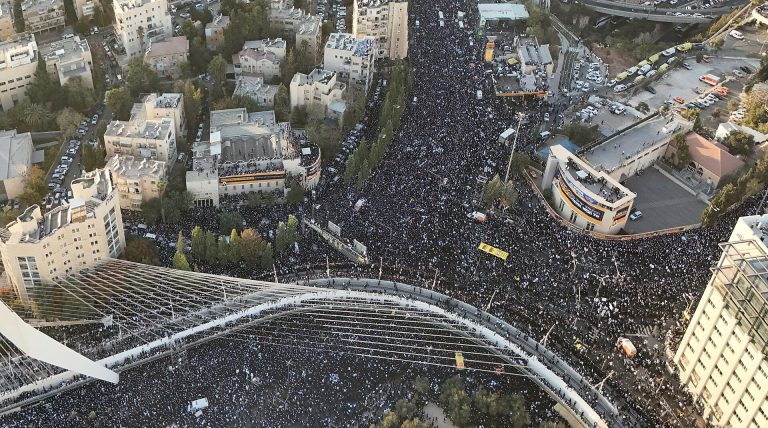
For the Zionist opposition parties, the government has failed to translate military successes into diplomatic gains; they would prefer regional agreements. But the elections will not hinge on this issue.
The Running Lists and Their Strategies
38 lists have filed their candidacies with the Central Elections Committee, chaired by Judge Noam Sohlberg. Following the Supreme Court’s intervention, all were approved. According to all polls in recent weeks, 13 are expected to clear the minimum threshold for election,21 with uncertainty surrounding two of them that are hovering just below it. However, there are discrepancies—sometimes amounting to one or two seats—in these projections, and they could alter the final result given the tight race between the two blocs.
The uncertainty centers mainly on the turnout among traditional Likud voters. Will those who, according to the polls, plan to abstain to “punish” Netanyahu or vote for a more centrist list return to the fold at the last minute?
Three factors may explain the difficulty pollsters face:
– The presence of 550,000 new voters aged 18 to 22, who are highly motivated according to the Israel Democracy Institute (IDI)22, but whose voting intentions are poorly understood—even though young people, especially soldiers, traditionally vote more to the right than the average.
– The number of expatriates23 has been rising for the past four years, and many have announced their intention to vote upon returning to the country,24 despite the cost of tickets.25
– The difficulty in estimating voter turnout: the higher it is, the more votes each party will need to clear the eligibility threshold, which could lead to the failure of those parties for which polls predict a result of around four seats. Furthermore, if Arab voters turn out in greater numbers than usual, the parties representing them could win 14 or even more seats.26 However, it is unclear how to accurately gauge the impact of Sami Abu Shehadeh’s withdrawal from the race—under pressure from the Supreme Court—on their mobilization.27 The uncertainty centers primarily on the turnout of traditional Likud voters. Will those who, according to polls, plan to abstain to “punish ” Netanyahu or vote for a more centrist list—will they return to the fold at the last minute?
The “Four Tribes” at the Polls
They are divided according to the “four tribes” of Israeli society described by former President Reuven Rivlin.
The Orthodox:
No major surprises are expected regarding this demographic’s voting results. The two Orthodox lists currently in the Knesset, Yahadut Hatorah (“Torah Judaism”) and Shas, are each expected to win between 7 and 8 seats. The new development is the creation of a third list seeking to represent them, HaTsibour Haredi (“The Haredi Public”), which breaks taboos in the ultra-Orthodox world (men working, national service for yeshiva students) and includes women on its list. It is not expected to pass the electoral threshold, barring a surprise in how women vote behind closed doors.
The Religious Zionists:
Currently represented by 14 members of Knesset on a joint list,28 they are running this year on four separate lists:
Otzma Yehudit (“Jewish Power”), led by Itamar Ben Gvir, which is projected to retain around 7 to 8 seats according to the polls.
Hatsionout Hadatit (“Religious Zionism”), led by Bezalel Smotrich, who—under pressure from Netanyahu—had to include Moshe Feiglin, a former far-right ultra-nationalist lawmaker, on his list, despite his distaste for the man,29 so that his list could clear the threshold. Together, they could win between 5 and 7 seats.
Amcha Israel, a new list created by Ofer Winter, a former brigadier general who supports mandatory military service for the ultra-Orthodox as well as the voluntary emigration of Gaza Strip residents. According to polls, this list would struggle to clear the minimum threshold. Netanyahu is attacking its leader because of the risk of vote loss he poses to the right-wing bloc,30 even though Winter has pledged his allegiance to him.
Noam leIsrael, led by Avi Maoz, would not clear the minimum threshold, according to all polls.
The “Arab lists”:
Israeli Arabs, who make up 21.5% of the country’s population, are currently represented by 10 members of the Knesset from two lists: Ra’am, led by Mansour Abbas, and Hadash-Ta’al, led by Ayman Oudeh and Ahmed Tibi.
Polls indicate a higher-than-usual turnout among Arab voters and suggest that the parties representing them could win 12 to 14 seats.
Two lists will represent them in the elections:
– HaReshima Hameshutefet (“The United List”), comprising Balad, a nationalist party; Ta’al, also a nationalist party calling for equality between Jews and Arabs; and Hadash, the Communist Party.
–Ra’am, an Islamist party. Yoav Segalovitz, a former member of Knesset for Yesh Atid, a former high-ranking police officer, and Deputy Minister of Internal Security in the Bennett-Lapid government, is running second on the list. This unprecedented alliance breaks down the political barrier between the two communities for the first time. Although he is a Zionist Jew and a former police officer, he is popular among Israeli Arabs for having reduced crime in their communities: 116 murders in 2022, more than double the number in subsequent years under Itamar Ben Gvir.31 There have already been 171 deaths among this population this year.32
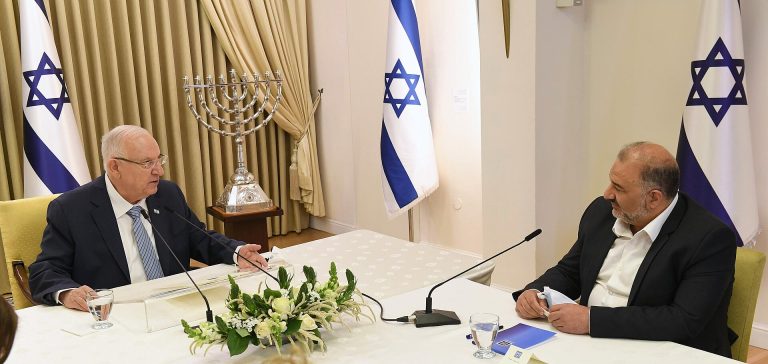
Current polls indicate a higher-than-usual turnout among Arab voters and suggest that the parties representing them could win 12 to 14 seats,33 which would give them a decisive role in forming a government led by the current opposition, should the latter accept their support.
Secular Jews:
They are currently represented by 78 members of the Knesset from five non-religious parties: Likud with 36 members34 and four opposition parties.35 Forty-four percent of Israeli Jews identify as secular,36 but these parties also attract traditionalist and even religious voters.
It is within this demographic that the greatest shift has occurred since 2022.
According to all polls, Likud has lost more than 10 Knesset members compared to the 2022 elections. It is currently projected to win 19 to 21 seats. This is why Netanyahu has worked to push for the merger of smaller party lists so as not to lose votes within his bloc. Unable to attract new figures, he has assigned the spots he had reserved for himself on the list to close associates or former ministers.
With Yesh Atid losing momentum, Yair Lapid has aligned himself with former Prime Minister Naftali Bennett, who heads their joint list, Beyahad (“Together”). Initially projected to win 25 seats, this list has seen its projected number of seats drop to about a dozen.
Israel Beiteinu, led by Avigdor Liberman, has benefited from a shift in votes from Likud supporters and is expected to win between 8 and 9 seats. This party traditionally represents Jews from the former Soviet Union, a largely secular population.
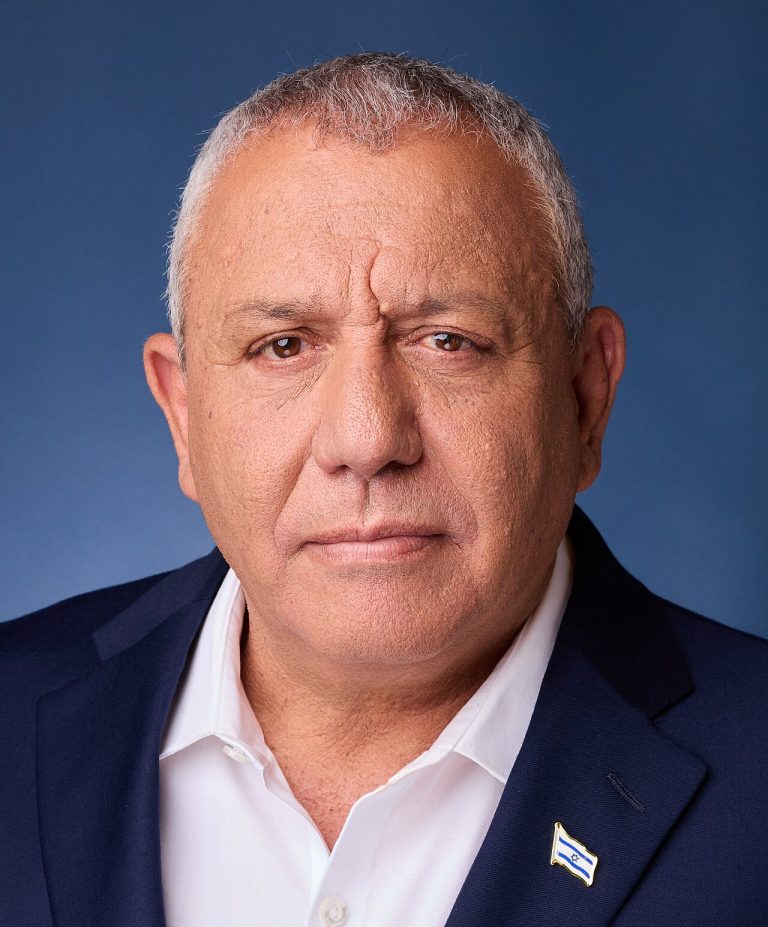
The sentence should be revised to read: The Yashar (“Straight”) list, created by Gadi Eizenkot, which likely drew some voters from both Likud and Mahane Hamamlakhti (“The National Camp”) led by Benny Gantz—who ultimately decided, in light of the polls, not to run again—is expected to win between 20 and 23 seats and surpass Likud.
The Democrats party37 is expected to win between 9 and 11 seats.38
It is worth noting the failure of attempts by two former ministers and Likud veterans—who opposed Netanyahu’s decision to support military service exemptions for the ultra-Orthodox39—to create a “third way.” Another list, aspiring to represent this “third way,” remains in the race and, according to polls, would come close to or just barely cross the electoral threshold. This is the “Reservists” list, created by Yoaz Hendel, who served as Minister of Communications in the Bennett-Lapid government and previously as a communications advisor to Netanyahu. Hendel has joined forces with Yaron Zelekha, an economist who aspires to become Minister of Finance. Positioned more to the right, they are calling for the conscription of Orthodox Jews into the army.
Two blocs, two strategies
The concepts of “right” and “left” in Israel differ from those in France. Affiliation with one camp or the other is not determined by economic and social issues, but by one’s position on the conflict.
Right-wing propaganda has always sought to label all opponents of its policies—particularly activists in the protest movement—as pro-Palestinian “leftists” and traitors, in order to discredit them. Since October 7, Israeli society has shifted further to the right, and the Likud’s entire strategy now focuses on two main pillars:
– Avoiding taking responsibility—including Netanyahu’s personal responsibility—for the political decisions that led to the October 7 massacre40 and redirecting public anger toward those in charge of security at the Shin Bet and in the military.41
– Since the polls show no hope of securing a majority with right-wing and religious parties alone, Netanyahu is focusing his attacks on the opposition by emphasizing that it will be forced to form an alliance with the Arab party Ra’am if it wants to come to power.
This strategy appears to have enabled Likud to improve its standing in the polls. Netanyahu consistently succeeds in setting the agenda in public debate by raising issues that put his opponents on the defensive while avoiding those that are uncomfortable for him. He refuses to appear on mainstream networks and speaks only on Channel 14, on American networks such as Fox News, or during official statements without questions.
260,000 volunteers have signed up to serve as poll workers and scrutineers, a 150% increase compared to the previous election.
The common goal of the opposition parties is to increase voter turnout among their electorate. In 2022, while the national turnout was 70.6%, there were notable differences by region and demographic: 60% in liberal cities like Tel Aviv, 64% in right-wing cities like Ashdod, 75% in West Bank settlements, and 82% in Orthodox cities. Thus, the more liberal voters turn out, the higher the electoral threshold will be, which could prevent two small right-wing lists from reaching it
The opposition’s challenge is that it consists of four Zionist parties—the leaders of three of which are vying for the position of prime minister42—while Netanyahu is the only candidate seeking reelection—and two Arab lists. The five leaders43 of the Zionist parties met on September 26 and issued a statement of principles44 affirming “their unity and determination to bring about positive change and hope for the State of Israel.” One issue, however, divides them: the possible inclusion of Ra’am in a future coalition—a move supported only by the Democrats, although two-thirds of Jewish opposition voters would be in favor of it.45
The opposition is aware of the risks to the smooth conduct of the elections, to the point that some are considering calling on foreign observers.46 72% of Jewish voters and 58.5% of Arab voters fear interference that could undermine the integrity of the elections.47 In preparation for election day, 260,000 volunteers have signed up to serve as poll workers and scrutineers—a 150% increase compared to the previous election. The possibility, sometimes raised, of postponing the election due to a resumption of fighting seems unlikely given public fatigue with the war.
The day after the vote: three scenarios
These scenarios are based on the most likely assumption that neither bloc will be able to secure a majority on its own. However, more than 10% of voters are still undecided between the two blocs, and many of them will make their choice at the last minute.48 Furthermore, previous elections have shown that many voters often ultimately decide to cast a “tactical vote” by choosing one of the major parties to strengthen it, which could eliminate smaller parties and weaken the others.
Even if Likud manages to achieve a better result, it will struggle to persuade the “Reservists” list to join it in a right-wing coalition with the Orthodox parties due to their disagreement over military exemptions for yeshiva students.
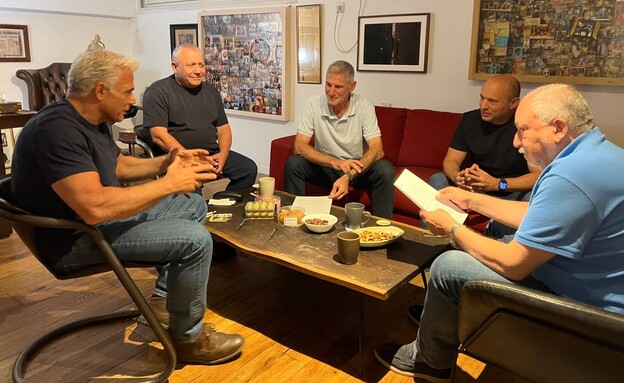
If the “Zionist” opposition parties cannot agree to form a coalition with the Ra’am party, they will have to choose between three alternatives:
– Holding new elections in a few months, which would mean the current government, with Netanyahu as prime minister, would remain in place until then.
– Forming a national unity government of “Zionist” parties ranging from Likud—excluding the extremist parties Otzma Yehudit and Hatsionut Hadatit and the Orthodox parties—to Yashar, which has not committed to refusing to govern with Likud.
– Forming a minority government with the support of Arab parties from outside the coalition. This scenario occurred in the past with Rabin’s second government from 1992 to 1995, which was thus able to secure Knesset approval for the Oslo Accords.
Given that the majority of its voters expect change, it seems difficult to imagine that the opposition would choose either of the first two scenarios. The four leaders of the opposition Zionist parties state that they oppose the participation of leaders who were in office on October 7 in the next government. I believe the opposition would instead form a minority government, with external support from the Arab lists. Then, after governing the country for a few months and beginning to improve both the domestic and international situations, it could organize new elections that might give it a clear majority.
Until a state commission of inquiry into the October 7 massacres is appointed, it will be impossible for the population to come to terms with their loss.
1977: A Precedent?
In conclusion, to return to the comparison with the situation surrounding the 1977 elections, there are similarities with today’s situation:
– The 1977 elections were the first held in the aftermath of the Yom Kippur War, which—like the events following October 7 today—was a major trauma for the population. The previous elections had taken place in December 1973, when the war had just ended and soldiers were still mobilized.
– The 1977 elections brought to a close some thirty years of Labor Party rule, just as today’s elections come after some twenty years of nearly continuous Netanyahu dominance. In both cases, there is a certain wear and tear on the ruling party.
– A proliferation of “scandals”: In 1977, scandals involving Labor Party leaders and Leah Rabin’s bank account49 in the United States weighed heavily on the election. Today, several ministers and members of Knesset are facing legal proceedings, not to mention Netanyahu’s trial, which has been ongoing since 2020 on charges of corruption, fraud, and breach of trust. These scandals are far more serious than those that affected the Labor Party in 1977.
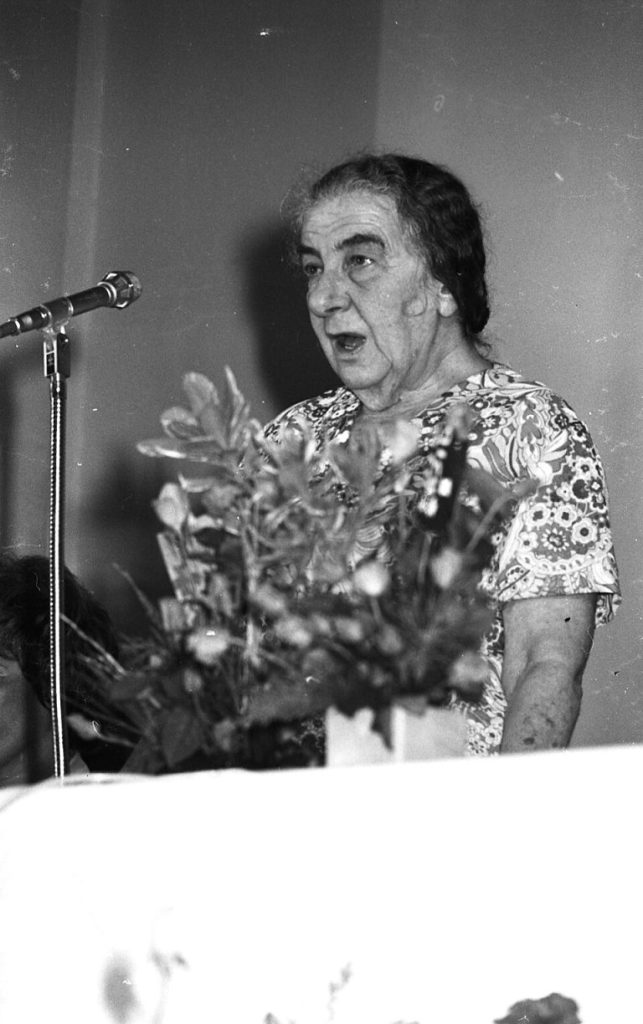
But unlike in 1977, the current government still refuses to take responsibility—unlike Golda Meir, who resigned after the publication of the interim report by the Agranat Commission50, which was established to analyze the failures of the Yom Kippur War. Until a state commission of inquiry into the October 7 massacres is appointed, it will be impossible for the public to come to terms with their loss. While it will not erase the trauma, it will help identify all those responsible so that such a tragedy does not happen again.
- According to a survey by the Israel Democracy Institute (IDI), 68% of Israeli Jews say the events of October 7 are a decisive factor in how they vote. The focus on the Hamas massacre transcends political divides, although it is more pronounced on the left: it is a central issue for 76.5% of left-leaning voters, compared with 74% of centrists and 66% of right-leaning voters. It also transcends differences in religious observance, with the exception of ultra-Orthodox Jews, only 26% of whom say it is a key issue, compared to 81% of secular Jews and 56% of religious Zionists. It is central or somewhat central for only 32% of Arab voters. (https://en.idi.org.il/articles/66177) ↩︎
- Notably, the Ahim LaNeshek (“Brothers in Arms”) association, composed of former military personnel and reservists, which had been very active in the protest movement and mobilized as early as October 8. ↩︎
- 100% of left-wing Jewish voters, 84% of centrist voters, and 36% of right-wing voters (IDI poll, December 2025 https://en.idi.org.il/articles/62950) ↩︎
- According to an investigation by Shlomi Eldar published in Ha’aretz—and later confirmed by The New York Times—the president of the United Arab Emirates, Mohamed bin Zayed (MBZ), had warned Netanyahu about ten days before October 7 of the Hamas attack. According to The Atlantic, Egyptian intelligence chief Abbas Kamel had secretly traveled to Israel on September 26, 2023, to warn the Israelis that Hamas was planning a major attack. Furthermore, according to Yediot Aharonot and the Wall Street Journal, he reportedly called Netanyahu a few days before October 7 to warn him of signs pointing to an imminent attack. Since these revelations were published, Netanyahu’s office has dismissed them as “utter lies.” Netanyahu reportedly urged MBZ to deny them, which he did not do (https://fr.timesofisrael.com/selon-un-ex-ministre-avant-le-7-octobre-israel-et-le-hamas-ont-frole-laccord/). ↩︎
- https://allisraelnews.com/fr/il-y-aura-un-tremblement-de-terre-un-ancien-ministre-de-lautorite-palestinienne-affirme-avoir-transmis-un-message-de-sinwar-au-shin-bet ↩︎
- A combined 19 years for Netanyahu and nearly 14 years for Ben-Gurion. ↩︎
- This is reflected in the Likud’s decline in the polls. ↩︎
- The refusal of Moshe Kahlon, the former Minister of Communications and later Minister of Social Affairs in his previous governments, and of Yossi Cohen, the former director of the Mossad. ↩︎
- Of the 573 laws passed during the current legislative session, 24 are classified as laws that challenge the balance of powers. The Supreme Court has struck down some of them, such as the one aimed at removing its authority to overturn a government decision that, while legal, was deemed “unreasonable,” and the one that had suspended the ability to arrest draft dodgers (a law that affected the Orthodox community). It has suspended others pending the review of pending petitions against them and postponed the implementation of other laws—such as the amendment to the Judicial Appointments Committee—until next year, after the elections. (https://www.zman.co.il/728709/) ↩︎
- According to a poll by the Institute for Democracy in Israel, 63% of Jews and 80% of Arabs have little or no trust in the police (https://en.idi.org.il/articles/62314) ↩︎
- This distrust is particularly on the rise in the Arab sector. ↩︎
- Interview with Gaby Lasski, former Meretz Knesset member and candidate for the Democrats party. As a lawyer, she worked to secure the release of many of the arrested protesters. ↩︎
- The name given to protesters gathering on Kaplan Street in Tel Aviv to participate in the protest movement against judicial reform and, later, to call for an end to the war. ↩︎
- Accusations of treason, or even complicity, against security officials or public figures such as Yair Golan, who are alleged to have known about the Hamas attack before October 7. ↩︎
- Gadi Eizenkot states that he supports settlements in the West Bank only when they serve national interests and comply with the law. In his view, “this is not the time to talk about a Palestinian state,” but in the long term, he envisions a stable Palestinian entity under Israeli security responsibility. (https://www.timesofisrael.com/bereaved-by-war-determined-to-heal-protect-and-revive-israel-gadi-eisenkots-prime-ministerial-mission/). ↩︎
- Support for the two-state solution has fallen from 47% in 2018 to 21% in 2026, while support for annexation has risen from 17% to 30%. Today, 24% support separation with Israel retaining security control, while the remaining 25% support the status quo. (See the surveys and reports conducted by Tamrur-Politography, the research group on the Israeli-Palestinian conflict led by Shaul Arieli (https://www.politography.org.il/en/about-t-politography) ↩︎
- The Minister of Finance and Minister in the Ministry of Defense responsible for administrative decisions regarding settlement activity in the West Bank, and leader of the Religious Zionist Party. ↩︎
- The Minister of National Security and leader of the Otzma Yehudit party. ↩︎
- 265 illegal settlements (outposts)—the majority of which are farms—have been established since 2023 (https://peacenow.org.il/en/settlements-watch/settlements-data/population) without altering the demographic balance between Israelis and Palestinians in the West Bank (https://www.lapaixmaintenant.org/ shaul-arieli-the-collapse-of-the-two-state-solution-is-a-political-decision-not-a-geographical-or-economic-one/) ↩︎
- To reduce the number of small parties, the Knesset has set a minimum threshold of votes required for representation. Since 2015, this threshold has been 3.25% of the votes cast. ↩︎
- https://en.idi.org.il/articles/64746 ↩︎
- 278,000 according to Tel Aviv University since 2023, including nearly 1,400 doctors (a 94% increase in the number of doctors between 2023–2025 compared to 2013–2015). ↩︎
- With the exception of diplomats and individuals on missions abroad, Israelis must vote in Israel. It is estimated that nearly one million Israelis, including children, live abroad, of whom more than 270,000 are believed to have emigrated in recent years. (https://fr.timesofisrael.com/pres-dun-million-disraeliens-vivent-a-letranger-dont-environ-30-en-europe-etude/) ↩︎
- Fly & Vote is an initiative led by AID Coalition, an American NGO that describes itself as nonpartisan. It was created to provide logistical assistance to expatriates in finding flights and has itself organized a number of charter flights from the United States, though it does not fund the tickets. ↩︎
- Their voter turnout in the 2022 election was 53.2%, lower than the national average of 70.6%. From 2003 to the present, it has ranged from a low of 44.6% in 2021 to a high of 64.8% in 2020 (when the four parties formed a joint list), while the national rate ranged from 63.5% in 2006 to 72.3% in 2015. ↩︎
- The Supreme Court asked Sami Abu Shehadeh, the leader of Balad—one of the three parties in the United List—to withdraw his candidacy so that the court would not have to invalidate it due to an article he had written the day after October 7 that could be perceived as support for the Hamas attack; he did so. The Supreme Court overturned the other decisions to disqualify the two Arab lists and Hadash Knesset member Ofer Kassif. ↩︎
- Composed of three factions: “Religious Zionism” with 7 Knesset members, “Jewish Power” with 6 Knesset members, and “Noam” with one Knesset member. ↩︎
- Smotrich said of him that he “was neither in his right mind nor of sound mind” (https://www.jpost.com/israel-news/politics-and-diplomacy/article-907589) ↩︎
- Hatsionut Hadatit and Amcha Israel are in a precarious situation. They could face the same fate as Meretz in 2022, which fell short of the electoral threshold by about 4,000 votes and thus failed to enter the Knesset. ↩︎
- https://abrahaminitiatives.org/victims-of-violence-and-crime-in-arab-society-in-2024 ↩︎
- The issue of crime in Arab communities is the primary factor influencing Israeli Arabs’ voting decisions (31.5%), ahead of economic issues (19%) and security and the conflict (15%) (https://en.idi.org.il/articles/66177) ↩︎
- Between 7 and 9 seats for HaReshima Hameshutefet and between 5 and 6 for Ra’am. ↩︎
- Including 4 from a list led by Gideon Saar, the foreign minister and former rival of Netanyahu for the Likud leadership who has returned to the party. ↩︎
- Yesh Atid, led by Yair Lapid, with 24 Knesset members; Hamahane Hamamlakhti, led by Benny Gantz, with 8 Knesset members following the departure of the 4 who followed Gideon Saar; Israel Beiteinu, led by Avigdor Liberman, with 6 Knesset members; and The Democrats, led by Yair Golan, with 4 Knesset members. ↩︎
- https://fr.timesofisrael.com/a-la-veille-de-rosh-hashana-israel-compte-9795-millions-dhabitants/ ↩︎
- Formed from the merger of the Labor Party and Meretz, the Democrats have nearly doubled their membership. They have included eight new candidates—five of whom are leaders of the protest movement—among the top 15 on their list and have enforced a strict alternating order of men and women. ↩︎
- https://fr.timesofisrael.com/retour-sur-les-premieres-primaires-du-parti-les-democrates/ ↩︎
- Gilad Erdan, former Minister of Internal Security, Communications, and Regional Cooperation, and later Israel’s ambassador to the UN from 2020 to 2024; and Yuli Edelstein, who served as Minister of Health, Speaker of the Knesset, and Chair of the Foreign Affairs and Defense Committee. ↩︎
- 65% of the population believes Netanyahu bears significant responsibility, and 22% believe he bears little responsibility (https://www.mako.co.il/news-israel-elections/2026/Article-d7459e0cc7c01a1026.htm). In an interview aired on October 8 on the channel, General Avi Gil, Netanyahu’s military secretary as of October 7, stated that the Prime Minister’s Office had falsified documents related to the pogrom carried out by Hamas and that the Prime Minister had, on several occasions, chosen to preserve his government rather than accept a deal that would have allowed for the earlier release of the hostages, some of whom subsequently died in Hamas prisons. (https://fr.timesofisrael.com/revelations-davi-gil-sur-le-7-octobre-lopposition-reclame-une-enquete-penale-sur-netanyahu/). ↩︎
- Netanyahu shifts the blame away from himself by personally attacking Ronen Bar, the head of the Shin Bet in office on October 7, whom he calls a “criminal” because he was aware of the danger and did not warn him. Ronen Bar disputes this, threatening to sue Netanyahu for defamation. ↩︎
- Naftali Bennett, Gadi Eizenkot, and Avigdor Liberman. Yair Golan is the only one proposing that Gadi Eizenkot, who is leading in the polls, be the opposition’s candidate. ↩︎
- Naftali Bennett, Gadi Eizenkot, Yair Golan, Yair Lapid, and Avigdor Liberman. ↩︎
- https://fr.timesofisrael.com/malgre-leur-accord-les-dirigeants-de-lopposition-divises-sur-les-partis-arabes/ ↩︎
- https://en.idi.org.il/articles/62950 ↩︎
- https://www.haaretz.com/israel-news/elections/2026-10-02/ty-article-magazine/.premium/the-last-fortress-guarding-israels-election-integrity/000001a0-f797-de31-a7f0-ff9f7b250000 ↩︎
- https://en.idi.org.il/articles/65483 ↩︎
- https://www.mako.co.il/news-israel-elections/2026/Article-06343a8a5f411a1026.htm ↩︎
- A commission established under the leadership of Justice Shimon Agranat, Chief Justice of the Supreme Court, to analyze the mistakes of the Yom Kippur War and the personal responsibilities of the political and military leaders who were in office at the time. ↩︎
- On March 15, 1977, Dan Margalit, Haaretz’s correspondent in Washington, revealed that Yitzhak and Leah Rabin held a dollar-denominated bank account in the United States, opened while Yitzhak Rabin was ambassador to Washington (1968–1973), even though the law prohibited Israelis from holding accounts abroad. Yitzhak Rabin stepped down as head of the Labor Party list and handed the position over to Shimon Peres; Leah Rabin was fined 250,000 Israeli pounds. ↩︎