#276 / Editorial
For those in Europe who are committed to the Zionist ideal, recent years may have given the impression that a massive tectonic shift was taking place beneath their feet. Some have discovered they are more deeply connected to this project than they realized, while others have become entrenched in defensive positions. But perhaps the most common experience is one of wavering, of losing one’s balance just as the ground trembles. Last January, Alexandre Journo shared the result of this wavering, in the form of an internal critique of Zionism leveled by the younger generation against the assumptions of the generation that preceded it. This week we are publishing the continuation of his reflection, which engages with the internal debates within the Jewish world on the question of Zionism, in order to develop a political perspective that does not shy away from the issue of Jewish responsibility. Post-Zionism, Non-Zionism, Anti-Zionism: all are attempts to bypass the Zionist analysis of the state of the Jewish question following the Emancipation. Are they all dead ends?
Related articles
Anti-Zionism, Post-Zionism, Neo-Zionism, and Non-Zionism
The Antisemitic Moment and the Collapse of Moral Language
The Long Escape of the "Tehran Children": From Poland to Palestine
Another dilemma: how can we think when shared moral and linguistic references are collapsing? Drawing on the concept of the “antisemitic moment” coined by Pierre Birnbaum, historian Manuela Consonni offers a reflection on the moral and political upheavals triggered by October 7 and the war in Gaza. Without compromising on the need to name the violence perpetrated by the Israeli state or to recognize the new forms that antisemitism takes today, she shows how the conditions for judgment and criticism are now blurred.
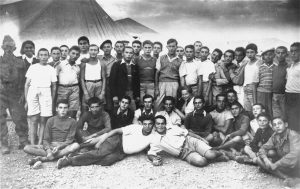
Lastly, we are revisiting Iran’s political turning point during World War II through the book Tehran Children by Mikhal Dekel, whom Martine Benoit interviewed for K. She investigated the traces of a story that is both personal and universal: that of her father, one of the many Polish Jews who, fleeing the Shoah, found refuge in Iran. Tracing this journey of survival – from Poland through the USSR, to the rescue operation that led them to Tehran and finally to Mandatory Palestine – Dekel examines the unique fate of these refugees forgotten by the memory and history of the Shoah.