The Long Escape of the “Tehran Children”: From Poland to Palestine
Interview with Mikhal Dekel
A little-known chapter in the history of Eastern European Jews threatened by the Shoah, the escape and rescue of many Polish Jews to Iran is the subject of Mikhal Dekel’s book, "Tehran Children". In this interview with Martine Benoit, Dekel recounts this story and her investigation into her father’s past, recalling the shifting dynamics of relations between Iran and the Jewish community.

Martine Benoit: Your book is about history, memory, trauma, and silence; it is also a form of “personal history”—the account of the journeys you undertook in your father’s footsteps, from Poland to the “special settlements” as a forced laborer in the Arkhangelsk region, in the far north of Russia, then to the Soviet republic of Central Asia, Uzbekistan, and finally to Tehran and British Mandate Palestine. Your book is a comprehensive work that draws attention to a hitherto little-explored aspect of Holocaust research: the flight—and rescue—of the largest group of Polish Jews to have survived the Holocaust. And this decisive period—their stay of several months in Tehran—is a little-known chapter in the history of Jewish communities threatened with extermination. A rescue significant enough in your eyes that you chose to title your book Tehran Children.
Mikhal Dekel: This book is about my father and me, but it is also about a quarter of a million Polish Jews who survived in a similar way; my father’s story is therefore both unique and universal.
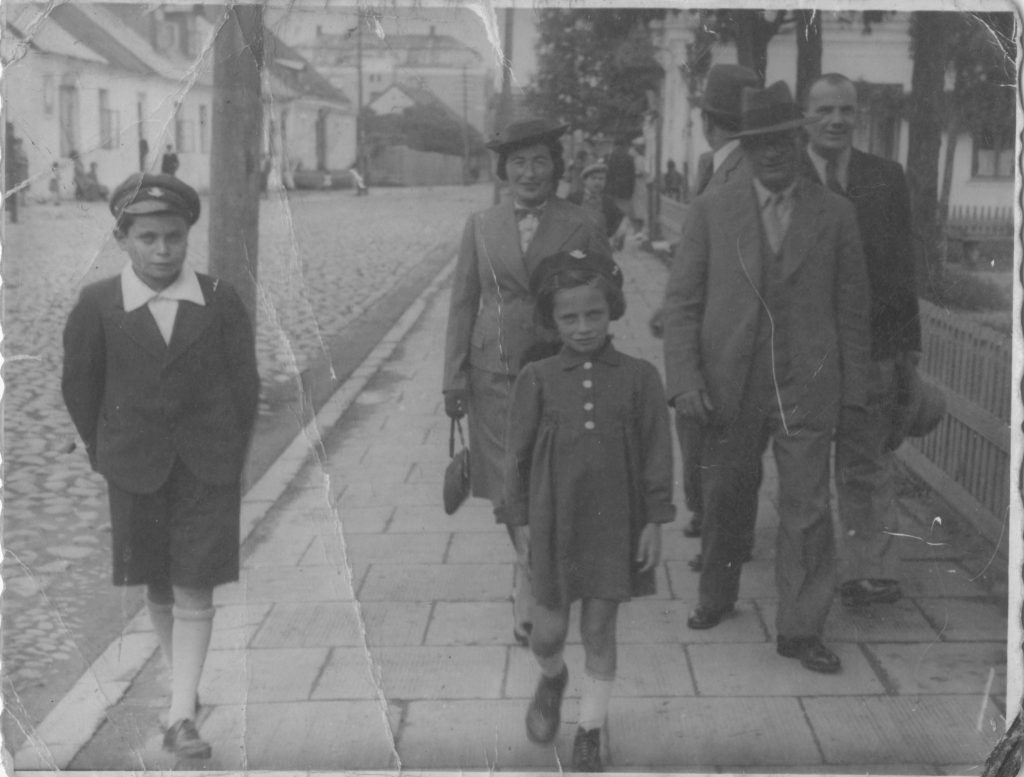
My father, Hannan Teitel, was born into a well-to-do family in the town of Ostrów Mazowiecka, located between Warsaw and Białystok. In 1939, it was a town of about 15,000 people, and his family were brewers.
The Teitels were part of a very large extended family. In 1939, seeing what was happening, they decided to flee toward the Soviet border. They fled eastward under German bombardment, crossed the Soviet border, and arrived in Białystok. They stayed there for about six months, then decided to return to German-occupied Poland. My grandparents, like many others, decided to go home because they realized they had no future: as “capitalists,” they didn’t believe at all in what the Soviet Union stood for; and more importantly, I believe, they did not think they could survive there. The refugee crisis worsened, with shortages of food and shelter along the border, while the Soviets confiscated food, property, and means of subsistence.
My grandparents therefore refuse Soviet passports—the Soviets are trying to convince these refugees to renounce their Polish citizenship to become Soviet citizens—and, like thousands of others, they are arrested by the NKVD and put on trains heading east. They travel in sealed cattle cars, unsanitary, and people died during the journey. They were not told where they were going. They were sent to different regions.
The Soviet Union had more than 400 major “special settlements” and Gulag camps, each with dozens of satellite stations. People were sent to Siberia and Komi. My family was sent to Arkhangelsk. After a fourteen-day journey, they were taken off the train at a small station called Yamsa, in a settlement that would eventually house more than 1,200 Polish Jews. My grandparents and my father (who was then over 13 years old and had to work) became Soviet laborers, cutting down trees to build Soviet railroads. They remained there for fourteen months, under very harsh conditions.
MB: After fourteen months, in June 1941, the Wehrmacht invaded the Soviet Union during Operation Barbarossa, and in August 1941, the Soviet Union and the Polish government-in-exile signed a treaty; your father and his family were released and left for Central Asia, to Samarkand, in Uzbekistan. But one can’t really call it a liberation…
MD: No, it wasn’t a liberation, and I don’t think they experienced it as such. The war between the Soviets and the Germans was just beginning, and it was chaos. Millions of Soviet citizens were evacuated from Moscow and St. Petersburg to Soviet Central Asia, for fear that these cities would fall into German hands. It was, in reality, a second deportation. They had no choice regarding their destination—typically a kolkhoz, a collective cooperative farm, in Central Asia.
My family, like all the others, left Arkhangelsk in a state of severe distress. They no longer had the resources they had when they fled Poland. They feared the advance of the German army. They traveled by cart, train, and on foot, first toward Kazakhstan, then toward Uzbekistan. The distance exceeded 2,000 kilometers. They arrive at the kolkhoz assigned to them, near Samarkand. The Uzbeks and Tajiks at the kolkhoz don’t know what to do with these people who have no food and are dressed in rags.
My family realizes they will die if they stay there, and in the middle of the night they flee the kolkhoz toward Samarkand. They sleep on the street until they find a sort of stable, where my grandparents will stay until the end of the war.
Later, aid from Jewish and Polish organizations in the West (primarily the Joint Distribution Committee) reaches Central Asia. The Anders Army, a Polish army in exile, was also formed, with the intention that it would fight alongside the Allies against Nazi Germany. Eventually, it was decided to evacuate the Anders Army from Central Asia to Iran, on the grounds that if it remained in the Soviet Union, the soldiers would starve to death and be unable to fight.
This was a window of opportunity in this story, and Jewish diplomacy—both that of the Joint Distribution Committee and the Jewish Agency for Palestine—and more specifically Moshe Shertok (later Sharet), head of the foreign affairs department in pre-state Israel, negotiated with the Polish government-in-exile, the Soviet government, and the British government to include about a thousand Polish Jewish children in the evacuation of Anders’s army, as a humanitarian gesture.
As a general rule, Jewish adults were not permitted to evacuate unless they were soldiers in the Anders Army, which presented families with a new dilemma: should they send the children alone down an unknown path, or keep them with them, exposing them to an equally uncertain fate? My grandparents decided to save their children, with the vague hope that they might reach Palestine, where they had distant relatives, though with no certainty. Their main goal was to get them out of the Soviet Union. The children set out as part of a group of about 100,000 soldiers from the Anders Army, their families, and other Polish Christian civilians. They traveled by train to Turkmenistan, then by ship across the Black Sea to the port of Pahlavi, and finally to Tehran.
Although there were Germans in Iran, including some Nazis and Nazi sympathizers, there was also a degree of flexibility and pragmatism that made it possible to evacuate refugees, including Jews, to Tehran.
In Tehran, the Jewish Agency for Palestine sought ways to gather and care for these evacuated Polish Jewish children, who had been scattered—often clandestinely—among Polish Christian children. They were brought together at the “Hebrew Children’s Home of Tehran”, remain in Iran for about four months (some longer) and, among other things, meet and receive assistance from local Persian Jews, as well as from Iraqi Jews who have also fled to Tehran. Eventually, Tzippora Shertok, the wife of Moshe Shertok/Sharet, travels to Tehran and, together with her husband, works to transfer the children from Iran to Palestine.
MB: Can you explain to me why the Anders Army was evacuated to Tehran? Why that choice?
MD: It was the most convenient choice for the Allies. In 1939, Iran was a neutral country with strong ties to Germany. After Operation Barbarossa, the Allies, fearing that Iranian oil might fall into German hands, invaded Iran, installed a pro-Western shah, and turned Iran into a hub for Allied activity, notably as the primary entry point for American war aid.
Although there were Germans in Iran, including some Nazis and Nazi sympathizers, there was also a flexibility and pragmatism that made it possible to evacuate refugees, including Jews, to Tehran.
MB: We can now talk about your journey: your book lies at the intersection of history and personal narrative; you worked on it for ten years—that’s a long time. What do you consider to be what I would call “key experiences” during the various trips you took in your father’s footsteps?
MD: Yes, there are two odysseys in this book: my father’s and my own. I in no way claim to have lived through my father’s odyssey. In fact, it’s very strange to write about such a perilous escape as an American academic, funded by an American grant, staying in nice hotels, when you know that your father was sleeping on the street just down the road. Despite everything, I tried to retrace part of my father’s journey. For example, I didn’t take a plane: I took a 29-hour train ride from Moscow to the region where I thought my father had been. I couldn’t recreate the abject conditions he faced, nor the fear and uncertainty, but I know what it’s like to be on an old train for 29 hours. It’s better than writing solely from a library!
My odyssey was physical (with the exception of Iran and Karachi, Pakistan, where I was unable to go), but it was also an emotional and intellectual journey. I grew up in Israel, in a generation that turned its back on the past. We had Holocaust Remembrance Day, but we didn’t study the Holocaust in detail. And people of my generation didn’t talk about it, and we didn’t ask questions, and we didn’t want to know. So when I started doing research, I moved very slowly, and always with the help of others, as if I needed help carrying that burden. It took me a few years to become fully immersed in this story; and then it became what mattered most to me. The journey was complicated because, when I embarked on it, there were still many gaps in the story. I didn’t even understand how my father had reached Iran, who exactly had brought him there, and no one could answer. I had to piece together the details, but also construct the narrative framework. That’s partly why it took so long, and why I had to travel to see things with my own eyes and consult so many archives around the world.
I grew up in Israel, in a generation that turned its back on the past. We had Holocaust Remembrance Day, but we didn’t study the Holocaust in detail. And people of my generation didn’t talk about it, and we didn’t ask questions, and we didn’t want to know.
It took me time, for example, to understand this simple idea: my father’s escape was very arbitrary. It could have happened differently; the choices could have been different—and that could have meant life or death, or simply an entirely different fate. Some transit points for my father were final destinations for others. Meeting these people along my journey was very moving, because I hadn’t imagined that someone could stay in Arkhangelsk, for example, have children and grandchildren there, and be Russian today. But in these places where Polish Jews were deported, a large portion of the current inhabitants are descendants of deportees. These are places that may have had 5,000 inhabitants before the war, and 100,000 afterward, due to the deportations. This gave me the impression that my identity was, in a way, very arbitrary.
Another surprise was discovering moments and acts of solidarity during my father’s journey—and experiencing them on my own journey. A very simple Uzbek family, farmers from the kolkhoz where my father’s family had been deported, welcomed me with extraordinary warmth: their grandparents had passed down the memory of these refugees. They said, “My father, my grandfather told me how they arrived, that they ate frogs because they were so hungry.” They didn’t necessarily refer to them as Jews. Many called them Poles. But despite everything, they still thought of them. They even had a small patch in their garden where they sometimes lit candles in their memory. It wasn’t commercial at all: I was the first descendant to come see them. It was very moving to feel that they shared my story and my pain.
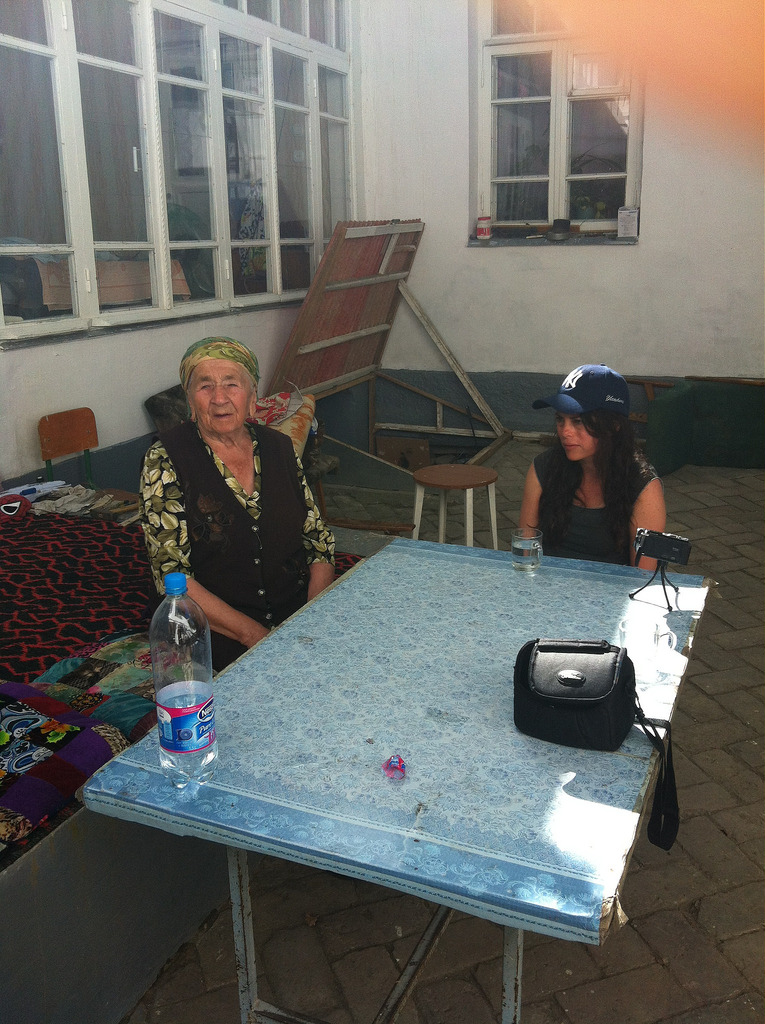
There were also difficult moments, when you feel the limits of others’ empathy—especially when there is a kind of competition of suffering. Sometimes I was surprised by the ignorance, in these remote areas, of what the Holocaust was. During an interview on a radio station in Komi, the host, a brilliant and intelligent woman in her mid-30s, asked me what I thought of Stalin. When I told her that, in my family’s history, Stalin was “better than Treblinka,” she replied, “What is Treblinka?”
MB: There is also a very important moment in your book when you describe the differences in fate between Christian Poles and Polish Jews.
MD: Yes. Both Christian Poles and Polish Jews were deported and went through this odyssey, but in different proportions (there were far more Jews among the exiles). Along the way, their fates converged, diverged, and converged again. Many Christian Poles made it to Palestine, and the Polish government-in-exile set up an “Information Center” in Jerusalem tasked with collecting testimonies from evacuated Polish refugees, including Polish Jews. When my father arrived in Palestine, he gave them a testimony that I was able to track down.
It was in Yiddish, which was strange, since my father spoke Polish, and 95% of the testimonies were in Polish, including those of the Jewish children. I tend to think that this choice of Yiddish came from my father, as a political act, a rebuke directed at the Polish center.
When my father speaks of his time in the Arkhangelsk colony, he recounts how Christian Poles and Jews cooperated, how they faced a common enemy. Later, in Central Asia, tensions between Jews and Poles increased, particularly over resources that Christians most often controlled. A hierarchy existed, and often, because Jews were not part of the apparatus controlling the resources, they did not receive them. We can see the difference between Polish Jewish children and Polish Christian children in the photos from Iran: the former appear significantly thinner and sicker. In Iran as well, numerous accounts describe altercations in the refugee camp between Christian boys and Jewish boys. Today, Poles claim that this violence was instigated by the Russians, but there is no proof of this. In Palestine, tensions are greatly easing, and cooperation between Polish Jews and Christians is very common.
MB: Why did you wait until your father’s death to begin researching his life?
MD: I think the answer is partly psychological, and partly cultural and political. My father was a quiet and reserved man. I believe he carried a lot of pain and resentment within him, and as I’ve said, he never spoke of his wartime experiences. He went through the horror, his life was completely shattered, and then he had to carry on in silence, like all the others who suffered the same fate. So I believe that intuitively, without consciously thinking about it, I sensed that my father’s past was off-limits. We had a complicated relationship. I’m the eldest, the firstborn; we were very close: we did things together, we went to the beach together, I loved him, but I also feared him, and I feared for him. Anyway, as I said, I grew up at a time and in a place where the Holocaust was far from my mind. It took me decades to come to terms with it, and by the time I did, my father was no longer there. He died young, at 66.
When the train carrying the children arrived in Palestine in 1943, they too were described in the newspapers as survivors. Later, they seem to have lost that “status” and become “the lucky ones.”
More generally, I believe there’s almost a convention of sorts: in memoirs dedicated to parents, we always write too late. We write them when we can no longer ask our parents questions, and we begin to study them, to get to know them, to recreate an image of them that we can hold onto.
MB: Your book deals with a little-known story of the Holocaust—or, more precisely: the story you tell has not been told as a story of survivors. And yet, this is the largest group of Polish Jews who survived: there were 3.5 million Jews in Poland before the war, 10% survived, and of those 10%, 250,000 survived in Central Asia, the Middle East, and India. This largest group of survivors was not recognized as survivors: they were not included in the 1952 reparations agreement between Israel and Germany; they received no reparations; they were not commemorated and have not been studied. This story has not been told as a story of survivors. They were “the lucky ones.”
MD: I think my grandmother considered herself a survivor of the war. When the train of children arrived in Palestine in 1943, they too were described in the newspapers as survivors. Later, they seem to have lost that “status” and become “the lucky ones.” The Germans did not recognize them as survivors because they had not been under Nazi occupation, which is absurd: they did not flee to the USSR for a vacation… Their story has not been commemorated nor, for the most part, incorporated into Holocaust museums.
Perhaps because their experience has not been formally recognized, they do not refer to themselves as survivors, but as “the lucky ones.” When you are not recognized, you tell yourself a story you can live with: a lighter version. When I asked these people to tell me about their journey from the Gulag to Uzbekistan, they would say, for example: “My father knew I had asthma, so he chose to take me to a warm place in Central Asia”—they didn’t speak of deportation or famine; they told a story of initiative, of choice, of caring parents. They said they were among the “lucky ones” compared to those in the extermination camps. But I know who my father was, and I know that my grandmother, who lived with us, would scream every night in her sleep. I believe she was haunted by nightmares her whole life.
Perhaps my book helped a little to break that silence. After its publication, many people wrote to me—and continue to do so—to tell me that their parents went through the same ordeal, and that they are grateful to have discovered this past that they neither knew nor understood until then. This is perhaps the most moving and rewarding aspect of this writing: I was able to give people a family history they didn’t have. One of them, the journalist Ruth Franklin, whose grandparents had been in Central Asia, even wrote in an article in the New York Review of Books that it was as if a complete stranger had answered her most intimate and unconscious desires. I am grateful for that.
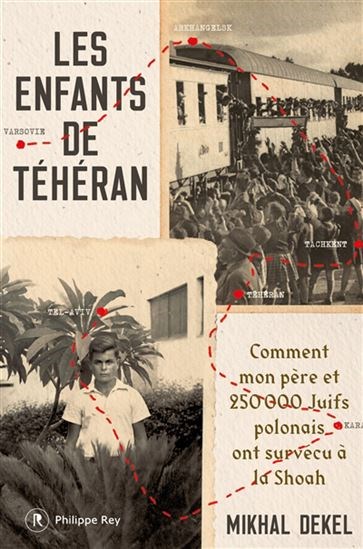
MB: I wanted to ask you to comment on the different titles of your book in various languages. The first English title is: Tehran Children. A Holocaust Refugee Odyssey — then: In the East – How My Father and a Quarter Million Polish Jews Survived the Holocaust; the German title: Die Kinder von Teheran – eine lange Flucht vor dem Holocaust: the key word is “Escape.” The Hebrew title emphasizes the luck: The Lucky Ones: How my father, the Tehran Children, and a quarter million Polish Jews survived the Holocaust. And the French title: Les Enfants de Téhéran – Comment mon père et 250 000 Juifs polonais ont survécu à la Shoah — which emphasizes survival.
MD: My publisher, W.W. Norton, wanted the book to be presented as a serious work of nonfiction on this little-known chapter of history, not as a memoir. Then the book came out, and I gave many lectures where people were mostly interested in me, my father, and my relationships with the people I traveled with. The publisher realized that the book’s strength lay in the blend of the personal and the academic, and we decided to change the title and add “my father.” Otherwise, I wasn’t very involved in the titles of the translations. Finding the right title for this book is difficult. It covers many topics, many places, and many issues. How do you encapsulate that in a title? The name “Tehran Children” misses the fact that the book also deals with Central Asia, where most Polish Jews remained. And who exactly are they? Refugees? Exiles? Survivors? In Hebrew, the term “ניצול שואה” (nitzol Shoah, Holocaust survivor) has largely been replaced by “שורד” (sored), which lacks the triumphant connotations of the word “survivor.” That seems more appropriate to me.
MB: I like the German title, with the term “escape”, a long escape: I find that the German word Flucht sums up your book very well.
MD: You’re right. The book is due to be published in Spanish next; perhaps I should suggest they use that term.
MB: Mikhal, you wrote this book, and we know what’s happening in Iran. How do you react to what’s happening in Iran today?
MD: For me, it is tragic that Israel and Iran have reached this point of direct and very violent conflict, because I have warm feelings toward Iran, which was the first place where my father found refuge, where he was able to eat bread, and where he was treated with humanity. One can also consider Iran during World War II as the “starting point” of relations between Iran and Israel: it was the first meeting place between the Jews of Palestine and the Muslims (and Jews) of Iran, and from there, relations continued until the Islamic Revolution of 1979. Jews from Palestine first arrived in Iran in late 1941, after the Allies invaded Iran and took control of the oil fields in Abadan. Before this invasion, Iran was a neutral country that maintained close ties with Germany. It was home to pro-Nazi Shiite clerics, racist publications, and thousands of German citizens working in Iran, many of whom identified as Nazis. After the invasion, these German citizens were expelled from Iran and replaced, in part, by Jewish engineers and other workers whom the British sent from Palestine to the oil fields of Abadan. When my father and other Jewish refugees arrived in Tehran, some of these workers began to help them clandestinely, remaining in Iran even after the refugees had been evacuated. Over time, ties were forged with Shah Reza and certain segments of the population, ties that developed and strengthened after the establishment of the State of Israel and continued into the 1960s and 1970s. On the eve of the Islamic Revolution, Iran was home to thousands of Israeli engineers, doctors, lawyers, construction workers, and agricultural experts, as well as an Israeli embassy, Israeli schools, daily direct flights between Tehran and Tel Aviv, and even an Israeli film festival. In 1978, one of these films was “The Raid on Entebbe” (1977), screened on the walls of the embassy. Eyewitnesses recount that the audience wept when Yoni, Benjamin Netanyahu’s brother, was shot on screen. A few months later, all embassy staff and other Israeli workers were evacuated from the country overnight.
Thus, the two facets of Iran we see today—the hardline regime and the liberal population fighting it—were already present in the war-torn Iran I describe. Ordinary people show kindness toward refugees, some leaders demonstrate pragmatism, and there is none of the rigidity found, for example, in wartime Iraq. But there are also tensions, a latent danger within this society, and the sense that things can change quickly. My father was fortunate enough to experience, at least at the beginning of his stay in Tehran, the more moderate, open, and flexible side of Iran. I hope that this side of Iran will prevail in the current conflict. And if it does, I hope that its rise will help moderate Israeli extremists. Beyond bringing a forgotten history to light, if my book contains a “lesson,” it is that enmities can be highly situational. The many groups I discuss in this book—Polish Jews and Christians, Russians, Uzbeks, Tajiks, Iraqis (both Jewish and Muslim), Persians (both Jewish and Muslim)—sometimes find themselves in deep disagreement with one another and sometimes collaborate, if only for the sake of shared interests. We are not in such a situation at present, but in the future, we will need to create the conditions for maximum collaboration and minimal friction. My book shows that this is possible.
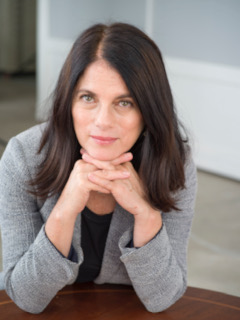
Mikhal Dekel