#274 / Editorial
On April 8, Rav Eliahou Abitbol, founder of the Strasbourg Students’ Yeshiva and a unique figure in the French Jewish community, passed away. In his memory, we are publishing a text written in 1998 by Peter Honigmann, the result of a series of interviews conducted with the rabbi and some of his closest students to trace the origins, transformations, and paradoxes of the “anarcho-orthodoxy” characteristic of the microcosm established by Eliahou Abitbol. Amid the enthusiasm sparked by the call for a return to the texts, away from community institutions, the contours of a moment of uncertainty began to emerge, one ripe for insurrectionary fervor. This is the story of a generation of young Jews who feel somewhat lost, disillusioned by their parents’ petty-bourgeois Judaism, and seeking to reclaim a vibrant part of their collective identity after the erasure of their origins.
Related articles
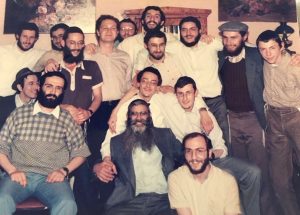
Rabbi Abitbol, May 1968, and the Invention of a Talmudic Counterculture
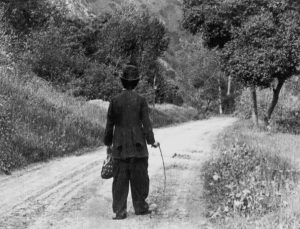
Czaplin
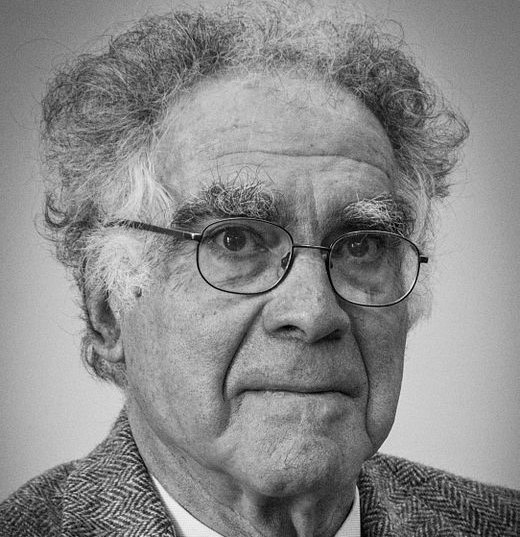
Interview with Carlo Ginzburg
Returning to Góra Kalwaria, Adolphe Nysenholc parents’ hometown before the Shoah swallowed them at Auschwitz, the Belgian writer and Chaplin scholar finds himself standing across from his father’s former house, face to face with a sign pointing toward a village called “Czaplin” – a near-homophone of the comedian who shaped his life’s work. What begins as a near-comic etymological puzzle unspools into something far deeper: a meditation on the half-erased traces of a vanished world, on a mother’s voice remembered only as melody, and on the strange consolations memory invents to fill the silence left by genealogies with no names, no faces, no graves.
Tribute to Carlo Ginzburg
With the passing of Carlo Ginzburg, a revolutionary voice in historical scholarship and a leading figure in European intellectual life has suddenly been taken from us. We would like to be able to remember and revisit every one of the countless shifts he brought about in his discipline. Yet on every specific issue, the act of remembrance would be overwhelmed by the challenges of the present, which he never shied away from. Thus, a tribute to him makes sense only if it reconnects with his singular vitality, recapturing the tone of his passionate and anxious questioning of what we are becoming, as a trace of that unique way of questioning reality that his commitment to the historian’s craft had given rise to.
Time and again, in his fields of medieval and modern history, but also whenever current events called for it, he had encountered what is commonly called the “Jewish question,” in both its negative and positive forms – in the guise of murderous antisemitism, which ran through his family history, as well as in the form of the mental constructs that the history of this “strange people,” as Georg Simmel once described them, had never ceased to produce. On this last point, namely the impact of Jewish history on history at large, he had developed a keen interest. Similarly, on the subject of antisemitism, its driving forces, its twists and turns, and its metamorphoses, many of his writings offer insightful perspectives. With regard to Zionism and Israel, however, condemnation had long since prevailed over loving fascination for him. His visceral anti-fascism, a legacy just as powerful as his resistance to antisemitism, colored his perception of the Israeli situation so intensely that his indignation toward the far right in power had turned into indomitable anger, the kind where condemnation runs the risk of preempting judgment. We had already confronted this pitfall even before October 7, in the interview he had granted to Avishag Zafrani for K. But publishing it in its entirety seemed to him, as it did to us, a sign of our shared refusal to let the effort to understand the chaotic conditions of Jewish survival come to a halt, in a history where the most serious internal crises sometimes arise.
In tribute to the great historian that he was, we are republishing this interview this week. In it, we hear his voice, right down to the thunder with which it would sometimes merge.