Rabbi Abitbol, May 1968, and the Invention of a Talmudic Counterculture
The Strasbourg Student Yeshiva
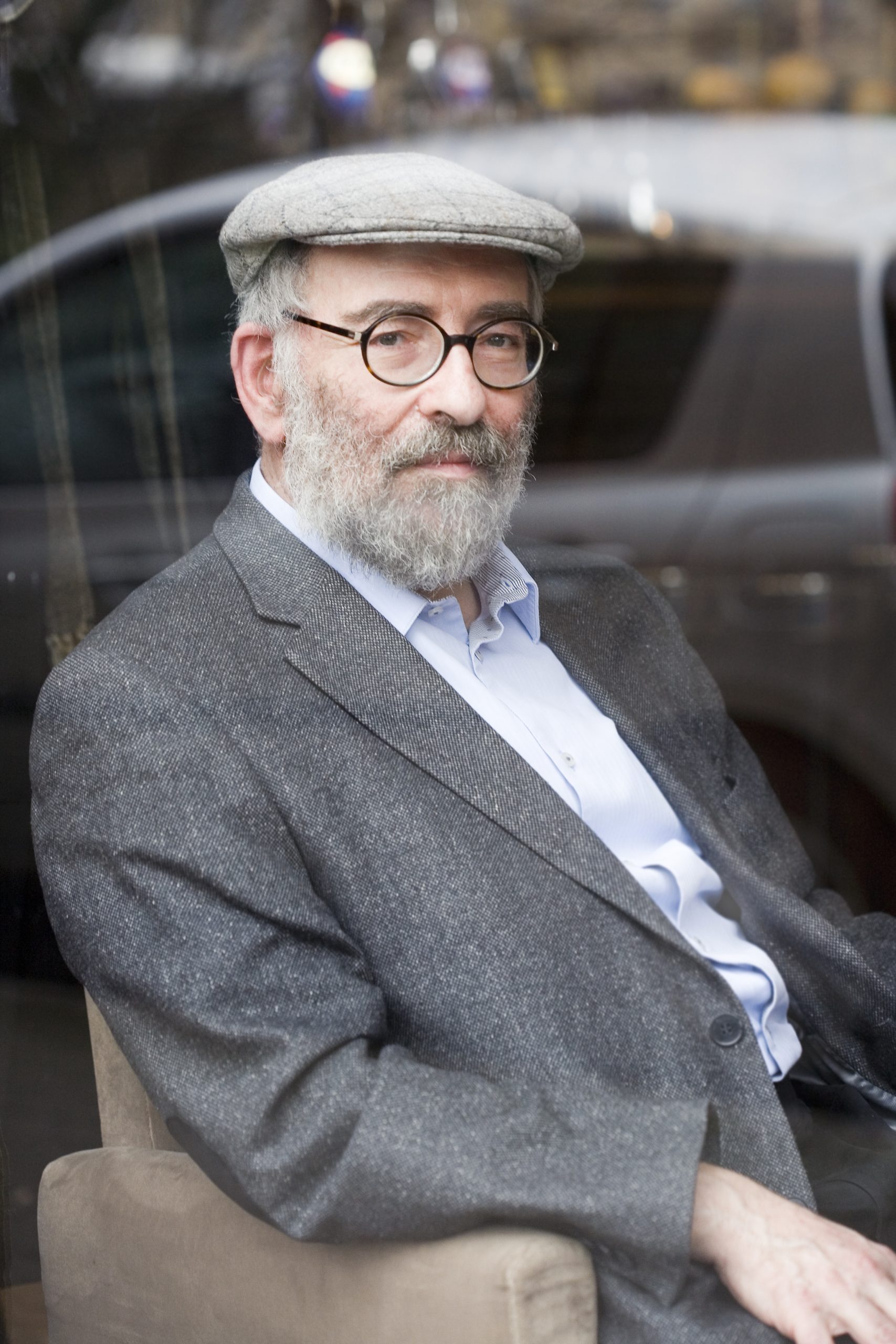
On April 8, Rav Eliahou Abitbol, founder of the Strasbourg Student Yeshiva and an unconventional figure in the French Jewish community, passed away. By tapping into the rebellious spirit of a generation weary of their parents’ petit-bourgeois Judaism and by recruiting from far-left circles, he catalyzed - beginning in May 1968 - a return to Talmudic study that set a trend. In 1996, Peter Honigmann, who had joined the Students’ Yeshiva in 1984 from East Berlin, conducted a series of interviews with the rabbi and some of his closest students to trace the origins, transformations, and paradoxes of the anarcho-orthodoxy unique to the microcosm established by Eliahou Abitbol. Written in the narrative present tense, we reproduce the text here in its original form.
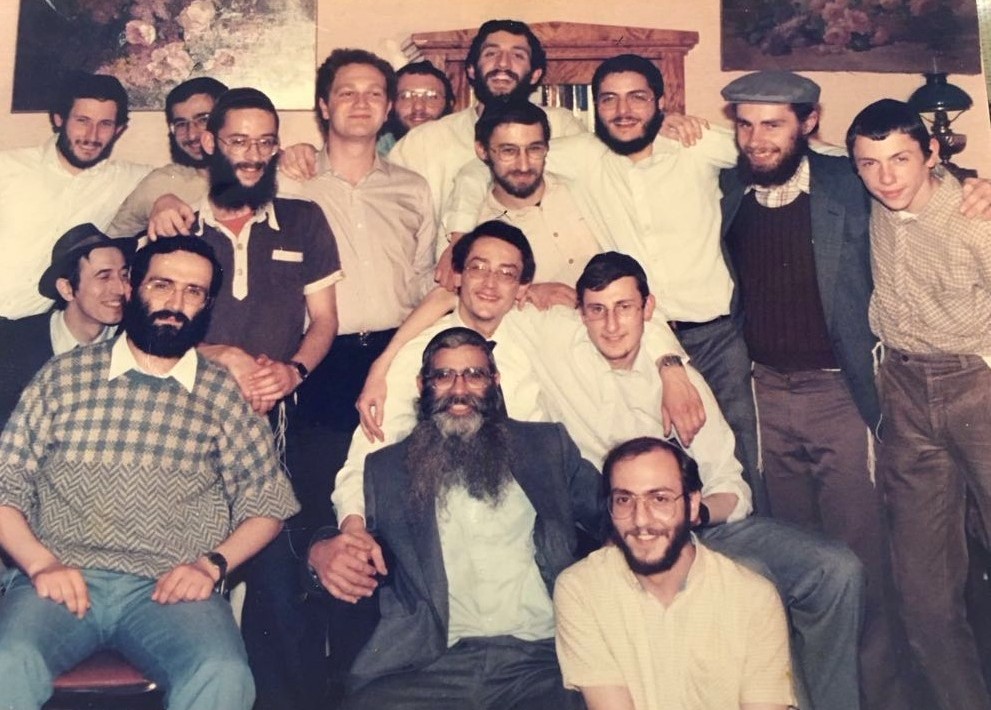
Writing the history of the Strasbourg Yeshiva for Students first raises a problem of terminology. The more one reflects on this institution, the less one knows which term to use to refer to those who shaped the life of the yeshiva. Are they students, ba’hurim1, Rav Eliahou’s pupils, or members of an informal community? Each of these terms describes a part of reality, but none of them can be unequivocally used to refer to that same reality in its entirety.
In Strasbourg, this problem is circumvented by simply referring to “the people of the Yeshiva.” This terminological difficulty is by no means a mere matter of wording; it expresses the full tension inherent in this institution, in this group, and in its unique mode of study and thought.
The emblematic figure of the Strasbourg Yeshiva is undoubtedly Rav Eliahou Abitbol. Born in Morocco, he earned his high school diploma at the Yeshiva of Aix-les-Bains in the 1950s. Founded immediately after the war (1945), this yeshiva was practically the first institution of Talmudic studies in post-French Revolution France.
Furthermore, Rav Eliahou was also steeped in the more philosophical discourse prevalent at the École d’Orsay, the study center affiliated with the Jewish Scouts, a Jewish youth movement that served as a major catalyst for postwar French Judaism. During his six-month stay, it was above all his teacher, Léon Achkenazi, who impressed him the most.
The high school student’s desire – then quite unusual in his circle – to connect the Torah and philosophy would shape the rest of his journey. After earning his baccalaureate, he initially wanted to study philosophy. He hoped to acquire the intellectual tools that would enable him to express the truth of Judaism in a universal language.
The need to first familiarize himself with Jewish sources ultimately prevailed, however. He did not go to university but instead traveled to Israel, to Rabbi Wolbe’s yeshiva in Beer Yaakov. He remained there for five years and spent an additional three years deepening his knowledge at the Hazon Ish Kollel in Bnei Brak.
Even today, Rav Eliahou lives with the feeling that he sacrificed his plan to study philosophy in order to master the Talmud. His interest in engaging with the great thinkers, from Spinoza to Heidegger, has, however, remained intact.
In the meantime, he had adopted the Lithuanian method of Talmud study, an entirely rationalist system of thought that seemed to him powerful enough to affirm the traditional values of Judaism in the face of the Enlightenment (Aufklärung); and he was driven by a compelling desire to bring this discourse to France.
He had obtained the Semi’ha (rabbinical diploma) in Israel and thus arrived with full legitimacy at the Kollel2 in Strasbourg in 1965. This Kollel had been established only two years earlier to counter the risks of assimilation among North African Jews arriving en masse in France since 1962.
It seems paradoxical, but Rav Eliahou, who was himself originally from Morocco and belonged to an institution that had been created for Sephardic immigrants, was initially interested only in assimilated Ashkenazi Jews, mostly from Alsace, though some were also from Eastern Europe.
Immigrants from North Africa were not his target audience. He knew from experience just how strong the thirst for Western culture was. Anyone who leaves the Mellah for France dreams only of Paris, and all their efforts are directed toward the same goal: finding the gateway to Western culture.
From this perspective, the Torah was synonymous only with intellectual poverty and archaism. Judaism was now reduced to nothing more than superstitious traditionalism and a sense of community based on ethnic considerations. The Sephardic masses had no interest in Rabbi Eliahou, and he returned the favor. It was a mutual lack of interest.
From his perspective, the Ashkenazim were more open to listening to him. Their encounter with French culture had already taken place several generations earlier. Among this group, Rabbi Eliahou could find young people receptive to interpreting traditional texts through the lens of Lithuanian rationalism. In their families, most had known Judaism only as a process of disintegration. Outwardly, they still observed certain customs and ceremonies, did not eat pork, ate matzah on Passover, and fasted on Yom Kippur. None of this, however, carried much real significance, and they did it more out of piety than out of conviction.
Having grown up in such an environment, they were still sufficiently steeped in it to retain a sense of belonging, and the point of no return had not yet been reached. If, at the same time, doubts began to arise about Western values, or if even a slight unease crept into the minds of these students regarding their parents’ way of life, then Rabbi Eliahou’s words found a receptive ear.
Outwardly, we still observed certain customs and ceremonies; we did not eat pork, we ate matzah on Passover, and we fasted on Yom Kippur. None of this, however, was taken very seriously, and we did it more out of piety than out of conviction.
Beginning in the fall of 1965, shortly after his arrival, he began giving evening classes for Jewish students, to which he added Shabbat classes and summer seminars. After two years, he had gathered a sufficiently large and committed group of followers around him to found, in September 1967, the Yeshiva for Students from France.
Rabbi Eliahou left the Kollel and decided to devote himself entirely to the students. He was able to count on the help of Rabbi Klapisch, whom he knew from Beer Yaakov. The yeshiva secured its first premises in a student apartment on Rue des Hallebardes, which was filled with study desks and beds. But they quickly felt cramped in the apartment’s two rooms. Just a few months later, in early 1968, the yeshiva moved into a larger apartment on Boulevard de la Victoire, right next to the university’s main building. Rav Gabriel Toledano then joined the yeshiva. Like Rav Eliahou, he had earned his baccalaureate in Aix-les-Bains and then studied at a yeshiva in Israel. Rabbi Toledano became the Talmud teacher for those among Rabbi Eliahou’s followers who had decided to stop their university studies to devote themselves solely to limud3. However, he left Strasbourg after a few years and returned to Israel. In 1970, the yeshiva had to change its address once again. It then moved into the building on Allée Spach, at the foot of the Council of Europe, where it remains to this day.
It is difficult to quantify the “impact” of the yeshiva, but the expansion of its successive premises, as well as the growth of its faculty, are indicators of its successful development.
Within the yeshiva, a core group of highly motivated young men had formed. Among them were Jean-Jacques Levy, Sim Bloch, Daniel Epstein, Sam Gottfarstein, Guy Spingarn, Alain Levy, Henry Kahn, and Alain Kaufman. These names alone clearly illustrate the purely Ashkenazi character of the first group of students.
Under the influence of Rav Eliahou, most of them abandoned their university studies or put their professional careers on hold to devote several years of their lives solely to the study of the Talmud.
The radical nature of these upheavals was highly controversial. It did not align with the traditional views of the Jewish establishment. It worried parents, particularly because it jeopardized the financial livelihood of those involved.
Rabbi Eliahou, however, has every reason to be proud of those who made limud their life’s purpose: a significant number of the students mentioned above have become renowned teachers within French-speaking Judaism.
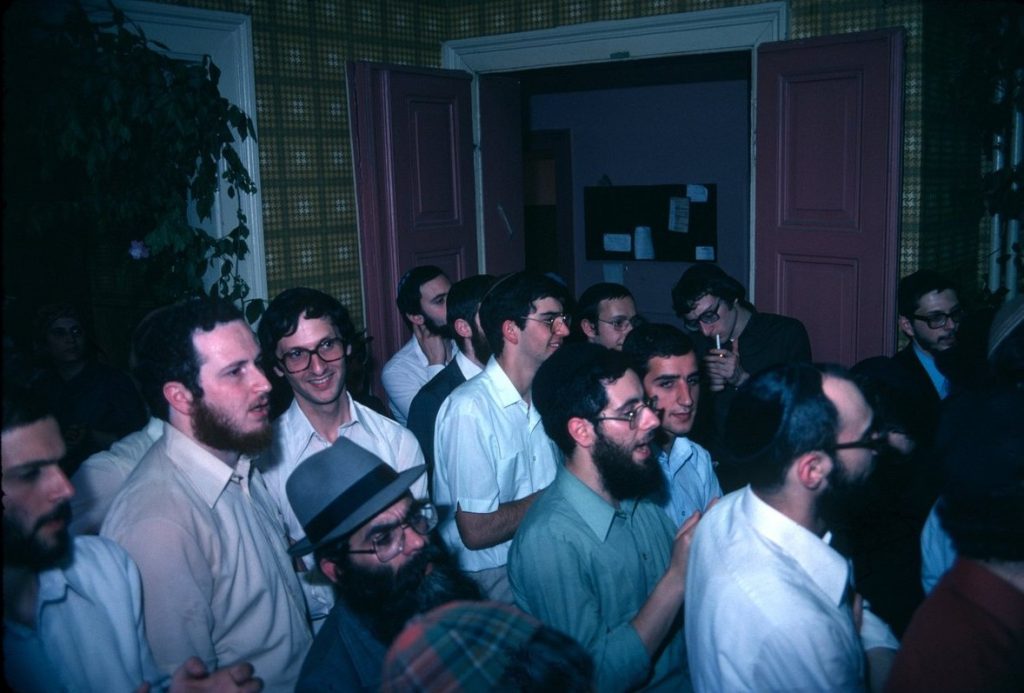
The yeshiva in Strasbourg, however, was not composed solely of full-time students. There were always people there who studied intensively while pursuing university studies or working a job on the side.
It is interesting to note that two types of professions predominated there: doctors and teachers. Alongside them were also a few merchants and accountants, but representatives of other professions typically practiced by Jews were notably absent: neither artists, nor scientists, nor lawyers, nor journalists wished to commit themselves long-term – in significant numbers – to the yeshiva community.
The more a profession was underpinned by a certain “worldview,” the more the combination of professional life and limud would lead to a split existence that was difficult to bear.
The life trajectories of those in the yeshiva circle show that sooner or later a choice had to be made. If limud became a serious pursuit and was accompanied by genuine commitment, professional interests were then reduced to the mere concern for making a living (parnassa). If one’s profession was conceived as a vocation, limud was reduced to a luxury hobby. For a community that held limud up as an essential value and was not content with mere observance of ritual practices, the concept of Torah im-dere’h-eretz was bound to remain a pipe dream.
Under the influence of Rav Eliahou, most students abandoned their university studies or put their professional careers on hold to devote several years of their lives solely to the study of the Talmud.
Those who, over the years, joined the yeshiva unanimously attest that it was not the practice of the mitzvot, but the world of Talmudic study that they discovered there. When the exclusive study of the Talmud proved impossible, they would fall back on a profession that would encroach as little as possible on what was essential. In this case, it is not simply a matter of a difference in content, but also of the time devoted to these secular occupations. To that end, professions such as teaching or medicine were best suited to those who wanted to devote significant time to limud while skillfully juggling their professional schedules without their incomes suffering unduly.
Since most of Rav Eliahou’s students were already well into very different career paths, it became urgent to adapt these established paths to the new demands of their passion for limud. The simplest way to scale back ambitious and potentially fulfilling career plans was often to shift from scientific or artistic vocations to teaching careers.
Other forms of convergence of interests, however, also emerged. For example, in 1980, a series of medical dissertations were defended that focused primarily on evaluating the ethical value of modern scientific advances through the lens of Jewish tradition: contraception, abortion, assisted reproductive technology (ART), organ donation, transplants, etc.4
Through this work, Rav Eliahou’s students were able to demonstrate to the academic community just how fruitful it could be to confront the most modern social issues with traditional Jewish texts. The choice of these themes also allowed them to channel the energy invested in these final-year projects into their limud.
However, such practical solutions could not always be developed. At times, dedication to the Torah came at the cost of significant professional sacrifice. Generally speaking, the greater the progress made by a newcomer to the yeshiva, the greater the sense of accomplishment and pride.
Rav Eliahou’s greatest strength lay in his skill at recruitment. Like no other, he knew how to harness the rebellious atmosphere of the May ’68 student movement.
In addition to Talmud classes, dinner-debates were organized at the Cité Laure Weil, the headquarters of Strasbourg’s Jewish students, focusing on the relationship between Judaism and the Revolution, Marxism, Trotskyism, etc.
Unlike well-established Jewish institutions, Rav Eliahou was not afraid of contact with Jewish revolutionaries, and even their support for the Palestinian cause was no obstacle for him. He himself regarded Zionism as merely one of the idols of a Jewish modernity that needed to be thoroughly questioned. The urgency of rethinking all the fundamentals of life to which this rebellious youth aspired—that was something he could embrace.
Moreover, he found in the language of the Revolution the same radicalism and absence of preconceived notions that seemed to him to be the hallmark of Talmudic power, as he had experienced it in Bnei Brak.
Unlike well-established Jewish institutions, Rav Eliahou did not shy away from contact with Jewish revolutionaries, and even their support for the Palestinian cause was no obstacle for him.
From 1968 to the present (1998), Rav Eliahou’s success has rested above all on the fact that he never sought to present his audience with ready-made truths.
The entire purpose of his very long lectures is to encourage critical thinking. He does not want to smooth things over; he wants to restore their full roughness. He goes to great lengths to prevent a quick and easy reading of the texts. He refuses to accept simple answers and even more so to provide them. His world is one of paradox, which is difficult to grasp. The essence of his work consists in dismantling all certainties acquired with minimal effort. This is what always led him to engage in dialogue with the Left.
These contacts went far beyond the strict framework of May ’68: in the 1970s, Rav Eliahou became close to the Cercle Gaston Crémieux. After an initial lecture, he traveled to Paris every two weeks to teach Talmud classes and later continued this work within Maoist circles. Such meetings and classes subsequently took place in other cities, including Nancy, Lyon, Besançon, and Brussels. This was a period during which Rav Eliahou traveled constantly. Wherever he went, he gained new recruits, and the yeshiva truly became a project reaching out to the entire French-speaking world. Over time, students from countries where English, German, Russian, or Spanish was spoken joined the yeshiva, and it even became a haven for some Israeli emigrants.
With Benny Levy, it was a leading figure of the far left who arrived at the yeshiva in 1984. Not only had he been, for years, the legendary leader of the Maoist-inspired The Proletarian Left, but as Sartre’s personal secretary and collaborator, he was imbued with the prestige of the great philosopher. It was as if Sartre himself had just arrived at the yeshiva, and his arrival caused a considerable public stir. A three-page article devoted to Benny Levy’s transformation appeared in the French newspaper Libération. The American Jewish journal Commentary published a lengthy interview with him. All of Strasbourg was proud of this surge in notoriety; whether one was for or against it, this media success left no one indifferent. It was also a significant event for the Yeshiva community. Everyone had, to one degree or another, sympathized with left-wing movements. Even if only a minority had actually been actively involved, everyone had already taken part in one demonstration or another. In fact, when Benny Levy joined the yeshiva, it felt like ordinary soldiers standing at attention as the general reviewed his troops. For many, this event served as a justification for their own life choices.
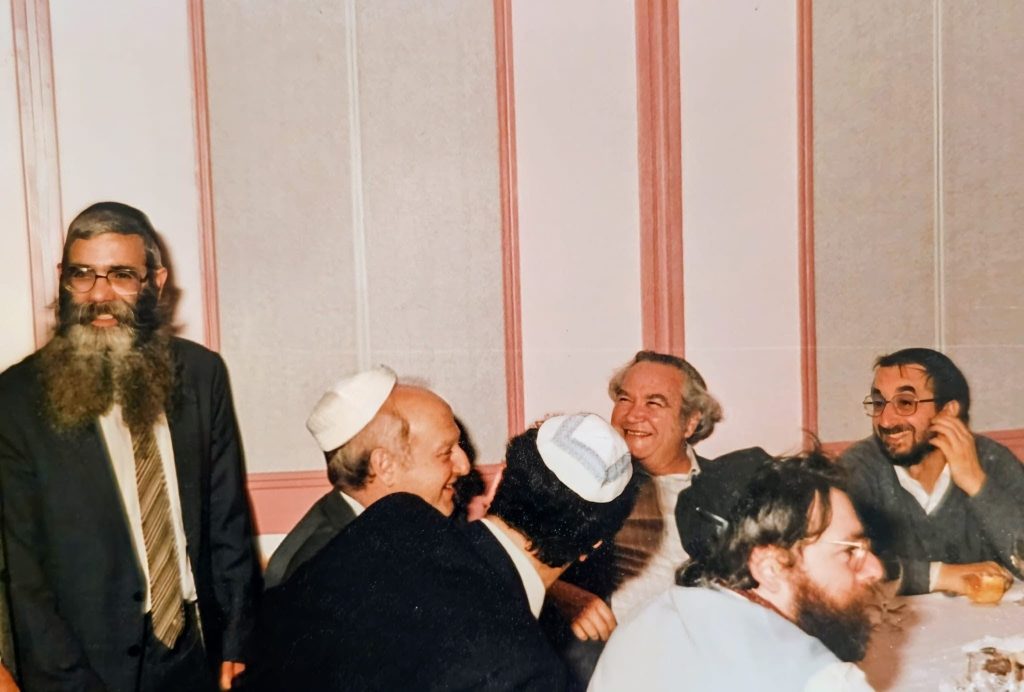
At the yeshiva, there was no question of strict rules. Rav Eliahou had understood that the total absence of coercion led far more effectively to personal transformation than a petty exercise in control and domination. Outwardly, anarchy reigned at the yeshiva. Even regarding daily prayers, this apparent laxity was in truth the result of a completely deliberate choice. It was out of the question for anything related to ritual and formalism to take on too great a role. The only essential requirement had to remain that of limud.
Rabbi Eliahou did everything in his power to secure complete independence for his limud. He felt that any form of integration into an institutional framework was suffocating. In its early days, the yeshiva had been supported by the Strasbourg Jewish Community and the French United Jewish Social Fund (FSJU). But after a few years, he managed to develop his own funding system. Rabbi Eliahou succeeded in explaining to government agencies that the yeshiva provided a form of continuing education, namely that the in-depth study of the Talmud could have beneficial effects on the practice of medicine or teaching. The Institute for Training and Cultural Activities (IFAC) was founded, and from then on, the yeshiva’s funding was secured through public funds.
Although Rav Eliahou thus managed to avoid dependence on well-established Jewish institutions, it would be unfair to view him as one of their enemies. He certainly did everything in his power to avoid being personally subject to community politics, but there was never any question of launching a frontal attack on the established order or attempting to destroy it. It is in this that he differs from any form of left-wing activism. Independence was enough; there was no alternative agenda to be imposed through violence or trickery.
Outwardly, anarchy reigned at the yeshiva. It was out of the question for anything related to ritual and formalism to take on too great a role. The only essential requirement was to be that of limud.
This approach later enabled some of his students to assume key positions on the teaching staff of the Jewish community in Strasbourg. The yeshiva’s influence on institutional Judaism even extended beyond this framework. Many prominent figures in the French rabbinate studied for a time with Rav Eliahou. Among them were the Chief Rabbi of Metz, Marc-Olivier Guedj; the Chief Rabbi of Lyon, Richard Werthenschlag; and, last but not least, the Chief Rabbi of France, Joseph Sitruk.
Rabbi Eliahou is wary of power and its institutional structures; it would be impossible for him to take on such roles. He is not only wary of the power of others; he is wary of power itself, including his own.
Over time, the students’ yeshiva became institutionalized in its own right, and it is easy to see why this model spread. Students from Rabbi Eliahou’s inner circle exported the model to other cities: Alain Levy to Toulouse, Guy Spingarn to Lyon, and Gérard Zyzek to Paris. But it would be a mistake to think that these branches were controlled from Strasbourg, given how much Rabbi Eliahou detests institutional power. Each of these expansion projects was the result of personal initiatives and individual abilities to forge local connections, even as the Strasbourg yeshiva continued to serve as a source of inspiration. The desire to step out of the master’s shadow after long years of study was at least as strong as the desire to emulate him.
Over time, a new problem arose: those who had returned to the fold knew nothing beyond the students’ yeshiva. The more time they spent studying and delving deeply into the Talmud, the more they longed to travel to Israel and discover the classical Talmudic institutions they had heard so much about.
Almost all those who decided to devote themselves entirely to limud spent several years in Israel to deepen their knowledge and broaden their horizons. Some, such as Alain Kaufmann, Daniel Epstein, and Henry Kahn, managed to settle there permanently. Alain Kaufmann has since published a commentary on the Hafetz Hayim, and Henry Kahn has been publishing the journal Kountrass for many years.
Most, however, returned. Their departure had plunged the yeshiva into a crisis in the early 1970s. The first group of students had followed Rav Gabriel Toledano to Israel in 1972, and it was only with the return of some of them beginning in 1975 that the yeshiva experienced a new surge of momentum.
Almost all those who decided to devote themselves entirely to limud spent several years in Israel to deepen their knowledge and broaden their horizons.
From that point on, the yeshiva’s development took a turbulent course, one in which, unlike in the first phase, students from North Africa also participated.
The yeshiva had become a center of intellectual life. The burden of cultural backwardness no longer tainted the Torah; on the contrary, the focus was now on catching up as quickly as possible in matters of Torah and mitzvot.
Women played an important role in this regard. Especially during the early years, only young, unmarried men came to the yeshiva; couples were not welcomed until later. Once the ba’hurim had mastered the fundamentals and demonstrated a certain consistency in their desire to put what they had learned into practice, it became necessary to find them wives. In most cases, Rav Eliahou succeeded in finding wives for his students from families that were more traditional than those of their husbands. In each instance, the shidduch5 in question led to a further drawing closer to the world of Torah and contributed to strengthening the return (teshuva) that had begun at the yeshiva. Such marriages were clear signs of the success of the work undertaken by Rav Eliahou.
With the arrival of women in the yeshiva community, classes were also organized for them, though certainly not as intensive or on the same scale as the men’s classes. Initially, these classes were still held in private homes and were taught in rotation by particularly learned husbands. Later, Rav Eliahou organized a regular course every two weeks for women, and they also always had the option of attending the coed Shabbat morning class.
Overall, these courses depended on his personal inspiration at the time and did not reflect a genuine desire to equip these women with the tools to engage with the texts independently. For women who had previously played an active role in far-left circles, this situation was difficult to accept.
There were periodic attempts to organize Talmud classes for women, but these attempts came to nothing.
After the women came the children. Many were born, and the question of their education quickly arose. The parents in the Yeshiva community had not succeeded in influencing or changing the existing Jewish school system to the point where they could identify with it. It was precisely regarding the issue of education that the Yeshiva’s unique stance became a vital problem. The teaching of Jewish subjects in Jewish schools was considered either too superficial or too authoritarian.
Thus, in 1981, a school affiliated with the Yeshiva, the Tachbar School, was founded. Its leadership was entrusted to Yonathan Lilti, who had already been part of the Yeshiva for nearly ten years.
The Strasbourg Yeshiva had become a respected institution. What would have brought a sense of pride and accomplishment to others proved to be a burden for Rav Eliahou. The gradual institutionalization of his intellectual pursuits did not sit well with his fundamentally anarchist nature.
The school was entirely private, receiving no financial support from the state. Four hours a day were devoted to religious instruction and two to the national curriculum. The children were on a first-name basis with their teachers, and only secular subjects were graded. The project was one of alternative education, in keeping with a Jewish life in the fullest sense of the term.
With all these families, the yeshiva gradually transformed into an informal community. The group’s cohesion no longer depended solely on its rallying around the charismatic figure of Rav Eliahou, nor on the shared experience of breaking away from assimilation. From then on, family ties formed the glue that held the whole together. Through the shidduchim arranged by Rav Eliahou, two or three large families eventually came to make up the bulk of the yeshiva.
The yeshiva was no longer just a collection of a few isolated ba’hurim, but a community in its own right comprising about a hundred households. The twenty-year-old students of yesterday had become doctors in their forties.
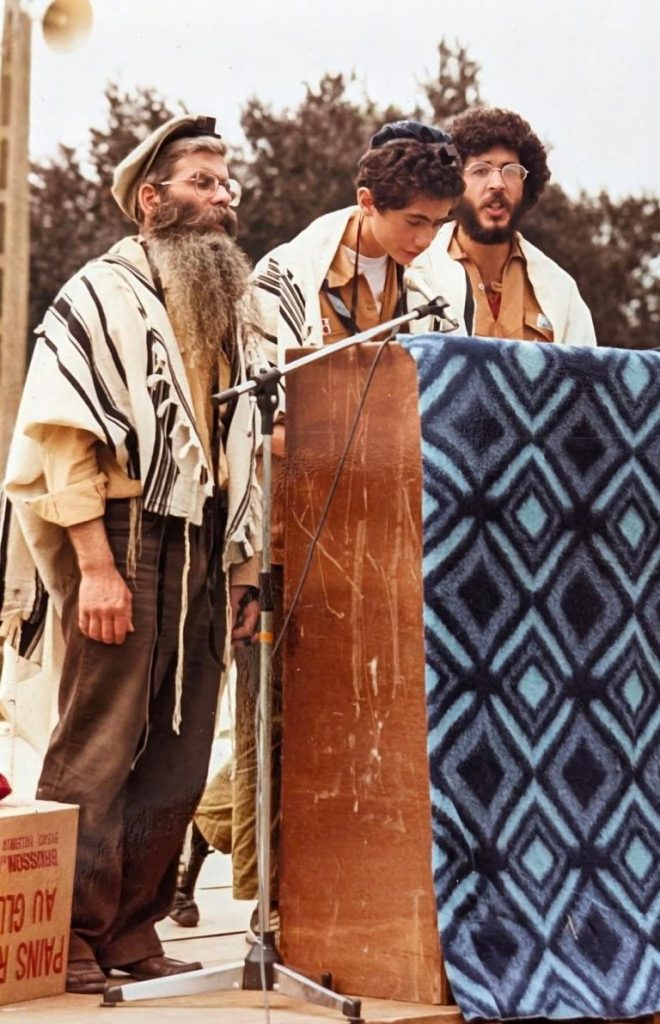
The yeshiva for students from Strasbourg had become a respectable institution. What would have brought a sense of pride and accomplishment to others proved to be a burden for Rav Eliahou. The gradual institutionalization of his intellectual pursuit did not sit well with his fundamentally anarchist nature. The “Return” community he had created was on the verge of becoming permanently established in his home. This stabilization was unbearable to him; he felt trapped within his own institution.
In 1991, the yeshiva-turned-community imploded. A significant number of his students established their own Beit Hamidrash three streets away. After years of inner struggle, most of them had returned to Judaism under the influence of Rav Eliahou. Now, they wished to calmly continue deepening their knowledge. They needed a place and a structure for study that was compatible with their professional and family obligations.
Now, recruitment is where Rav Eliahou excels. What interests him are people who are already fairly assimilated, who have experienced a hollow form of traditional Judaism, and bringing them back to a serious reappropriation of the Torah and the mitzvot. To do this, he needs to “rub shoulders” with the outside world, and he needs time and energy to devote himself to these newcomers. He conceived the yeshiva as a place to pass through, not a place to stay. What he wants is to convince people and win them over; their departure is already planned in advance.
Ultimately, the Strasbourg students’ yeshiva remained the project of a single generation, embodying a Jewish form of student rebellion, with Talmud study serving as an act of insurrection against the establishment.
Every individual who joined this community did so by personal choice; no one was sent there by their parents. No one’s destiny unfolded there according to a preestablished plan. Admission to the yeshiva was, for the most part, independent of family traditions and often even in opposition to the expectations of one’s community of origin. Of course, the convergence of so many individual wills had to be driven by a particular impetus. At the yeshiva, people came together who wanted to collectively live out their individual choice to return.
Perhaps this also explains the fervor and passion of the celebrations that took place there. It was only later, in the second generation, that routine and professionalization began to pose a problem.
For the children of the yeshiva, the Torah and the mitzvot had in turn become well-established values. What had still been an act of rebellion and emancipation for their parents had become, for them, obedience and submission. The discovery of the Talmud was no longer their lot; they could only hope to deepen their mastery of it.
This is where the attempt to write the ongoing history of the yeshiva comes to an end. It is already a bold undertaking to attempt to write history about events still very much present in the minds of those who lived through them. It would be presumptuous to speculate on the yeshiva’s future developments. The yeshiva still exists, and its history thus remains largely unfinished.
Perhaps, as is so often the case, it is only at the end that the true meaning of the beginning will be revealed.
This text – based on interviews conducted with Rav Eliahou Abitbol, Pierrot Elleb, Sam Gottfarstein, Philippe Kanter, Jean-Jacques Levy, Yonathan Lilti, Alain Recht, and Pierre Wolff – was first published in 1998 by Peter Honigmann under the title “The Strasbourg Students’ Yeshiva (1967–1998): Toward a Reappropriation of the Torah and the Mitzvot in the Contemporary Era” in the journal Romania Judaica.
- Young men. ↩︎
- Talmudic study structure/center for married men. ↩︎
- Hebrew word for “to learn/learning”. ↩︎
- Sebag, Albert: Problèmes posés par les avortements provoqués dans la tradition juive. Strasbourg. Méd. 1980 ; Bauer, Jean-Claude : Les Problèmes soulevés par la contraception et les interventions sur la sphère uro-génitale selon la tradition juive. Strasbourg. Méd. 1981 ; Lienhart, Jacques : Problèmes posés par les autopsies dans la tradition juive. Strasbourg. Méd. 1983 ; Botbol, Elie : Ethique juive et transplantation d’organes. Strasbourg. Méd. 1985 ; Sellam, Alain : Aspects éthiques juifs des procréations médicalement assistées au travers d’une lecture talmudique. Dissertation submitted to Claude-Bernard University of Lyon 1. Medicine, 1988; Bouaniche, Henri : Maimonide – Vers une redéfinition de l’homme sain. Strasbourg. Méd. 1990. ↩︎
- Organized meeting. ↩︎