#271 / Editorial
“Welcome to Israel, we are the homeowners.” That is how Itamar Ben Gvir greeted the detained Gaza flotilla activists on May 20, as they stood with their hands bound and heads bowed. By posing as an all-powerful master flaunting his control over captive bodies, deciding who may stand and who must bow down on his territory, the Minister of National Security has once again illustrated what Jewish national emancipation is reduced to when it becomes a purely domineering assertion of sovereignty. This gesture of humiliation and exclusion of the other has been repeated time and again against the Palestinians, and the expansion of settlement in the West Bank indicates that the boundaries of “home” now bear only a distant resemblance to those of a refuge. But it also targets Christians, with those shattered statues of Christ, the spitting on priests, and the assaults on nuns that have made headlines. This vulgar nationalism spreads unabashedly, arrogantly asserting its superiority over everything that is not “Jewish” in the narrow sense it claims. However, this “Judaism” is empty: to become master in its own house, it had to clear out the furniture inherited from a two-thousand-year-old tradition of exile. This is what Gabriel Abensour reminds us of, as he does not hesitate to describe this self-worship in the mirror of its own power as “Judeolatry”. We must therefore acknowledge that this act of humiliation and exclusion is not directed solely outward: the pride with which this childish messianism defiles the Jewish Name among the nations indicates that the middle finger is also directed against that exile consciousness which was meant to continue nourishing Zionism, but which has been liquidated under the anathema of “slave morality.” To accompany Abensour’s analysis of this internal fault line within the Jewish world, we are republishing “Home is where you are?” by Bruno Karsenti, written at the time of the 2022 elections, when it was already becoming clear what happens when the “home” becomes property and the shelter turns into a fence.
Related articles

The False Messiah to Come

Ten Years On: The IHRA Definition

Eurovision: Circle Dancing Above Europe’s Peoples
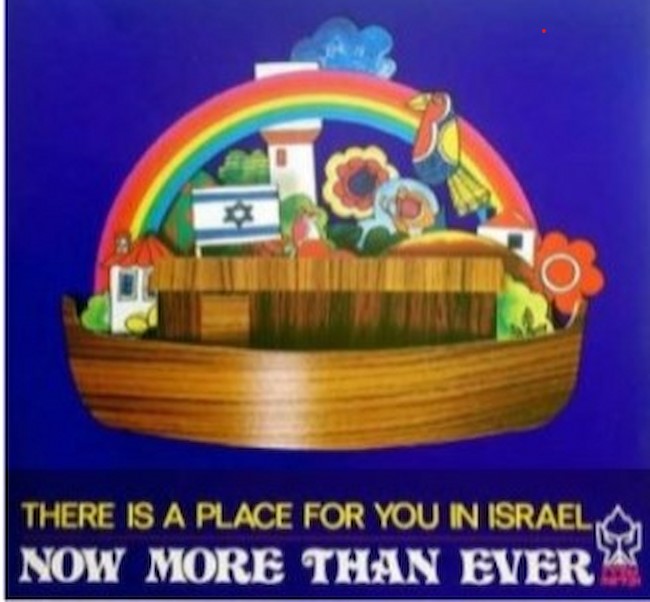
Home is where you are? Israel on the edge of Zionism
That Israel’s existence holds a singular significance in the concert of nations is something that is best perceived from Europe. At least, provided that European consciousness remains at the level of understanding that its history makes accessible to it. In this regard, the International Holocaust Remembrance Alliance’s definition of antisemitism has just celebrated its tenth anniversary. Reut Yael Paz and Niklas Pretsch take this opportunity to revisit the history of this document, through which the European conception of the democratic necessity of the fight against antisemitism has permeated the international arena. Recalling the debates surrounding the IHRA definition – particularly regarding the relationship between anti-Zionism and antisemitism – the authors offer a nuanced assessment of the institutional success of this tool, whose political and quasi-legal applications have extended beyond what its authors had anticipated. What can—and cannot—a definition achieve in the face of a phenomenon as fluid, contentious, and steeped in history as antisemitism?
Another way to understand Israel’s place in the European consciousness lies in the conflicts it provokes and the political divisions they bring to light. In this regard, the results of the Eurovision Song Contest over the past three years provide a prime vantage point, given the vast audience this spectacle of excess mobilizes. Arié Flack has sent us an insightful analysis of the divide between European audiences and their cultural elites. For since October 7, it has been the same story: the public votes for the Israeli artist whom the official jury snubs. What do the successes of these persistent Israeli songs reveal about European political aspirations?