Eurovision: Circle Dancing Above Europe’s Peoples
Based on the massive popular vote Israel received at Eurovision, Arié Flack sees a rift emerging between European audiences and their cultural elites. Behind the kitsch of the contest, he reads a political sign: Israeli persistence, sung about since October 7, is making the peoples of Europe hear what their institutions struggle to name — a desire to endure.

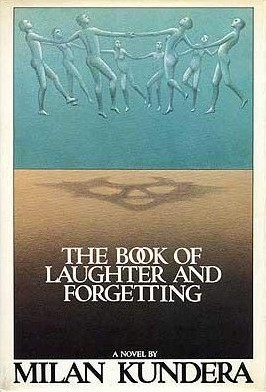
Fractures within societies are rarely legible where they form. They rise to the surface at the periphery — in objects of seemingly slight consequence where a society deposits, unknowingly, its deepest tensions. Eurovision is one such object. For three years now, a phenomenon has recurred with a regularity that renders anecdotal explanation untenable: Israel has drawn massive popular support — 323 points from the public in 2024, nearly 300 in 2025, 220 in 2026 — whilst the cultural institutions of several European countries have maintained a studied distance from it, extending in some cases to outright boycott, and their respective Eurovision juries have shown themselves singularly reluctant to reward Israeli performances — 52 jury points in 2024, 60 in 2025, and 123 in 2026. Portugal offers an almost perfect illustration: its televote has placed Israel first for three consecutive years, whilst its juries have held to an absolute refusal. In 2026, Spain, Ireland, the Netherlands, Slovenia, and Iceland withdrew from the contest altogether, citing Israel’s presence as intolerable; Finland, Italy, Portugal, the United Kingdom, and Sweden remained, but expunged Israel from their jury ballots. In this spectacle of excess and glittering kitsch that is Eurovision, the official juries of these countries appear to function as a community bound by a shared moral passion: Israel merits neither recognition nor legitimacy — only exclusion or relegation. In The Book of Laughter and Forgetting, Kundera evokes the circle dances of young Czech revolutionaries in the first flush of communism; swept up in their common faith, these circle dances rise, in his vision, above Prague, whilst those cast out run below, conscious that wings will never be theirs. To this circle dance Kundera symbolically admits Paul Éluard — the archetype of the committed poet who remained silent when the regime condemned to death those he might have defended. Kundera himself was driven from it. The Eurovision of official juries has become our own circle dance — it revolves so swiftly that it lifts from the ground, and Israel, having been cast out, runs desperately beneath. A question thus presents itself to the European citizen-viewer: does this frenzied circle dance leave Israel alone outside it, or does the popular vote — cast repeatedly in favour of the outcast — also bespeak the first stirrings of a divorce between certain European cultural elites and the societies whose preferences they still claim to interpret?
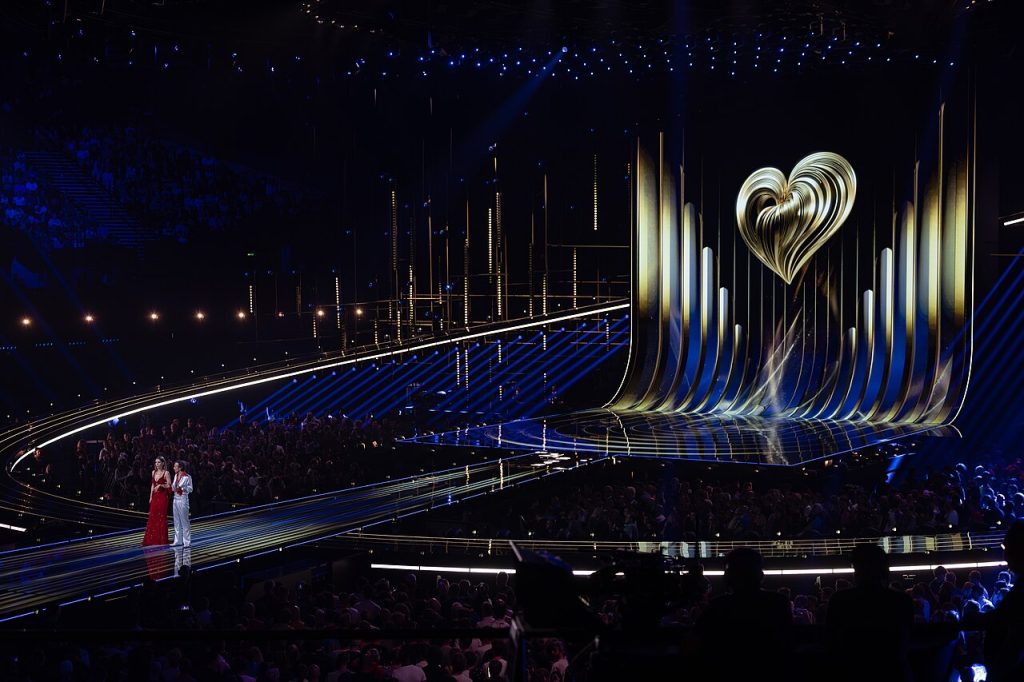
A close reading of the figures reveals that between 2024 and 2026, the Eurovision televote placed Israel among the top two choices in 23 distinct countries. This constellation traces a remarkably wide geography of support: it encompasses much of Western Europe (France, Belgium, the Netherlands, Luxembourg, Switzerland, the United Kingdom, Ireland, Spain, Portugal, Italy), the countries of Northern Europe (Sweden, Finland), those of Central and Eastern Europe (Germany, Austria, the Czech Republic, Moldova, Slovenia), as well as Mediterranean territories (Cyprus, Albania, San Marino) and Caucasian ones (Azerbaijan, Georgia), with Australia besides. The geographical breadth of the phenomenon thus precludes reducing it to a regional vote, a diaspora vote — the size of the Jewish population in Europe renders this hypothesis highly improbable — or one confined to a handful of particular historical affinities. Before the withdrawals that marked the 2026 edition, 163 million viewers had followed Eurovision, for a market share of approximately 46% and an estimated 17 million votes cast during the final. At such levels of viewership, it does not seem excessive to regard the Eurovision audience as a fleeting embodiment of the European people. Since the seventh of October — across the 2024, 2025, and 2026 editions — the average score awarded to Israel by European audiences has stood at 10/12, the equivalent of a solid second place, sustained over time. In other words, for three years now, popular support for Israel within the Eurovision framework has taken the form of a recurrent, relatively stable preference, crossing several European cultural spaces whose political and symbolic behaviours are far from homogeneous.
Like all singers in the contest, Israeli performers are carriers and interpreters of their society. Since the seventh of October, what have they conveyed that has met, with such constancy, with popular favour? In 2024, Eden Golan — a child of the entertainment world from a post-Soviet diaspora, raised between Russia and Israel — sang the trauma of the seventh of October and finished second in the European public vote. In 2025, Yuval Raphaël, a newcomer from Tel Aviv and survivor of the Nova Festival massacre, having lived through it by lying hidden amongst the dead, was carried to the summit of the public vote singing of her own rebirth. In 2026, Noam Bettan — born in Israel to a family from Grenoble, whose intimate lyrics moving between French and Hebrew make of him a European who has not severed the thread — finished second singing of a man’s heartbreak as he releases what he cannot cease to love. Three artists, three trajectories; and yet the same popular reception, repeated, which compels us to ask what, through these songs, has truly been heard. Where official juries, appointed by public broadcasters and governments, remain deaf, the viewers of Europe’s great singing contest listen with attention — and return a powerful message. Has Eurovision become the uncomfortable mirror in which songs from Israel lay bare a thwarted popular aspiration?
Does this frenzied circle dance leave Israel alone outside it, or does the popular vote — cast repeatedly in favour of the outcast — also bespeak the first stirrings of a divorce between certain European cultural elites and the societies whose preferences they still claim to interpret?
The question therefore deserves to be posed: what do the peoples of Europe hear in the songs from this battered corner of the earth, whilst their juries persist in refusal? Barthes, in his Mythologies, sought in the objects of popular culture not what they said, but what they caused those who received them to say. Three songs sent from Tel Aviv to Europe over three consecutive years constitute, no less than professional wrestling or the Tour de France, a mythological object — received by tens of millions of viewers as signifiers that overflow their apparent meaning. Each functions, on its surface, as a recognisable sentimental narrative. Hurricane, whose original title was October Rain — censored by the EBU for its overly explicit political references to the seventh of October — was rewritten as a universal ballad: the words “Never again” were removed, and “flowers” — the red anemones of the Negev, those symbolic equivalents of our commemorative poppies — was replaced by “powers”, a hollow phonetic substitute drained of meaning. One is entitled to suppose that the European public was not deceived by these acts of censorship, and embraced with enthusiasm an Israeli song of mourning from which the proper name had been excised. The same appears true of New Day Will Rise and its promise that pain will not endure, as well as of Michelle and its resolution to release what one still loves. Placed side by side, the three songs disclose an invariant structure. All three open in darkness — “someone stole the moon tonight” (Hurricane); “darkness will fade” (New Day Will Rise); “I plunged into the dark” (Michelle). All three traverse pain without denying it — “I’m still broken” (Hurricane); “everyone cries” (New Day Will Rise); “I cried, cried, cried” (Michelle). And all three arrive not at healing, but at the resolve to go on — “dancing in the storm” (Hurricane); “we will stay” (New Day Will Rise); “I dance with the pain” (Michelle). None has the structure of a love song; all have the structure of testimony: something terrible has occurred, I do not recover from it, yet I remain upright and I remain here. These three songs form a myth of persistence — they do not sing of victory over adversity, but of continuation in spite of it, of endurance as the supreme form of resistance. Beneath their guise as love songs, they give voice to the historical continuity of a people that wills its own permanence. And perhaps this is what the peoples of Europe hear — not what these songs say upon their surface, but what they allow those who hear them to say: the will to persist.
Where official juries, appointed by public broadcasters and governments, remain deaf, the viewers of Europe’s great singing contest listen with attention — and return a powerful message. Has Eurovision become the uncomfortable mirror in which songs from Israel lay bare a thwarted popular aspiration?
It is indeed this existential question of persistence that now presses itself upon Europe — first with the Russian invasion of Ukraine, then in the face of the imperial temptation of an America that treats its allies as vassals. Europe finds itself compelled to rediscover what it had rendered unthinkable: sovereignty, power, identity, and above all the collective will to exist as a protagonist in its own history. In this light, it may be that for a part of the European peoples, Israel is less the convenient alibi of a facile moralism than the living paradigm of a nation that has never ceased to will its own survival. The divide observable between the jury vote and the public vote would then owe nothing to divergent aesthetic or musical preferences between music lovers and the industry professionals dispatched by national broadcasters — broadcasters whose directors are themselves often appointed by their respective states. What seems to be emerging from the gap between the popular vote and the official verdict is a rift between Europe’s cultural elites and the societies they are supposed to represent. Raymond Aron had already traced the limit of this model of representation in the cultural and intellectual sphere: the intellectual betrays his calling when he substitutes his passionate preferences for the judgement expected of him.
Spain concentrates this contradiction between cultural elites and European national societies almost chemically: in 2025, at the very moment when the former are fiercely committed to political criticism, moral condemnation, and the delegitimisation of Israel — a course that will lead the national broadcaster to boycott Eurovision in 2026 — the Spanish public continues to award the maximum number of points to the Israeli entry. Given the gulf between the public vote and the jury vote since the seventh of October, it would be self-deceiving to regard this as accident. It is more realistic to conclude that the moral campaigns of cultural institutions no longer produce the alignment of opinion they still believe themselves to command. This disconnection between the media agenda and the actual concerns of citizens is not peculiar to Eurovision: polling organisations have long observed that the subjects saturating public debate are not those people discuss amongst themselves. The intensity of a moral campaign in the media no longer determines its real hold upon society.
Before the 2026 results were even in, institutional voices chose to disqualify the public vote rather than accept its verdict: popular support for Israel was declared the product of manipulation, of a coordinated government campaign; inquiries were mounted to demonstrate that the public cannot possibly disagree with the thinking of the cultural avant-garde. This line of reasoning is revealing — and ancient. In 1953, Brecht turned the logic of the East German government back upon itself with withering irony: disappointed by a people that had risen up, that government would do better, he observed, to “dissolve the people and elect another.” What satire denounced as the absurdity inherent in totalitarianism, certain liberal elites now reproduce as a matter of course: when the ballot box fails to produce the correct result, it is the ballot box that is lying. It is thus the self-styled liberal elites who have turned against liberalism itself — those who invoke democracy at every turn, and who, at the first sign of popular disagreement, seek to invalidate its expression.
Beneath their guise as love songs, they give voice to the historical continuity of a people that wills its own permanence.
The betrayal of the clerks today takes the form of a transnational morality that regards all belonging with suspicion — a suspicion it curiously does not extend to its own existence or its own continuance. Since the turn of the twenty-first century, whole swathes of Europe’s cultural elites have taken it upon themselves to deconstruct inheritances, to police loyalties, to subject every collective narrative to relentless critical scrutiny. But criticism that aspires to the absolute ends by turning against what it claimed to defend and reform: by refusing to set any limits upon its own excess, it severs the bond with the societies from which it springs — and loses thereby the only legitimacy it had left.
The crisis of representation that is taking shape here does not begin in political institutions. It begins when peoples cease to expect, from those who speak in their name, any account of why their own continuity is still worth willing. And perhaps this is the most arresting paradox of all: that it is towards Israel that European peoples turn in search of what they lack — towards a society whose land is an imaginary geography that has inhabited Europe for centuries, whose memory is woven into their own, whose history is one of the sources from which Europe itself was formed. Israel is not outside Europe: it lies at the heart of what Europe has been. And perhaps, for a part of its peoples, it is the sign of what Europe would still wish to be — a body politic capable of believing in the legitimacy of its own endurance.