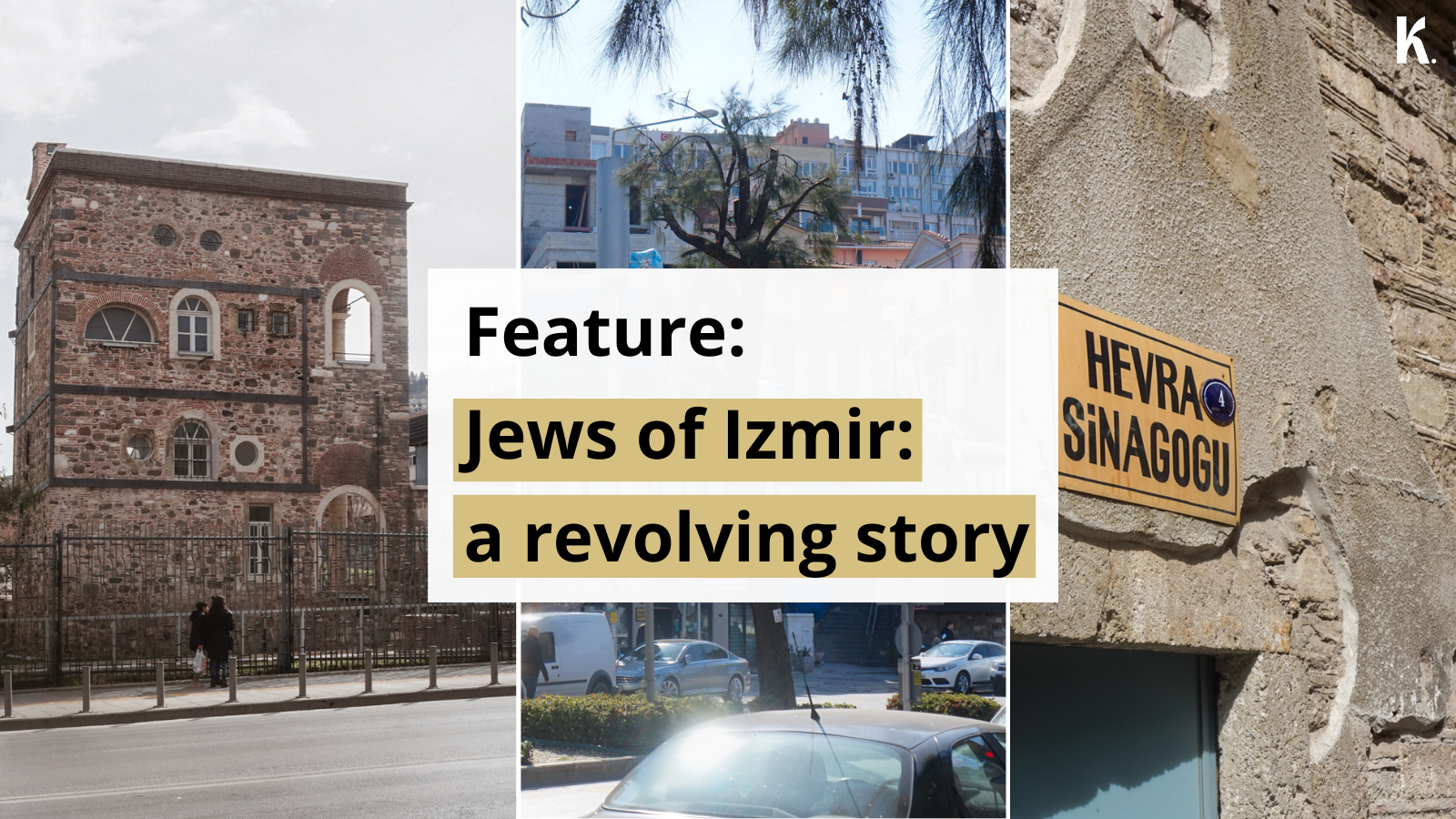
Feature: Jews of Izmir – a revolving story
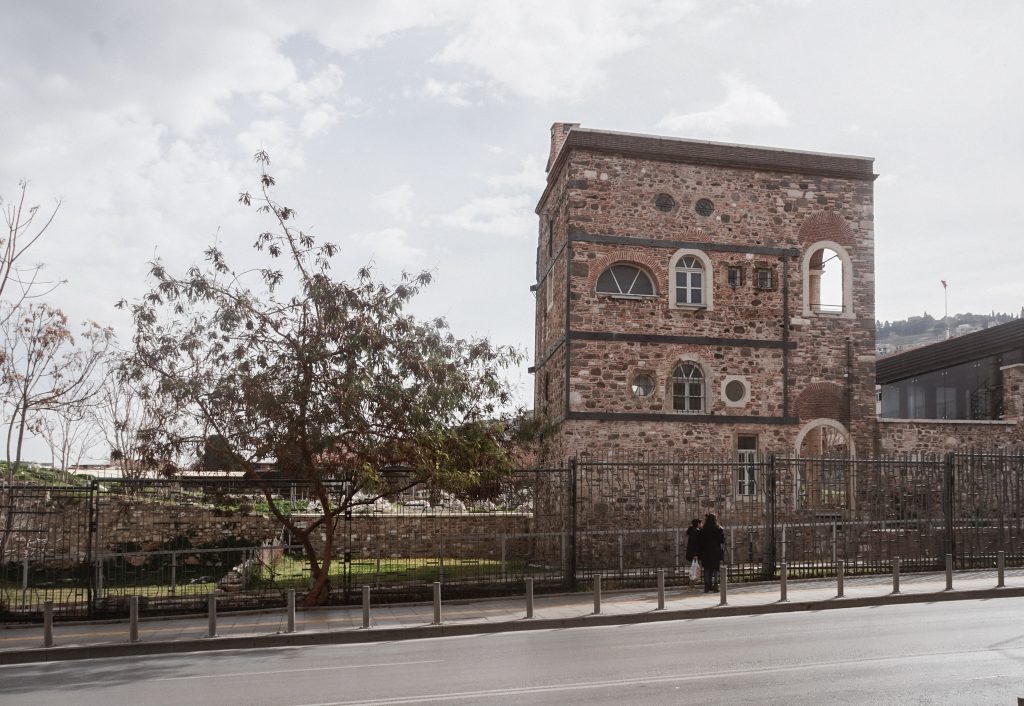
Izmir (Smyrna) was one of the great cosmopolitan ports of the Ottoman Empire. Having grown stronger after 1492, the Jewish community of Izmir endured migrations, reforms, and divisions throughout the 20th century: today, it has few remaining members. This dossier offers three texts: first, historical references to understand the community's formation, heyday, and exile; second, a first-person account of Ladino in Izmir, a language of memory that has also become a laboratory for transmission; and finally, an investigation into the heritage status of synagogues and their competing uses, between the municipality, central government, and the tourism industry.
The Jewish community of Izmir: some historical landmarks
François Azar
The Jewish history of Izmir has been shaped by waves: exile from Iberia, the rise of the port, social restructuring. Around 1900, the community had about 25,000 members. François Azar provides a concise chronology, from the internal tensions experienced by the community (Sabbatai Zevi) to the reforms of the Alliance and the departures of the 20th century.
Keeping Ladino alive in Izmir
Jacob Ceki Hazan
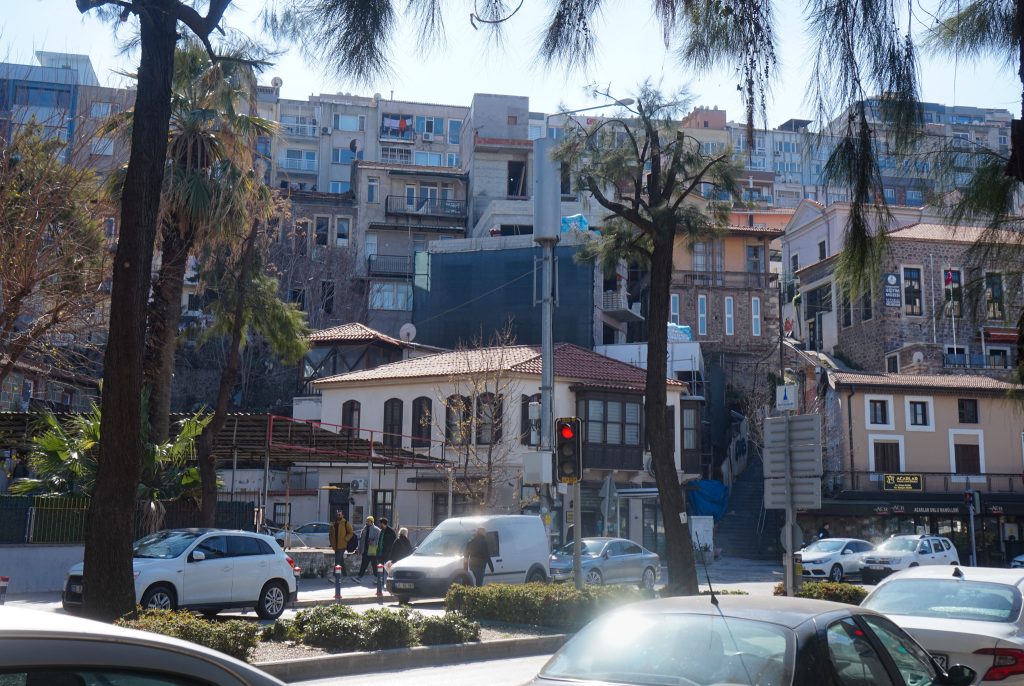
In Izmir, Ladino is no longer measured by the number of speakers, but by what it connects: dispersed families, generations, and passed-down traditions. Jacob Ceki Hazan’s testimony-manifesto recounts a transmission recomposed by digital technology, between lessons recorded with a father, oral archives, and YouTube projects as tools of continuity.
The conflicted memory of the last Jews of Izmir
Camille Scali
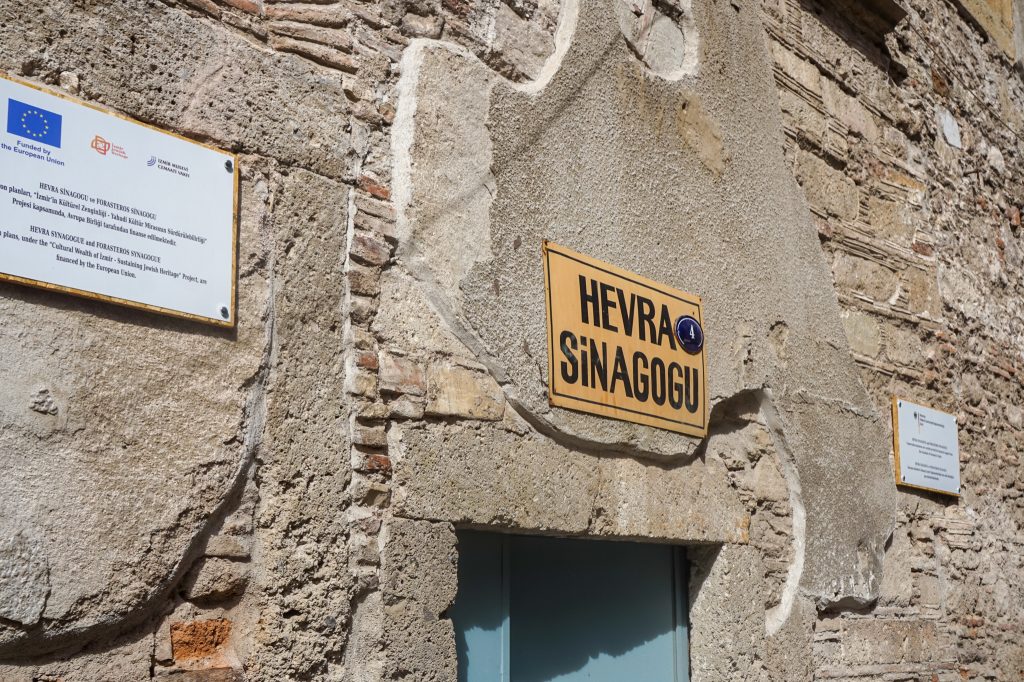
Since the arrest and imprisonment of the mayor of Istanbul in March 2025, tensions between the Kemalist CHP party and the central AKP government have been growing. The memory of Turkey’s Jews has not escaped this rivalry. In recent years, the Jewish community in Izmir, in the west of the country, has been mobilizing to preserve its heritage. A past caught between appropriation by the CHP municipality and the covetousness of Erdoğan’s AKP.
We would like to thank François Azar, editor of Kaminando i Avlando (Aki Estamos association), a magazine whose commitment to keeping Judeo-Spanish culture alive in the present has made it possible for these voices to be heard.