A Jewish Aftermath of the 2026 Swedish Elections
On September 13, Sweden’s general election produced one of the closest results in the country’s recent history. To govern, the centre-left depends on the Left Party, embroiled in a series of scandals involving antisemitism and indulgence toward terrorism; the centre-right depends on the Sweden Democrats, a party born in neo-Nazi circles. David Stavrou describes the trap in which Sweden’s 15,000 to 20,000 Jews now find themselves, and what it foreshadows for Jewish communities in a Europe of fragmented political systems.
Sweden has just handed Europe one of the clearest examples of a political trap facing a Jewish community in an increasingly polarized continent. Following its September general elections, the country still has no government and both political blocs are dependent on parties which are deeply problematic when it comes to the country’s Jewish minority.
On one side is a centre-left bloc that cannot govern without the support of a party whose politicians and activists have repeatedly been spreading antisemitic conspiracy theories, expressing sympathy for terrorist organizations and, most recently, sending letters of solidarity to Palestinian prisoners convicted of terrorism in Israel. The party, which is Sweden’s former Communist Party, now called the Left Party, has a program that officially condemns antisemitism and in the last few years it has removed a number of members following antisemitism-related statements and expressions of support for terrorism.
However, critics claim that its leadership, including party leader Nooshi Dadgostar, does not take the issue seriously. The politically independent Swedish Committee Against Antisemitism recently accused Dadgostar of failing to speak clearly about antisemitism after revelations about candidates who had shared blood-libel material, Jewish-control conspiracy theories, Holocaust denial and praise for Hamas and Hezbollah. The committee wrote that removing candidates was insufficient and argued that the recurring cases showed that the party had difficulty identifying and handling antisemitism within its ranks1.
On the other side is a centre-right bloc that cannot govern without the Sweden Democrats, a nationalist party born out of Sweden’s neo-Nazi and white-supremacist milieu in the late 80s. The party has spent years trying to distance itself from its extremist origins and today it portrays itself as strongly opposed to antisemitism and one of Israel’s strongest supporters in Sweden. However, in recent years, some party figures have continued to face antisemitism-related scandals despite the party leadership’s stated zero-tolerance policy2.
For Sweden’s approximately 15,000–20,000 Jews, the election has produced an uncomfortable political reality. The parties at the two ends of the political spectrum are no longer marginal protest movements. Both have become important pieces in the parliamentary arithmetic that determines who can govern Sweden after the September 13 election produced one of the closest results in modern Swedish politics.
An arithmetic without a majority
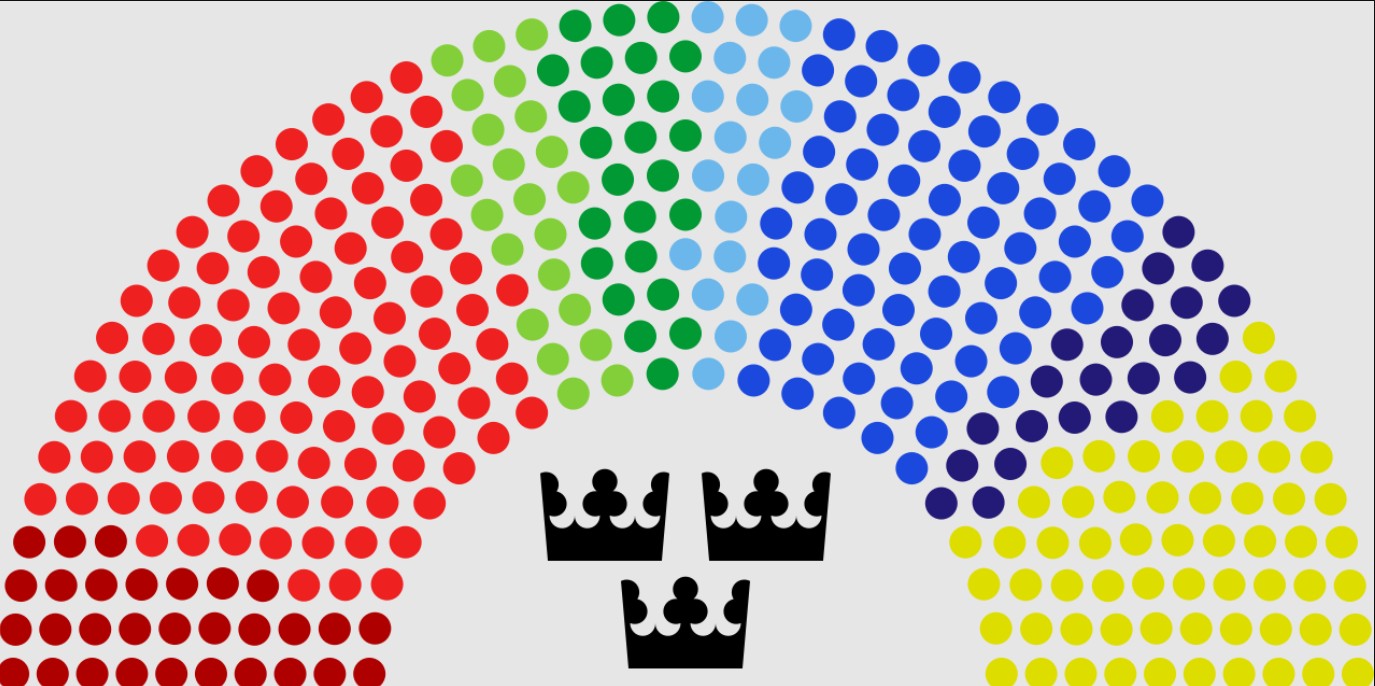
The Social Democrats remained the country’s largest party with 28.02 percent of the vote. The Moderates, a conservative centre-right party, won 19.85 percent; the Sweden Democrats 17.48 percent; the Left Party 8.40 percent; the Centre Party 7.03 percent; the Christian Democrats 6.17 percent; the Greens 6.12 percent; and the Liberals 5.34 percent3.
Together, the Social Democrats, Left Party, Greens and Centre Party control 176 of the parliament’s 349 seats, against 173 for the Moderates, Sweden Democrats, Christian Democrats and Liberals. This arithmetic, however, has not yet produced a government. The Centre Party has rejected a government that includes either the Left Party or the Sweden Democrats, while both extreme parties entered the post-election negotiations demanding to be a part of any future government rather than just handing over parliamentary support from outside government as they’ve both done in the past.
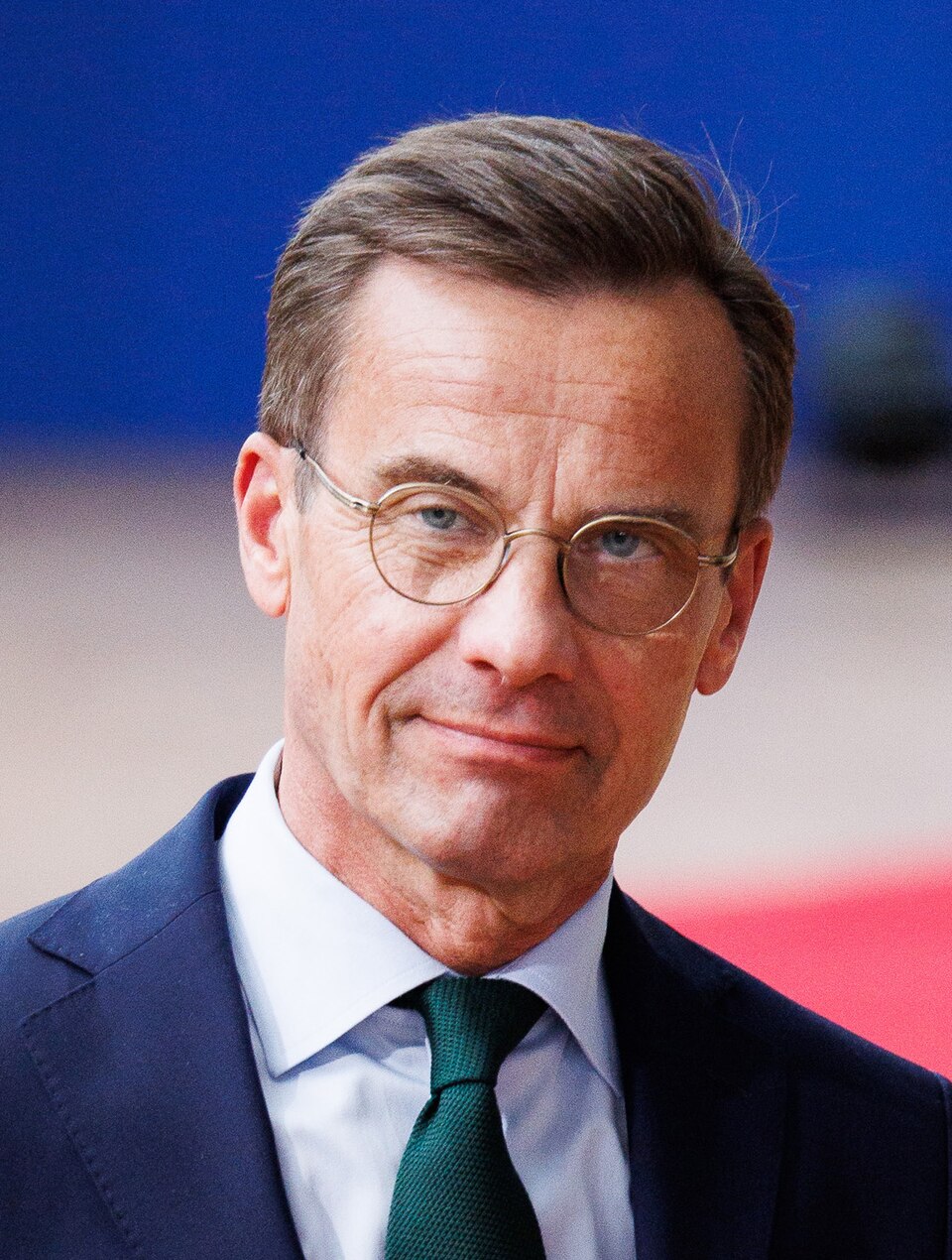
Outgoing Prime Minister Ulf Kristersson resigned after the election result became clear. He and his ministers remain in office until a new government is in place. Social Democratic leader Magdalena Andersson was subsequently given the task of forming a government, but she ended her exploratory mandate on September 28 after concluding that she could not find a workable parliamentary arrangement. On October 2, Speaker Andreas Norlén gave Andersson a second mandate. She now has until October 12 to report back to him, but analysts remain sceptical about her chances of succeeding.
Since a German-style grand coalition between the Social Democrats and Moderates remains highly unlikely in Sweden, some version of the same dilemma now confronts both sides. Either the Left Party or the Sweden Democrats may have to become an active participant in government, or provide the parliamentary support in return for significant political influence. For Swedish Jews, neither possibility is politically uncomplicated.
The problem on the left
The Left Party, Vänsterpartiet, traces its origins to the Swedish Communist movement. It emerged from a split in the Social Democratic Party in 1917 and for decades maintained close ideological links with Soviet communism before gradually transforming itself into what it now calls a “socialist, feminist and anti-racist party on an ecological foundation”4. It has never held cabinet positions in a Swedish national government, but has frequently provided parliamentary support for Social Democratic governments. Its current leader has made clear that this time the party does not intend to supply votes from outside. If a Social Democratic government depends on the Left Party, it wants political influence including cabinet posts.
That demand would have been controversial even without the events of the past several years. Since October 7, Israel, Gaza and the wider Middle East have become an increasingly important part of Swedish domestic politics. All the major parties have taken positions on the war, but few have made Palestine as central to their political identity as the Left Party.
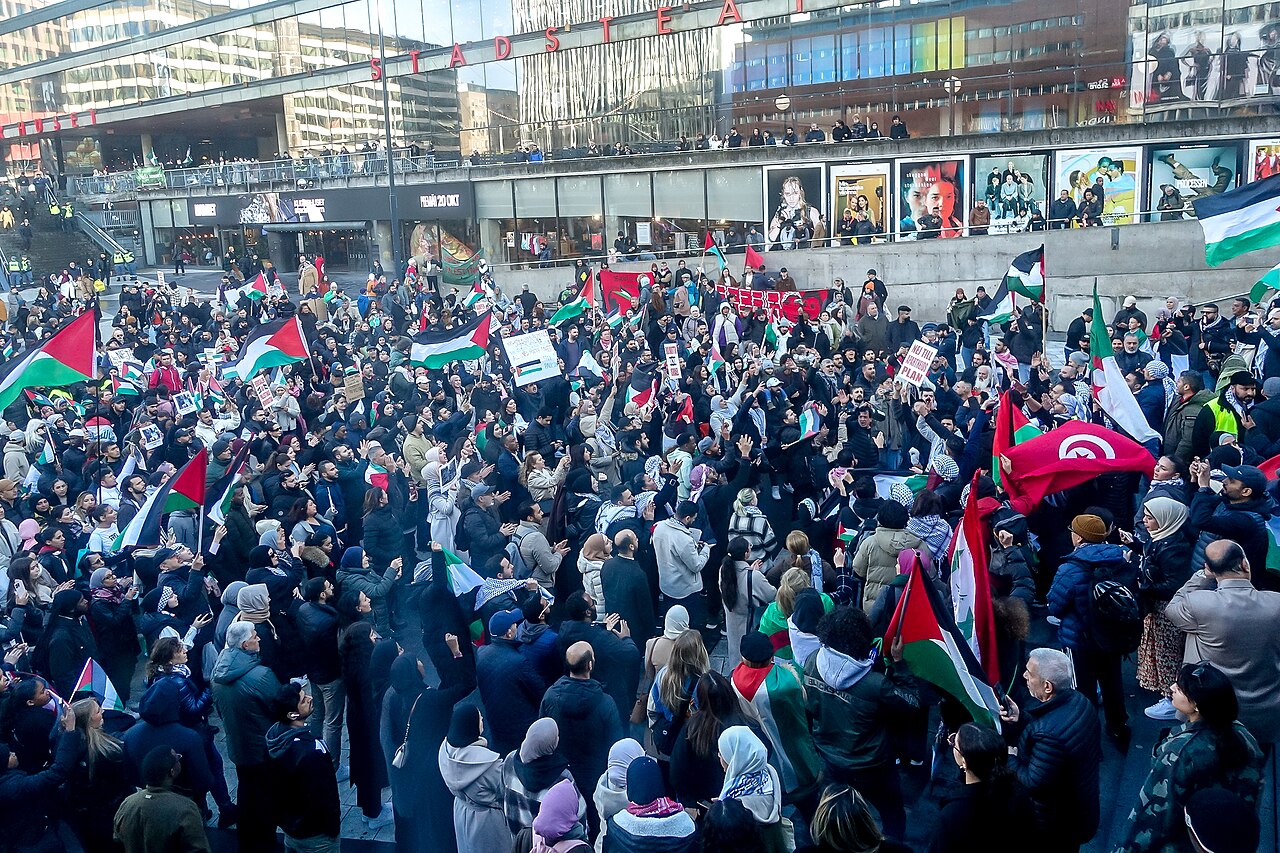
During the 2024 European Parliament campaign, party leader Dadgostar explicitly described the vote as a “Palestine election” and declared: “We are not finished until we have liberated Palestine”5. The conflict became one of the party’s most visible campaign themes. Many of its politicians and activists have also participated in Sweden’s large pro-Palestinian demonstrations, some of which have included slogans and symbols that Jewish organizations and experts have described as antisemitic or supportive of terrorist organizations.
More troublingly for the party, a succession of controversies has suggested that the problem is not confined to demonstrations outside its formal structures. In 2023, Swedish public broadcaster SVT revealed that money from the Left Party’s international aid organization had gone to a project connected to the Democratic Front for the Liberation of Palestine. The DFLP’s armed wing participated in the October 7 attacks6.
The following year, Kristofer Lundberg, a prominent Left Party local politician, was expelled after openly expressing support for the Popular Front for the Liberation of Palestine, an EU-designated terrorist organization. While Lundberg chaired the party’s Angered branch, a PFLP representative had also participated in its annual meeting. In Malmö, Orwa Kadoura, then a senior local Left Party politician, left following controversy over antisemitic social-media material. In 2025, MP Lorena Delgado Varas left the party after sharing an image based on a classic antisemitic conspiracy theory7.
From scandal to political question
Then came the 2026 election campaign. Just over a month before the vote, Swedish journalists revealed that several Left Party MPs had participated in a solidarity campaign for Palestinian prisoners held by Israel. In Swedish daily Expressen, journalist Sofie Löwenmark reported that Left Party MP Ilona Szatmári Waldau had written to Ahmad al-Moghrabi, a senior figure in the al-Aqsa Martyrs’ Brigades serving multiple life sentences for involvement in deadly attacks in Jerusalem. In her letter, Szatmári Waldau praised his “courage and perseverance”. After the case was exposed, she said she didn’t know his background and that information about the prisoners came from the Palestine Solidarity Association of Sweden.
At what point does a series of individual scandals become evidence of a political culture?
As a result of the media revelations, the Left Party acknowledged that its checks had failed and withdrew the campaign. Dadgostar called the letters a mistake but continued to defend the MPs involved. But the scandal did not end there. In Swedish online publication Kvartal, journalist Nathalie Rothschild reported that the Left Party’s parliamentary group leader, Samuel Gonzalez Westling, had sent a solidarity letter to Ibrahim Abu Mokh, who was sentenced to life imprisonment for the 1984 kidnapping and murder of 19-year-old Israeli soldier Moshe Tamam. She also reported that the party had organized a seminar involving former Palestinian prisoner Hussam Shaheen, who had been sentenced to 27 years for attempted murder and conspiracy to commit murder.
“This is a party that aspires to sit in government after the election, and eight of its MPs have taken part in a solidarity campaign with prisoners without even considering that they should at least Google their names,” Rothschild told Israeli daily Haaretz. “It’s incompetent at best, and a security risk at worst.”
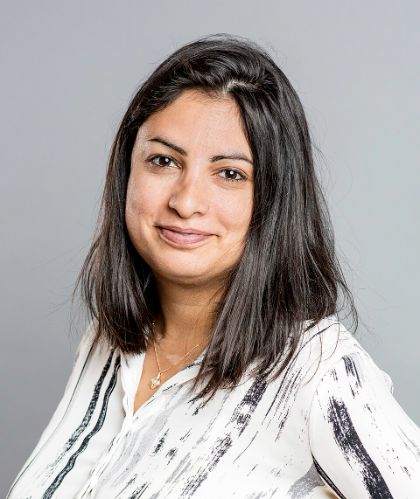
Another investigative journalist, Inas Hamdan, subsequently published a list of 24 prisoners said to have been connected to the campaign, several of whom had been convicted of murder or terrorism-related offenses. The Left Party disputed the scope of the list, saying only a handful had actually been included in its campaign. For Hamdan, a Swedish journalist of Palestinian background, the story went beyond party politics. “In Sweden, we have seen enormous demonstrations where there have been slogans in support of terrorism or flags representing terrorist organizations such as Hamas, Hezbollah and the al-Aqsa Martyrs’ Brigades”, she told Haaretz. “Threats against Sweden’s Jewish minority are a threat to Swedish democracy. That’s why it’s important to show what these threats look like”.
Hamdan’s reporting uncovered still more cases involving Left Party politicians and candidates. By the summer, the party had removed more than 20 candidates from local electoral lists following revelations involving, among other things, praise for Hamas’ October 7 massacre, Holocaust denial and antisemitic conspiracy theories. The party insists that these cases do not represent its ideology and points to the fact that it has taken disciplinary action. But the number and recurrence of the incidents raise a more difficult question: at what point does a series of individual scandals become evidence of a political culture?8
The problem on the right
Just like the Left Party’s problem, the one posed by the Sweden Democrats is both historical and contemporary. The party was founded in 1988 out of the Swedish nationalist far-right. For years, its opponents described it as having neo-Nazi roots. The party disputed parts of that characterization while gradually attempting to transform itself into a mainstream nationalist party. Then, in 2025, the party published its own long-awaited 900-page white paper on its history. The study, written by historian Tony Gustafsson at the party’s request, left little ambiguity about its origins. Gustafsson concluded that the Sweden Democrats were effectively a transformation of the racist campaign organization BSS (Bevara Sverige Svenskt, “Keep Sweden Swedish”) into a political party. Of 22 people identified as involved in founding the party, 18 had direct or indirect backgrounds in BSS, and ten or eleven had backgrounds in neo-fascist or National Socialist movements, including a founding member who was a Waffen SS veteran9.
Of 22 people identified as involved in founding the party, 18 had direct or indirect backgrounds in BSS.
The white paper found that the party’s connections with Nazism could be documented on several levels, particularly between 1988 and 1995. Nazi and antisemitic ideas appeared in party publications, while some candidates simultaneously belonged to explicitly Nazi organizations. Gustafsson also described coded language used in the early party to communicate ideas about Jewish conspiracies. Terms such as “internationalists” and “liberal Marxists” could function as euphemisms for an alleged Jewish power operating behind political and social change.
The white paper is particularly uncomfortable because Jimmie Åkesson, who has led the party since 2005, joined in 1995. Gustafsson has said that the party was already changing by then, but its links with National Socialist organizations were still difficult to miss. Åkesson has rejected the implication that he knowingly joined a Nazi organization and argues that he should be judged by the party he has helped build since then. In 2025 he publicly apologized to Swedish Jews for the antisemitism that existed in the party during its early years10.
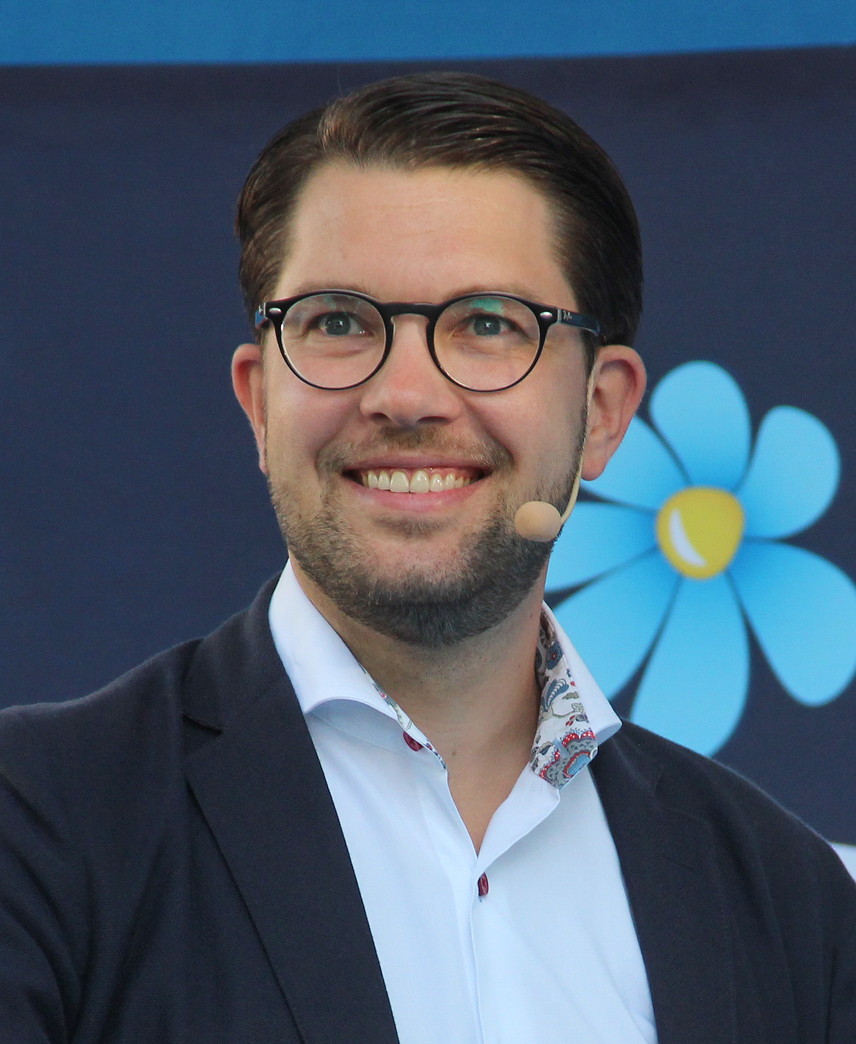
There is no question that today’s Sweden Democrats are a very different political organization. The party officially condemns antisemitism, calls for stronger protection for Jewish institutions and presents Islamist antisemitism as a major threat to Swedish Jews. It also presents itself as one of the strongest supporters of Israel in Swedish politics. Yet the transformation has repeatedly been complicated by new scandals.
In 2021, Swedish daily Aftonbladet linked Jörgen Fogelklou, then the party’s leader in Gothenburg, to an online account that had published racist and antisemitic statements, including the assertion that Jews were the “root of all evil in the world.” Fogelklou denied writing the posts, and a subsequent internal SD investigation said the evidence was insufficient to establish that he was behind the account. Other investigations have exposed party representatives with links to neo-Nazi or white-power environments. One local politician, Jonas Ringqvist, was reported to have participated in and promoted white-power music events and to have used the number 88, widely used in neo-Nazi circles as code for “Heil Hitler.”
In 2022, prominent SD media figure Rebecka Fallenkvist was removed from her role at the party-linked Riks channel after mocking Holocaust victim Anne Frank on Instagram; she had also caused controversy by saying “helg seger” on the 2022 election night. Literally, “helg seger” means “weekend victory”, but critics interpreted it as an allusion to “Hell seger,” the Swedish rendering of the Nazi slogan “Sieg Heil”. She later received another job within the party organization and returned as a SD candidate in the 2026 election. In 2024, Expo reported that an employee at the party’s parliamentary office had repeatedly shared material from Nazi and antisemitic accounts11.
This is why the Sweden Democrats’ increasingly close relationship with Israel has itself divided Swedish Jews. The party has spent recent years attempting to position itself as Sweden’s most pro-Israel political force and its representatives have travelled to Israel and met Israeli politicians. In 2024, a delegation including Åkesson met Israeli cabinet ministers, despite Israel’s previous policy of avoiding official relations with the party. That prompted Aron Verständig, chairman of the Official Council of Swedish Jewish Communities, and European Jewish Congress President Ariel Muzicant to write to Israel’s foreign minister expressing grave concern.
Their argument touched on a dilemma extending far beyond Sweden: European populist parties with anti-immigration agendas increasingly present themselves as allies of Jews and Israel, partly on the basis that Jews and right-wing nationalists share a common enemy in Islamist extremism. For some Jews, particularly after October 7, that argument has become more attractive. For others, it amounts to using Jewish vulnerability to legitimize movements whose own history (and sometimes their present politics) remains hostile to minorities.
A Star of David in an election debate
All these tensions became unusually visible during the 2026 campaign. At an Expressen televised party-leaders’ debate on August 17, Liberal Party leader Simona Mohamsson walked onto the stage wearing a Star of David around her neck. Mohamsson, whose father is Palestinian and mother Lebanese, explained that she wanted to show solidarity with Sweden’s Jewish minority and protest against rising antisemitism, including the scandals then being exposed within the Left Party.
The reaction was immediate. Some praised the gesture. Others criticized it as electioneering. But Mohamsson also received messages portraying the Jewish symbol as evidence that she had betrayed Palestinians and her own family background. The Swedish Committee Against Antisemitism noted a revealing feature of many of the reactions: the Star of David, a symbol of Jewish identity, was automatically interpreted as support for Israel and its government12. Mohamsson’s gesture therefore illustrated one of the problems Swedish Jews have described since October 7: the collapsing distinction between Jews, Israel and the policies of a particular Israeli government.
Mohamsson’s gesture therefore illustrated one of the problems Swedish Jews have described since October 7: the collapsing distinction between Jews, Israel and the policies of a particular Israeli government.
But Mohamsson embodies another political contradiction as well. Her Liberals had once been among the Swedish parties most reluctant to cooperate with the Sweden Democrats. By the 2026 campaign, after four years of cooperation, that barrier had fallen. The same politician who wore a Star of David in solidarity with Swedish Jews was also prepared to contemplate a government dependent on a party whose own commissioned history documents a substantial Nazi and antisemitic inheritance. This in itself does not necessarily make either of these decisions insincere. It does, however, illustrate how thoroughly the old boundaries of Swedish politics have been rearranged.
Alice Teodorescu Måwe represents another version of the same transformation. She is a prominent Christian Democrat politician, a member of the European Parliament who has become one of Sweden’s most outspoken political voices in support of Israel and against contemporary antisemitism. In the European Parliament she has repeatedly argued that the principal danger facing European Jews today comes from a convergence between parts of the radical left and antisemitic currents imported from the Middle East. Since October 7, she has repeatedly accused the Swedish left of failing to confront that phenomenon.
Her language is much sharper than that of most mainstream Swedish politicians. But the fact that such arguments have moved from the margins into parliamentary politics is itself significant. During the election campaign, Teodorescu Måwe repeatedly made antisemitism and the Left Party’s scandals part of her case against a centre-left government and a few days before the elections, after the Left Party accused her of spreading far-right conspiracy theories, she replied to the Svenska Dagbladet daily that “the Left Party is now crossing every line” and accused it of refusing to take responsibility for Islamist influence in its ranks13.
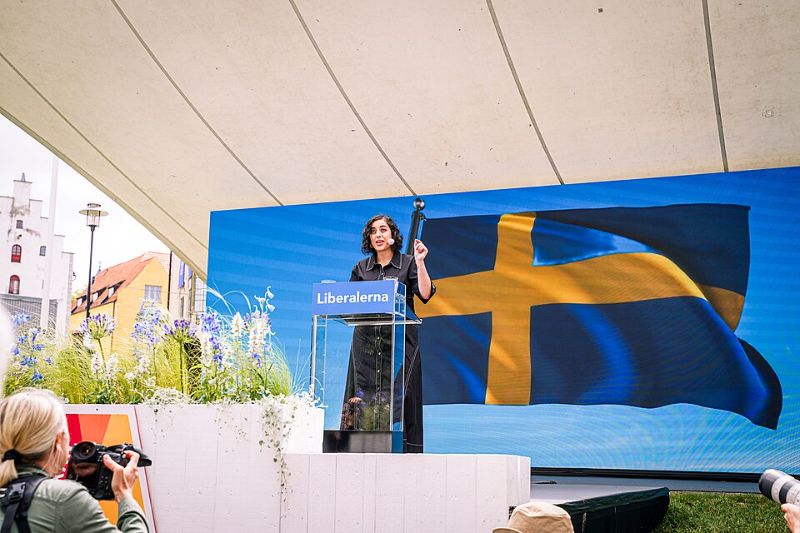
This incident and others show that antisemitism and Israel were not side issues in the 2026 election. They became part of the argument over which parties were morally legitimate partners in government. Both Teodorescu Måwe and Mohamsson have also faced serious security threats. Mohamsson reported threats and hate after wearing the Star of David, and Säpo, Sweden’s Security Service, opened an investigation into a suspected unlawful threat. Teodorescu Måwe has publicly described an ongoing personal-security need and the hate campaign against her is particularly vicious14.
And the Social Democrats?
Besides the radical parties and the conservative and liberal centre-right, the dilemma of how to treat Sweden’s Jewish minority and what policy to choose concerning Israel is also important to the country’s largest political party: the centre-left Social Democrats.
The party has pursued a policy increasingly critical of Israel in recent decades, while also being deeply engaged in Holocaust remembrance and efforts to combat antisemitism. In the late 1990s, Social Democratic Prime Minister Göran Persson initiated the work that led to the Stockholm International Forum on the Holocaust and helped establish the international task force that later became the International Holocaust Remembrance Alliance. Two decades later, another Social Democratic prime minister, Stefan Löfven, hosted the Malmö International Forum on Holocaust Remembrance and Combating Antisemitism in 2021.
The party’s current platform calls antisemitism “a poison” threatening Swedish democracy and society. It proposes increased security funding for vulnerable religious communities, stronger protection around Jewish institutions, expanded Holocaust education and a ban on racist and Nazi organizations.
At the same time, the Social Democrats have adopted increasingly harsh positions toward Israel during the Gaza war. The party wants the European Union to freeze its association agreement with Israel as long as, in its view, Israel fails to comply with international law. It supports stopping settlement goods from entering the European market, restoring Swedish support for UNRWA and strengthening mechanisms for investigating and prosecuting suspected war crimes15.
Senior Social Democrats have gone further in public rhetoric and proposals. Morgan Johansson, the party’s foreign-policy spokesman, called for an international flotilla to deliver aid to Gaza and former minister Annika Strandhäll has demanded that the EU freeze its agreement with Israel. Pro-Palestinian activism has also been prominent elsewhere in the party. In 2025, newly elected leader of the party’s youth league, Moska Hassas, was criticized after appearing at a Gaza demonstration wearing a Palestinian scarf bearing the words “Jerusalem is ours” and a map from which Israel was absent.
The party argues that there is no contradiction between combating antisemitism at home and strongly criticizing Israel. In its view, these are separate political and moral obligations. Its official foreign-policy position also states that Israelis have a right to live in peace and security, supports a two-state solution and says Hamas must be disarmed and excluded from any future Palestinian government. For many Swedish Jews, however, the distinction is not always experienced as neatly as it appears in party programmes.
After October 7, it has become harder for many to leave Jewish identity outside the voting booth.
This is particularly important because since October 7, Jewish institutions have faced increased security concerns, Jewish pupils and teachers have reported hostility connected to Israel, and public arguments about Gaza frequently spill over into arguments about Swedish Jews. Criticism of Israel is not in itself antisemitic. But when Jewish Swedes are expected to account for Israeli policy, or when Jewish symbols are treated as symbols of the Netanyahu government, foreign policy becomes domestic identity politics.
No “Jewish vote”
Still, when it comes to voting there is no single “Jewish vote”. Just like everyone else, Swedish Jews vote on taxes, schools, healthcare, climate, crime, immigration, welfare and economic policy. Some are socialists, others liberals or conservatives; some regard Israel as central to their Jewish identity, while others do not. But after October 7, it has become harder for many to leave Jewish identity outside the voting booth.
For a Jewish voter on the left, the dilemma can be painful. A person may support Sweden’s welfare state, economic redistribution, feminism and liberal immigration policies, while being deeply disturbed by antisemitism and terror romanticism among activists in the political camp with which he or she otherwise identifies. For a Jewish voter on the right, the mirror image exists. A person may see the right as more willing to speak openly about Islamist antisemitism, more supportive of Israel and more prepared to finance security for Jewish institutions, while remaining deeply uncomfortable with dependence on the Sweden Democrats, a party whose own historical investigation confirms its origins in a milieu containing Nazis, fascists and antisemites.
Many Swedish Jewish voices claim that there is no clean political home in this equation. Some are also concerned about being treated as a measuring instrument for deciding which side of Swedish politics is morally superior and they do not agree to become props in somebody else’s argument about immigration, Islam, Gaza or nationalism.
The question is what happens when antisemitism appears.
This matters all the more because Jewish insecurity can itself become politically useful. The populist right can point to Islamist antisemitism to strengthen a broader anti-immigration narrative. Parts of the left can point to the Sweden Democrats’ Nazi history to portray antisemitism primarily as a far-right phenomenon, while minimizing forms of antisemitism that emerge in pro-Palestinian or Islamist environments. Both descriptions contain real phenomena. Neither is sufficient on its own. Swedish research has repeatedly found antisemitic attitudes in different parts of society rather than in a single political camp and it shows that the political temptation to acknowledge only the antisemitism produced by one’s opponents isn’t based on facts. For Jews, that is not much comfort. In this sense the Swedish election and its results raise a question larger than Sweden itself.
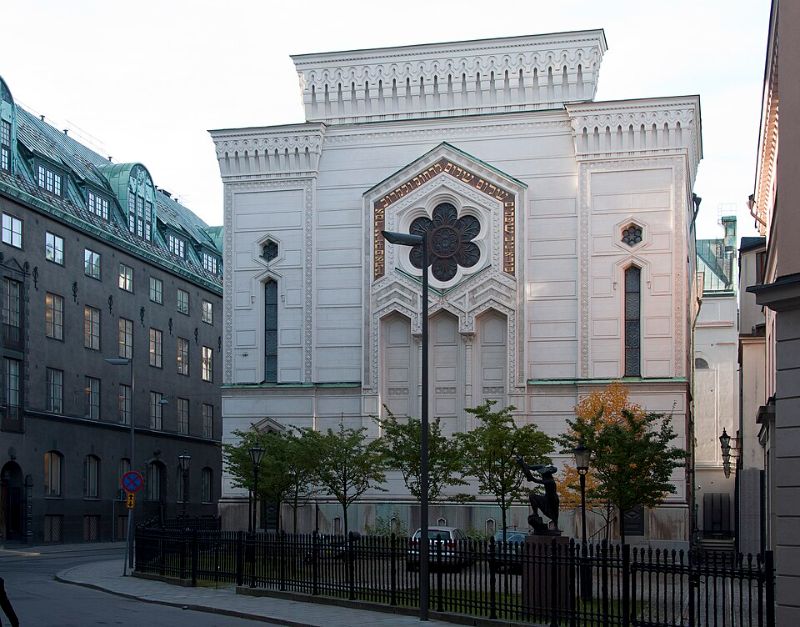
A Swedish dilemma, and a European one
Across Europe, traditional political systems are fragmenting. Parties that once dominated politics can no longer automatically form governments on their own. Smaller parties that were previously excluded from power have become necessary coalition partners. This shift creates difficult choices for Jewish communities. Populist parties with ideologies rooted in xenophobia, ethnic nationalism or antisemitism and parties which treat Zionism as inherently illegitimate are becoming legitimate political partners and the boundary between hostility toward Israel and hostility toward Jews is becoming dangerously porous.
Sweden happens to offer an unusually clear version of the problem because both forces may now be necessary to form a government. The question is not whether a political party can prove that no antisemite has ever belonged to it. The sad truth is that no large European political movement could pass such a test. The question is what happens when antisemitism appears: whether leaders recognize it when it comes from their own side; whether they investigate it; whether repeated incidents have consequences; and whether Jews are defended even when doing so is politically inconvenient.
Sweden’s election has not answered those questions. It has made them harder to avoid.
Note from the 22th of October:
Five weeks after the election, and following two unsuccessful attempts by Social Democratic leader Magdalena Andersson to form a government and a failed parliamentary vote on her candidacy for prime minister, Speaker Andreas Norlén on Monday tasked Centre Party leader Elisabeth Thand Ringqvist with exploring the possibility of forming a new government. She has one week to negotiate a possible centrist solution to the political deadlock, largely caused by the Centre Party’s refusal to join a government including the Left Party, which insists on being part of the next cabinet.
- SKMA (Swedish Committee Against Antisemitism), 8 September 2026: https://skma.se/2026/09/tala-klarsprak-om-antisemitismen-nooshi-dadgostar/ ↩︎
- SVT on the Sweden Democrats’ white paper, 26-28 June 2025: https://www.svt.se/nyheter/inrikes/sverigedemokraternas-vitbok-visar-ett-nazistiskt-arv ; https://www.svt.se/nyheter/inrikes/tidslinje-viktiga-punkter-ur-sds-vitbok ↩︎
- Official final results, Valmyndigheten (Swedish Election Authority): https://www.val.se/valresultat-och-statistik/riksdags–region–och-kommunval/valresultat-2026 ↩︎
- Left Party programme: https://www.vansterpartiet.se/resursbank/partiprogram/ ↩︎
- Nooshi Dadgostar’s full speech at Järvaveckan 2024: https://www.svenskatal.se/tal/nooshi-dadgostar-tal-pa-jarvaveckan-2024 ↩︎
- SVT, 20 October 2023, on the funding by the Left Party’s international aid organization (VIF) of a DFLP-linked project: https://www.svt.se/nyheter/inrikes/vansterpartiet-gav-pengar-till-terrorkopplad-gazagrupp ↩︎
- SVT on Kristofer Lundberg: https://www.svt.se/nyheter/lokalt/vast/kristofer-lundberg-utesluten-fran-vansterpartiet-besviken ; SVT on Orwa Kadoura: https://www.svt.se/nyheter/lokalt/skane/kadoura-lamnar-v-efter-antisemitiska-budskap ; SKMA on Lorena Delgado Varas: https://skma.se/2025/04/vansterpartistisk-riksdagsledamot-delar-antisemitisk-propaganda-pa-sociala-medier/ ↩︎
- SKMA summary of Expressen’s June and September 2026 investigations: https://skma.se/2026/09/tala-klarsprak-om-antisemitismen-nooshi-dadgostar/ ; Haaretz article with the three journalists’ interviews: https://www.haaretz.com/world-news/europe/2026-08-12/ty-article-magazine/.premium/swedish-left-party-faces-scrutiny-over-support-letters-to-palestinian-terrorists/0000019f-f543-d929-afff-f7cba7e30000 ↩︎
- SVT on the white paper’s findings: https://www.svt.se/nyheter/inrikes/sverigedemokraternas-vitbok-visar-ett-nazistiskt-arv ; https://www.svt.se/nyheter/inrikes/vitboksforfattaren-tydliga-nazistiska-kopplingar-nar-akesson-gick-med ; Svenska Dagbladet on Waffen SS veteran Gustaf Ekström: https://www.svd.se/a/or7nK/nazist-arbetade-for-ss-var-med-och-grundade-sd ↩︎
- SVT, 26 June 2025: https://www.svt.se/nyheter/inrikes/vitboksforfattaren-tydliga-nazistiska-kopplingar-nar-akesson-gick-med ↩︎
- SVT on Rebecka Fallenkvist: https://www.svt.se/nyheter/lokalt/stockholm/fallenkvist-lamnar-sitt-fortroendeuppdrag-for-sd-i-region-stockholm ; SVT on her 2026 candidacy: https://www.svt.se/nyheter/lokalt/smaland/efter-skandalerna-rebecka-fallenkvist-kandiderar-for-sd-i-oskarshamn ; Expo on parliamentary staff sharing Nazi and antisemitic material: https://expo.se/kommentar/kd-blundar-for-hoger-antisemitismen/ ↩︎
- SKMA, 24 August 2026: https://skma.se/2026/08/mohamsson-davidsstjarnan-och-antisemitiska-tankefigurer/ ↩︎
- SVT election compass: https://valkompass.svt.se/2026/kandidat/966-alice-teodorescu-mawe/ ; Svenska Dagbladet election live, 8 September 2026: https://www.svd.se/a/0p33lG/valet-2026-sverige-live-senaste-nytt?pinnedEntry=77128 ↩︎
- SVT on the threat against Simona Mohamsson: https://www.svt.se/nyheter/inrikes/sapo-inleder-forundersokning-efter-hot-mot-mohamsson ↩︎
- Social Democrats’ current Israel/Palestine policy: https://www.socialdemokraterna.se/var-politik/a-till-o/israel-och-palestina ↩︎
David Stavrou
David Stavrou is a regular contributor for "Haaretz" based is Stockholm. This article is based on a series of articles about Malmö originally published in “Haaretz".