The conflicted memory of the last Jews of Izmir
Since the arrest and imprisonment of the mayor of Istanbul in March 2025, tensions between the Kemalist CHP party and the central AKP government have been growing. The memory of Turkey's Jews has not escaped this rivalry. In recent years, the Jewish community in Izmir, in the west of the country, has been mobilizing to preserve its heritage. A past caught between appropriation by the CHP municipality and the covetousness of Erdoğan's AKP.
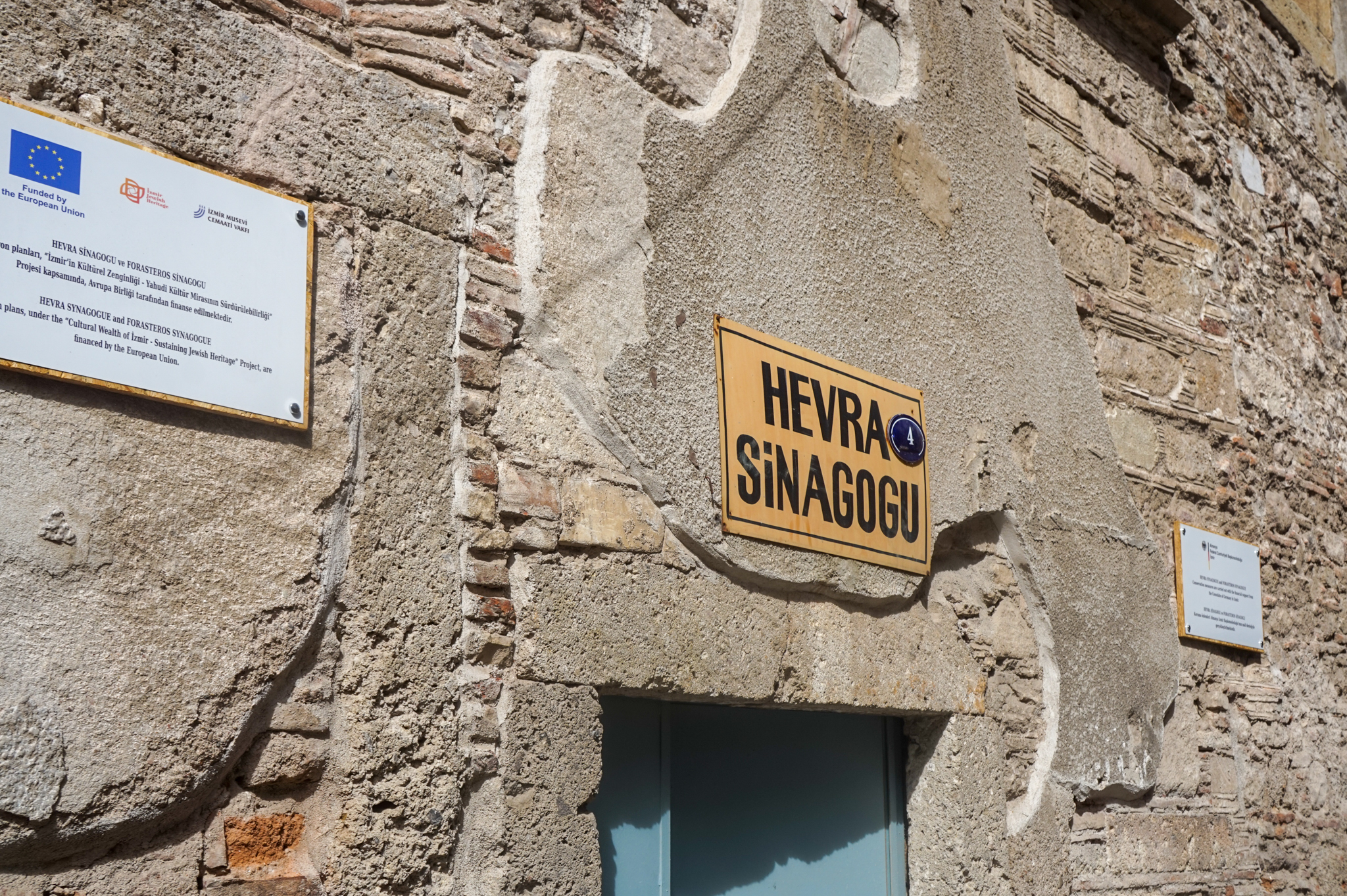
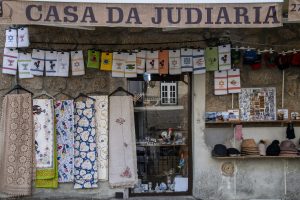
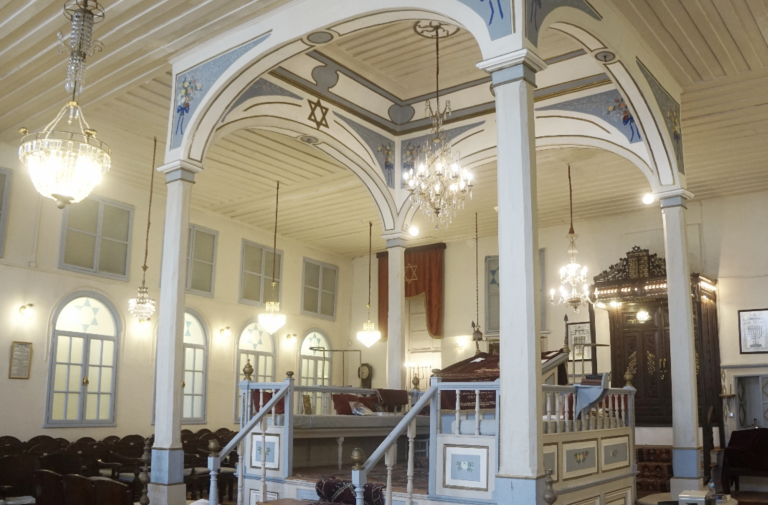
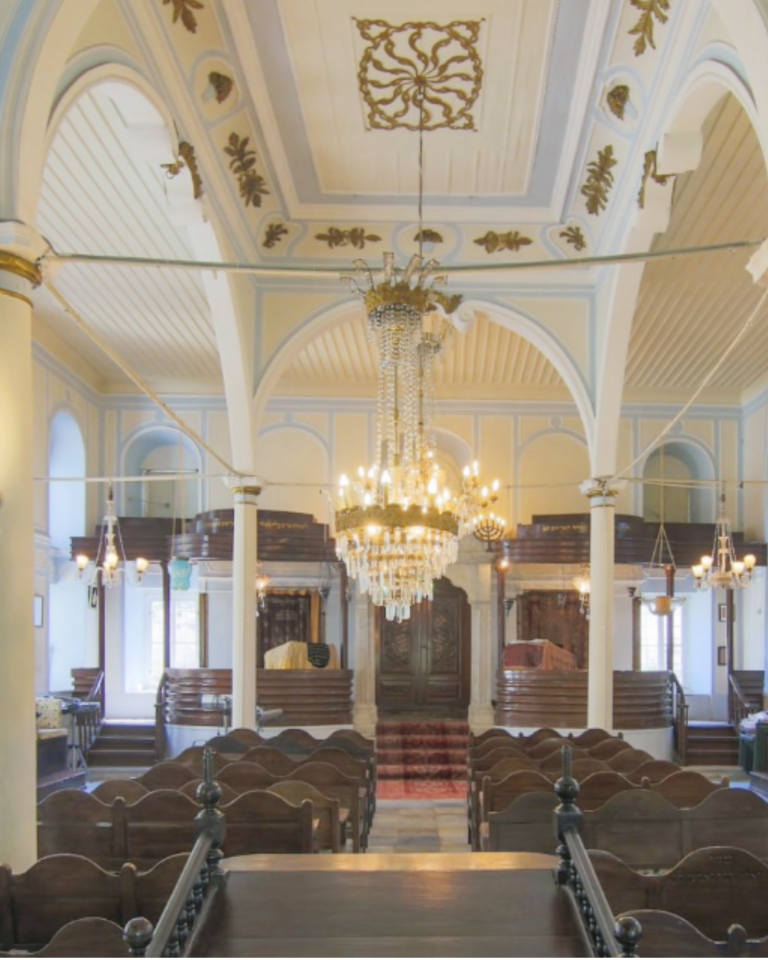
Almost all that remains of the Jews of Izmir are ruins and a fish market. Nesim Bencoya, one of 1,000 to 1,200 Jews in a city of nearly 3 million inhabitants, walks through the fragrant alleys of the Kemeraltı bazaar towards “Synagogue Street”, where places of worship dating back to the 16th century are located. He accompanies a group of tourists, introducing them to this heritage. Nesim Bencoya knew this street well as a child, before moving to Israel. In 2010, the former director of the Haifa Film Library returned to Turkey with the intention of reviving Izmir’s Jewish past. He undertook a heritage preservation project: visiting the old Jewish neighborhoods of Smyrna, restoring nine historic synagogues, and promoting Sephardic culture with a festival, which has been suspended since October 7, 2023.
“It may be more about promoting a Judeo-Spanish identity than a Smyrna identity”, comments Ceki Hazan, who participated in this heritage preservation effort by developing the Despertar project, aimed at civil society. Although a synagogue bears witness to the presence of an Ashkenazi community, the majority of Jews in Izmir are descendants of those expelled from Spain in 1492.
As he shows you around the first judería (Jewish quarter), Nesim Bencoya will offer you subiya (a delicious melon seed juice, usually drunk to break the Yom Kippur fast), boyos (small, soft filled buns) and other Sephardic specialties.
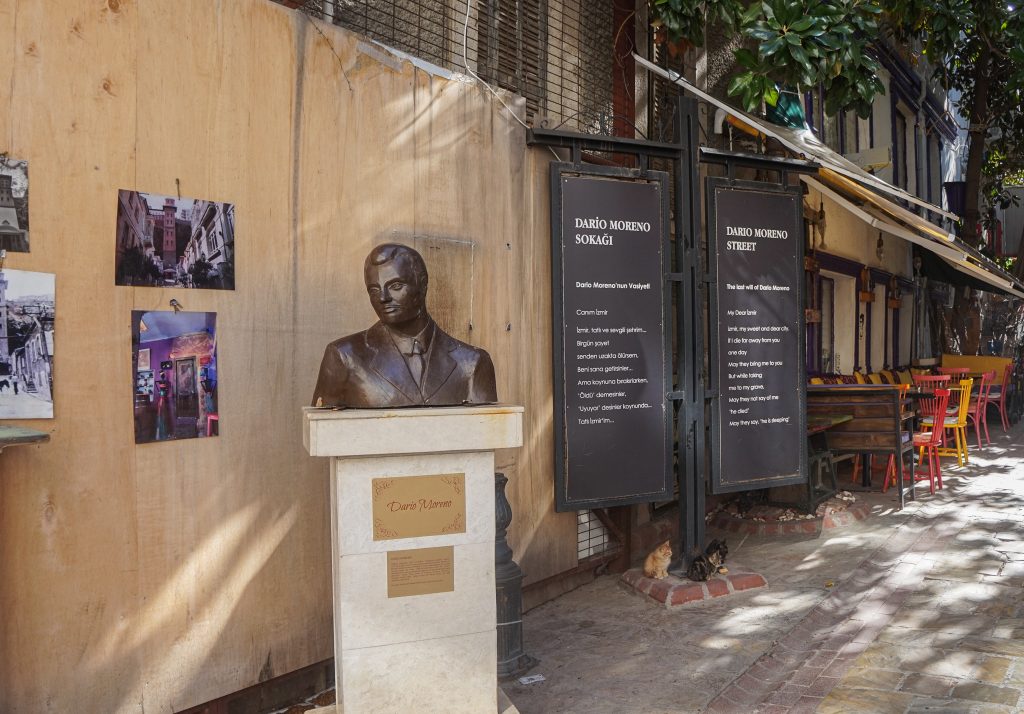
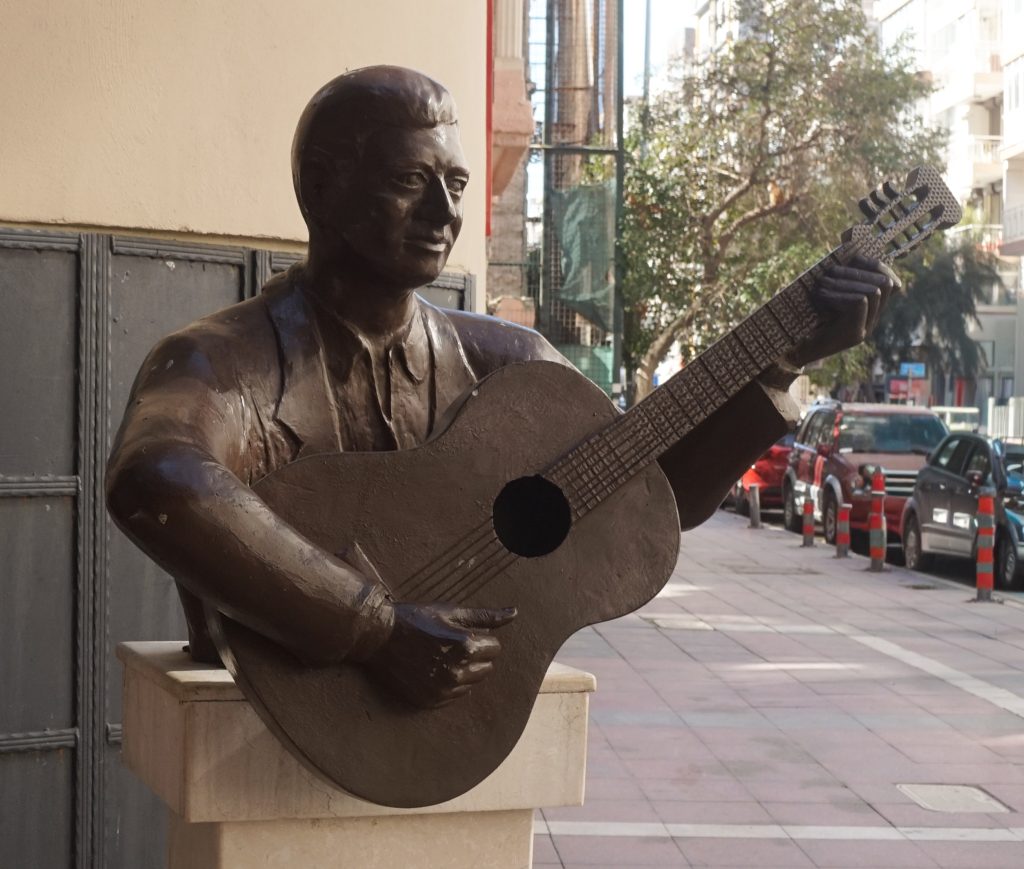
In the upper part of the city, in the bourgeois-bohemian neighborhood of Karataş, you will find the second Jewish quarter (where wealthy Jewish families lived, as from 1880 onwards, the different communities chose where to live based on their socio-economic status rather than their religious affiliation) with its bust of Dario Moreno (the singer of Si tu vas à Rio, who was born near Izmir), on the street of the same name, facing a rough bronze statue of Enrico Macias. The singer of Algerian origin, whose repertoire was significantly covered in Turkish between the 1960s and 1970s, was awarded the “golden key” of the Konak district (where the first judeía is located), according to the Turkish newspaper Yeni Asır.
The municipality and Jewish community of Izmir, as well as the European Union, foundations, and foreign states, are supporting this preservation project, particularly financially. Everyone is reclaiming this memory according to their own interests. The Jews of Izmir see it as a way to reclaim their history, which has been overlooked and forgotten, if not confiscated by the national narrative. Meanwhile, the city council sees it as an economic and ideological opportunity.
Izmir aspires to be recognized as a UNESCO World Heritage Site. The municipality is therefore relying on the project to preserve Jewish heritage, since the UN institution lists in its selection criteria the promotion of “cultural exchanges” and “evidence of a living or vanished civilization”. This UNESCO listing brings with it the promise of economic benefits: increased tourism, investment, and job creation (in the hotel, restaurant, and retail sectors).
Everyone recovers this memory according to their own interests. The Jews of Izmir see it as a way to reclaim their history, which is little known and forgotten when it is not confiscated by the national narrative. Meanwhile, the city council sees it as an economic and ideological opportunity.
This is especially true since the port city is already using the renovation of the first judería, in Kemeraltı, as a tool for gentrification. Izmir plans to turn the market into an attractive tourist destination. Rent costs are rising, which is leading to higher prices for products sold in the bazaar, such as fish, fruit, vegetables, and everyday items. Across the way, in Kemeraltı, Syrian refugees live in Basmane, a makeshift neighborhood, parts of which are being destroyed to make way for urban development projects. These initiatives and the increase in prices in the bazaar are forcing these Syrians to leave the area.
A city hall employee sees the renovation of Kemeraltı and the development of nightlife, with the opening of bars, as a political move. In his view, alcohol consumption is contrary to the Islam advocated by Recep Tayyip Erdoğan. Izmir opposes the presidential AKP party, being historically rooted in the Kemalist movement with a mayor belonging to the CHP, as are 28 of the city’s 30 districts.
Although the thinking inherited from Mustafa Kemal reflects a strong nationalism that values a homogeneous Turkish identity, ethnic and religious minorities are taken into account. In its contemporary interpretation, Kemalism uses this argument of “living together” to turn towards Europe and the United States. This is partly what motivates the municipality to support the renovation of the Jewish quarter through the semi-public urban planning company Tarkem.
A liberated memory?
Paradoxically, the AKP also glorifies this multicultural palette, but in a nostalgic interpretation of the Ottoman Empire, when Jews had the status of dhimmi. The Smyrna project is one of the few heritage initiatives that has escaped Erdoğan’s attention. The AKP has financed the restoration of synagogues across the country: in Edirne, presented as the largest in Europe, Gaziantep, Kilis, and Diyarbakır. Ceki Hazan, an academic involved in the preservation of Izmir’s Jewish heritage, is concerned about a reappropriation by the central government in his hometown, because “the Jewish community risks being dispossessed of its heritage and there will be no turning back”.
Erdoğan, whose antisemitism is no secret, cynically shares the idea of ”Turkey as the savior of the Jews” during World War II. However, this position is challenged by German historian Corry Guttstadt in her book Turkey, the Jews and the Holocaust (2008). To describe this appropriation of memory by the state, Nora Şeni, professor emeritus at the French Institute of Geopolitics (IFG), uses the term “captive memory”. She argues that this instrumentalization serves to deny the Armenian genocide, becoming the justification for Turkey’s membership in the IHRA (Intergovernmental Organization for Combating Antisemitism and Raising Awareness of the Shoah).
Erdoğan, whose antisemitism is no secret, cynically shares the idea of “Turkey as the savior of the Jews” during World War II.
To quote director Noé Debré on his film Le Dernier des Juifs (The Last of the Jews, about the departure of the Jewish community from the Paris suburbs): “The fewer Jews there are (…), the more fantasies there are.” Izmir is losing its Jewish community, more specifically its young people, who are leaving for more attractive cities such as Istanbul, or abroad to the United States or Europe. Many students have left Izmir because the quality of education, particularly in the humanities, is better in Northern Europe. The Jewish community is therefore aging and detached from the heritage project, with the exception of Nesim Bencoya, who in his own way embodies the last Jew of Izmir. More generally, Jews left Turkey in waves: in the 1920s with the rise to power of the Young Turk nationalists, in the 1940s with the imposition of a wealth tax on minorities (varlık vergisi) and the creation of Israel, and then in 2016 after the attempted military coup that led to Erdoğan’s assertive authoritarianism.
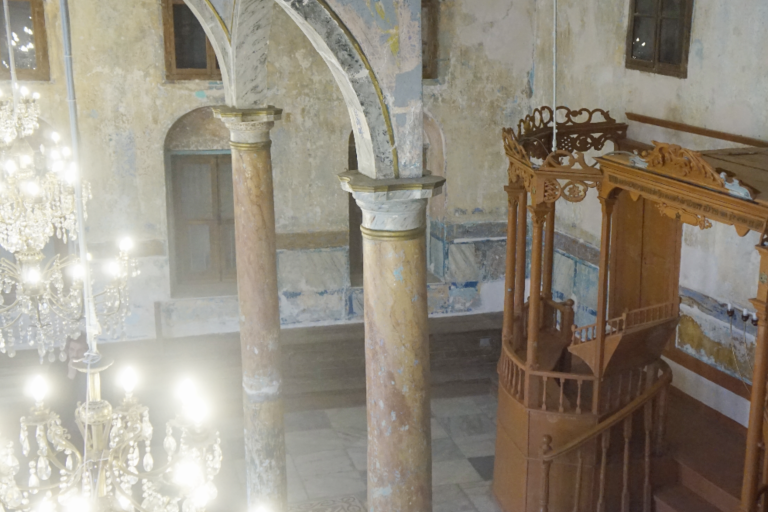
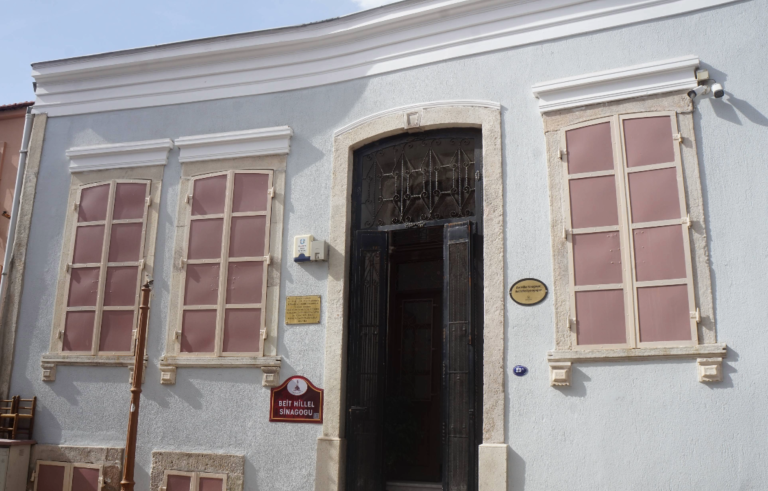
After October 7, 2023, and the intensification of the conflict in Gaza, a man spray-painted “Israel murderer” on the Etz Hayim synagogue. On the same day the following year, an individual painted red hands and a reference to the Koran on the historic Sinyora and Algazi synagogues. Meanwhile, a demonstration of about ten people sharing conspiracy theories (fantasies of Jews stealing and killing children, and Jewish responsibility for the earthquake in Turkey in February 2023) took place in front of the Beit Hillel synagogue in Karataş, according to Avlaremos, a Turkish Jewish youth media outlet.
Now, many Jews in Izmir feel protected thanks to the security forces deployed by the municipality. Visits have resumed. The synagogues, still frequented by the community, have reopened and the heritage project is continuing. Nesim Bencoya says that the Sephardic culture festival was suspended two years ago for fear of “radical attacks”, but he hopes for a new edition in December 2026, during Hanukkah.
Camille Scali
A graduate of the IFG, now a journalist and illustrator, Camille Scali is interested in minorities in the Mediterranean, Middle East, and South Caucasus regions.