Chapoutot’s Godwin moment
When the history of Nazism becomes a weapon against liberalism…
From American race laws to contemporary management, and from the fall of Weimar to Emmanuel Macron's France, Johann Chapoutot draws on the history of Nazism to put liberal modernity in the dock. Joël Kotek examines the slippages on which this reading rests: from resemblance to lineage, from ideological kinship to historical causation. He also questions the political consequences of this method, particularly when it comes to thinking about left-wing antisemitism.

In 2017 James Q. Whitman, a Yale legal scholar specialising in comparative law, published Hitler’s American Model (brought out in French by Armand Colin in 2018, with a preface by Johann Chapoutot)1. Presented as an unsettling revelation, its thesis caused a considerable stir. The Nuremberg race laws of 1935 were supposedly inspired by American race law, namely restrictive immigration laws, second-class citizenship and bans on mixed marriages. The subtitle of the French edition does not trouble itself with nuance: ‘Comment les lois raciales américaines inspirèrent les nazis’ [How American race laws inspired the Nazis]. The book has one real merit: it brings back to light a long-underestimated fact, which is that Nazi jurists did indeed read, cite and debate American segregationist law. Whitman notably unearths the minutes of a June 1934 meeting at the Reich Ministry of Justice at which American precedents were examined, as well as approving references to them by the Nazi jurist Roland Freisler. On this factual point he is right, and a historiography that dismissed these mentions as marginal and inconsequential is wrong. But between the fact and the thesis lies a chasm, the one that separates ideological kinship from causal lineage. And the title clears that chasm in a single leap.
From resemblance to lineage
A resemblance that is not causation. The heart of the problem is methodological. Showing that Nazi jurists took an interest in America in no way proves that America shaped their legislation. This is the objection raised in the December 2018 issue of the Journal of American History by the German historian Jens-Uwe Guettel, one of the leading experts on German-American transfers2. While acknowledging the book’s merits, he faults Whitman for failing to engage seriously with either the literature on Nazi antisemitism or the work on the internal dynamics of the Third Reich, and above all for overstating the presence of American references in the genesis of the Nuremberg Laws. These laws, he points out, emerged from a cluster of factors that overwhelmingly had nothing to do with the United States: the NSDAP programme of 1920, the 1933 Law for the Restoration of the Professional Civil Service (modelled on an Italian precedent), the Defence Law of May 1935 and, at a deeper level, a German antisemitic tradition that had already reached full maturity3. Whitman is a legal scholar, not a historian. Nor is the German historian alone in his criticism. Indeed, Whitman is forced to cite the very consensus he claims to overturn: Marcus Hanke, who judged American segregation to have had no significant influence, and Guettel, who wrote as early as 2012 of the ‘stunning insignificance’ of this supposed influence. In other words, the thesis is not the culmination of cumulative research. It is a polemical inversion of established knowledge, and it makes no secret of the fact. Overturning received wisdom always sells.
To make America the matrix of Nuremberg, one has to forget that in Germany state antisemitism was an old, home-grown and politically organised doctrine long before anyone thought of taking inspiration from Jim Crow.
German antisemitism’s overwhelming head start. The ‘American matrix model’ does not hold up. To make America the matrix of Nuremberg, one has to forget that in Germany state antisemitism was an old, home-grown and politically organised doctrine long before anyone thought of taking inspiration from Jim Crow. It hardly needs saying that the word ‘antisemitism’ was popularised by the German political agitator Wilhelm Marr in 1879. That same year the historian Heinrich von Treitschke, from his lofty Berlin chair, coined the famous phrase that would become a slogan: ‘the Jews are our misfortune’. In 1880-1881 a major antisemitic petition circulated demanding discriminatory measures. The 1890s saw antisemitic parties flourish, and in 1892 the Conservatives’ Tivoli Programme brought hostility to Jews into parliamentary politics. In 1899 Houston Stewart Chamberlain gave völkisch racism its pseudo-scholarly bible. Above all (and Guettel lays particular stress on this), the president of the Pan-German League, Heinrich Claß, was already demanding in 1912, in a pamphlet that caused a sensation, that Jews be stripped of their civil rights and treated as foreigners on German soil. This is the crux: depriving Jews of citizenship was an old and recurring Pan-German demand. Point 4 of the Nazi Party programme of 1920 takes it up almost word for word. Only a person ‘of German blood’ may be a citizen (Staatsbürger); no Jew can be one. The Reich Citizenship Law of 1935 therefore merely carried out a fifteen-year-old German programme, itself the product of half a century of agitation. To look for its source in Washington is to ignore Munich, Berlin and Vienna. More broadly, it is to brush aside the structural antisemitism of Europe.
The racial criterion and the religious criterion. Most troubling of all, Whitman concedes as much himself. While casting himself as an iconoclast overturning certainties, he acknowledges that American racism, decentralised and federal as it was, was incapable of producing mass murder on an industrial scale. In his view, the Shoah is unthinkable in the American context. Better still, he points out the ultimate, sordid irony: when the Nazis rejected certain American practices, it was not because they found them too lenient but because they found them too harsh. The American ‘one-drop rule’, which made even distant African ancestry grounds for exclusion, struck them as excessive. On this precise point, their own legal definition of the Jew was more ‘moderate’. One last paradox remains. The Nuremberg Laws of 15 September 1935 certainly laid down racialist principles, but they refrained from defining the Jew in racial terms. It fell to the first implementing decree, of 14 November, to settle the matter. And for want of any marker in the blood, the legislator went looking for race in the synagogue registers. Anyone descended from members of the Jewish religious community was deemed ‘fully Jewish’. The ancestors’ race was thus read from their religion, and the religious practice of the person concerned could, in borderline cases, tip a half-Jew over into full Jewishness. The criterion was religious, even if the logic was ‘racial’. Which leaves the admission written into the regime’s most fundamental law: to define its imaginary race, Nazi antisemitism had no option but to borrow the records of a religion that was, by contrast, entirely real.
In one case, America is the poisoned source whose legacy Nazism is said to have inherited; in the other, it is the heir that recycles the Nazi poison. The causal arrow is reversed, but the target stays put: it is always liberal, capitalist, American modernity that ‘Nazism’ is used to indict, in whichever direction the moment requires.
A thesis for the Trump era. Which leaves the question of why so fragile a thesis proved so successful. Part of the answer lies in a name: Donald Trump. Whitman makes no secret of it. In his foreword to the French edition, he recounts receiving the proofs on the very day of the November 2016 election, convinced, like most of those around him, that Hillary Clinton would win. He then ties the urgency of his argument to Trump’s victory and to what he describes as the resurgence of white supremacy at the highest level of the American state. The book is not merely an inquiry into 1935. It is also an occasional piece from 2017, in which Trump’s America casts a retrospective light on Coolidge’s. The mood of those years turned anti-American genealogies into a thriving genre, and this is the point at which to name the man who has become its ablest advocate in France.

Nazism, the matrix of contemporary management?
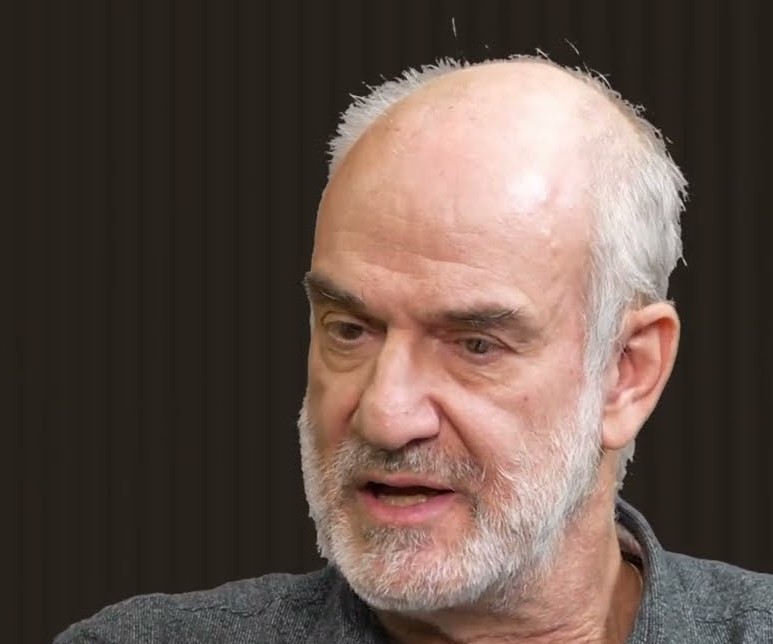
The Chapoutot case, or genealogy in both directions. It is no accident that the French edition of Whitman carries a preface by Johann Chapoutot, an undisputed specialist in Nazi ideology, to be sure, but now also a controversial fellow traveller of La France Insoumise. The French historian lends the thesis (‘America inspired Nuremberg’) the considerable weight of his name, and his books on Nazism are authoritative. Yet two years later the same historian constructed the exact opposite genealogy. In Free to Obey, he contends that contemporary Western management is, in part, a legacy of Nazism. Through Reinhard Höhn, an SS jurist who after 1945 reinvented himself as the founder of the thriving Bad Harzburg school of management, a former senior SS officer is promoted to ‘precursor, if not prophet’ of New Public Management, itself elevated into a quasi-religion of the Western state4. The author goes so far as to posit a near-identity between Nazism and management. The book, a considerable success, inevitably drew criticism from specialists on the very grounds on which Whitman stands condemned. A review published in Politiques et management public puts it bluntly: showing that the Nazis spoke of ‘agencies’ and that New Public Management advocates ‘agencification’ does not justify concluding that Nazism inspired the latter, or that it spread from Germany to the English-speaking world5. Anglo-American managerial liberalism has other sources, substantial and independent ones: Taylorism, Fordism, the human relations school, management by objectives as championed by Peter Drucker. Once again, the step from parallel to lineage is taken without proof. It is Whitman’s fallacy exactly, merely reversed. And it is here, paradoxically, that the coherence of the whole becomes apparent. In one case, America is the poisoned source whose legacy Nazism is said to have inherited; in the other, it is the heir that recycles the Nazi poison. The causal arrow is reversed, but the target stays put: it is always liberal, capitalist, American modernity that ‘Nazism’ is used to indict, in whichever direction the moment requires. This is no longer a matter of establishing facts. It is political rhetoric that reshapes itself as needed. And the blessing of one of France’s greatest historians of Nazism makes it no sounder. It merely makes it more authoritative, hence more effective, in short more damaging. For to situate is not to derive.
That scientific racism, eugenics and imperialism formed a shared spirit of the age on both sides of the Atlantic, no one doubts: that is ideological kinship, and it is real. To claim that the Nuremberg Laws descend in a direct line from the codes of Alabama (or that our organisational charts descend from the SS) is to assert a causal link that does not withstand scrutiny. To conflate the two is to write bad history for purely ideological, if not partisan, reasons. Understanding the Shoah and antisemitism demands precisely that we resist the allure of easy analogies and genealogies. Exterminatory antisemitism was not imported from America. It ripened for more than half a century at the very heart of German culture, until it became a programme, then law, then massacre. Casting Western liberal modernity as the spiritual heir of Nazism is not history: it is political presentism.
The historian for whom ‘capital always opts for the far right’ thus affects to forget that the anticapitalist left, too, joined hands with the fascists, precisely against the very democratic centre he accuses of every betrayal.
From Weimar to Macron: the pitfalls of analogy
From historical genealogy to political prophecy. This fondness for lineage might be dismissed as a scholar’s quirk. That would be to underestimate what is at stake, for in our brilliant historian’s work it now leads to an entirely explicit reading of the French present. In Les Irresponsables6 [The Irresponsibles], he reconstructs the manoeuvring of January 1933. He invokes Franz von Papen, the politician from the conservative (and certainly not liberal) Catholic right who thought he could ‘neutralise’ Hitler by handing him the chancellorship, in order to cast light, in barely veiled terms, on current events in France. The lesson is crystal clear, and he hammers it home elsewhere: it is never the fascists who seize power; it is ‘liberals’ (?) who hand it to them. Macron’s supporters thus become the ‘useful idiots of the far right’. The government in office is deemed ‘neoliberal and social-Darwinist’, close to the Rassemblement National ‘through intellectual affinity7’, and the 2024 dissolution of the National Assembly a manoeuvre to carry the RN into Matignon8. Borrowing the concept of the ‘extreme centre’ from the historian Pierre Serna, Chapoutot posits that capital, in the end, always chooses the far right. The foundation is a Marxian premise: fascism is not an accident but a function of capitalism, the resource it turns to as a last resort. It follows mechanically that liberalism and fascism share the same class base, and therefore the same enemy (read: the redistributive left), and that the moderate centre is not the bulwark against barbarism but its objective stepping stone. According to Chapoutot, ‘“Liberals” and the far right always have the same enemy: the redistributive left, which challenges an unjust order and an economy that destroys women, men and all living things9’. He adds: ‘the compromise between authoritarian liberalism and fascism is a classic of twentieth-century history.’ Clearly, what is at issue is no longer merely the ‘American model’, nor even economic liberalism alone, but liberalism as such, right down to its French governmental form. And yet this is, in every respect, the same intellectual manoeuvre, now carried out for a third time. In Libres d’obéir, he argues that Western management descends from Nazism; in his preface to Whitman, that Nazi race law was inspired by the American example; here, that fascist power springs from the liberal centre. Each time, he establishes a resemblance or a genealogical thread, then converts it into causation, in order to indict liberal modernity. The distinction between kinship and lineage is therefore not merely a matter for historians of the past: it names the matrix of the whole project, political prophecy included. Scholarly genealogy and activist prediction are one and the same move. Johann Chapoutot is the intellectual touchstone of the Institut La Boétie, Jean-Luc Mélenchon’s think tank.
Reduced to the epiphenomenon of a class struggle, antisemitism ceases to be thinkable anywhere but on the right, and the left-wing antisemite, made literally nowhere to be found, is absolved in advance.
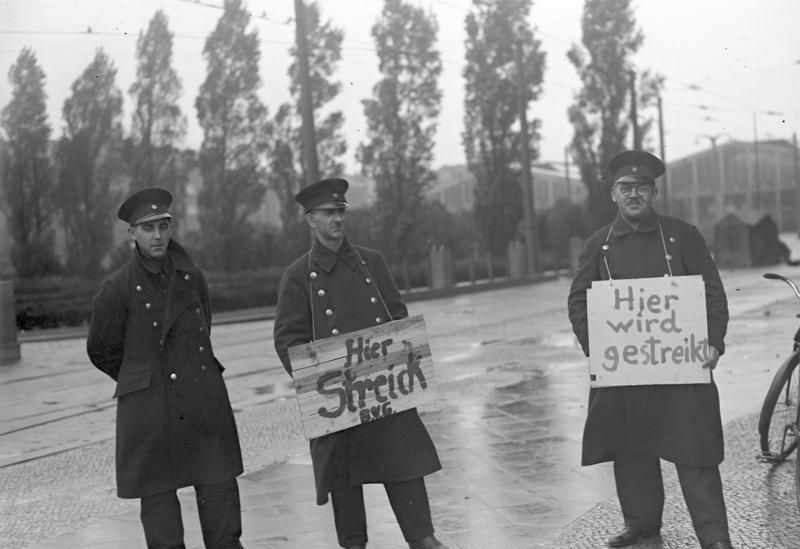
The double betrayal by the right and the communists. Credit must nonetheless be given where this thesis is sound: Hitler did not ‘win’ an election; he was hoisted into power by the intrigues of conservatives who thought themselves cleverer than he was. The French historian Pierre Serna’s ‘extreme centre’ is indeed a concept and not a mere slogan, even if it applies more to the French case (Bonapartism, Gaullism and so on) than to the German one. Yes, von Papen betrayed the Weimar Republic, but he was not alone in doing so. Once the great ledger of ‘objective alliances’ has been opened, it would be dishonest to close it after examining the right alone. For in those same years the German communist left also converged with the Nazis against the liberal Republic. Faithful to Moscow’s ‘social fascism’ line, the KPD regarded the moderate left, not Hitler, as its main enemy. In 1931 and 1932, the KPD and the NSDAP waged a series of actions against the German Republic, sometimes in parallel, sometimes in concert: in August 1931, communist support for the referendum launched by the Stahlhelm and the Nazis to bring down the socialist government of Prussia; on 12 September 1932, the no-confidence motion passed jointly against the von Papen government, which led to the dissolution of the Reichstag. The textbook case is the Berlin transport strike (BVG) from 3 to 7 November 1932: on the eve of the elections, the communist union (RGO) and the Nazi one (NSBO) ran it together, with Ulbricht and Goebbels marching their pickets side by side and the strike committee sitting at the Karl-Liebknecht-Haus, the KPD’s headquarters10. The Social Democrats, and historians after them, made it the prime example of the ‘anti-republican united front’ of ‘Nazis and Kozis’. A communist deputy put it bluntly at the time: Bolshevism and fascism had ‘a common goal, the destruction of capitalism and of social democracy’. And the logic culminated, on a continental scale, in the Nazi-Soviet Pact of 23 August 1939: the two totalitarian regimes carved up Europe and, for two years, until the invasion of the USSR, turned their weapons against the liberal democracies. The Comintern went so far as to instruct communist parties to sabotage the Franco-British war effort. The ‘objective alliance’, Chapoutot’s favourite tool, thus turns against his own camp far more surely than he admits. To write the genealogy of 1933 by heaping blame solely on a right he wrongly takes to be liberal, while beatifying the left, is not to do history: it is a kind of hemiplegia, a selective blindness. The historian for whom ‘capital always chooses the far right’ thus affects to forget that the anti-capitalist left also joined hands with the fascists, precisely against the democratic centre he accuses of every kind of treachery. It will be objected that these convergences were cynical rather than a genuine fusion, and that the KPD was soon the Nazis’ first victim. True, but the same holds for von Papen, who despised Hitler and was sidelined within the year. The ‘objective alliance’ never required affection. And so the analogy he puts before us (the dying Weimar Republic, hemmed in by armed militias, and Macron’s France) flattens two situations that are worlds apart: the reduction is of the same kind as ‘Nuremberg equals Alabama’.
The blind spot: the possibility of antisemitism on the left
The root of the problem is that a fascism ‘inherent in capitalism’ becomes a fascism emptied of conceptual meaning. For if everything is fascism, nothing is, and the ability to recognise the real thing is lost. Above all, this framework shifts the danger towards the liberal centre, at the risk of relativising the xenophobia and antisemitism specific to the far right, which are reduced to froth on the surface of class struggle. For anyone who studies antisemitism, this is a decisive point. This is where the matter becomes most serious, because the mechanism is not a matter of temperament but of sophistical logic. If a man of the left turns out to be an antisemite, then he must be… a man of the right, as our historian argued in an interview with Au Poste: ‘When people talk about the left-wing antisemites of the late nineteenth century? […] They are neither internationalists nor universalists, they are the complete opposite […] The left is by definition universalist, internationalist, humanist. It embraces the whole of humankind. When you truly are all that, notions such as racism, antisemitism, sexism make absolutely no sense. […] Being on the left really is work, daily work, and sometimes even against yourself, against your prejudices, against your first spontaneous ideas. And so, when you really do that work, of course you are immune to this intellectual and moral leprosy that is antisemitism or racism, naturally.11’ QED.
Reduced to the epiphenomenon of a class struggle, antisemitism can no longer be conceived of anywhere but on the right, and the left-wing antisemite, rendered literally impossible to find, stands absolved in advance. If antisemitism is a function of capital and the weapon of reaction, then it is, by its very construction, always on the right. Hatred of Jews is confined to the camp that the redistributive left is fighting. ‘Left-wing antisemitism’ thus becomes an oxymoron, an impossibility in principle. Whatever goes under that name can therefore be only one of two things. Either a legitimate anti-Zionism, standing in solidarity with Palestine and unjustly relabelled as antisemitism: in short, a critique of an unjust order, passed off as hatred. Or an ‘instrumentalisation’ (the very word La France insoumise uses to reject the accusations levelled at it) manufactured by ‘the extreme centre’ to divide the anti-fascist front and divert attention from the only antisemitism deemed real, that of the far right. It is, once again, the flaw of the master key: a single causal scheme that claims to explain everything and which, by tracing everything back to capital, becomes blind to what it refuses to see. The common thread, from start to finish, is therefore always the same: casting liberalism as the genealogical and structural accomplice of fascism, through management yesterday, through racial law the day before, through the ballot box today. And the flaw does not vary either. To confuse kinship with lineage, resemblance with cause, is not to shed light on our present: it is to demand that it resemble the past.
- James Q. Whitman, Le Modèle américain d’Hitler. Comment les lois raciales américaines inspirèrent les nazis, preface by Johann Chapoutot, trans. from the English by Christophe Jaquet, Paris, Armand Colin, 2018 (original edition: Hitler’s American Model: The United States and the Making of Nazi Race Law, Princeton, Princeton University Press, 2017). ↩︎
- A long-standing member of the history department at Pennsylvania State University, Jens-Uwe Guettel is now affiliated with the University of North Carolina at Chapel Hill. His works include German Expansionism, Imperial Liberalism, and the United States, 1776-1945, Cambridge, Cambridge University Press, 2012, based on his doctoral dissertation (‘Reading America, Studying Empire: German Perceptions of Indians, Slavery, and the American West, 1789-1900’). ↩︎
- Jens-Uwe Guettel, review of James Q. Whitman, Hitler’s American Model: The United States and the Making of Nazi Race Law, Journal of American History, vol. 105, no. 3, December 2018, p. 737. DOI: 10.1093/jahist/jay396. ↩︎
- Johann Chapoutot, Libres d’obéir. Le management, du nazisme à aujourd’hui [Free to Obey: Management from Nazism to the Present], Paris, Gallimard, 2020. ↩︎
- Marcel Guenoun, ‘Analyse critique du point de vue de la gestion publique de l’ouvrage de Johann Chapoutot: Libres d’obéir. Le management, du nazisme à aujourd’hui’ [A critical analysis of Johann Chapoutot’s Libres d’obéir from a public management perspective], Politiques & management public, vol. 37, no. 2, 2020, pp. 211-229. DOI: 10.3166/pmp.37.2020.0011. Available on Cairn: shs.cairn.info/revue-politiques-et-management-public-2020-2-page-211. Marcel Guenoun is a former director of the IGPDE (Institut de la gestion publique et du développement économique), which gives him authority in the field of public management. He specifically criticises Chapoutot for disregarding the substantial body of socio-historical work on public management ideas in Germany, and disputes that Reinhard Höhn was the precursor of New Public Management. ↩︎
- Johann Chapoutot, Les Irresponsables. Qui a porté Hitler au pouvoir? [The Irresponsibles: Who Brought Hitler to Power?], Paris, Gallimard, 2025. ↩︎
- ‘Johann Chapoutot: “Le capital fait toujours le choix de l’extrême droite”’ [Johann Chapoutot: ‘Capital always chooses the far right’], interview, Politis, July 2024, online: https://www.politis.fr/articles/2024/07/johann-chapoutot-le-capital-fait-toujours-le-choix-de-lextreme-droite/ ↩︎
- Johann Chapoutot, ‘Dans la nausée brune dont nous accable le pouvoir, les leçons des années 30’ [Amid the brown nausea the government is inflicting on us, the lessons of the 1930s], Libération, 11 June 2024. ↩︎
- Johann Chapoutot, ‘Dans la nausée brune dont nous accable le pouvoir, les leçons des années 30’, op. cit. ↩︎
- Jacques Droz, Le Socialisme démocratique, 1864-1960 [Democratic Socialism, 1864-1960], Paris, Armand Colin, 1966. See also Thierry Wolton, Rouge-Brun. Le mal du siècle [Red-Brown: The Sickness of the Century], Paris, JC Lattès, 1999. ↩︎
- Interview with Johann Chapoutot, Au Poste, [June 2024], online transcript: https://auposte.media/emissions/johann-chapoutot-la-bordelisation-du-pays-c-est-macron/transcription ↩︎