“We, Italian Jews: A Minority within the Minority”
Read by Ada Treves on February 5th, 2026, during the latest “K. On Stage” at the Théâtre de la Concorde in Paris, this text plays with a self-portrait of Italian Judaism. In contrast to the better-known narratives of the European Jewish world, it brings out its singularity: an ancient, discreet, layered presence, a minority even within a minority. A world scarcely visible, without folklore, where apparent obscurity prevents neither continuity nor the force of existence.
“There are the so-called inert gases in the air we breathe. They bear curious Greek names of erudite derivation which mean ‘the New,’ ‘the Hidden,’ ‘the Inactive,’ and ‘the Alien.’
They are indeed so inert, so satisfied with their condition, that they do not interfere in any chemical reaction, do not combine with any other element, and for precisely this reason have gone undetected for centuries. (…)
They are also called the noble gases — and here there’s room for discussion as to whether all noble gases are really inert and all inert gases are noble. And, finally, they are also called rare gases. (…)
The little that I know about my ancestors presents many similarities to these gases. Not all of them were materially inert, for that was not granted them. But there is no doubt that they were inert in their inner spirits, inclined to disinterested speculation, witty discourses, elegant, sophisticated, and gratuitous discussion. (…)
Noble, inert, and rare: their history is quite poor when compared to that of other illustrious Jewish communities in Italy and Europe.”
This text also speaks of my ancestors, for these are my uncle’s words. It is the opening of Argon, the story that opens The Periodic Table by Primo Levi. It captures the essence of Italian Judaism: something that does not explode, that does not blend easily, and that precisely for this reason might go almost unnoticed.
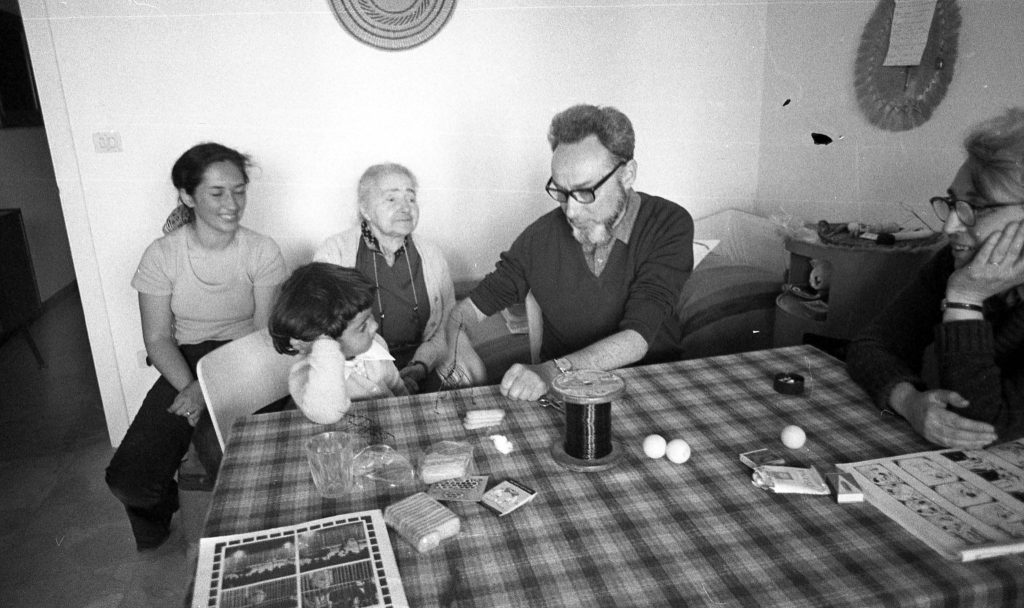
Yet, we are very much there. We have always been few in number, but we continue to exist.
We are neither truly Sephardic nor truly Ashkenazi. We have welcomed both, but we are not them. We are Italian Jews, quite simply. We are the result not of assimilation, but of stratification. We are a minority even among other Jews: a minority within the minority. A square root.
We have no ‘elsewhere’ to think of, no great expulsion to recount, no original trauma haunting our minds, no memories of the shtetl. We do not lend ourselves to folklore.
We have been in Italy for over two thousand years. We have not arrived; we stayed. And we have remained ourselves, since time immemorial.
In Piedmont, where I come from, synagogues cannot be seen from the street. They do not occupy public space: they bend it. They are above, behind, inside, hidden on upper floors, in anonymous buildings.
In Casale Monferrato, you cannot distinguish the synagogue from neighbouring buildings. Yet, inside, in Piedmontese Baroque style, there is an explosion of gilded decoration. Outside, sobriety; inside, theatre.
That is how we are: even inert gases, at times, enjoy a touch of theatre and excess… always with style.
We do not need to shout in order to exist. Yet there is no shortage of stories. In Cuneo, in 1799, a cannonball pierced the ceiling of the synagogue and came to rest in a wall, without injuring anyone. The community decided to keep it. They established the “Purim della bomba”.
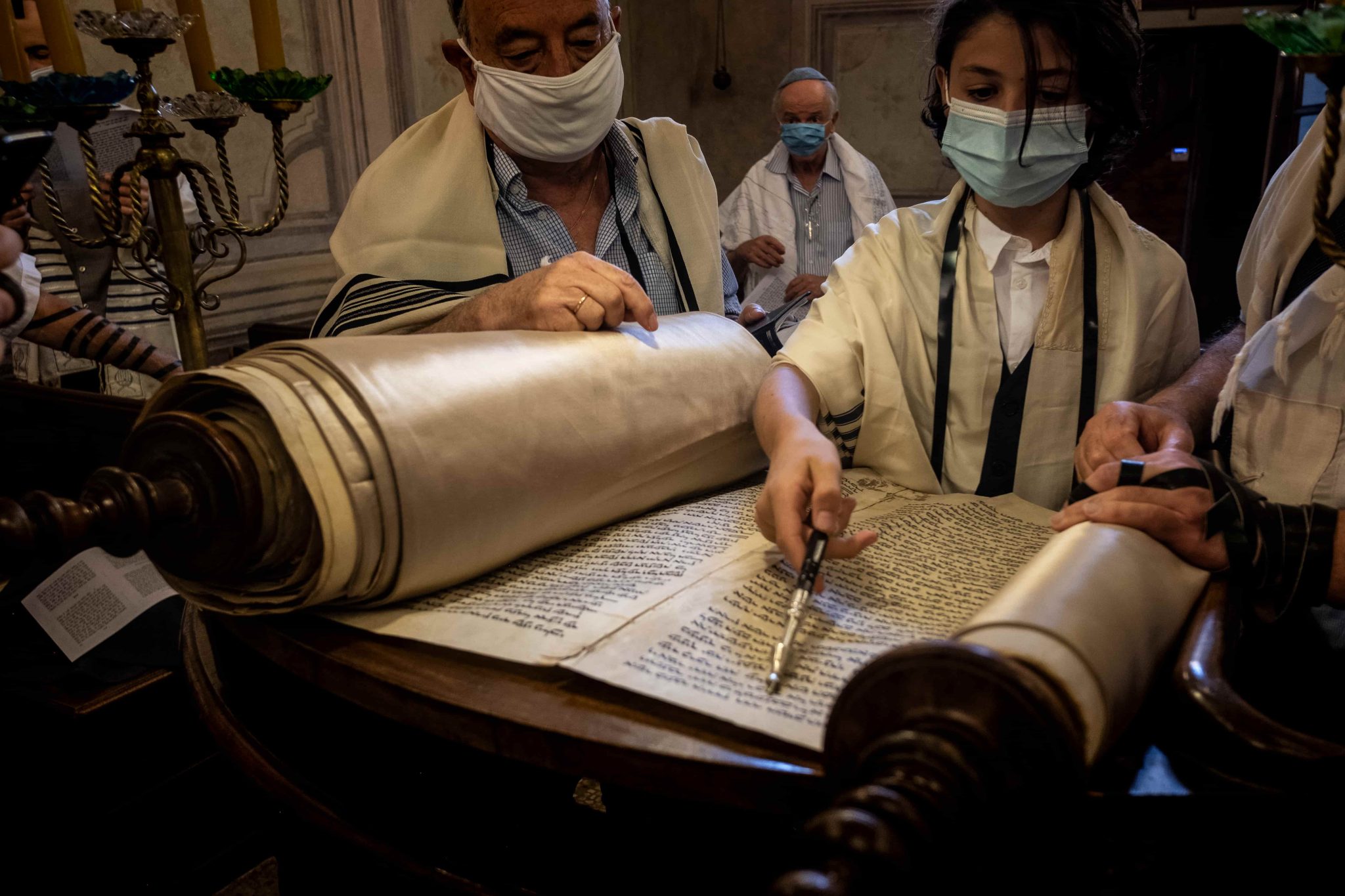
In Biella, the tiny town up north where I grew up, we have the oldest kosher Sefer Torah in the world. It is still in use. Reading from it is a privilege, even if making one’s way through its ancient characters, dating back to the mid-thirteenth century, can be something of a nightmare. And my children know this all too well.
History is everywhere. And there are many stories.
Trieste is a city where everyone can find their place and where no one is entirely at home. Port, empire, cafés, psychoanalysis: Trieste is a Jewish city, even when we are not speaking of Jews. It thinks too much, it has too much history, it speaks too many languages.
Trieste, like Turin, is a land of writers: from Natalia Ginzburg to Italo Svevo.
But each community has its own madness, its geniuses and its madmen, its heroes and its inventors.
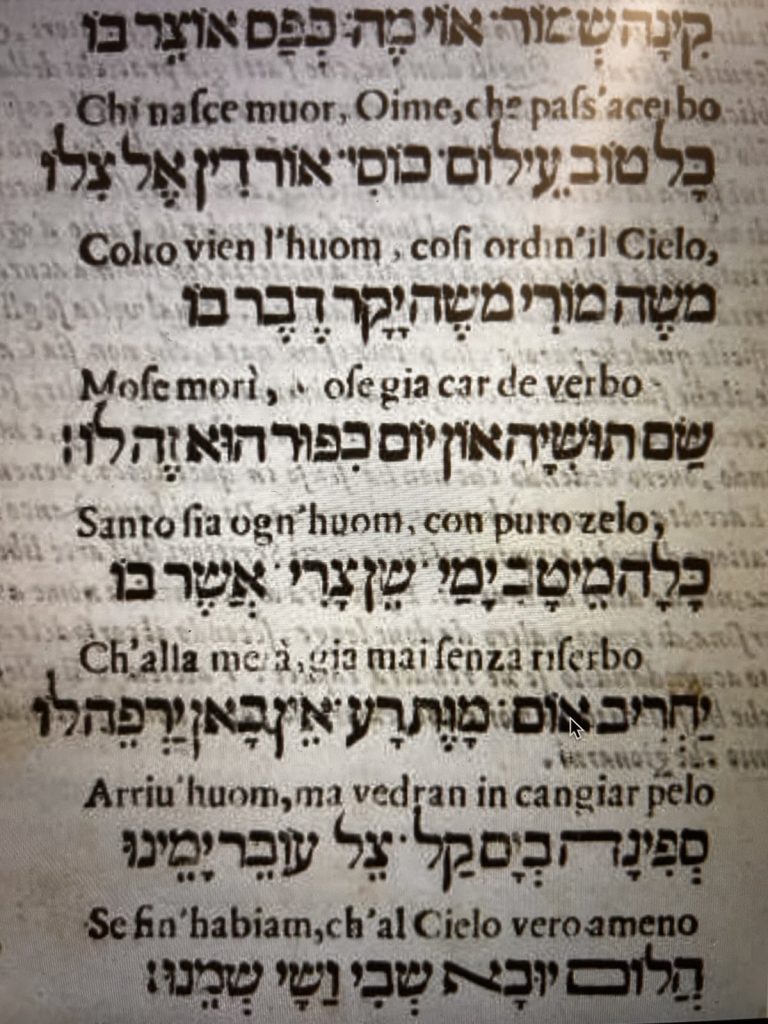
Padua gave us Moses Chaim Luzzatto, the RaMCHaL, whose grave is a place of pilgrimage. Amedeo Modigliani was born in Livorno; in Turin, Rita Levi-Montalcini; and Leone Modena came from Ferrara. It was in Venice, though, that Leone Modena composed the Kinah shemor, Chi nasce muor, a perfect bilingual elegy, as beautiful as Venice itself, city where now there are almost only tourists and a tiny handful of Jews who resist, living on their past.
Venice invented the word ‘ghetto’, an idea that later somewhat slipped out of our control… It was also in Venice that the Talmud was first printed.
Not bad, all things considered.
Few in number, we Italian Jews are an exception and a complication: a Judaism without blockbusters, without epics, without nostalgia.
We are painfully European, European even before Europe decided to exist.