Lanzmann: holding on to the present
A month ago, Claude Lanzmann would have turned 100. To mark the occasion, Danny Trom revisits the debates surrounding the representation of the Shoah, highlighting the tension between the attempt to keep the event strictly contemporary and the movement of life.
When it comes to the Shoah, there are two distinct problems. That of forgetting and that of remembering.
The first seized us in the mid-1980s, with a few subsequent twists and turns. Two opposing camps delivered a political and aesthetic drama that only France knows how to produce. On the one hand, there was Claude Lanzmann’s Shoah, a titanic work that was able to reconfigure even the very name of the unimaginable destruction of the Jews of Europe; on the other, those who attempted, in one way or another, with varying degrees of talent, to depict the event. Lanzmann and his supporters accused figurative approaches of all stripes, mainly filmmakers, of precipitating the Shoah into oblivion of what it really was. The American series Holocaust and Spielberg’s Schindler’s List were nothing but a series of mistakes, since the genocide in its industrial dimension was supposedly represented, but in reality stripped of its unfathomable content and metabolized to be relegated to the past. They were objected to by claims that the images produced by cinema, on the contrary, fix the event in the present in the public mind.
The controversy took a metaphysical turn when the fault of pictorial representation was challenged by George Didi-Huberman, for whom the interpretation of the four photographs exhumed from the Chelmno Sonderkommando was precisely an opportunity to bring the event closer to us, to make it more present. The documentary image was not only interpretable, but it was our duty to scrutinize it in detail in order to read the message of those who had bequeathed it to us. Lanzmann’s supporters evoked the Jewish tradition, which only gives credence to the spoken or written word, including the silence that punctuates the word, as George Steiner would say, denouncing an iconic, transgressive attempt to Christianize the Shoah. The epistemological dispute then took a theological turn, revolving around the embodiment of the ineffable, further dividing positions. But on closer inspection, or rather from a broader perspective, the issue at stake was the same on both sides: the danger of forgetting in an era when witnesses were disappearing, Holocaust denial was flourishing, and the event was being diluted in the tide of mass violence of the 20th century. Everyone wanted us to remember, some by reserving a status of historical extraterritoriality for the event (“a protected, preserved region where no one should ever have access”, as Lanzmann said in Les Temps Modernes, June 1979, No. 395), others by seeking, prosaically, through fictional or documentary illustration, sometimes naively, sometimes skillfully, to embed it in the public imagination.
Shoah therefore struggles against the tide of life, of life that flows by.
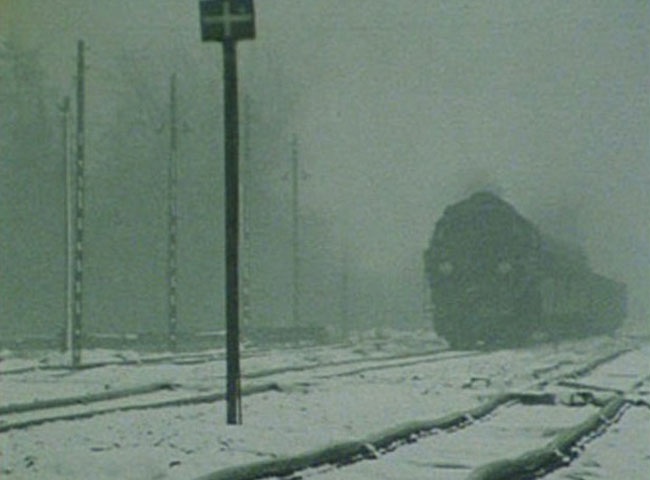
However, it was the other problem, that of memory, which would arise as an extension of the first. Those who understood Lanzmann, those who recognized that no fiction—however evocative, scrupulous, powerful, and realistic—could succeed in dimming this blinding, dazzling black hole, experienced the problem of memory in the present. For Shoah is in the present tense. The film simultaneously explores and fills the contrast between the concreteness of the world before our eyes—a clearing, a river, a hill, railroad tracks, the sky, a field—and those same objects, indexed by gestures, pointing fingers, and glances, those of the criminal witness or survivor. In Shoah, the two worlds, material and indexical, separate in order to better merge. This is something that no fictional image or photographic document can achieve. For the latter belong, by their very nature, to the historical world, that past world that is graspable, readable, and ultimately understandable. This world can be explored because we have an affinity with it. To participate in this world, it must indeed be past, submerged, like a shipwreck under the sea. We can only visit it from the stance, which we call the present, to which we are anchored. However, Shoah produces a stasis; the work prevents any temporal dislocation since the event is current, strictly contemporary. It takes away any temporal grip we might have. Shoah therefore fights against the current of life, of life as it flows. And yet we live, we have children, we are carried away by the flow of time that inevitably breaks through the dam that Lanzmann has never ceased to consolidate.
It is precisely here that, from the series of condemned films, one stands out, Benigni’s ill-titled Life Is Beautiful. Once the most disparaged, it was believed to address the problem of forgetting, when in fact it deals with that of remembering. Based on this miscategorization, the author was vilified for having “triumphantly presented falsehood” (in the words of Serge Klarsfeld in an interview with Les Inrockuptibles); above all, for having dealt with extermination through fable, and comic fable at that. “You shouldn’t look for anything realistic in it”, the accused clumsily replied in his defense. His best lawyers argued that the filmmaker was merely suggesting horror, another indexical strategy, which this time relies not on the overlap of one world onto another, without any gap, but on the maximum distance between them (J.-M. Frodon, “The Shoah as an absurd gag. Life is Beautiful, a clever but disturbing film,” Le Monde, May 19, 1998). But here, the essential point was overlooked.
Benigni nevertheless revealed what had led him down this steep slope in an interview (L’Express, October 22, 1998): “When my father came home, he weighed 35 kilos. Every evening at dinner, he would talk about the ration of bread that he made last all week. But his wife was afraid that he would traumatize the kids. So he started to change his approach. To make it lighter.” And here the stumbling block of Shoah: “the kids”. Can we stop the flow of their lives? I am reminded of the kindergartens in Israel which, when the sirens of Yom HaShoah sound throughout the country, cover the shrill sound with songs so that the children do not hear and do not ask questions. To everyone’s relief, especially the parents. In its intention, this gesture, this joyful veil of sound thrown over the piercing reminder, is equivalent to the tactic of the father character in Benigni’s Life Is Beautiful, who hides reality from his son through play. And don’t we adults want to cover our ears when the siren screams? What Benigni reminds us is that we are all children who must but cannot hear the sound. The great film Shoah and the small film Life Is Beautiful form a kind of doublet, which objectively depicts a logical impossibility and subjectively an insurmountable contradiction in which we are caught and with which we must live.
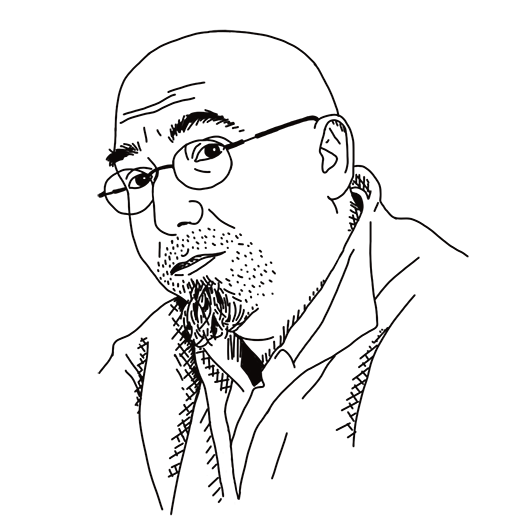
Danny Trom
Danny Trom is a political sociologist and Director of Research at the CNRS. His work combines the sociology of political experience with reflections on Jewish life in Europe, exile, and the State of Israel. His research focuses in particular on the persistence of Jewish existence, minority conditions in Europe, and the reconfiguration of relationships between diaspora, nation-states, and Israel.